
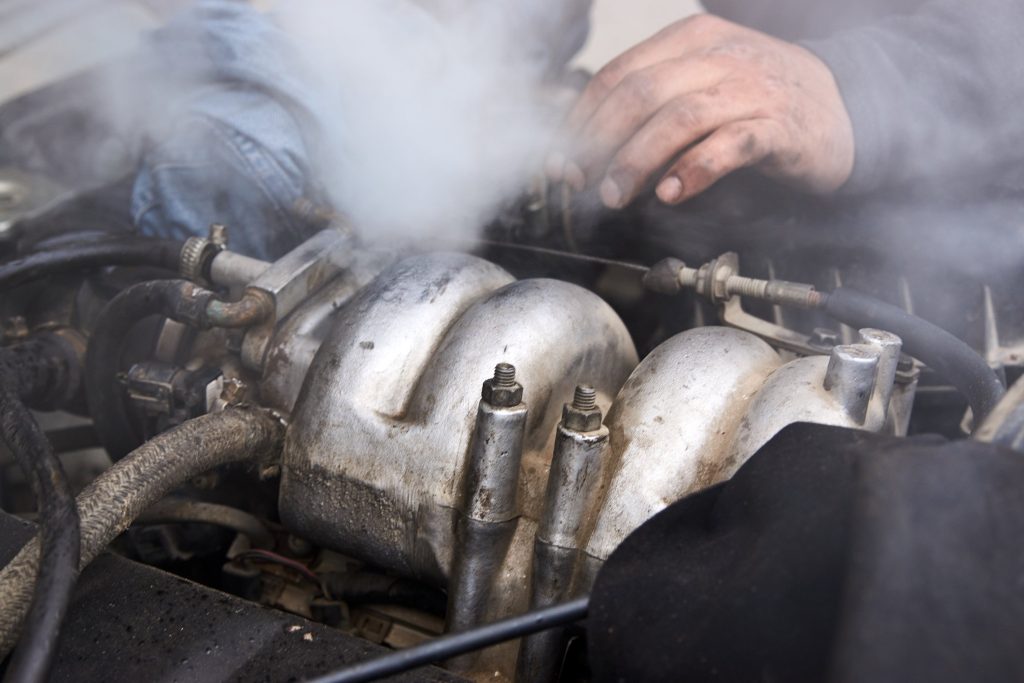
Why is my car smoking is one of the most alarming things a driver can experience on the road.
Whether you see smoke billowing from under the hood, puffing out of the tailpipe, or rising from the vents inside the cabin, it is never something to ignore.
In most cases, the color and location of the smoke reveal exactly what is wrong.
Some causes are simple and cheap to fix. Others signal serious engine damage that demands immediate action.
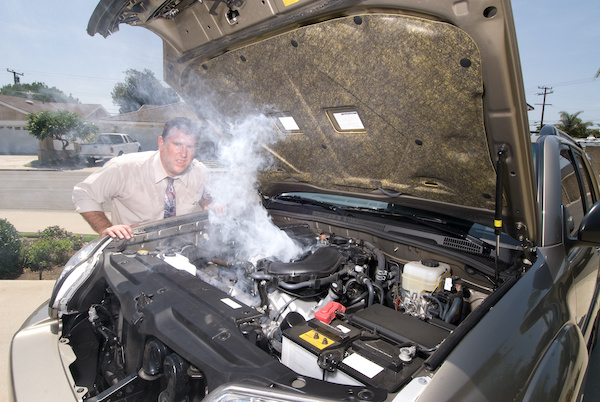
Before diagnosing the problem, you need to understand one key fact. Smoke is a symptom, not the problem itself. Your car is burning or vaporizing something it should not be — usually coolant, engine oil, transmission fluid, or excess fuel.
The color of the smoke is your single most important diagnostic clue. Location matters too. Smoke from the tailpipe means something is being burned inside the engine. Smoke from under the hood means fluid is leaking onto a hot surface outside the engine.
| Smoke Color | Most Likely Cause | Urgency Level |
|---|---|---|
| Thin white / steam | Cold start condensation | None — Normal |
| Thick white | Coolant burning / blown head gasket | High — Stop driving |
| Blue / blue-grey | Engine oil burning in combustion | Medium-High — See mechanic soon |
| Black | Running too rich / excess unburned fuel | Medium — Schedule inspection |
| Grey | Transmission fluid burning or oil burning | Medium-High — See mechanic soon |
| Smoke under hood | Fluid leak onto hot engine or exhaust | High — Pull over and check |
On cold mornings, you may notice a thin, wispy white puff from the tailpipe right after starting the engine. This is condensation, plain water vapor, burning off the exhaust system. It disappears within one to two minutes as the engine warms up.
This is completely normal in cold weather. You do not need to do anything.
Thick, persistent white smoke that does not clear after warmup is a red flag. It almost always means coolant is leaking into the combustion chamber and being burned with the fuel.
The smell is the giveaway. Coolant contains ethylene glycol, which has a distinctly sweet odor. If your white smoke smells sweet, stop driving and call a mechanic.
The head gasket sits between the cylinder head and the engine block. It seals the combustion process and keeps coolant and oil in their separate channels. When the gasket fails, coolant leaks directly into the cylinder and burns as thick white smoke.
Signs of a blown head gasket include white smoke with a sweet smell, overheating, milky brown deposit on the underside of the oil filler cap, and coolant levels that keep dropping without a visible external leak.
Head gasket replacement is one of the more expensive repairs a car needs. Labor alone can run 8 to 12 hours at shop rates, with total repair costs typically between $1,500 and $3,000 depending on the make and model.
A cracked block or cylinder head allows coolant to seep into the combustion chamber continuously. Symptoms are similar to a blown head gasket but are often more severe. This repair can exceed $4,000 and sometimes makes the vehicle uneconomical to fix.
In diesel vehicles, a failed fuel injector that sprays too much fuel or misfires can produce thick white smoke. The unburned diesel exits through the exhaust as visible white or pale grey smoke, especially on acceleration.
Blue or blue-grey smoke from the tailpipe means one thing: your engine is burning oil. Oil is seeping into the combustion chamber where it mixes with fuel and air and gets burned. The result is that distinctive blue-tinted exhaust cloud.
Blue smoke is more common in high-mileage vehicles but can appear in any engine with worn components or improper maintenance.
| Blue Smoke Timing | Likely Cause |
|---|---|
| On startup, then clears | Worn valve stem seals — oil drips into cylinders overnight |
| On hard acceleration | Worn piston rings — oil pushed past rings under pressure |
| On deceleration | Worn valve guides in cylinder head |
| Constant blue smoke | Severe oil consumption — multiple worn components |
Piston rings create an airtight seal between the piston and cylinder wall. As mileage builds up, the rings wear down and lose that seal. Oil from the crankcase slips past them into the combustion chamber and burns.
Piston ring replacement requires a full engine teardown. Parts are relatively inexpensive ($75–$200) but labor pushes the total cost to $1,800–$3,500.
Valve seals are rubber components that prevent oil from dripping down the valve stems into the cylinders. Heat and age cause them to harden and crack. When they fail, oil seeps in overnight and burns off as a puff of blue smoke at startup.
Valve seal replacement is less expensive than piston rings — typically $300–$900 depending on the vehicle — because the engine does not need to be fully disassembled.
The positive crankcase ventilation (PCV) valve routes blow-by gases from the crankcase back into the intake system. When the PCV valve clogs or fails, pressure builds in the crankcase, forcing oil past seals and gaskets into the combustion chamber.
This is the cheapest fix on this list. A PCV valve costs $10–$50 and takes minutes to replace. Always check the PCV valve first before assuming more expensive damage.
If your vehicle is turbocharged, a worn or blown turbo seal allows oil to be drawn directly into the intake and burned. You may also notice a drop in boost pressure, a whining or grinding noise from the turbocharger, and increased oil consumption.
Turbo rebuild or replacement ranges from $500 to $2,500 depending on the vehicle.
Black smoke means the engine is running too rich — burning more fuel than it should. Unburned or incompletely burned fuel exits as dark, sooty smoke. Diesel trucks commonly emit black smoke under heavy load, but persistent black smoke in any vehicle means something is out of balance.
A severely clogged air filter restricts airflow to the engine. Without enough oxygen, the fuel cannot burn efficiently and excess fuel passes through as black smoke. An air filter typically costs $15–$30 and is one of the easiest DIY replacements.
Injectors that are leaking or stuck open deliver too much fuel into the cylinder. The excess fuel cannot burn completely and exits as black smoke. A fuel injector cleaning service costs $50–$150. Full injector replacement runs $300–$1,000 for the set.
These sensors tell the engine control unit how much fuel to inject. A faulty reading results in excessive fuel delivery. A check engine light almost always accompanies this failure. Sensor replacement costs $150–$500 depending on the sensor type.
If the fuel pressure regulator sticks open, it floods the engine with too much fuel. The engine may also run rough, idle poorly, or smell strongly of gasoline. This repair runs $150–$400.
Grey smoke sometimes indicates transmission fluid is being drawn into the engine and burned. This can happen when the vacuum modulator on older automatic transmissions fails, pulling transmission fluid into the intake manifold.
If you notice grey smoke and your transmission fluid level is dropping without visible leaks, have your mechanic check the vacuum line between the intake and the transmission.
A mixture of heavy oil burning and combustion gases can also appear grey rather than distinctly blue. Older engines with significant wear often produce grey rather than blue smoke as multiple components degrade simultaneously.
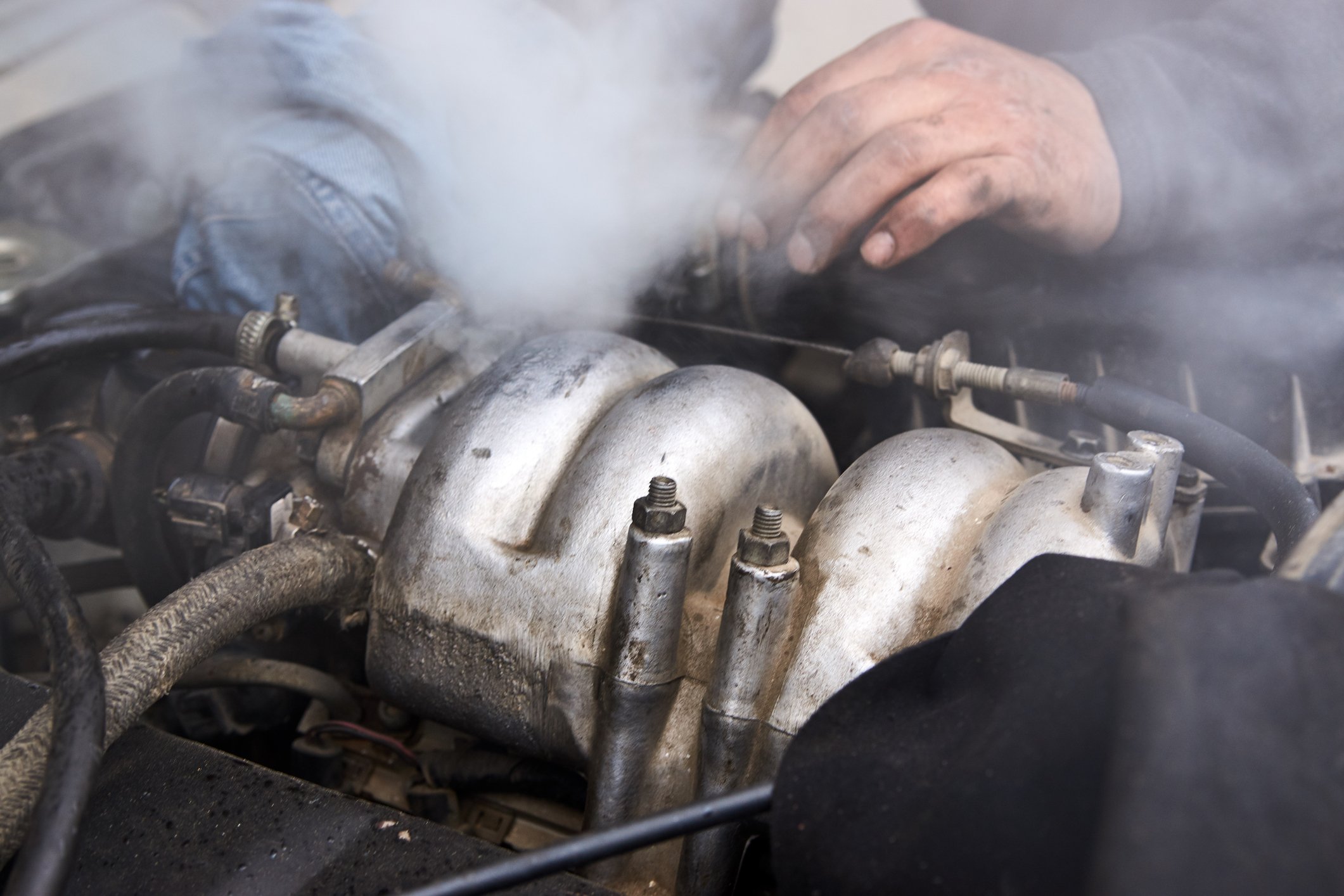
Smoke under the hood is not being burned in the engine. It is a fluid landing on a hot external surface — the exhaust manifold, the engine block, or hot metal components — and vaporizing or burning on contact.
This type of smoke can come from multiple directions and can be harder to diagnose visually. The smell is your best guide.
The most common cause of under-hood smoke is engine oil dripping from a gasket or seal onto the hot exhaust manifold. The oil vaporizes instantly on contact with the 800–1,000°F surface. You will smell a sharp, acrid burning-oil odor.
Common oil leak sources include the valve cover gasket, the oil pan gasket, the cam seal, and the crankshaft seal. Small leaks are easy to miss until smoke appears after the engine reaches full temperature.
A coolant hose with a small crack or a loose clamp can spray coolant onto hot engine parts. Unlike oil smoke, coolant smoke smells sweet. You may also see white steam rising from a specific point under the hood rather than general smoke.
When an engine overheats severely, the coolant inside the system reaches boiling point. Steam escapes from the overflow reservoir, the radiator cap, or cracked hoses. The temperature gauge rises into the red zone.
Overheating causes include a low coolant level, a faulty thermostat stuck closed, a damaged radiator, a broken water pump, or a clogged cooling system.
Melting wire insulation or a short circuit produces a distinctive acrid smell, similar to burning plastic. Smoke may appear near the battery, the fuse box, or along the wiring harness. This is potentially the most dangerous cause of under-hood smoke as it can ignite a fire.
If you smell burning plastic and see smoke near electrical components, pull over immediately and do not restart the car.
After an oil change or top-up, small amounts of oil sometimes spill onto the exhaust manifold or engine block. This burns off within the first few minutes of driving and produces smoke without any underlying mechanical problem. It resolves on its own and is not a cause for concern.
If you notice sweet-smelling mist or smoke coming from the dashboard vents, particularly when the heater is running, the heater core is likely leaking. The heater core is a small radiator inside the dashboard that heats the cabin air.
When it leaks, coolant is sprayed or vaporized into the airstream and blown directly into the cabin. You may also notice foggy windows, low coolant levels, and a slippery feeling on the inside of the windshield. Heater core replacement is labor-intensive — $500 to $1,200 in most vehicles.
Debris caught in the HVAC system, a clogged cabin air filter, or a faulty blend door can sometimes produce a musty or burning smell from the vents. Check the cabin air filter first — it is a simple $15–$25 DIY replacement.
As soon as you notice smoke, signal, move to the shoulder or a parking lot, and stop the vehicle. Turn off the engine immediately. Do not keep driving hoping the smoke will clear — continued operation can cause catastrophic damage within minutes.
Wait at least 15–20 minutes before opening the hood. Steam and pressurized coolant can cause serious burns. Never remove the radiator cap while the engine is hot.
From a safe distance, check whether you can see flames, thick black smoke, or sparks. If there is any sign of fire, move everyone away from the vehicle and call emergency services. Do not attempt to open the hood.
Once safely stopped, note what color the smoke is and where it is coming from. A sweet smell means coolant. A sharp, oily smell means oil. Burning plastic means an electrical problem.
After the engine cools, check the oil level using the dipstick. Check the coolant level in the overflow reservoir. If either is critically low, do not attempt to drive — call a tow truck or roadside assistance.
If your check engine light is illuminated, plug a basic OBD-II scanner into the port below the steering column. Many auto parts stores will read the codes for free. The codes will point directly to the affected system — whether it is a misfire, an oxygen sensor fault, or a cooling system issue.
For anything beyond thin condensation smoke on a cold morning, have a qualified mechanic inspect the vehicle before driving it further. Driving a smoking car risks turning a $300 repair into a $3,000 engine replacement.
| Problem | Estimated Repair Cost (USD) | DIY Possible? |
|---|---|---|
| PCV valve replacement | $10–$100 | Yes — easy |
| Air filter replacement | $15–$50 | Yes — very easy |
| Oxygen sensor replacement | $150–$500 | Moderate |
| Valve cover gasket | $150–$400 | Moderate |
| Valve stem seals | $300–$900 | No — requires mechanic |
| Fuel injector replacement (set) | $300–$1,000 | No — requires mechanic |
| Coolant hose replacement | $100–$300 | Yes — moderate |
| Thermostat replacement | $150–$350 | Yes — moderate |
| Heater core replacement | $500–$1,200 | No — requires mechanic |
| Turbocharger rebuild / replace | $500–$2,500 | No — requires mechanic |
| Head gasket replacement | $1,500–$3,000 | No — requires mechanic |
| Piston ring replacement | $1,800–$3,500 | No — requires mechanic |
| Cracked engine block repair | $2,500–$4,000+ | No — requires mechanic |
If your car starts smoking shortly after an oil change, the most common cause is spilled oil on the exhaust manifold or nearby hot components during the service. This is harmless and burns off within a few minutes.
However, if the smoking persists more than 10 minutes after a fresh oil change, check that the oil drain plug and filter are properly seated and not leaking. Also check that the correct oil type and quantity was used — overfilling the crankcase forces oil past seals and into the combustion chamber where it burns as blue smoke.
If you smell a sharp burning smell and notice smoke near one of the wheels rather than from the engine or tailpipe, the brakes are likely overheating. Common causes include a stuck caliper that keeps the brake pad pressed against the rotor, driving with the parking brake partially engaged, or heavy repeated braking on a long downhill.
Pull over safely, allow the brakes to cool, and have the vehicle inspected before continuing. A stuck caliper will also cause uneven braking, pulling to one side, and rapid brake wear.
| Factor | Petrol / Gasoline Engine | Diesel Engine |
|---|---|---|
| Black smoke on acceleration | Usually a fuel system fault | Can be normal under heavy load |
| White smoke at startup | Normal condensation | May indicate glow plug failure |
| Thick white smoke | Head gasket / coolant leak | Failed injector or head gasket |
| Blue smoke | Oil burning — always a fault | Oil burning — always a fault |
| Smoke at idle | Usually a fault | Can be partially normal when cold |
If your temperature gauge is normal but smoke is present, a fluid like oil or transmission fluid is likely dripping onto a hot external component. Check for leaks on the engine surface and have a mechanic inspect gaskets and seals.
A thin white puff at a cold start is normal condensation burning off. If it is blue, valve stem seals are likely worn and oil has dripped into the cylinders overnight while parked.
No — except for thin condensation smoke on cold mornings. Any other smoke means pull over immediately, identify the cause, and have the car inspected before driving further.
Thick white smoke almost always means coolant is entering the combustion chamber from a blown head gasket, cracked cylinder head, or cracked engine block. A sweet smell confirms this diagnosis.
Spilled oil burning off hot engine parts is the most likely cause and clears within minutes. If it persists, check that the drain plug and filter are tight and that the oil level is correct.
Blue smoke means the engine is burning oil. Causes include worn piston rings, worn valve stem seals, a faulty PCV valve, or a blown turbocharger seal. See a mechanic soon to prevent engine damage.
Black smoke means the engine is burning too much fuel. Common causes include a clogged air filter, faulty fuel injectors, a bad oxygen sensor, or a malfunctioning mass airflow sensor.
You may have an oil or fluid leak onto hot components that is burning off faster than it produces visible smoke. Check fluid levels and look for wet spots, drips, or discoloration on engine surfaces.
Smoke near a wheel after braking means the brakes are overheating, usually from a stuck caliper, a dragging parking brake, or repeated heavy braking. Stop driving and allow the brakes to cool before inspecting.
Costs range from $10 for a PCV valve to over $4,000 for a cracked engine block. The color and location of smoke determine the repair. Catching it early almost always means a cheaper fix.
Why is my car smoking is a question that deserves a fast, clear answer — because the longer you ignore smoke, the more expensive the repair becomes.
White smoke points to coolant, blue to oil, black to excess fuel, and under-hood smoke usually means a leak onto hot metal.
Each color has a distinct set of causes ranging from a $10 PCV valve to a $3,000 head gasket job.
The first step is always the same: pull over safely, let the engine cool, identify the smoke color and smell, and check fluid levels before deciding whether to drive or call a tow truck.
Regular maintenance — oil changes, coolant flushes, air filter replacements, and visual leak checks — prevents the vast majority of smoking problems before they start.
When in doubt, have a qualified mechanic diagnose it. Protecting your engine now saves your wallet later.