
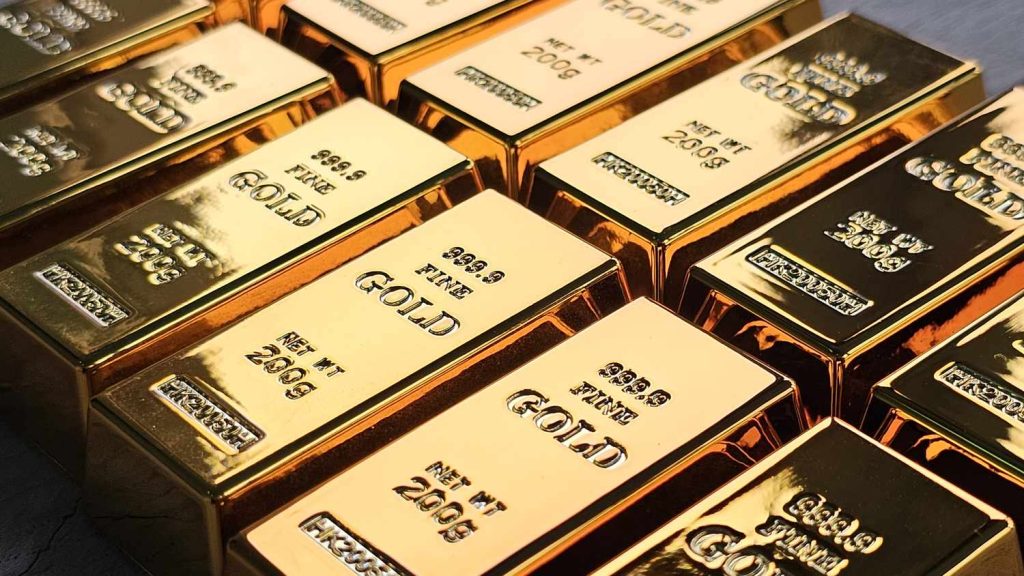
Why is gold so expensive? That is a question millions of people are asking right now as gold prices have crossed record highs in 2026.
Gold is expensive because of its extreme scarcity, high mining costs, global economic uncertainty, central bank demand, and its 5,000-year reputation as the world’s most trusted store of value.
Gold did not become expensive overnight. Its value has been built over thousands of years across dozens of civilizations.
Every ancient empire from Egypt to Rome to China treated gold as the ultimate form of wealth. Not because someone decided it should be valuable, but because gold earned that status naturally.
Gold is chemically stable, physically beautiful, and impossible to fake. Those qualities made it the natural choice for coins, crowns, and trade across borders for over 5,000 years.
Gold has a set of physical properties that no other element on Earth can match.
It does not rust, corrode, or tarnish. A gold coin buried for 2,000 years comes out looking the same as the day it was made.
It is malleable enough to be shaped into jewelry or electronics. It conducts electricity reliably. It reflects heat. These properties make it valuable not just as money but as a material used in aerospace, medicine, and modern technology.
The true scarcity of gold is hard to wrap your head around.
All the gold ever mined in human history would fill just over three Olympic-sized swimming pools. That is roughly 244,000 metric tonnes extracted across thousands of years of mining.
Scientists estimate there are only 4 parts per billion of gold in the Earth’s crust. Mining companies must process enormous amounts of rock just to extract a tiny amount of usable gold.
Global mine production adds only 2,500 to 3,000 tonnes per year to existing supplies. That is a very small amount compared to global demand from jewelry, investment, technology, and central banks.
The high cost of mining is one of the biggest reasons gold is so expensive.
Finding a viable gold deposit can take years and cost millions in geological surveys and exploratory drilling. Most exploration projects never become producing mines.
Once a mine is operating, costs pile up fast. Heavy machinery, fuel, labor, environmental compliance, water management, and processing facilities all require continuous investment.
After extraction, gold must be refined through a combination of melting, chemical processes, and electrolysis to achieve the purity needed for investment or industrial use.
| Mining Stage | Typical Cost Range |
|---|---|
| Exploration & drilling | $5M – $500M+ |
| Mine construction | $100M – $5B+ |
| All-in sustaining cost per oz | $1,200 – $1,500 |
| Refining & logistics | Additional 2–5% |
As the easiest-to-access deposits are exhausted, miners go deeper and into more remote locations. That makes every ounce more expensive to produce over time.
When the world gets uncertain, investors run to gold. This has been true for centuries and it is more true in 2026 than ever before.
When stock markets fall, currencies weaken, or wars break out, gold tends to go up. It is seen as a financial anchor that holds value when everything else is shaking.
This safe haven demand does not just come from individual investors. Governments, pension funds, and large institutions all buy gold to protect their portfolios during crises.
One of the biggest drivers of the current gold price surge is central bank demand.
Emerging market central banks have been moving away from US dollar reserves and into physical gold. According to the World Gold Council, central bank holdings of physical gold in emerging markets have risen 161% since 2006.
China’s central bank reported gold purchases for 13 consecutive months at the time of writing, adding to total holdings that now exceed 2,305 tonnes. Russia, India, Poland, Turkey, and several other nations have all been significant buyers.
When central banks buy gold, they hold it for decades. That removes supply from the market and pushes prices higher for everyone else.
Gold is the world’s oldest and most reliable hedge against inflation.
When governments print large amounts of money, the purchasing power of that currency falls. Gold, which cannot be printed, tends to hold or increase its value during inflationary periods.
Major economies including the US, EU, Japan, and China are all running large budget deficits in 2026. There is little political will to reduce spending, which means continued currency pressure and continued demand for gold as a store of value.
Every time inflation rises or a central bank signals more money printing, gold benefits.
Gold thrives in uncertainty, and 2026 has no shortage of it.
Ongoing trade wars, geopolitical conflicts, concerns about the independence of the US Federal Reserve, and shifting global alliances have all pushed investors toward gold.
When confidence in financial systems or political stability falls, gold becomes the fallback option. It is globally recognized, accepted across borders, and independent of any single government or central bank.
This dynamic means every major geopolitical event can add upward pressure to gold prices.
Exchange-traded funds backed by physical gold have made it much easier for everyday investors to buy gold exposure.
Global gold ETF holdings hit near all-time highs going into 2026. In Q3 2025 alone, ETF investors added 222 tonnes of gold holdings, the biggest quarterly inflow in years.
When ETF demand rises, fund managers must buy physical gold to back the new shares. That adds real buying pressure to an already tight market.
| Source of Gold Demand | Share of Total Demand (Est.) |
|---|---|
| Jewelry | ~45% |
| Investment (bars, coins, ETFs) | ~30% |
| Central Banks | ~15% |
| Technology & Industrial | ~10% |
Gold is not just for rings and coins. It is inside almost every smartphone, computer, and piece of medical equipment on the planet.
Gold is used in circuit boards, connectors, and semiconductors because it is one of the best electrical conductors and does not corrode over time. As electronics demand grows globally, so does industrial demand for gold.
Medical applications including cancer treatments, dental work, and diagnostic equipment also rely on gold. This industrial demand creates a base layer of buying that supports prices regardless of investor sentiment.
Gold is priced in US dollars, so the strength of the dollar directly affects gold prices around the world.
When the dollar weakens, gold becomes cheaper for buyers using other currencies. That increases global demand and pushes prices up. When the dollar strengthens, gold prices tend to face short-term pressure.
In 2026, concerns about US fiscal policy, political interference in the Federal Reserve, and potential rate cuts have all contributed to a weaker dollar outlook, which is bullish for gold.
Unlike stocks or currencies, gold supply cannot respond quickly to higher prices.
A gold mining company that wants to increase production must first spend years exploring for deposits, securing permits, building infrastructure, and ramping up operations. That lead time is typically 10 to 20 years from discovery to production.
This means that even with gold prices at record highs, the market cannot quickly flood with new supply. The price has to stay high to attract the long-term investment required to bring new mines online.
Looking at gold’s price history puts the current rally in context.
| Year | Approximate Gold Price per Oz |
|---|---|
| 2000 | $280 |
| 2010 | $1,400 |
| 2020 | $1,900 |
| 2023 | $2,000 |
| 2025 | $3,000+ |
| 2026 | $4,500+ |
The long-term trend is clearly upward, driven by the compounding of all the factors described above. Short-term dips happen, but each major cycle has established a new higher floor.
The gold price in 2026 has surged past $4,500 per ounce and some analysts project it heading toward $5,000 or beyond. Several specific 2026 factors are at play.
J.P. Morgan Global Research is forecasting prices to average $5,055 per ounce by Q4 2026. Goldman Sachs revised its target to $4,900 per ounce by end of 2026. ING analysts see the bull run continuing with prices averaging $4,325 per ounce across the year.
The main 2026 drivers include ongoing trade war uncertainty, the US government shutdown concerns, central bank buying continuing at pace, ETF inflows at record levels, and investors diversifying away from US dollar assets at scale.
People often wonder why gold costs so much more than similar precious metals.
Gold’s higher price compared to silver comes down to relative scarcity, brand recognition, and centuries of monetary history. Silver is more abundant and more widely used in industrial applications, which makes it more tied to economic cycles.
As of early 2026, gold is approximately twice as expensive as platinum, which was not always the case. Platinum used to trade at a premium to gold, but falling demand for diesel engine catalytic converters has hurt platinum demand over the past decade.
Gold sits at the top of the precious metals hierarchy because of its unique combination of monetary history, scarcity, industrial use, and universal global recognition.
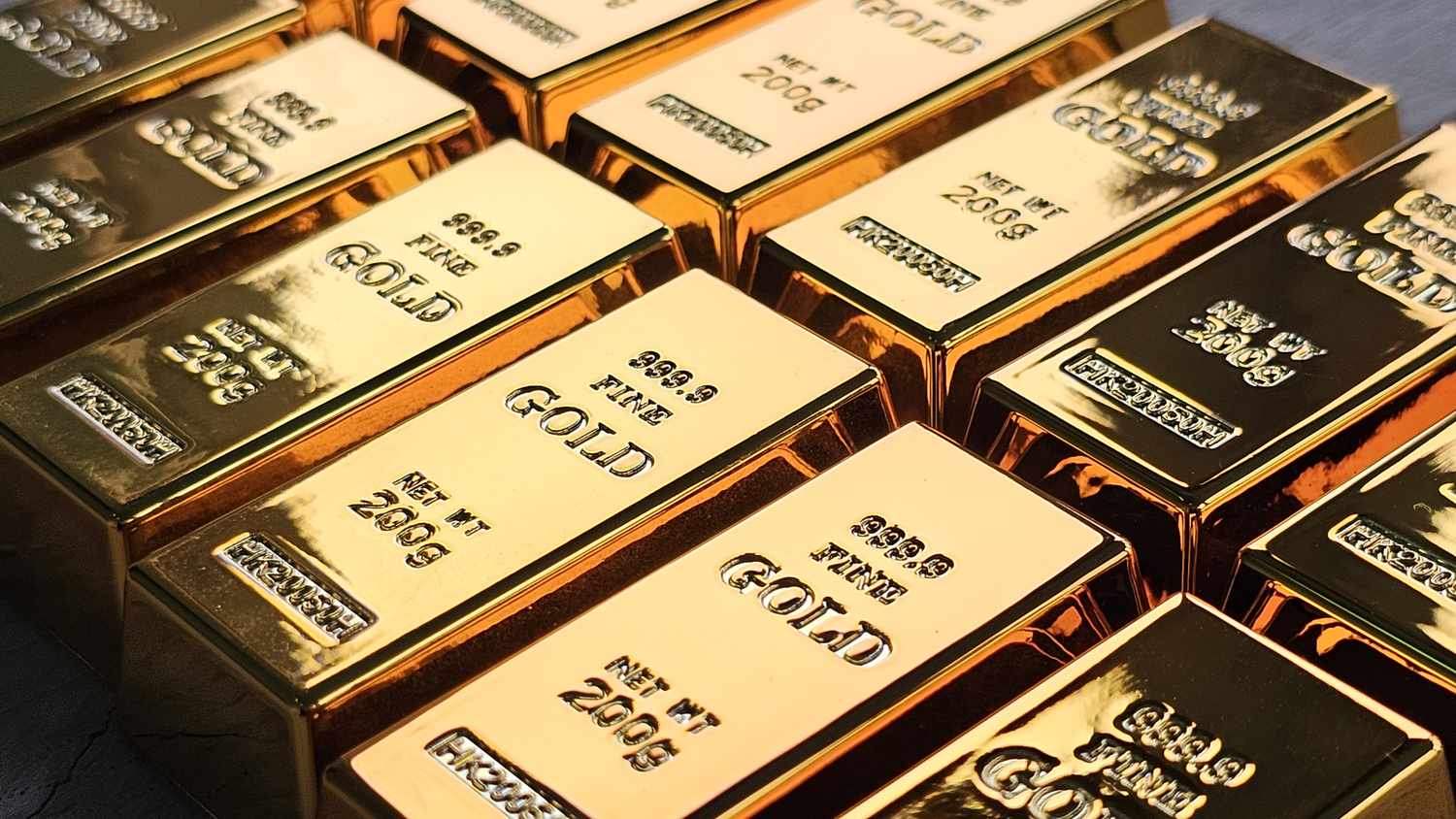
Jewelry accounts for roughly 45% of global gold demand, making it the single largest end use.
India and China together represent the two largest jewelry markets in the world. Cultural traditions around gifting gold during weddings, festivals, and religious ceremonies create deep, recurring demand that does not disappear even when prices rise.
High prices do create some demand elasticity, as consumers may buy lighter pieces or choose lower karat options. But the cultural attachment to gold in major markets means jewelry demand stays relatively resilient even at elevated price levels.
Most of Earth’s gold was delivered by meteorite impacts billions of years ago. Gold formed in neutron star collisions and was scattered across the universe before some of it ended up embedded in the Earth’s crust.
This origin story is not just fascinating. It explains why gold is so scarce and so evenly distributed in tiny quantities across the crust rather than concentrated in easily accessible veins.
The fact that gold literally came from outer space is part of what makes it so cosmically rare and enduringly valuable.
Some argued that Bitcoin and other cryptocurrencies would replace gold as a store of value for a new generation of investors.
That has not happened. If anything, gold and crypto have found a way to coexist, with some investors holding both as hedges against traditional financial systems.
Gold still has advantages that digital assets cannot replicate. It has 5,000 years of track record, it requires no electricity or internet connection, it is accepted by every central bank on Earth, and it cannot be hacked or erased.
Every major financial institution that has weighed in on gold in 2026 leans bullish for the foreseeable future.
The structural drivers that have pushed gold to current levels, including central bank buying, dollar weakness, geopolitical risk, and inflation concerns, are not going away quickly. New mine supply is years away from catching up with demand.
The most likely scenario is that gold stays expensive at minimum, and most forecasters expect it to go higher before any sustained reversal takes hold.
| Factor | Impact on Gold Price |
|---|---|
| Physical scarcity | High — finite global supply |
| Mining costs | High — rises over time |
| Central bank demand | Very High — record buying in 2023–2026 |
| Inflation hedge | High — rises with money printing |
| Geopolitical uncertainty | High — safe haven buying spikes |
| US dollar weakness | High — inversely correlated |
| ETF investment demand | High — record inflows in 2025–2026 |
| Jewelry demand | Moderate — resilient but price sensitive |
| Industrial/tech demand | Moderate — steady base demand |
Gold is rarer than most metals, has 5,000 years of monetary history, and benefits from both investment and industrial demand that silver or copper do not have in the same way.
Yes, inflation is a major driver. Gold is seen as a hedge against currency debasement, so rising inflation or expectations of money printing push gold prices higher.
Central bank buying at record levels, ongoing geopolitical tensions, a weaker US dollar, and strong ETF inflows have all combined to push gold past $4,500 per ounce in 2026.
Gold is priced in dollars, so when the dollar weakens, gold becomes cheaper for international buyers, which increases demand and pushes the price up in dollar terms.
Central banks buy gold to diversify reserves away from any single currency, hedge against geopolitical risks, and maintain a store of value that no government can freeze or sanction.
Most major analysts including J.P. Morgan and Goldman Sachs see gold prices staying elevated or rising further in 2026 and 2027, driven by ongoing macro uncertainty and structural demand.
Yes, the all-in sustaining cost of mining gold is typically $1,200 to $1,500 per ounce, and finding new deposits is becoming harder and more expensive as easy-to-access reserves are depleted.
Gold’s conductivity, corrosion resistance, and reliability make it irreplaceable in high-performance electronics. Only tiny amounts are needed per device, so the cost is justified by performance.
Approximately 244,000 metric tonnes of gold have been mined throughout human history. All of it would fit into just over three Olympic-sized swimming pools.
Gold can still serve as a portfolio diversifier and inflation hedge even at high prices, but individual investment decisions depend on financial goals, risk tolerance, and time horizon. Speaking with a financial advisor is recommended.
Why is gold so expensive? The answer is not one thing. It is everything at once. Gold is expensive because it is cosmically rare, brutally hard to mine, universally trusted, and sitting at the intersection of global fear, inflation, and institutional demand in 2026.
From its origins in ancient trade routes to today’s central bank vaults and ETF portfolios, gold has maintained its position as the world’s most reliable store of value for a simple reason: nothing else does what it does.
The 2026 price surge is not a bubble driven by speculation alone. It is the result of decades of compounding demand against a supply that cannot easily grow. Central banks are still buying. Inflation concerns are still present. Geopolitical uncertainty is not going away. And new mine supply is years from catching up.
Whether you are an investor, a jewelry buyer, or simply someone trying to understand the world economy, understanding why gold is so expensive is understanding how value itself works. Gold is not just a metal. It is a mirror held up to the confidence, or lack of it, that humanity has in its own financial systems.