

If your cat curls up at the foot of the bed every night instead of anywhere else in the house, that’s not random.
Why Does My Cat Sleep By My Feet? Cats sleep by your feet mainly for warmth, safety, and trust — your feet offer steady body heat, a low-disturbance spot, and enough closeness to feel secure without being right in your face. It’s one of the clearest signs of a comfortable, trusting relationship with you.
Below, you’ll find every documented reason behind this behavior, how it compares to cats who sleep on your chest or head instead, and the situations where a sudden change in sleeping spot is worth paying attention to.
Cats choose to sleep at your feet for a mix of warmth, safety, and bonding. Your feet radiate heat, stay relatively still while you sleep, and sit close enough for your cat to feel protected — while still giving them a clear escape route if needed. Veterinary behaviorists and feline experts agree this spot balances closeness with independence, which fits how cats naturally show affection.
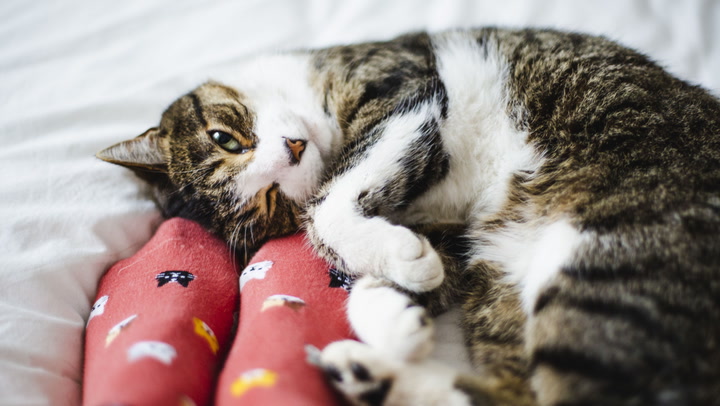
Cats spend a large portion of their day asleep, and they don’t pick a spot carelessly. As both hunters and small prey animals, cats are instinctively cautious about anywhere they let their guard down. A cat that consistently chooses to sleep near you — especially at your feet — is making a deliberate decision based on comfort, safety, and trust, not just convenience.
Feet give off a steady, gentle source of body heat, and cats are drawn to warm spots because maintaining body temperature matters a lot to their comfort and health. Compared to blankets or furniture, your feet offer a consistent, living heat source that’s hard for a cat to resist, especially on cooler nights.
Your head and upper body move far more during sleep than your feet do. Cats notice this. Sleeping near your feet lets them stay close without being jostled awake every time you roll over or shift position.
Cats are wired to be cautious about where they’re vulnerable, and sleep is one of the most vulnerable states for any animal. The end of the bed gives them a wider view of the room — and often the doorway — so they can watch for movement while still resting near you.
Choosing to sleep close to you at all is a sign your cat feels safe in your presence. Feet offer a middle ground: near enough to feel your presence and warmth, but with enough space that your cat isn’t overwhelmed by direct contact all night.
Cats are affectionate, but they also value independence. Sleeping at your feet keeps them close to you while avoiding the kind of contact — being petted, shifted, or rolled onto — that can happen when they sleep right next to your torso or head.
Your bed already smells like you, but your feet carry a distinct scent your cat recognizes as familiar and comforting. Cats rely heavily on scent to interpret their environment, and a familiar smell nearby can be reassuring at bedtime.
Cats have scent glands in their paws. By resting against or near your feet, they may also be leaving a bit of their own scent behind — a subtle way of marking you and their sleeping spot as “theirs.”
Cats are creatures of habit. Once a sleeping spot proves comfortable and safe, most cats stick with it night after night simply because it’s familiar and reliably works for them.
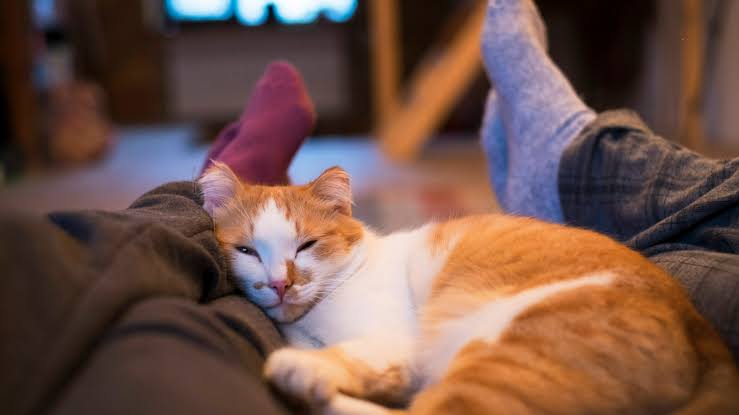
Some cats do prefer sleeping on your chest or near your head, but many settle at your feet as a practical compromise. Feet move less, sit farther from your face (avoiding accidental contact when you turn over), and still keep your cat within your scent and warmth zone. Feline behavior experts describe this as a “best of both worlds” spot — closeness without the risk of being disturbed or rolled on.
| Sleeping Spot | Why Cats Choose It | Trade-Off |
|---|---|---|
| At your feet | Warmth, stability, escape route, moderate closeness | Less direct contact |
| On your chest | Maximum closeness and warmth | Higher risk of being moved or disturbed |
| Near your head | Convenient for waking you for attention or food | More exposure to your movement at night |
| Foot of the bed, away from you | Cooler temperature preference or more independence | Less physical closeness |
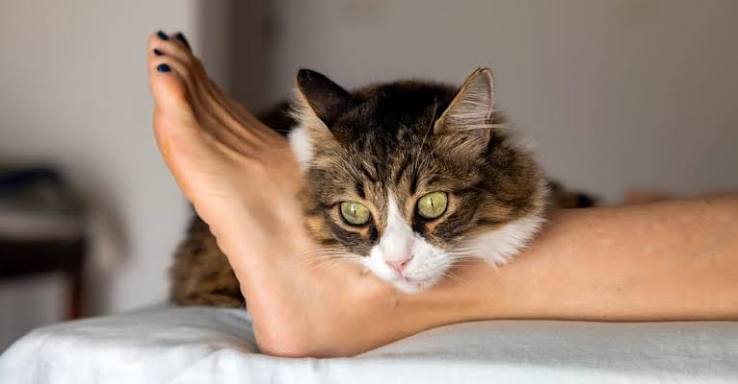
Yes — in almost every case, a cat sleeping at your feet is a sign of trust, comfort, and attachment. It reflects a cat that feels secure enough around you to lower its guard for an extended sleep, something cats generally reserve for people and places they consider safe.
Cat sleeping habits are usually stable, so a sudden shift can be a useful clue. Consider mentioning it to your vet if your cat:
In most cases, a shifted sleeping spot just reflects temperature changes, a new pet or person in the home, or simple preference — but a sudden, unexplained change combined with other symptoms is worth a vet visit to rule out illness or pain.
Yes, generally. Choosing to sleep near you, especially in a vulnerable state like sleep, is one of the clearest signs of trust and attachment in cats.
It likely comes down to a mix of warmth, stability, and personal space — your feet offer closeness without the disturbance of your upper body’s movement.
Yes, cats can shift sleeping spots based on the season, temperature, new pets, or simple preference. It only becomes a concern if it happens suddenly alongside other behavior changes.
Cats seek out warmth more actively in colder months, and your feet provide a reliable heat source when the room temperature drops.
This is a personal preference. Many owners find it strengthens the bond with their cat, though allergy sufferers or light sleepers may prefer a nearby cat bed instead.
Some cats want closeness without direct contact. Sleeping nearby without wanting to be touched still reflects comfort and trust, just on their own terms.
No, preference varies by cat. Some prefer sleeping on the chest or near the head for maximum warmth and closeness, while others prefer the feet for a bit more independence.
Yes, if cats in the same household get along well, it’s common for more than one to share a favorite sleeping spot near you.
This is often linked to a new bond forming, a change in household routine, cooler weather, or your cat simply feeling more secure over time.
Some experts note that cats position themselves where they can monitor their surroundings, which some owners interpret as a protective instinct, though it’s more about vigilance and safety than active guarding.