
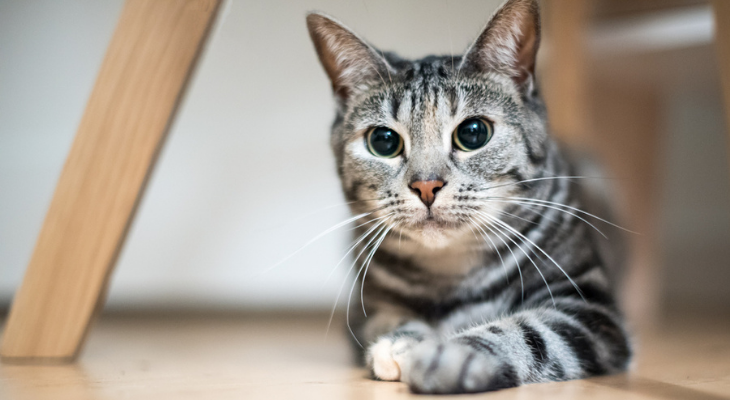
Why do cats pupils get big before attacking is one of the most searched questions by cat owners worldwide.
If you have ever watched your cat crouch low, tail twitching, eyes turning into wide black pools — you already know the look. It is intense, sudden, and a little unsettling.
Those huge, dilated pupils are not random.
They are a direct window into your cat’s brain, body chemistry, and ancient predator instincts.
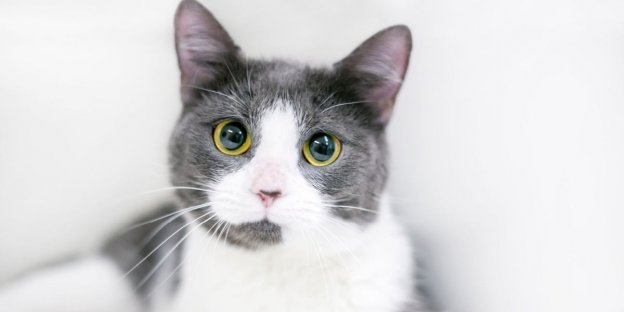
When your cat’s pupils suddenly expand into large, round circles, it is called mydriasis. This is the technical term for pupil dilation.
Under normal, calm conditions, a cat’s pupils look like narrow vertical slits. The moment something triggers their system — prey, a threat, excitement, or fear — those slits open wide into big black circles almost instantly.
This change is controlled by the autonomic nervous system. It is not something your cat chooses to do. It happens automatically as part of a powerful biological response.
Cat eyes are built for one primary purpose: hunting. Their vertical slit-shaped pupils are unique to predators that are active at dawn and dusk — low-light hours when most prey is moving.
A 2015 scientific study confirmed that animals with vertical slit pupils are almost always predators who hunt in dim conditions. This shape allows extreme control over how much light enters the eye.
| Feature | Cat Eyes | Human Eyes |
|---|---|---|
| Pupil Shape | Vertical slit (relaxed) | Round |
| Max Dilation Diameter | Up to 9mm | Up to 7mm |
| Pupil Change Range | Extremely wide | Moderate |
| Active Hunting Hours | Dawn, dusk, night | Daytime |
| Slit Pupils | Yes | No |
Cat pupils can dilate up to 9mm — about 135% more than a human pupil. This is a massive advantage for a predator who needs to see in near-darkness.
The sympathetic nervous system is the “fight or flight” control center of the body. When a cat detects prey, senses danger, or gets excited during play, this system fires immediately.
It releases adrenaline into the bloodstream within seconds. That adrenaline directly triggers the muscles inside the eye to relax, causing the pupils to dilate rapidly.
The entire process takes less than a second. Your cat’s body is preparing to act before their conscious brain has even finished processing the situation.
The most important reason is simple — more light means better vision. When a cat is locked onto a target, their pupils open fully to flood the retina with as much light as possible.
This is especially critical if your cat is hunting in dim lighting, which is when cats are naturally most active. Even indoors, your cat’s prey instinct activates the same response regardless of actual lighting conditions.
The retina then uses this extra light to produce a sharper, brighter image of the target. Every movement of the prey becomes more visible and easier to track.
When a cat goes into attack mode, their adrenal glands pump adrenaline (epinephrine) directly into the bloodstream. This hormone does several things at once.
It increases heart rate, tenses muscles for explosive movement, and signals the eye muscles to relax — which causes dilation. The entire body shifts into high-alert mode in under a second.
This response is the same whether your cat is hunting a real mouse or pouncing on a toy. The brain treats both situations identically because the predator instinct does not distinguish between real and simulated prey.
Dilated pupils also change how the lens of the eye bends light. As the pupil expands, the eye’s depth of field narrows, which means the cat’s focus sharpens on whatever is directly in front of them.
This is similar to how a camera works — a wider aperture creates a shallow depth of field that isolates the subject. Your cat is essentially doing the same thing automatically before pouncing.
This sharper focus on the target reduces visual distractions from the sides, helping the cat judge exactly how far away the prey is and how much force to use in the attack.
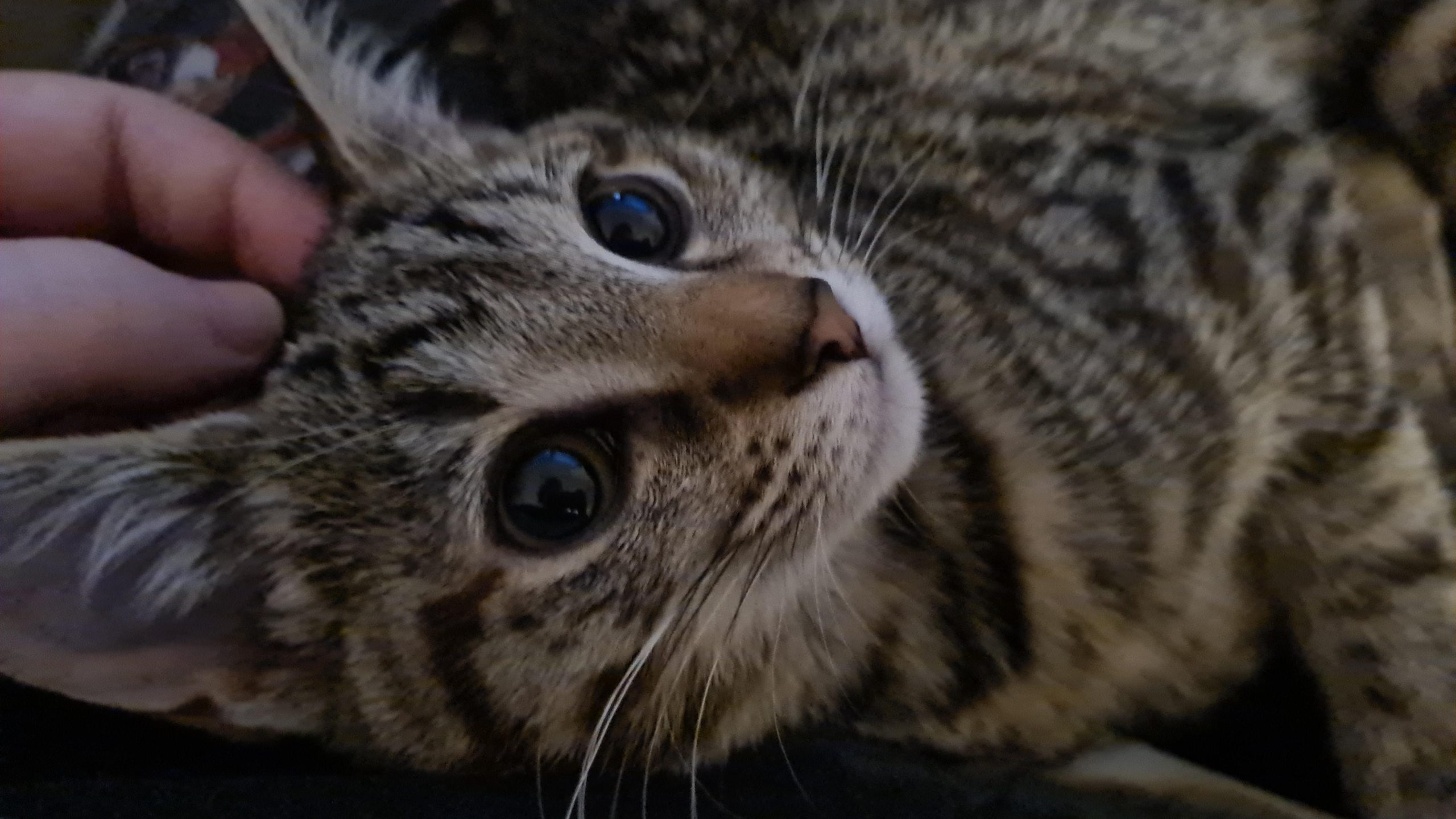
Big pupils do not only mean aggression. They also appear when a cat is excited during play, frightened, anxious, or feeling pain. The pupil cannot tell the difference between these emotions — they all trigger the same sympathetic nervous system response.
This is why reading pupil dilation alone is not enough. You always need to check the full body language picture to understand what your cat is actually feeling before an attack.
A cat that is excited to play looks very different from a cat that is about to attack out of fear — even if both have huge pupils.
This is the key question most cat owners struggle with. The pupils look the same. But the rest of the body tells the real story.
| Body Language | Playful Attack | Aggressive Attack |
|---|---|---|
| Ears | Forward | Flat/back |
| Tail | Up or gently swishing | Puffed, tucked, or lashing |
| Sound | Chirping, silent | Hissing, growling |
| Fur | Flat and smooth | Raised/puffed |
| Body Posture | Light, bouncy crouch | Stiff, tense, pressed low |
| Pupils | Dilated | Dilated (same but context differs) |
The most common and completely normal reason for big pupils is simple darkness. In dim rooms, outdoors at dusk, or at night, a cat’s pupils automatically open wide to pull in as much light as possible.
This is a reflex controlled by the eye and does not involve any emotional state. You can observe this simply by moving your cat from a bright room to a darker one and watching the pupils expand within seconds.
Even a simple laser pointer or feather wand can trigger the full predator response. When your cat crouches and locks onto a moving toy, their body enters the same hunt mode as if facing real prey.
Pupils dilate, adrenaline flows, and the cat prepares to pounce. This is completely healthy and normal. It is actually one of the best signs that your cat is fully engaged and enjoying the play session.
A frightened cat’s nervous system floods with adrenaline just like an excited one. The pupils widen dramatically as the body prepares to run or fight.
Other signs of fear-based dilation include a crouching posture, tucked tail, flattened ears, and possibly hiding behavior. If someone rings the doorbell, a new animal enters the home, or a loud noise occurs, you may see this reaction.
Pain is a strong activator of the sympathetic nervous system. A cat in physical pain may have persistently dilated pupils even in bright lighting and with no obvious emotional trigger.
If your cat’s pupils seem unusually large for no clear reason, and they are also hiding more, eating less, or moving differently, pain should be considered as a cause.
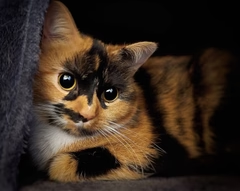
Catnip contains nepetalactone, a compound that produces a mild euphoric response in cats who are genetically sensitive to it. One of the visible effects is pupil dilation.
This reaction typically lasts around 10 minutes. After that, the cat becomes temporarily immune to catnip’s effects for a couple of hours before the sensitivity resets.
Most of the time, dilated pupils in cats are completely normal and temporary. But there are situations where persistent dilation signals something is medically wrong.
| Condition | What Happens | Other Signs to Watch |
|---|---|---|
| High Blood Pressure (Hypertension) | Damages blood vessels in the eye | Bumping into things, disorientation, vision loss |
| Glaucoma | Increased eye pressure | Cloudy eye, squinting, pain |
| Anisocoria | One pupil larger than the other | Urgent vet visit needed |
| Kidney Disease | Systemic effects on blood pressure and nerves | Increased thirst, weight loss |
| Neurological Disorders | Nerve damage affecting pupil control | Changes in balance, behavior |
| Progressive Retinal Atrophy | Inherited disease (Abyssinian, Persian cats) | Night blindness first, then full blindness |
| Toxin Ingestion | Nervous system disruption | Vomiting, behavior changes, tremors |
| Blindness | No visual signal to trigger constriction | Fixed, wide pupils even in bright light |
You can do a quick informal check at home. Briefly shine a small flashlight toward your cat’s eyes. A healthy cat will squint or look away. A cat with vision problems will often stare forward with their pupils remaining wide.
This is not a replacement for a vet exam, but it gives you a basic baseline to work from. Always consult your vet if you notice anything unusual.
Call your veterinarian right away if you notice any of these signs.
Narrow, vertical slits in normal lighting mean your cat is calm, comfortable, and content. This is the healthy resting state of a cat’s pupils.
Partially dilated pupils, somewhere between a slit and a full circle, mean your cat is paying attention to something. They are curious and engaged but not yet in full predator or fear mode.
Large, round, fully dilated pupils signal maximum arousal — whether from hunting excitement, fear, pain, or play. This is the look you see right before a cat launches into an attack.
In direct sunlight or very bright indoor lighting, pupils constrict to tiny slits to protect the sensitive retina. Cats need this extreme control more than humans because their retinas are significantly more light-sensitive.
If pupils appear very small in normal lighting without any obvious bright light source, this can sometimes indicate inflammation of the eye (uveitis), certain medications, or other neurological issues worth checking with a vet.
Lean into it. Give your cat a toy to redirect the pounce toward. Feather wands, moving laser dots, or crinkle toys that mimic prey movement work best.
Keep play sessions to 5–15 minutes to prevent overstimulation. If your cat gets too intense, pause the session and let them calm down before resuming.
Speak in a low, calm voice. Give your cat plenty of space and do not approach or corner them. Remove or reduce the source of the fear if possible.
Avoid direct eye contact, as cats can interpret staring as a sign of aggression or a challenge. Turn slightly sideways and blink slowly to signal you are not a threat.
Do not punish your cat physically. Punishment increases fear and makes aggression worse. Step back calmly and give your cat an exit route.
Identify the trigger — overstimulation, redirected aggression toward another animal, territorial behavior, or pain. Once you know the cause, you can address it properly.
When big pupils appear out of nowhere with no obvious emotional trigger and no change in lighting, take it seriously. Monitor for other symptoms and contact your vet if the dilation persists or is accompanied by any behavioral or physical changes.
Preventing unwanted attacks from your cat comes down to understanding and managing their environment effectively.
Provide enough play sessions daily. Cats that get adequate hunting-style play are far less likely to redirect that energy onto people or other pets. Aim for at least two 10-minute interactive play sessions per day.
Give your cat vertical space. Cat trees, shelves, and window perches reduce stress and give cats a sense of security and territory. A cat that feels safe is a calmer cat.
Watch for early warning signals. Tail lashing, ear flattening, skin rippling along the back, and low growling all come before the dilated pupils reach their maximum size. Stopping the interaction at those early signals prevents escalation.
Never use your hands as toys. This teaches cats that human hands are prey, which leads directly to biting and scratching behavior. Always use a toy as an intermediary.
Pupil dilation does not happen alone. The entire body shifts into a coordinated attack-ready state the moment the predator response fires.
The ears rotate forward to maximize sound detection. The whiskers spread wide and angle forward to pick up air movement and vibrations near the target. The tail often begins a slow, deliberate lashing motion — different from a happy tail wag, this is tense and controlled.
The hindquarters lower slightly while the front legs stay planted, creating the signature pre-pounce crouch. Many cats do a small, rhythmic “butt wiggle” at this stage to calibrate their rear legs for the explosive spring that follows.
All of these physical changes happen in coordination with the pupil dilation. Your cat’s entire body becomes a precision hunting machine in a matter of seconds.
Wild cats such as lions, tigers, and leopards actually have round pupils rather than vertical slits. This is because large cats hunt primarily during the day when light is abundant, so they do not need the same extreme range of dilation control.
Domestic cats and small wild cats have vertical slit pupils specifically because they hunt in low-light conditions. The slit shape allows an almost complete closure in bright light while expanding to maximum dilation in darkness — a far greater range than a round pupil can achieve.
This biological difference confirms that your cat’s dramatic pupil dilation is a direct inheritance from millions of years of low-light predator evolution.
Pupils dilate due to an adrenaline surge triggered by the fight-or-flight response, allowing more light into the eye for sharper vision during hunting or an attack.
Yes, it is completely normal. Dilated pupils before a pounce are a healthy sign of the predator instinct activating, whether during real hunting or play.
No. Pupils also dilate due to low light, excitement, fear, pain, catnip, and certain medical conditions. Always read the full body language, not just the eyes.
Pupils look the same in both cases. Watch the ears, tail, fur, and posture instead — forward ears and a bouncy posture mean play, while flat ears and puffed fur signal real aggression.
Pupil dilation happens in under a second. The adrenaline response is nearly instantaneous once the sympathetic nervous system fires.
Yes. Persistently dilated pupils in normal lighting can signal high blood pressure, neurological disorders, toxin exposure, or blindness. A vet exam is needed.
Anisocoria is when one pupil is larger than the other. It is considered a medical emergency and requires immediate veterinary attention.
Yes. Cat pupils can dilate up to 9mm compared to a human maximum of around 7mm, giving cats a 135% greater light-gathering range.
The moving laser activates the predator instinct. The brain treats the moving dot like prey, triggering adrenaline release and full pupil dilation as part of the hunt response.
Yes. Both emotions activate the same sympathetic nervous system response, producing identical pupil dilation. Body posture and environmental context are the only ways to tell them apart.
Why do cats pupils get big before attacking is answered by one core biological truth: your cat is a predator, and their body responds accordingly.
The moment they lock onto prey — real or simulated — adrenaline floods the system, pupils expand to maximum size, and every sense sharpens for the strike.
This response is ancient, automatic, and deeply hardwired into their DNA. Understanding it changes the way you read your cat’s behavior. Big pupils are not random.
They are a direct signal of your cat’s emotional and physical state in that exact moment.
Learn to pair what you see in the eyes with the full picture of ears, tail, and posture, and you will understand your cat on a level most owners never reach.
And remember — when those big pupils appear without any clear trigger and do not return to normal, that is the moment to call your vet.