
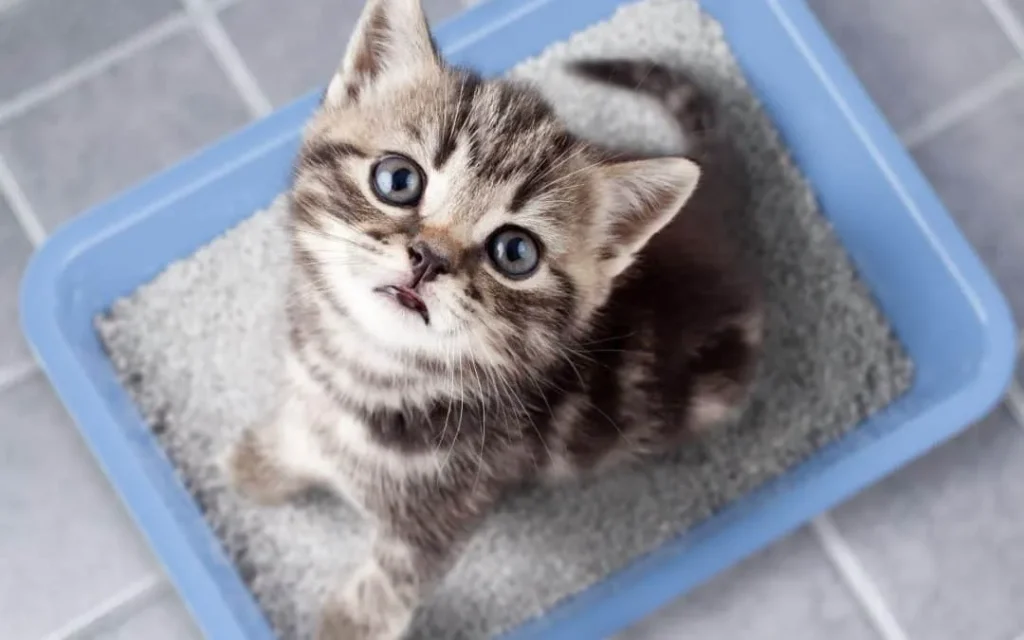
Why do cats bury their poop is one of the most common questions cat owners ask, and the answer goes much deeper than simple cleanliness.
Whether your cat meticulously covers every visit to the litter box or has recently stopped doing so, there is always a reason behind it.
Understanding why cats behave this way helps you provide a better environment for them and recognize when a change in habit might signal something worth paying attention to.
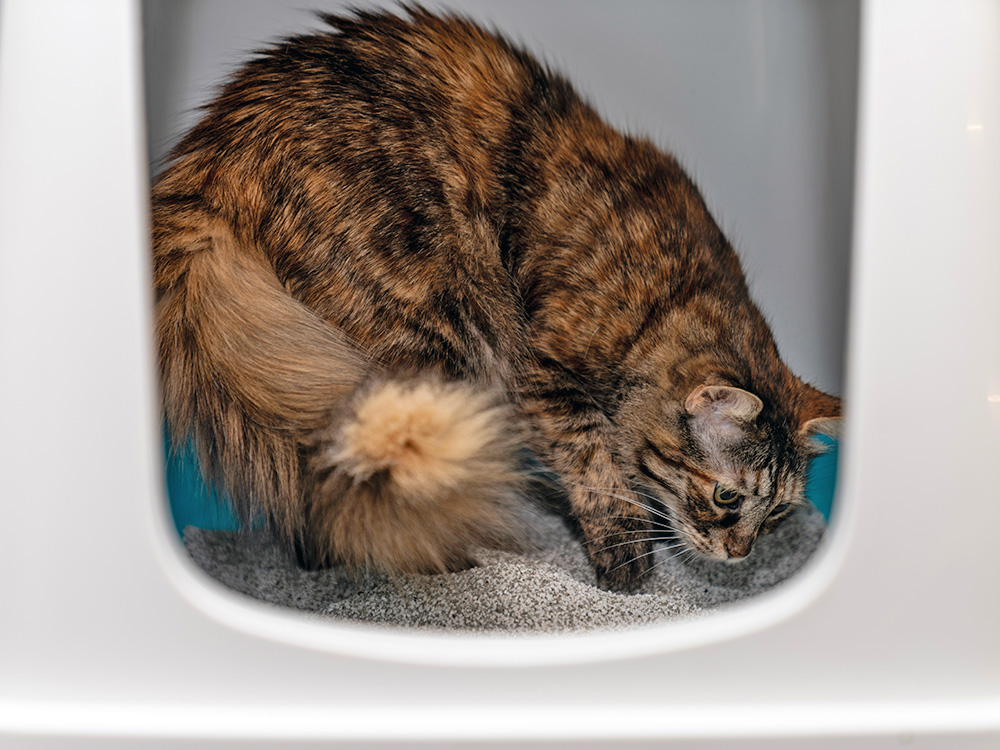
To understand why domestic cats bury their poop, you have to go back to their wild ancestors.
The domestic cat descends from the African wildcat, a small solitary predator that sat in the middle of the food chain. It was both hunter and hunted, which made concealment a daily survival strategy.
Wild cats were vulnerable to larger predators like leopards, lions, and birds of prey. Cat feces contains pheromones — chemical signals that broadcast identity, health, and location to other animals. Leaving waste uncovered was essentially announcing your presence to anything that wanted to eat you.
Burying poop reduced the scent trail and lowered the risk of being tracked, attacked, or ambushed. It also helped conceal a cat’s location from prey, making hunting more effective.
Your indoor cat faces zero predators in your living room, yet she still scratches and covers after every bathroom visit. Why?
Because instinct does not disappear simply because the threat does. Deeply hardwired survival behaviors persist across generations even when the original need no longer exists. This is true for many species, including humans.
The behavior is also reinforced socially. Mother cats teach their kittens to bury waste, passing the habit from one generation to the next. Even if there is no longer any practical reason for the behavior, it becomes part of a cat’s normal routine from the earliest weeks of life.
Cats experience the world primarily through scent. Their sense of smell is estimated to be 14 times stronger than a human’s, and they use scent constantly to gather information about other animals, their territory, and their environment.
Cat feces contains pheromones produced by anal glands. These chemical compounds carry a remarkable amount of information — a cat’s sex, reproductive status, general health, and identity.
By burying poop, a cat effectively erases a detailed scent marker that could broadcast its location or invite conflict. This is why some cats also sniff their own feces before burying it — they may be instinctively assessing whether the scent is strong enough to attract unwanted attention.
Here is something most casual cat owners do not know: whether a cat buries its poop or leaves it exposed is actually a social statement.
In multi-cat environments, dominant cats — and in the wild, large cats like lions and tigers — often deliberately leave their waste uncovered. This is a territorial signal. It tells other cats: “This space is mine, I am not hiding from anyone, and I am not submitting to you.”
Subordinate or non-dominant cats, on the other hand, bury their poop to communicate the opposite. It signals deference and a desire to avoid conflict. The message is essentially: “I am not a threat, and I am not challenging you.”
This is why in multi-cat households, the cat that consistently covers its poop most carefully is often the more submissive one.
| Cat Social Role | Poop Burying Behavior | Meaning |
|---|---|---|
| Dominant cat | Leaves poop uncovered | Territorial claim, confidence |
| Subordinate cat | Consistently buries poop | Submission, conflict avoidance |
| Secure indoor cat | Buries poop routinely | Habitual, instinctive |
| Stressed or anxious cat | May stop burying | Signaling discomfort or change |
| Nursing female cat | Buries poop more often | Protecting kittens from predators |
The technical term for when cats intentionally leave their poop uncovered as a territorial message is middening.
Middening is most commonly seen in outdoor and feral cats, particularly when they want to establish or reinforce territory boundaries. A cat practicing middening will often choose visible, high-traffic areas — near doorways, on pathways, or in open spots where other animals are likely to encounter the message.
In domestic cats, middening is less common but not unheard of. It may appear when a new cat is introduced to the household, when an outdoor cat is spotted through a window, or when the resident cat is feeling threatened or insecure.
Middening is different from general litter box avoidance. It is a deliberate, purposeful behavior — and it means something is making your cat feel the need to assert itself.
Kittens do not automatically know how to use a litter box or cover their waste. These skills are taught.
Mother cats demonstrate proper elimination behavior, and kittens observe and mimic the process. This is why kittens separated from their mothers too early sometimes struggle with litter box habits and may never fully develop the burying behavior.
A kitten that was orphaned young or weaned too early may grow into an adult cat that does not bury its poop — not because anything is wrong medically, but simply because it never learned the behavior in the critical early weeks of life.
This is also why the behavior varies so much between individual cats. Nature provides the instinct, but nurture shapes how strongly it is expressed.
If your cat has never buried its poop since kittenhood, it is likely due to one of these reasons:
Early weaning or separation from the mother before proper bathroom behavior was modeled. Some cats simply never received that early behavioral education.
Personal preference or temperament. Some cats are naturally more dominant or independent and simply do not feel the need to conceal themselves.
Breed tendencies can also play a small role, though individual variation within breeds is far more significant than breed-wide patterns.
This is where cat owners need to pay attention. A sudden change in an established behavior is almost always a signal.
If a cat that has consistently buried its poop for years abruptly stops, something has changed. The cause may be physical, environmental, emotional, or medical.
This is the most common reason. Cats are highly particular about their bathroom environment, and even minor changes can disrupt their routine.
A litter box that is too small forces the cat to contort uncomfortably. The AAFP (American Association of Feline Practitioners) recommends a box at least 1.5 times the length of the cat.
Litter that feels wrong — too coarse, too pellet-like, scented — can make a cat reluctant to dig and scratch. Most cats strongly prefer soft, fine-grained, unscented litter that mimics the texture of sand or loose soil.
A covered litter box can feel like a trap. If a cat is anxious about being cornered, it may rush through elimination without taking the time to bury.
A dirty litter box is a major deterrent. Cats have a far more sensitive sense of smell than humans. A box that smells manageable to you may feel overwhelming to your cat.
| Litter Box Issue | Cat’s Response | Solution |
|---|---|---|
| Too small | Avoids digging, rushes out | Use box 1.5x cat’s body length |
| Scented litter | Skips burying | Switch to unscented, fine grain |
| Covered box | Exits quickly without covering | Try an open-top box |
| Dirty box | Eliminates near the box or stops burying | Scoop daily, full clean weekly |
| Wrong location | Avoids box entirely | Move to quiet, low-traffic area |
| Too few boxes | Competition stress in multi-cat homes | One box per cat plus one extra |
Pain is a powerful disruptor of normal behavior. When a cat is in physical discomfort, its priority is to eliminate as quickly as possible and escape, not to stay and cover.
Arthritis is one of the most common culprits, especially in senior cats. Squatting, scratching, and shifting weight in the litter box can be genuinely painful for a cat with inflamed joints.
Paw injuries or sore pads make the scratching motion painful, causing a cat to abandon the burying step.
Digestive disorders including inflammatory bowel disease (IBD), constipation, or diarrhea can make elimination so urgent or uncomfortable that normal post-elimination behavior gets skipped.
Other medical conditions linked to changes in litter box habits include hyperthyroidism, diabetes, kidney disease, and urinary tract infections.
A sudden and unexplained change in any bathroom-related behavior is reason enough to schedule a veterinary visit.
Cats are highly sensitive to change. Events that seem minor from a human perspective can register as significant stressors for a cat.
Moving to a new home, rearranging furniture, introducing a new pet or family member, changes in the owner’s schedule, or even a neighbor’s cat appearing outside a window can disrupt normal behavior.
When a cat is stressed, it may rush through bathroom visits without completing normal covering behavior. It may also start eliminating outside the litter box altogether, which is a stronger signal that something needs to be addressed.
Stress-related litter box changes in multi-cat households are especially common. If one cat is being bullied near the litter box, it will rush its visits to reduce the risk of being cornered.
Older cats, generally those 12 years and above, can experience feline cognitive dysfunction — sometimes compared to dementia in humans. This can affect memory, spatial awareness, and the performance of previously routine behaviors.
A senior cat that suddenly stops burying may not be making a statement. It may simply have forgotten the usual sequence of steps, or it may feel confused about where it is or what it is doing.
Age-related physical changes compound this issue, as arthritis, reduced flexibility, and decreased sensory sharpness all make normal litter box behavior more effortful.
Cats spend an estimated 30 to 50 percent of their waking hours grooming themselves. Cleanliness is not just a behavior — it is a core part of feline identity.
Burying poop is an extension of this hygiene instinct. In the wild, leaving waste exposed near a living area attracted parasites, bacteria, and other health hazards. By covering it, cats protected themselves and their colony from contamination.
This hygienic motivation is also why cats instinctively avoid eliminating near their food and water sources. Wild cats would seek out toileting spots well away from where they ate and slept, a behavioral pattern domestic cats still follow.
A 2024 study on feline poop-burying behavior found that nursing female cats and kittens cover their feces significantly more often than young adult or non-reproductive female cats.
Researchers found that nursing mothers bury waste more frequently as a way to hide chemical information from predators that might locate and threaten their nest.
Kittens extend this behavior further — some will bury not only their own waste but that of their siblings and nearby kittens as well. This suggests the behavior has a clear and active function related to nest protection during the vulnerable early weeks of a kitten’s life.
Dogs and cats have fundamentally different relationships with their own waste, and the contrast is informative.
Dogs use fecal scent as a communication tool. Dog poop contains information about sex, reproductive status, and individual identity, and most dogs want that information distributed and discovered by other animals. Covering it would defeat the purpose.
Cats, by contrast, use scent strategically — either concealing it for safety and submission, or leaving it exposed for territorial assertion. The choice is intentional and contextual.
Some dogs do scratch or kick at the ground after eliminating, but this is typically to spread scent through gland secretions in the paws over a wider area — the opposite of what cats are doing.
| Species | Poop Burying Behavior | Primary Reason |
|---|---|---|
| Domestic cat | Usually buries | Survival instinct, scent concealment |
| Dominant wild cat (lion, tiger) | Does not bury | Territorial marking |
| Domestic dog | Rarely buries | Poop used as scent communication |
| Some armadillos and mink | Sometimes buries | Similar predator-avoidance instinct |
| Feral cat | Buries within home range, not outside | Territory-dependent behavior |
Since litter box satisfaction is so closely tied to poop-burying behavior, getting the setup right matters a great deal.
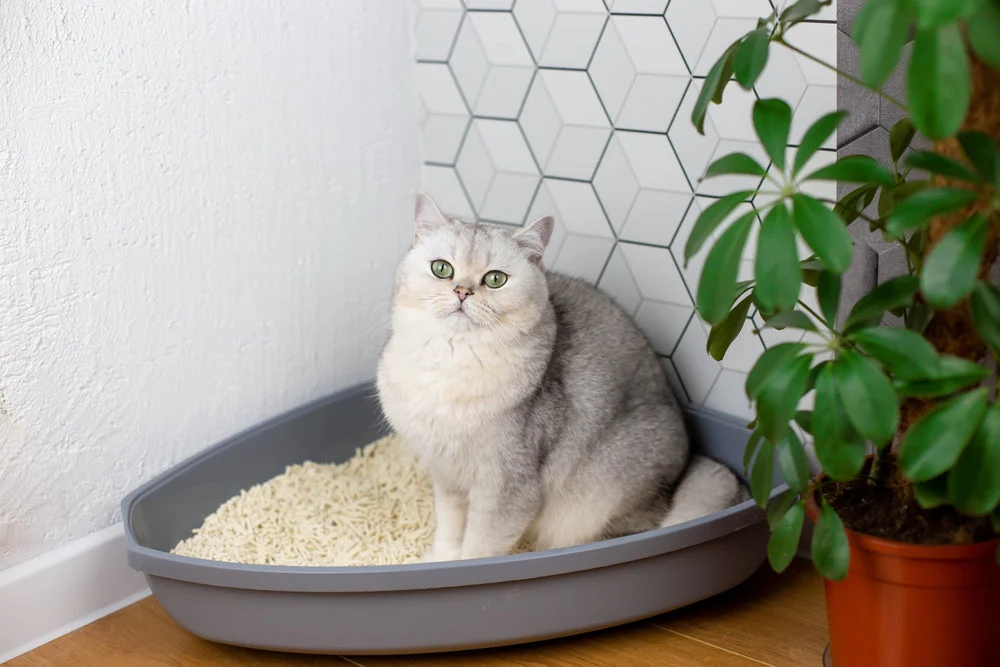
The box should be large enough for the cat to turn around, dig, and position itself without feeling cramped. Open-top boxes are generally preferred over covered ones because they give the cat a clear escape route and reduce the sensation of being trapped.
Fine-grain, unscented litter is the preference of the majority of cats. Pellet litters, while easier for some owners to manage, are often too hard and uncomfortable on sensitive paws, making digging and burying unpleasant.
Litter depth should be around three to four inches — deep enough for comfortable digging and covering.
The location should be quiet, accessible, and not near food or water bowls. Low-traffic areas that offer a sense of privacy without feeling isolated are ideal.
For multi-cat households, the general guideline is one litter box per cat plus one additional box. This reduces competition and stress around elimination.
| Litter Box Feature | Recommendation |
|---|---|
| Minimum size | 1.5x the length of the cat |
| Box style | Open-top preferred by most cats |
| Litter type | Fine-grain, unscented, clumping |
| Litter depth | 3 to 4 inches |
| Cleaning frequency | Scoop daily, full clean weekly |
| Number of boxes (multi-cat) | One per cat plus one extra |
| Location | Quiet, low-traffic, away from food |
If your cat is not burying and you want to encourage the behavior, there are several practical steps to try.
Start with the litter box itself. Switch to a fine-grain, unscented litter if you are not already using one. Increase the litter depth so there is enough material for digging and covering.
Move the box to a quieter location if it is currently in a high-traffic or noisy area. Make sure no other animal is monopolizing the box or creating stress around it.
Scoop daily. A clean box is a used box, and a used box is one where normal burying behavior is far more likely to occur.
If you have multiple cats, add more boxes and place them in different areas so that no single cat controls access to all bathroom facilities.
Never punish a cat for not burying or for eliminating outside the box. Punishment creates anxiety, and anxiety makes litter box problems significantly worse.
Not all changes in poop-burying behavior require a vet visit. But some do.
Call your vet if the change is sudden and unexplained. Call if your cat is eliminating outside the litter box entirely, showing signs of pain or straining during elimination, has blood in the stool, is losing weight, is drinking more water than usual, or is displaying other behavioral changes alongside the litter box shift.
These signs in combination can point to conditions like hyperthyroidism, diabetes, kidney disease, IBD, or arthritis — all of which are treatable when caught early.
Do not wait for the behavior to resolve on its own if it has persisted for more than a week alongside other concerning signs.
Yes, entirely. Young kittens are still learning everything, including litter box behavior.
A kitten that was separated from its mother before about eight weeks of age may not have observed and learned the burying sequence. These kittens often develop the behavior later on their own through trial and instinct, though some may never fully adopt it.
Providing a litter box with appropriate litter from the earliest possible age, and gently demonstrating digging motion with the kitten’s paws, can help establish the habit without causing stress.
| Behavior | Likely Explanation |
|---|---|
| Consistently buries poop | Normal instinct, good litter box setup, feels secure |
| Never buried from kittenhood | Learned from mother, early separation, personality |
| Suddenly stopped burying | Litter box issue, medical problem, stress, pain |
| Buries more than usual | Heightened anxiety, nursing kittens, new animals nearby |
| Leaves poop outside the box | Medical urgency, stress, box avoidance, middening |
| Buries excessively and scratches the walls | Litter box too small, instinct persists outside box |
Cats bury their poop as an inherited survival instinct to conceal their scent from predators and signal social submission. The litter box simply provides the closest available material for covering waste the way they would in the wild.
It depends on the cat’s history. If the cat has never buried since kittenhood, it is likely a learned behavior issue. If the cat suddenly stopped, a medical or environmental cause should be investigated.
A sudden change usually points to a litter box problem, stress or anxiety, pain from arthritis or injury, or an underlying illness. A vet visit is recommended if the change persists beyond a few days.
Middening is when a cat deliberately leaves its poop uncovered and visible as a territorial signal. It is more common in outdoor and feral cats and can appear in domestic cats when they feel threatened or need to assert dominance.
No. Dominant large wild cats typically leave their waste uncovered as a territorial marker. Only smaller or subordinate cats in the wild consistently bury their feces to avoid detection.
This happens when a cat follows the burying instinct but the litter conditions are not right — usually a box that is too small, too shallow, or uses an uncomfortable litter. The cat performs the motion but cannot complete the behavior effectively.
Yes. Arthritis, paw injuries, digestive disorders, hyperthyroidism, diabetes, and kidney disease can all disrupt normal litter box behavior. Pain during or after elimination is a common reason cats rush out without covering.
Nursing female cats instinctively bury their waste more frequently to reduce the scent trail that could lead predators to their kittens and nest. Research from 2024 confirmed this behavior is significantly more pronounced during the nursing period.
Yes, significantly. Most cats strongly prefer fine-grain, unscented litter that is soft on their paws and easy to dig through. Pellet litters, coarse textures, and heavily scented varieties often cause cats to skip the burying step.
Never. Punishment creates stress, and stress makes litter box issues significantly worse. Instead, identify and address the underlying cause — whether that is the litter type, box placement, a medical issue, or anxiety.
Why do cats bury their poop is not a quirky mystery — it is a behavior with deep evolutionary roots, complex social meaning, and real practical implications for cat owners.
The act of burying waste is driven by survival instinct, social communication, hygienic need, and learned maternal behavior.
When a cat buries consistently, it signals comfort, security, and a well-functioning environment.
When that behavior changes, the cat is communicating something worth listening to. Pay attention to sudden shifts.
Look at the litter box setup, consider recent environmental changes, and check for signs of physical discomfort.
A veterinarian and a certified cat behavior consultant are both valuable resources when the cause is not immediately obvious.