
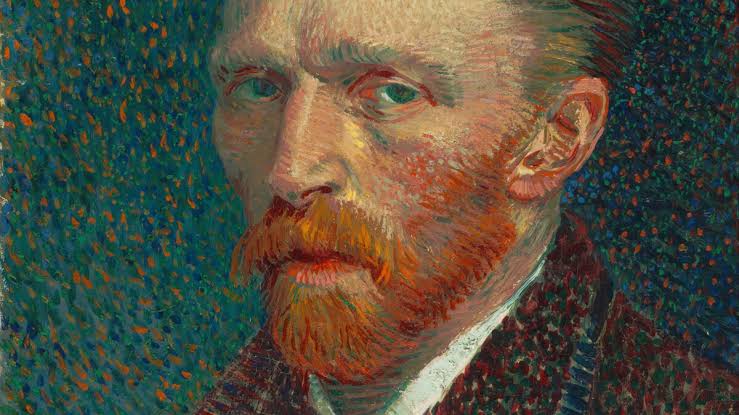
Why did Vincent van Gogh cut off his ear is one of the most searched questions in art history, and the true story is stranger and sadder than most people realize.
On December 23, 1888, in the French town of Arles, van Gogh suffered a violent mental breakdown that ended with him severing part of his own ear. The event has been retold, exaggerated, and mythologized for over a century.
Vincent van Gogh was a Dutch post-impressionist painter, born in 1853, who created roughly 900 paintings and 1,100 drawings in just a decade.
Before becoming an artist, he worked as an art dealer, a teacher, and even a preacher, struggling to find his true calling for years.
It was his brother Theo, an art dealer in Paris, who eventually encouraged him to commit fully to painting, a decision that changed art history forever.
In 1888, van Gogh moved to Arles in the south of France, hoping to build an artist’s colony centered around a rented home known as the Yellow House.
During his roughly 15-month stay in Arles, he painted more than 200 works, capturing the region’s light, people, and landscapes with striking intensity.
He dreamed of inviting fellow artists to live and work alongside him, turning the Yellow House into a shared creative community.
Van Gogh convinced fellow painter Paul Gauguin to join him in Arles, and Gauguin arrived in October 1888 to share the Yellow House.
At first, the two artists worked closely together, but tensions grew quickly, fueled by clashing personalities and very different artistic philosophies.
Gauguin favored bold, symbolic composition, while van Gogh painted more instinctively, and the two argued frequently about the very nature of art itself.
By late December, the friendship was collapsing. Gauguin announced he planned to return to Paris, a decision that deeply upset van Gogh.
Table 1: Timeline Leading to the Incident
| Date | Event |
|---|---|
| October 1888 | Paul Gauguin arrives in Arles to share the Yellow House |
| November–December 1888 | Tensions rise between van Gogh and Gauguin |
| December 23, 1888 | A heated argument erupts; van Gogh suffers a breakdown |
| Night of December 23 | Van Gogh severs part of his left ear |
| Early morning, December 24 | Police find van Gogh and take him to hospital |
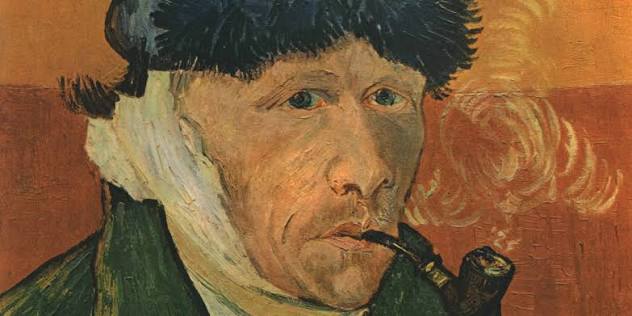
| January 1889 | Van Gogh paints Self-Portrait with Bandaged Ear |
According to Gauguin’s later account, van Gogh approached him with an open razor before stopping and running back toward the house.
That same night, alone in the Yellow House, van Gogh used the razor on himself, severing a large portion of his left ear.
For decades, the widely accepted account was that van Gogh only cut off the earlobe, based on a letter from fellow artist Paul Signac.
However, later research by historian Bernadette Murphy uncovered a doctor’s original drawing showing a clean incision across the base of the ear, not just the lobe.
That discovery confirmed van Gogh had, in fact, removed nearly the entire ear, correcting a myth that had persisted in art history for over a century.
After the incident, van Gogh wrapped the severed ear in cloth or paper and walked to a nearby brothel in Arles’s red-light district.
He handed the package to a woman, reportedly telling her to “guard this object carefully.” She fainted immediately upon seeing what was inside.
For years, the woman was identified as a prostitute named Rachel, but Murphy’s research later found no records of anyone by that name working there.
Table 2: Key Figures in the Van Gogh Ear Incident
| Person | Role in the Story |
|---|---|
| Vincent van Gogh | Dutch painter who severed his own ear during a breakdown |
| Paul Gauguin | Fellow painter sharing the Yellow House; argument preceded the incident |
| Theo van Gogh | Vincent’s brother and closest supporter throughout his life |
| Bernadette Murphy | Historian who corrected long-held myths about the ear incident |
| Paul Signac | Artist whose letter originally suggested only the lobe was cut |
| The woman at the brothel | Received the severed ear; later identified as a maid, not a prostitute |
Murphy’s later research suggested the woman’s real name may have been Gabrielle, working as a maid at the brothel to repay medical debts.
The morning after the incident, police found van Gogh at home and took him to the local hospital in serious condition.
Van Gogh later said he remembered nothing about the night itself and called the entire episode “purely a personal matter.”
Gauguin left Arles for Paris shortly afterward, and the two artists never saw each other again in person.
Historians and doctors have debated the true cause of van Gogh’s breakdown for over a century, and no single explanation has been universally accepted.
Most historians agree the episode reflects a severe mental health crisis, though the exact underlying condition remains debated among researchers today.
Van Gogh suffered recurring attacks in the following months, eventually accepting that he was dealing with an ongoing psychological condition.
Some researchers point to van Gogh’s heavy consumption of absinthe, a potent alcoholic drink, as a possible factor worsening his mental state.
While not considered the sole cause, alcohol use is often cited as one contributing element among several overlapping stressors.
Other historians view the act as a form of self-punishment, possibly tied to guilt over the deteriorating friendship with Gauguin.
Under this theory, the severed ear functioned less as random violence and more as an intense, desperate emotional message.
A more controversial theory, proposed by German researchers Hans Kaufmann and Rita Wildegans, suggests Gauguin himself injured van Gogh’s ear with a fencing sword.
According to this theory, the two men agreed to a “pact of silence” to protect Gauguin, with van Gogh taking the blame publicly.
This theory remains disputed and is not accepted by most mainstream historians, but it continues to generate discussion in art history circles.
Table 3: Comparing the Leading Theories
| Theory | Core Idea | Level of Acceptance |
|---|---|---|
| Mental health breakdown | Underlying psychological condition triggered the act | Widely accepted |
| Absinthe and alcohol influence | Heavy drinking worsened an existing crisis | Considered a contributing factor |
| Self-punishment or emotional cry for help | Act reflected guilt or desperation over the friendship | Commonly cited alongside mental illness |
| Gauguin fencing/pact of silence | Gauguin injured van Gogh; both agreed to hide the truth | Disputed, minority theory |
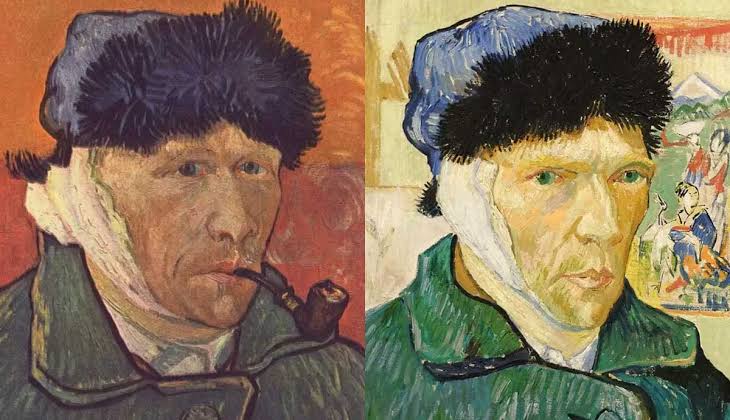
About a week after returning home from the hospital, van Gogh painted his now-iconic Self-Portrait with Bandaged Ear in January 1889.
The painting is a mirror image, showing a large bandage running from his temple down beneath his chin, quietly documenting his injury.
Today, the piece hangs in the Courtauld Gallery in London and remains one of the most recognized self-portraits in art history.
Just two months after the incident, van Gogh’s neighbors in Arles signed a petition asking authorities to have him removed and institutionalized.
He eventually agreed to enter Saint-Paul-de-Mausole, an asylum in Saint-Rémy-de-Provence, seeking stability and continued treatment for his condition.
Despite his struggles, van Gogh continued painting prolifically during this period, producing some of his most celebrated later works.
In 1890, not long after leaving the asylum, van Gogh died from a self-inflicted gunshot wound at the age of 37.
He was buried in the small cemetery of Auvers-sur-Oise, in northern France, alongside his brother Theo, who died just months later.
His mother lived to witness his growing posthumous fame, even though Vincent and Theo themselves never saw his global recognition unfold.
Vincent van Gogh sold only one painting during his lifetime, yet today his works are among the most valuable and recognized in the world.
Paintings like The Starry Night and the Sunflowers series remain instantly recognizable, appearing everywhere from museums to popular culture and merchandise.
The ear incident, while tragic, has become permanently linked to his public image, often overshadowing the depth of his actual artistic achievements.
One persistent myth is that van Gogh cut off only a tiny piece of his earlobe. Medical records instead confirm nearly the entire ear was removed.
Another myth claims the woman he gave the ear to was definitely a prostitute named Rachel, though later research disputes both her occupation and name.
A third widely repeated claim is that historians fully understand his motive. In reality, the exact reason remains debated to this day.
Historians believe a severe mental health breakdown, following a heated argument with Paul Gauguin, led to the act on December 23, 1888.
Later research confirmed he removed nearly his entire left ear, not just the lobe, as long believed.
He gave the severed ear to a woman at a nearby brothel, long identified as Rachel but later linked to a woman named Gabrielle.
A disputed theory suggests Gauguin injured van Gogh during a fight, but most historians still credit the injury to van Gogh himself.
He was hospitalized in Arles, later entering the Saint-Paul-de-Mausole asylum for continued psychiatric care.
No, van Gogh claimed he remembered nothing from that night, calling the event “purely a personal matter.”
He painted Self-Portrait with Bandaged Ear in January 1889, showing his injury shortly after leaving the hospital.
Yes, Gauguin left Arles for Paris shortly afterward, and the two artists never met again.
Van Gogh died in 1890 from a self-inflicted gunshot wound at the age of 37, two months after leaving the asylum.
Partly. A woman did receive the ear, but later research suggests she worked as a maid, not a prostitute, contradicting the popular version.
The story of why Vincent van Gogh cut off his ear is far more complicated than the simplified legend most people know. What began as a fractured friendship with Paul Gauguin ended in a violent mental health crisis that changed the course of van Gogh’s life.
Modern historical research has corrected key details, from how much of the ear was actually removed to who really received it that December night. Theories range from a psychological breakdown and heavy absinthe use to more controversial claims involving Gauguin himself.
What remains certain is that the incident marked a turning point, one closely followed by institutionalization and, eventually, his death in 1890. Understanding this history with accuracy, rather than myth, helps honor both the tragedy of van Gogh’s struggles and the brilliance of the art he left behind.