
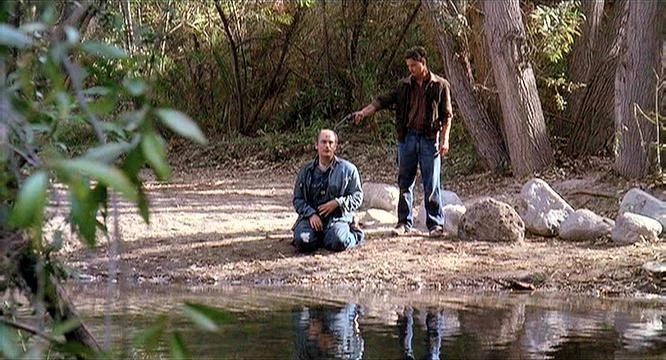
Why Did George Kill Lennie? is one of the most searched questions about John Steinbeck’s Of Mice and Men.
George shoots Lennie at the end of the novel not out of hatred, but out of love, loyalty, and a desperate need to protect his friend from a far worse fate.
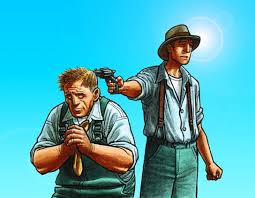
In Chapter 6, Lennie accidentally kills Curley’s wife by shaking her too hard when she screams. He panics and runs to the riverbank — the same place George told him to hide if he ever got into trouble.
George finds Lennie there before Curley and the angry mob do. He knows what is coming. He steals Carlson’s gun, heads to the river, and shoots Lennie in the back of the head while Lennie is calm and happy — still dreaming about their little farm and the rabbits.
It is one of the most emotional endings in American literature, and it raises a question that students and readers still debate today: was George right?
George kills Lennie for three core reasons:
| Reason | Explanation |
|---|---|
| To protect Lennie from the mob | Curley wanted to shoot Lennie in the gut — a slow, painful death |
| To spare him from a life of suffering | Prison or an asylum in the 1930s would have been brutal for someone like Lennie |
| Because of love and loyalty | George was the only person who truly cared about Lennie |
George did not kill Lennie because he hated him, was tired of him, or gave up on him. He killed him because he loved him — and that is the tragedy at the heart of the novel.
Lennie Small is a large, physically powerful man with a child-like mind. He cannot understand social rules, does not control his own strength, and relies completely on George Milton to navigate the world.
Lennie loves soft things — mice, puppies, and fabric — but his strength causes him to accidentally hurt or kill the things he wants to protect. This pattern runs through the entire novel and foreshadows the tragic ending from the very first chapter.
George has been looking after Lennie since Lennie’s Aunt Clara died. He promised her he would take care of him. That promise weighs on George every single day of the story.
Understanding the lead-up is essential to understanding why George made the choice he did.
Before arriving at the ranch, Lennie and George had to flee a town called Weed because Lennie grabbed a woman’s dress and would not let go. He was not being violent — he just wanted to touch something soft — but she screamed and the whole town came after them.
This pattern shows Lennie cannot stop himself. His actions come from innocence, not cruelty, but the consequences are the same.
At the ranch, Curley’s wife lets Lennie stroke her hair because she likes the attention. When she tries to pull away, Lennie panics and holds on tighter. When she screams, he shakes her to stop the noise — and accidentally breaks her neck.
He does not realize what he has done until it is too late. He runs to the river, confused and frightened, waiting for George.
Curley is furious. His wife is dead, and the same man who crushed his hand is responsible. He does not want justice — he wants revenge. He tells the men he plans to shoot Lennie in the stomach, which would mean a slow and agonizing death.
George hears this. He knows what is coming. He takes Carlson’s Luger pistol and goes to find Lennie first.
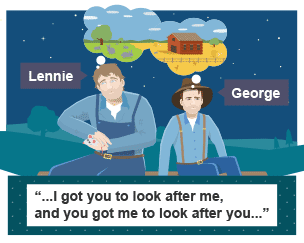
Curley was not going to let Lennie die quickly. He said explicitly he wanted to shoot him in the guts. George could not let that happen to someone he loved.
A quick, painless death at the back of the head — while Lennie was relaxed and happy — was the most humane option available.
In the 1930s, people with intellectual disabilities who committed crimes were not treated with care or compassion. They were thrown into jails or asylums where conditions were brutal and dehumanizing.
Lennie had no concept of what he had done or why people were angry. Locking him in a cell or an institution would have meant a lifetime of fear, confusion, and suffering with no understanding of why.
Lennie was powerful but had no survival instincts in a social sense. He could not reason, plan, or talk his way out of a situation. If he had run and been cornered, he likely would have fought back instinctively — possibly killing more people — which would have made everything worse for him.
George knew the only way to end this with any dignity was to do it himself.
Earlier in the novel, Candy lets Carlson shoot his old dog — a dog Candy had raised from a pup. Candy deeply regrets it. He tells George, “I ought to of shot that dog myself. I shouldn’t ought to of let no stranger shoot my dog.”
This moment is critical. It tells George that if the same situation ever came with Lennie, he needed to be the one to do it. Not Curley. Not a stranger. Him.
George does not sneak up on Lennie or rush the moment. He sits with him. He lets Lennie talk. He tells him the story of the farm they are going to have — the rabbits, the land, the freedom.
Lennie dies picturing something joyful. That is a gift George gave him. That is love.
Steinbeck sets up the ending long before it happens. The mercy killing of Candy’s dog in Chapter 3 is a direct parallel to what George does to Lennie in Chapter 6.
| Element | Candy’s Dog | Lennie |
|---|---|---|
| Killed by | Carlson (a stranger) | George (his closest friend) |
| Reason | Old, suffering, no quality of life | Facing torture, prison, or brutal death |
| Method | Shot in the back of the head | Shot in the back of the head |
| Regret | Candy says he should have done it himself | George is devastated but knows it was right |
The parallel is not accidental. Steinbeck uses it to frame George’s act as mercy — not murder. The same compassionate logic that made readers accept Carlson’s act applies to George’s.
Steinbeck was writing about more than two friends. George killing Lennie represents the destruction of the American Dream itself.
Throughout the novel, the dream of owning a small farm is what keeps George and Lennie going. It is their hope. When Lennie dies, that dream dies with him — because Lennie was the emotional heart of it.
George will now be alone, like every other ranch worker. He will drink, drift, and survive without purpose. The ending suggests that for the poorest and most vulnerable people in America, lasting friendship and lasting hope are equally out of reach.
The novel is set in the 1930s during the Great Depression. Men like George and Lennie had nothing — no job security, no savings, no social safety net. Their only asset was each other.
Steinbeck shows how a cruel and indifferent world strips people of everything — including the people they love.
Mercy is one of the novel’s central themes. George’s act is an act of mercy in a world that offers very little of it. Slim, one of the most respected characters in the book, tells George afterward: “You hadda, George. I swear you hadda.”
Even the moral authority of the novel agrees — George had no better option.
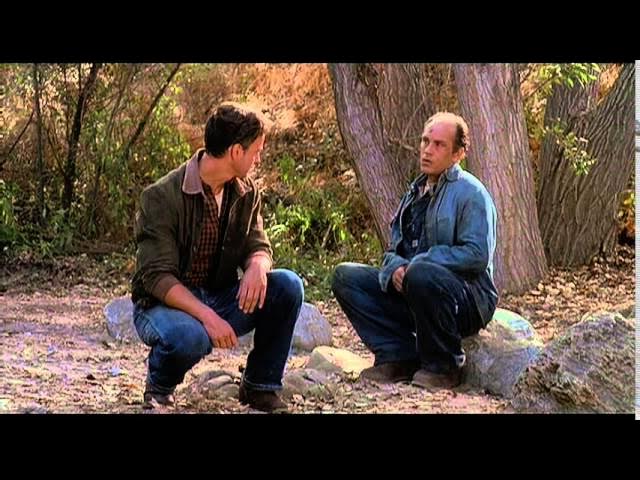
This is a debate that appears in nearly every classroom that reads Of Mice and Men. Here is a fair look at both arguments.
Curley would have made Lennie’s death brutal and slow. A 1930s asylum would have been terrifying for someone with Lennie’s mind. There was no other realistic option that protected Lennie from suffering. George acted out of love, not convenience. Slim — the most respected voice in the novel — agreed with the decision.
They had escaped before (from Weed) and could have run again. George made a unilateral decision about Lennie’s life. Some argue that Lennie deserved the chance to face consequences. The friendship made George’s freedom more important, which may have influenced his choice.
Steinbeck does not give a clean answer. He wants readers to sit with the discomfort. That is the point.
George and Lennie are unusual in a world where ranch workers are lonely and isolated. Most men have nothing and no one. George and Lennie have each other — and that bond is what makes the ending so devastating.
The farm, the rabbits, the land — it is all a symbol of hope for a better life. The dream is what kept Lennie obedient and George motivated. Its death with Lennie signals that for men like them, the dream was always out of reach.
Almost every character in the novel is lonely — Candy, Crooks, Curley’s wife, George. The killing of Lennie removes the one thing that set George apart from all the other drifters: a companion.
Lennie has physical power but no social power. George has social awareness but no financial power. Neither of them can change the system they live in. The ending reflects the powerlessness of the poor and marginalized in 1930s America.
Steinbeck draws a clear line between the violence of the mob (brutal, vengeful) and George’s act (compassionate, controlled). Both result in Lennie’s death — but only one comes from love.
George kills Lennie in Chapter 6, the final chapter of Of Mice and Men.
The chapter opens at the same riverbank where George and Lennie camped at the very beginning of the novel — a deliberate structural choice by Steinbeck that creates a sense of painful full-circle closure.
George steals Carlson’s Luger pistol while the other men are still in the barn with Curley’s wife’s body. He goes north toward the river, pretending Lennie went south to throw the others off.
He finds Lennie at the river. Lennie is scared and confused. George sits beside him and tells him to look out over the water. He begins telling the story of the farm — the one they have told each other hundreds of times.
As Lennie looks out happily and peacefully, picturing the rabbits and the land, George raises the gun and shoots him in the back of the head.
He does it while Lennie is calm. While Lennie is happy. That detail is everything.
Here are key quotes from the novel that directly connect to George’s decision:
Slim (after the shooting): “You hadda, George. I swear you hadda.” This is the novel’s moral verdict — even the wisest character confirms George had no other choice.
Candy (about his dog): “I ought to of shot that dog myself.” This plants the idea in George’s mind that he must be the one to end Lennie’s life, not a stranger or an enemy.
George (to Lennie before shooting): He describes the farm, the house, the garden, the rabbits. He gives Lennie the dream one last time.
Curley (about Lennie): “I’ll shoot ‘im in the guts.” This confirms what Lennie would face if George did not act first.
| Chapter | Key Event |
|---|---|
| 1 | George and Lennie camp at the river; George tells Lennie to come back here if trouble starts |
| 2 | They arrive at the ranch; meet Curley, his wife, Slim, Candy |
| 3 | Carlson shoots Candy’s dog; Lennie crushes Curley’s hand |
| 4 | Crooks, Lennie, Candy, and Curley’s wife have tense conversation in the barn |
| 5 | Lennie accidentally kills his puppy, then accidentally kills Curley’s wife |
| 6 | George finds Lennie at the river and shoots him to save him from the mob |
Of Mice and Men is one of the most assigned novels in American high schools and middle schools. It appears on the GCSE reading list in the UK. Students encounter it at ages 12–16 and are often asked to write essays on whether George was justified.
The question “why did George kill Lennie” is also popular because the answer is not simple. It forces students to think about mercy, morality, loyalty, and the limits of friendship — topics that do not have clean, comfortable answers.
That complexity is exactly what Steinbeck intended.
If you want to explore this topic deeper, these terms are directly connected:
Running was not a real option — Curley’s mob would have caught Lennie, and Lennie could not protect himself in a chase. George chose a peaceful death over a violent one.
No. George was shaking when he pulled the trigger. He did not want to do it — he felt it was the only way to spare Lennie from something worse.
Yes. George chose a quick, painless death while Lennie was calm and happy, rather than letting him face torture, lynching, or a brutal asylum.
Lennie is thinking about the farm — the rabbits, the land, and a peaceful life. George made sure his last thoughts were joyful.
No one legally does, but Slim — the most respected man on the ranch — tells George afterward, “You hadda, George. I swear you hadda,” validating his choice.
Candy regretted letting a stranger shoot his dog. That regret taught George that he had to be the one to end Lennie’s life — not Curley or any stranger.
Curley wanted to shoot him in the gut (a slow, painful death). The alternative was prison or a 1930s mental institution, both of which would have been terrifying for Lennie.
Steinbeck frames it as mercy, not murder. George’s motive was compassion, and the act is presented in moral parallel with Carlson’s killing of Candy’s dog — which readers accept as humane.
George kills Lennie in Chapter 6, the final chapter of Of Mice and Men, at the same riverbank where the novel begins.
Yes. George is visibly devastated. Slim has to lead him away. The final image of the novel is George walking off alone — his friendship, his dream, and his purpose all gone.
Why did George kill Lennie is a question with no easy answer — and that is exactly what John Steinbeck intended. George was not a villain.
He was a loyal friend trapped in an impossible situation, watching the only person he loved in the world heading toward a brutal and terrifying death.
He chose the one option that gave Lennie peace: a quick, painless end while Lennie’s mind was full of rabbits and farmland and hope.
The act is not a betrayal. It is the final and most complete expression of George’s love for Lennie.
Steinbeck uses it to show readers the cruelty of a world that leaves the most vulnerable people with no good options.
The tragedy is not just that Lennie dies — it is that George had to be the one to do it, and that after it was done, he was completely and permanently alone.
That loneliness is the true ending of the story. And it is the one thing George could never escape.