
Why are cops called 12 is one of the most searched slang questions in America right now, and the answer is more layered than most people expect.
The term “12” is used as a street-level warning that police are nearby, shouted to alert others to law enforcement presence in the area.
It shows up constantly in rap lyrics, social media posts, and protest chants — yet its exact origin has been debated for decades.
In everyday street slang, “12” means police officers. When someone shouts “12!” it is a coded warning that cops are approaching or already in the area.
The term functions the same way as “5-0,” “po-po,” or “the feds” — it gives people a quick heads-up without saying the word “police” out loud. Speed and discretion are the whole point.
“12” is not considered an official or professional term. It lives entirely in street culture, music, and social media, and its meaning is understood instantly by anyone familiar with American urban slang.
There is no single confirmed origin for the term “12.” Linguists, pop culture historians, and law enforcement analysts generally point to three major theories, each with real evidence behind it. Most experts believe all three contributed to the same word gaining traction over time.
Here is a breakdown of all the major theories side by side:
| Theory | Origin Era | Region | Strength of Evidence |
|---|---|---|---|
| Police radio code 10-12 | 1960s–1970s | Nationwide | Strong — widely documented |
| TV show Adam-12 | 1968–1975 | National pop culture | Strong — parallels “5-0” theory |
| Atlanta narcotics unit numbers | 1970s–1980s | Atlanta, Georgia | Moderate — supported by rap lyrics |
| ACAB / 1312 acronym | 2010s | Protest culture | Weak — math does not fully add up |
| 9+1+1 = 12 | Unknown | Internet | Debunked — adds up to 11, not 12 |
The most widely accepted theory traces “12” directly to the 10-code system used in law enforcement radio communication. In many U.S. police departments, the code “10-12” means “visitors are present” or “standby, there are bystanders in the area.”
When officers broadcasted “10-12,” it signaled that civilians — or potentially dangerous individuals — were nearby. People listening to police scanners in high-crime neighborhoods picked up on this code and began using it in reverse.
Instead of it meaning “civilians are present” from the officer’s perspective, it became “cops are present” from the street perspective. Shouting “12!” became a fast way to warn others that law enforcement was close — directly derived from what they heard on the scanner.
This theory is compelling because the 10-code system was in heavy use during the 1960s and 1970s, precisely the era when this slang is believed to have originated. It also explains why the term functions purely as a warning rather than an insult.
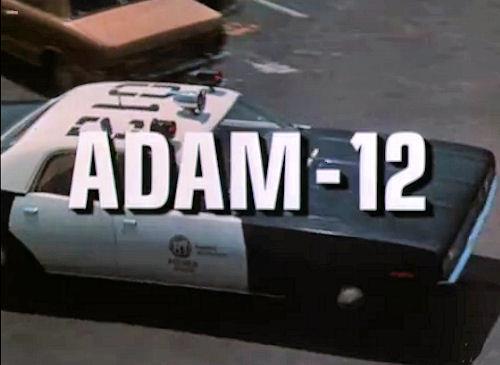
Another strong theory points to Adam-12, a police procedural drama that aired on NBC from September 21, 1968, to May 20, 1975. The show followed two LAPD officers — Pete Malloy and Jim Reed — as they patrolled the streets of Los Angeles in their patrol unit called “1-Adam-12.”
Every episode opened with the radio call sign “1-Adam-12, 1-Adam-12, see the man…” The phrase became deeply embedded in pop culture memory. People who grew up watching the show or hearing it in the background would have associated the number 12 with police patrol.
This theory gains major credibility when compared to the origin of “5-0.” The slang term “five-oh” or “5-0” refers to police and comes directly from Hawaii Five-O, another cop show from almost exactly the same era (1968 to 1980). Both shows aired during the same television generation, and both produced lasting slang nicknames for police officers that are still in use today.
If “5-0” can survive 50 years from a TV show, so can “12.”
A third theory places the origin specifically in Atlanta, Georgia. According to this account, the Atlanta Police Department’s narcotics enforcement officers — the drug unit — were assigned to radio designations and unit numbers beginning with “12” during the 1970s and 1980s.
Drug dealers and street lookouts in Atlanta began shouting “12!” as a coded alert when they spotted these officers approaching. The goal was to give everyone time to hide or dispose of drugs before the narcotics unit arrived.
This theory has specific cultural support. Migos, one of the most famous rap groups in history, are from Gwinnett County just outside Atlanta. Their 2013 song released on the mixtape Y.R.N. (Young Rich Niggas) used “12” specifically in the context of a narcotics raid — with lyrics referencing throwing drugs because the narcotics cops were outside. Atlanta rappers using the term in that specific context strongly supports this local origin story.
Atlanta has been the birthplace of trap music and Southern hip-hop. When Atlanta artists speak, the rest of the country listens and adopts the language.
A more controversial theory links “12” to the protest-era slogan ACAB, which stands for “All Cops Are Bastards.” Some activists encode this phrase numerically as 1-3-1-2, where 1=A, 3=C, 2=B. The theory suggests people abbreviated “1312” further to just “12.”
This theory has significant weaknesses. For the math to work, “13” would represent “All Cops” and “12” would represent just “Bastards.” That is not a clean or sensible abbreviation. Most linguistics researchers who study police slang dismiss this as a backronym — a story invented after the fact to explain a term that already existed.
The ACAB theory likely gained traction during the 2014 Ferguson protests and the 2020 Black Lives Matter demonstrations, when “12” appeared on protest signs and graffiti nationwide alongside ACAB language. But protest-era adoption does not necessarily mean protest-era origin.
This is the internet’s favorite theory and also its most mathematically embarrassing one. Some people claim that “12” comes from the digits of 911 adding together: 9 + 1 + 1. But 9 + 1 + 1 = 11, not 12.
This theory circulated widely on social media and was repeated enough times to seem credible. It has been definitively debunked simply by doing the arithmetic. No serious linguist or cultural historian includes it as a genuine origin.
Whatever the original source, there is no debate about what turned “12” from regional street slang into a nationally recognized term: hip-hop music and specifically Southern rap.
Atlanta became the center of trap music in the 1990s and early 2000s. Artists from the region built their music around the realities of street life, including constant police presence and narcotics enforcement. The word “12” was already embedded in Atlanta street culture, and when those artists broke into the national mainstream, the word traveled with them.
The 2013 Migos track on Y.R.N. was the tipping point. It brought “12” to a mainstream audience that had never heard the term used this way before. The meaning was immediately clear from context — throw the drugs away because the police are outside. Listeners across the country adopted the term almost overnight.
Other artists and labels from the South referenced “12” in the same period, reinforcing the meaning through repetition. Gucci Mane, Young Jeezy, and artists in their orbit used similar coded language throughout their discographies.
By the time the Ferguson protests erupted in 2014, “12” had already been in heavy pop culture circulation for at least a year, which is why it appeared so readily on protest signs and chants. Hip-hop had already primed the audience.
“12” is not used equally across the United States. It is strongest in the South, particularly Georgia, and has spread from there through music, social media, and migration patterns.
| Region | Most Common Police Slang | Is “12” Used? |
|---|---|---|
| Atlanta, Georgia | 12 | Primary term |
| Southern United States | 12, 5-0, po-po | Frequently used |
| New York City | Boys, blue, NYPD | Rarely |
| Baltimore, Maryland | 5-0, Knockers | Occasionally |
| Los Angeles, California | 5-0, Jakes, pigs | Sometimes |
| Chicago, Illinois | Twelve, one-time | Increasingly |
| United Kingdom | Feds, filth, bobbies | Not used |
| Canada / Australia | Different regional terms | Not used |
The geographic concentration of “12” usage confirms the Atlanta narcotics theory has strong merit. The slang is densest where its supposed origin is, and thinner the further you get from the South.
American English has produced dozens of slang terms for police officers over more than two centuries. “12” is one of the newer major entries but sits alongside some deeply historic terms.
| Slang Term | Estimated Origin | Origin Source |
|---|---|---|
| Cop | Early 1800s | From “copper” — the copper buttons on uniforms |
| Pig | 1800s England | General insult for authority figures |
| The Fuzz | 1920s–1950s | UK slang, possibly from fuzzy police hats |
| The Heat | 1930s–1940s | Criminal underworld slang |
| Five-O / 5-0 | 1968 (TV) | Hawaii Five-O television show |
| Po-Po | 1990s | Reduplication of “police,” Southern US origin |
| 12 | 1960s–1980s | Radio code, Adam-12, Atlanta narcotics |
| One-Time | 1970s–1990s | Warning slang in West Coast cities |
| Jake | Unknown | Older urban slang for detective |
| The Boys in Blue | 19th century | Reference to blue police uniforms |
“12” is notable for being one of the few major police slang terms driven primarily by numeric code rather than physical description or insult. It shares that quality only with “5-0” and “187” (the California Penal Code for homicide, used in rap to reference murder).
Understanding “12” in hip-hop requires knowing that it is almost always used as a warning rather than a direct insult. In rap songs, “12” typically appears in one of three contexts.
The first is a street alert: “Watch out, 12 is on the block” — meaning law enforcement is nearby and everyone should act accordingly.
The second is a narrative of conflict or confrontation with police: “Running from the 12” or “Got pulled over by the 12” — describing an interaction with police from the artist’s perspective.
The third is a statement of defiance or social commentary: “F*** 12” — expressing hostility toward police as an institution, often rooted in experiences of over-policing, racial profiling, and distrust of law enforcement in marginalized communities.
None of these uses necessarily indicate criminal intent. Linguists who study hip-hop consistently note that coded language in rap serves both practical street functions and broader artistic and political purposes.
The term “12” gained enormous visibility during the 2014 Ferguson protests following the death of Michael Brown, and again during the 2020 Black Lives Matter protests following the death of George Floyd.
Protesters used “12” on signs, in chants, and in social media posts as both a warning and a political statement. Seeing “F*** 12” spray-painted on walls or written on protest signs reflected the frustration of communities that felt over-policed and under-protected.
For many people who encountered the term for the first time during these protests, “12” arrived loaded with political weight. But the term predated these movements by decades — it was the protest moment that introduced “12” to older, more mainstream audiences who had not been following hip-hop closely.
Simply using the word “12” to refer to police is not illegal anywhere in the United States. It is slang — protected speech under the First Amendment.
However, using the term in a context specifically designed to obstruct justice could potentially create legal complications. For example, shouting “12!” to warn someone actively fleeing police during an ongoing investigation could potentially be interpreted as interference depending on the specific circumstances and jurisdiction.
The distinction is between casual speech — which is always legal — and active interference with law enforcement operations, which can carry consequences regardless of the specific words used.
Most law enforcement officers are aware of the term “12” and most treat it as background noise — the same way previous generations of officers shrugged at being called “5-0” or “the heat.”
Some police departments have begun incorporating urban slang dictionaries into training programs for officers working with younger populations in urban communities. Recognizing terms like “12,” “one-time,” and other coded language helps officers better understand community dynamics and interpret conversations they encounter on patrol or in schools.
A small number of officers have engaged with the term humorously on social media, acknowledging it as part of the cultural landscape. As one retired officer put it: “Call me whatever you want. It tells me more about how you feel about police than it tells me anything about myself.”
The broader conversation around police slang terms always connects back to the underlying relationship between law enforcement and the communities they serve — particularly communities of color in urban areas where over-policing has been a documented and ongoing concern.
The use of numbers as slang is a fascinating linguistic phenomenon. Numbers carry several advantages over words as coded communication tools.
Numbers are faster to say. In a situation requiring an immediate warning, “12!” takes a fraction of a second. “Police are coming!” takes several seconds.
Numbers are more opaque to outsiders. Someone unfamiliar with the code hears “12” and has no idea what it means. The code only works if you already know the system.
Numbers feel neutral on the surface. Unlike “pigs” or “the fuzz,” “12” does not immediately telegraph an insult. It can be used in conversation, in song lyrics, or in text without triggering obvious alarm to uninitiated listeners.
This is why numeric codes — borrowed from actual police radio systems — became such effective street slang. They used the authorities’ own communication system against them, flipping the meaning while keeping the number.
Hip-hop was the primary vehicle, but “12” has appeared in other pop culture formats as well.
The 1995 film Friday, starring Ice Cube, is frequently cited as one of the early mainstream film uses of coded police slang rooted in the same cultural tradition that produced “12.” The film depicted neighborhood life where police presence was constant and coded language was a natural survival skill.
Television shows set in Southern urban environments — particularly those depicting street culture in Atlanta or other major Southern cities — have used “12” in scripts to add authenticity. Reality television, especially shows set in the South, has also brought the term to broader audiences.
On social media platforms like Instagram, TikTok, and Twitter/X, “12” appears in comments, captions, and videos continuously. It is one of the few pieces of street slang that successfully crossed from niche regional use to universal recognition through the internet, which has accelerated slang adoption faster than any previous era.
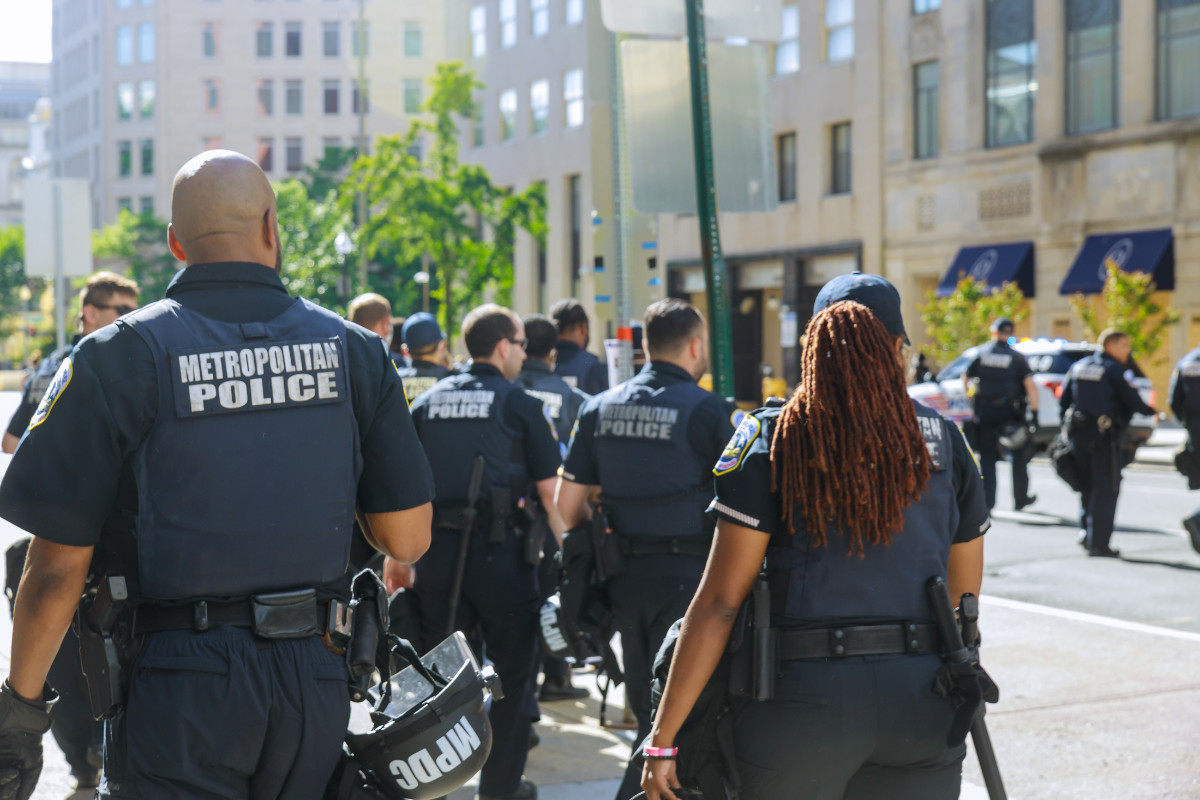
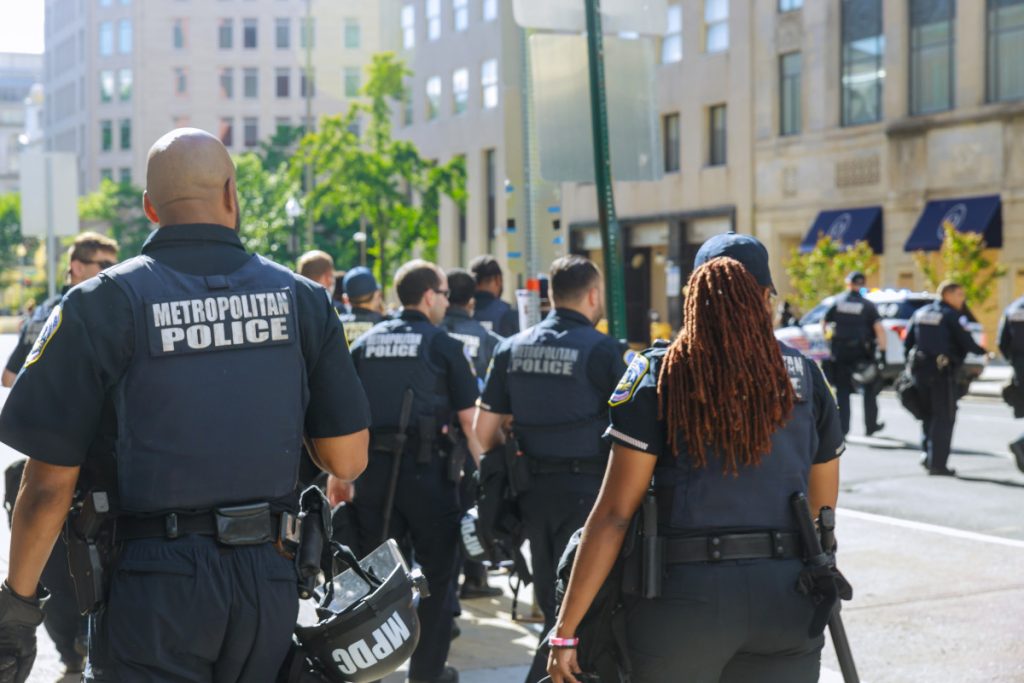
WASHINGTON D.C., USA – MAY 31, 2020: District of Columbia Metropolitan Police block road to White House during of protests against the death of George Floyd in Washington D.C.
Slang terms come and go rapidly, especially in the social media era. Most terms peak and disappear within a few years. “12” has demonstrated remarkable staying power and shows no signs of fading.
There are several reasons for this. First, the term is deeply embedded in the catalog of multiple generations of hip-hop music, making it permanently accessible through streaming platforms. Second, it was amplified by major national protest movements that gave it political significance beyond its street origins. Third, it is genuinely useful — a short, fast, effective warning code that serves a practical purpose.
Terms that are both culturally meaningful and practically functional tend to survive. “12” is both.
Cops are most likely called 12 because of the police radio code “10-12,” which signals that visitors or bystanders are present in an area. The term was also popularized by the TV show Adam-12 and Atlanta’s narcotics street culture, then spread nationwide through hip-hop music.
The term most likely originated in the 1960s and 1970s from a combination of the 10-12 police radio code, the TV show Adam-12, and Atlanta drug culture where narcotics officers wore unit numbers starting with “12.”
The term is not universally offensive. It is primarily used as a warning or neutral reference in hip-hop and street culture. Some officers take it personally, while most treat it as ordinary slang similar to “5-0” or “the heat.”
This is one of the strongest theories. Adam-12 aired from 1968 to 1975 and the patrol unit “1-Adam-12” became embedded in pop culture, similar to how Hawaii Five-O produced the slang term “5-0” for police.
Atlanta rappers use “12” because the term is deeply rooted in Atlanta street culture, where it specifically referred to the narcotics enforcement unit. Trap artists like Migos brought the term into the mainstream through lyrics referencing drug raids.
No. Using the word “12” as slang for police is protected free speech. Only using it to actively obstruct an ongoing law enforcement operation could potentially create legal issues depending on context and jurisdiction.
“F*** 12” is an expression of anger or defiance toward law enforcement, rooted in communities with histories of over-policing and racial profiling. It was popularized by Migos in 2013 and became a widespread protest phrase after 2014.
No. “12” is most heavily used in the Southern United States, especially Atlanta and Georgia. In Baltimore, New York, and Los Angeles, other terms like “5-0,” “the boys,” or “Knockers” are more common.
Other common terms include 5-0 (from Hawaii Five-O), po-po, the feds, the heat, the fuzz, Jakes, one-time, and pigs. Each term has its own regional strength and cultural history dating back decades.
“12” became mainstream around 2013 when Migos released their mixtape Y.R.N. and the track using the term went viral. It reached full national saturation during the 2014 Ferguson protests and the 2020 Black Lives Matter movement.
Why are cops called 12 does not have a single clean answer, and that is part of what makes the term so fascinating.
The most credible explanation is that “12” grew from the 10-12 police radio code used in the 1960s, was reinforced by the iconic TV show Adam-12, took root in Atlanta’s narcotics street culture, and then exploded into national consciousness through trap music and social media.
Each layer added something real, and together they created one of the most recognizable pieces of American slang in modern history. In 2026, “12” shows no signs of fading.
It lives in streaming music catalogs, protest archives, social media, and everyday conversation in cities across the country. Whether you see it as a neutral warning, a cultural artifact, or a political statement, understanding why cops are called 12 means understanding the complicated, creative, and constantly evolving relationship between American communities and the law.