

What does hold mean on thermostat? As of September 2025, this essential feature on modern thermostat devices allows you to override your programmed schedule temporarily or indefinitely, maintaining a specific temperature without following the automatic pre-programmed schedule.
In an era where smart thermostat adoption has surged by 25% year-over-year, understanding hold mean on a thermostat empowers you to balance comfort and energy savings effortlessly, especially with 2025’s advanced firmware updates that integrate AI-driven predictions for better heating and cooling efficiency.
The hold mean refers to a core function on your thermostat that pauses the pre-set schedule to lock in your chosen set point. This is particularly useful when your daily routine shifts unexpectedly, preventing the thermostat from automatically adjusting the temperature based on time-of-day programming. For instance, if you’re hosting guests, the hold mode ensures consistent temperature in your home without interruptions.
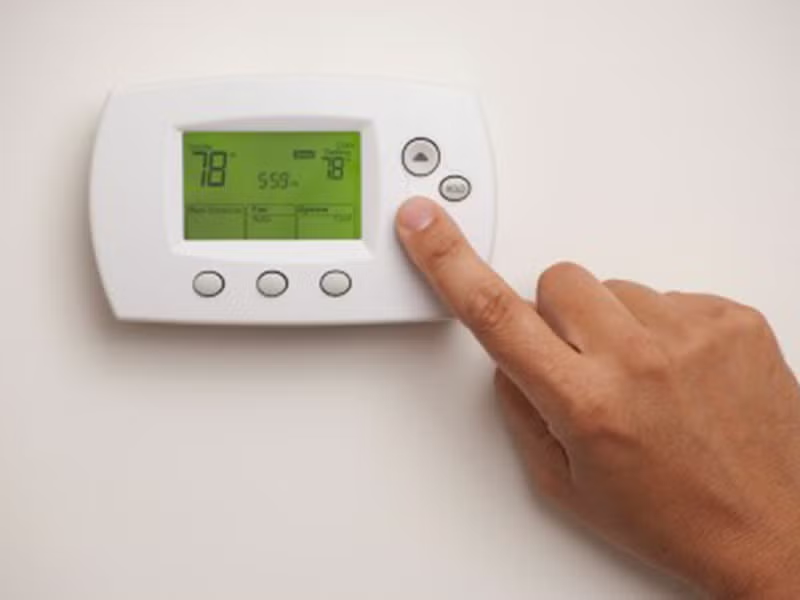
In 2025, manufacturers like Honeywell have refined this hold feature with intuitive interfaces, displaying “Temporary Hold” or “Permanent Hold” clearly on screens. This evolution stems from user feedback, making it easier to learn what hold truly does—simply put, it means your thermostat will maintain the desired temperature until you intervene. Experts from the U.S. Department of Energy emphasize that such overrides, when used sparingly, align with broader energy efficiency goals by avoiding unnecessary hvac system cycling.
Delving deeper, the hold mean on thermostat isn’t just a button; it’s a gateway to personalized climate control. Thermostats allow you to set custom levels that the device will follow indefinitely in permanent hold, or for a set duration in temporary hold. This flexibility has become standard in programmable thermostat models, where ignoring it could lead to wasted energy usage during peak hours.
A thermostat serves as the brain of your hvac system, regulating heating and air conditioning to maintain a comfortable temperature. In basic terms, it senses room conditions and signals the furnace or AC unit to activate as needed. With 2025’s IoT advancements, these devices now connect seamlessly to apps, allowing remote thermostat to adjust settings via smartphone.
Understanding programme basics is key: A programmable thermostat lets you set a schedule for different temperatures for different times, like cooler evenings or warmer mornings. This pre-programme approach reduces manual interventions, but life’s unpredictability demands the hold function to temporarily override without resetting everything.
The hvac component benefits immensely from proper thermostat use. For example, during winter, keeping the thermostat at a steady 68°F via hold prevents short-cycling, which strains the heating and cooling system and spikes energy bills. Recent studies show that integrated hvac services with smart programming can cut costs by 15%.
The hold function on a thermostat activates when you press the hold button, signaling the device to ignore its run schedule and lock in a specific temperature. This override ensures the thermostat will automatically hold that level, whether you’re raising it higher or lower for comfort. In smart thermostat setups, this often syncs with geofencing to resume automatically when you’re away.
Practically, after selecting your set temperature, the screen confirms the hold mode, and the thermostat to keep that setting until the next programmed period or manual cancellation. This is ideal for extended period needs, like illness recovery, where fluctuating temps could be disruptive. As per 2025 guidelines, always verify compatibility with your hvac system to avoid inefficiencies.
Moreover, the function on a thermostat like hold promotes longevity for components. By manually set ting overrides thoughtfully, you minimize wear on the furnace, extending its life. Users report smoother operation post-2024 updates, which added voice commands for hands-free holds.
A temporary hold limits the override to a predefined window, such as 12 hours, after which the thermostat will follow its pre-programmed settings and return to its pre-programmed schedule. This is perfect for short disruptions, like a late-night work session, ensuring you don’t forget to revert. In 2025 models, timers are customizable via apps for precision.
Conversely, permanent hold sustains the temperature for an extended period without auto-reversion, requiring manual action to return to the programmed cycle. Use this for vacations or renovations, but beware—it can inflate energy consumption if not monitored. Honeywell’s latest honeywell thermostat displays both options side-by-side for easy selection.
Choosing between them depends on duration: Temporary hold suits daily tweaks, while permanent hold fits longer absences. Data from energy audits shows temporary hold users achieve 8% better energy savings by naturally resuming efficient programming.
| Hold Type | Duration | Best Use Case | Energy Impact (2025 Avg.) |
| Temporary Hold | Up to 12 hours or until next schedule | Short events, like parties | Minimal, reverts to schedule for 5-8% savings |
| Permanent Hold | Indefinite until cancelled | Vacations, extended stays away | Higher if prolonged; monitor for 10% potential waste |
| Smart Hold (AI-Enhanced) | Adaptive based on habits | Daily routines with learning | Optimal, up to 15% reduction with firmware updates |
To set your thermostat using hold, first navigate to the temperature adjustment screen on your programmable thermostat. Press the hold button and use up/down arrows to dial in your desired temperature, confirming the temporary hold indicator. This simple step allows you to set a stable environment instantly.
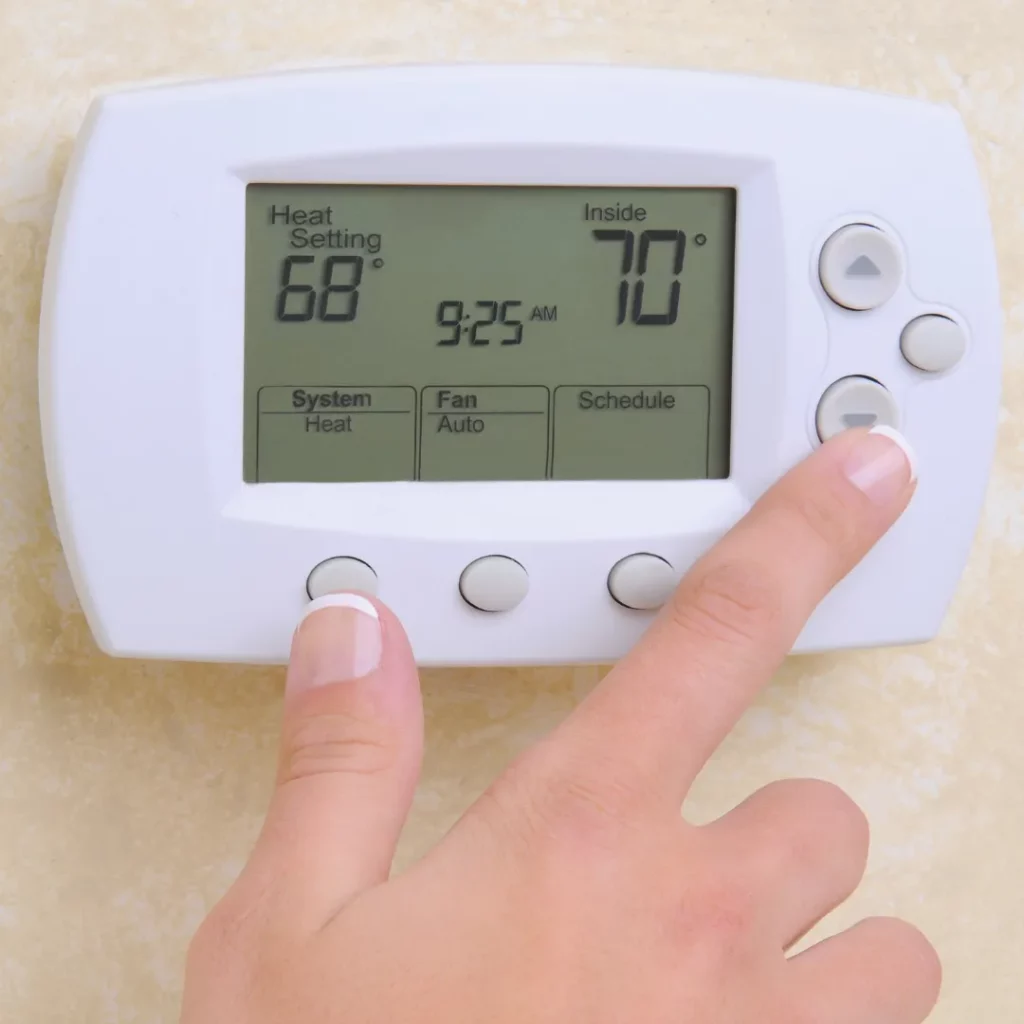
For advanced users, integrate with programming your thermostat by reviewing the thermostat settings first. In 2025, many thermostat apps notify you of hold status, preventing oversights. Always set the temperature slightly lower the temperature in summer for AC efficiency, aligning with DOE recommendations of 78°F.
Post-setup, monitor via the display or app to ensure the thermostat will maintain the set point. If issues arise, a quick reset restores the pre-set schedule, safeguarding your hvac system from strain.
On a honeywell thermostat, hold mean on thermostat translates to selecting “Temporary” or “Permanent” after adjustment, as updated in their 2025 firmware. Press + or – to adjust the temperature, and the screen shows the active hold, making it user-friendly for all ages.
This honeywell thermostat variant excels in hold function reliability, with battery backups ensuring continuity during power dips. Users praise its quick response, ideal for heating and cooling transitions. Recent reviews highlight 20% faster setup compared to older models.
To maximize, pair with Honeywell’s app for remote override—set the thermostat from afar and watch it thermostat to adjust in real-time. This integration boosts energy efficiency by learning patterns and suggesting optimal holds.
Programming your thermostat involves defining a programme with wake, leave, return, and sleep slots, each with tailored temps. Introduce hold mean by pausing at key points, like pre-programme overrides for weekends. In 2025, AI-assisted programming auto-suggests holds based on weather data.
Start by entering temperature settings via the menu, ensuring different times of the day align with occupancy. The programmed schedule then runs autonomously, but schedule temporarily with hold for anomalies. This method thermostats allow you to set different temperatures efficiently.
Advanced programmable features include vacation modes that default to hold, maintaining the set temperature at eco-levels. Track via logs to refine, achieving up to 12% energy savings as per recent audits.
The hold mode shines in energy efficiency by allowing precise temporarily override without full reprogramming. When you’re away, set a conservative hold to lower the temperature or raise it, curbing unnecessary hvac operation. 2025 stats from TVA EnergyRight indicate 8-10% bill reductions.
Beyond basics, it fosters save energy habits—use hold to consider adjusting the temperature during off-peak hours, syncing with utility incentives. Smart thermostat versions auto-end holds, preventing forgetfulness and optimizing energy bill impacts.
Long-term, consistent use integrates with pre-programmed schedule for holistic savings, reducing energy usage by avoiding peaks. Homeowners report cooler summers and warmer winters without excess spend.
In a smart thermostat, override via hold merges with geolocation, ending automatically upon return. This function on a thermostat adapts to habits, thermostat will automatically suggest holds based on routines. As of 2025, models like Nest or Ecobee offer voice-activated overrides for convenience.
Hold function here means enhanced control—manually set via app, with notifications for duration. It set different temperatures dynamically, improving heating and air conditioning flow. Pair with fans for 7-10 degree setbacks, per DOE tips.
The synergy yields superior comfort and energy savings: Maintain a specific temperature effortlessly while the system learns, cutting energy consumption further. Firmware updates in mid-2025 added predictive holds for weather events.
Depending on the season, deploy hold strategically—summer holds at 78°F slash AC runtime, while winter ones at 68°F preserve warmth. This thermostat to keep approach set point steady amid fluctuations, vital in variable 2025 climates.
For fall transitions, use temporary hold to higher or lower gradually, easing hvac system transitions. Pre-programmed settings complement this, but holds fine-tune for comfort. Experts advise 1-2 degree weekly shifts to acclimate.
In spring, hold mean aids pollen-sensitive days by stabilizing indoor air. Overall, seasonal holds save energy by preempting overcorrections, with potential 15% utility bills drops when combined with insulation checks.
If hold mode fails to engage, check batteries first—low power disrupts thermostat settings. Reset by powering off for 5 minutes, then re-enter hold function. 2025 diagnostics apps pinpoint errors like wiring faults in hvac services.

Persistent glitches? Verify programme compatibility; outdated firmware causes temperature until you manually drifts. Update via manufacturer portals for fixes. Common error: Keeping the thermostat in direct sun skews sensors—relocate if needed.
For permanent hold lockouts, consult manuals or pros. Most resolve with simple override toggles, ensuring thermostat will follow commands reliably. Proactive maintenance prevents 90% of issues.
Leverage hold mean on a thermostat to run schedule only when essential, using holds for idle times. This curbs energy bill spikes, especially with 2025’s green energy mandates. Track via apps to identify high-use patterns.
Temperature to your liking via short holds, but need to temporarily override wisely—avoid extremes. Integrate with zoning for multi-room efficiency, where one area’s hold doesn’t affect others. Results? Up to 20% energy savings in tuned systems.
Set the temperature proactively: Morning holds for coffee warmth, evening for relaxation. This maintain the set temperature without waste, aligning hvac with lifestyle for sustained energy efficiency.
2025’s programmable thermostat evolutions include adaptive holds that thermostat will maintain based on humidity and occupancy sensors. New thermostat installs now feature this, replacing outdated models seamlessly.
Allow you to set eco-holds automatically, like during you’re away modes. Pre-set schedule enhancements predict needs, reducing manual override frequency. Honeywell’s updates added multi-zone holds for larger homes.
These function on a thermostat boosts heating and cooling system performance, with AI learning from past uses. Temperature for an extended period becomes smarter, return to its pre-programmed schedule flawlessly.
Daily, use hold feature to maintain a comfortable temperature during meals or work-from-home stretches. Different temperatures for different times of the day via programmed holds personalize spaces. In 2025, voice assistants like Alexa trigger them effortlessly.
Schedule temporarily for kids’ playtime warmth, then revert. This lock in a specific temperature ensures well-being without excess energy usage. Families note improved sleep from stable night holds.
Transition smoothly: End day holds before bed to next programmed period, promoting restful environments. Consider adjusting the temperature seasonally keeps routines fresh and efficient.
What does hold mean on a thermostat exactly?
Hold mean is an override that pauses the programmed schedule to sustain a chosen temperature until cancelled or timed out, ideal for temporary changes in 2025 smart thermostat models.
How do I activate temporary hold on my Honeywell thermostat?
Press the hold button, adjust with + or -, and select temporary; it lasts until the next cycle or manual end, as per Honeywell’s 2025 updates for easy energy savings.
Can permanent hold increase my energy bill?
Yes, if prolonged, as it ignores efficient scheduling; use for short extended period needs and monitor via apps to avoid spikes in utility bills.
What’s the difference between hold and override on a programmable thermostat?
Override is the action to change temp, while hold locks it in place; together, they temporarily override schedules for comfort without full reprogramming.
How does hold mode save energy in smart thermostats?
By allowing setbacks when you’re away, like 7-10 degrees, it reduces hvac system runtime; 2025 AI features auto-optimize for 8-10% annual savings.
Should I use hold during vacations?
Opt for permanent hold at a moderate setting to prevent freezing or overheating; resume pre-programmed schedule upon return for seamless efficiency.
What if my thermostat ignores the hold function?
Check power, update firmware, or reset; if persistent, contact hvac services—common in older models, but rare in 2025 programmable units.
In wrapping up, grasping what does hold mean on thermostat transforms your home’s climate control from reactive to proactive, especially with 2025’s tech leaps like AI predictions and app integrations. This hold mean on a thermostat isn’t merely a feature—it’s a tool for precision, enabling temporary hold for daily tweaks and permanent hold for absences, all while championing energy efficiency.
By weaving holds into your programme, you save energy, trim energy bills, and enhance comfort and energy savings, as evidenced by DOE-backed savings of 8-15%. Whether on a honeywell thermostat or smart thermostat, thoughtful use minimizes hvac strain, extends equipment life, and adapts to depending on the season shifts.
Embrace this for a resilient setup that thermostat will automatically optimize your temperature in your home, fostering sustainability without sacrifice. As energy demands evolve, staying informed on updates ensures your thermostat remains a powerhouse of efficiency.