
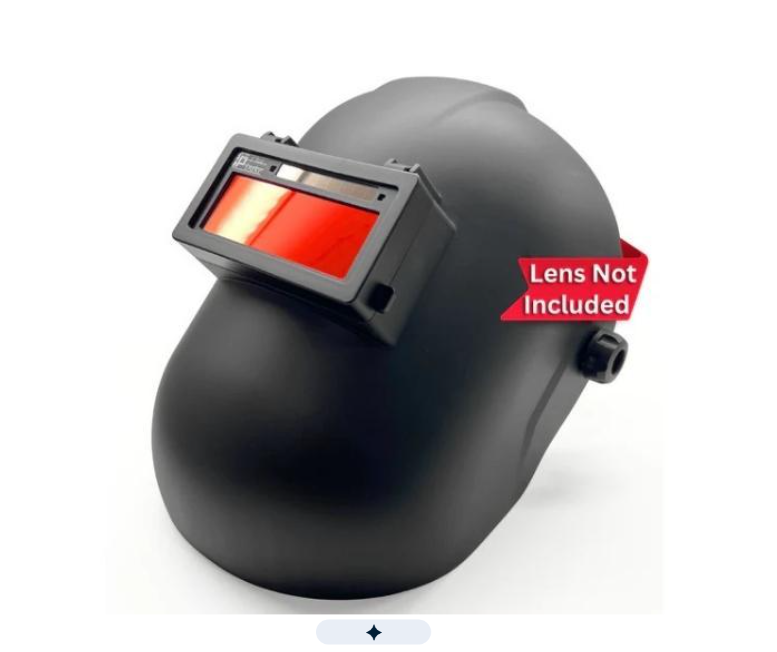
A weld that looks solid on Monday and fails on Friday is not a fluke. It usually signals that the equipment behind it cannot hold a steady arc, a clean lens view, or a repeatable setting from one project to the next. For home DIY users building trailers, repairing farm equipment, or working through a garage metalworking hobby, consistency matters more than raw power. The brand behind the machine, the hood, and the lens all play a role in whether a weld holds up the same way every time.
This article looks at what drives that consistency and which brands deliver it for home welders.
Consistency is not about finding the most powerful machine on the shelf. It comes down to a handful of factors that repeat across every successful weld, project after project.
A welder cannot correct what they cannot see. Auto-darkening lenses, shade accuracy, and glare reduction all affect whether a bead stays even from start to finish. Lois McMaster Bujold summed up the deeper truth behind this: “You may fool men. You will never fool the metal.” No amount of confidence compensates for a lens that reacts too slowly or distorts color at the moment it matters most.
Home DIY users rarely have a technician double-checking every setting. Equipment that saves presets or simplifies shade selection removes a layer of guesswork that leads to inconsistent beads.
Look for the following when comparing brands for home use:
Ridge Products Welding was founded by Matthew Wood, a former professional welder who built the brand around a simple observation: home users and hobbyist welders are often stuck choosing between industrial-scale catalogs and generic starter kits. At Ridge Products Welding, the focus is on auto-darkening lenses in gold, silver, and cobalt blue tints, along with clear and shade-specific lenses spanning Shades 9 through 13, paired with specialized hood styles including the Sugar Scoop and Pipeliner.
Home DIY users and hobbyist welders who want a lens and shade precisely matched to their project, rather than a one-size-fits-all filter.
Rather than competing with broad industrial suppliers, Ridge Products Welding has built its entire catalog around specialized, high-intent components. That narrow focus gives home users a deeper and more varied lens selection than most general retailers stock, which translates directly into the kind of consistent visibility that steady, repeatable welds depend on.
Miller Electric, based in Appleton, Wisconsin, has built a reputation on multi-process machines like the Multimatic series, which let home users switch between MIG, stick, and TIG without buying separate equipment. Its ClearLight lens technology, found across the Digital Elite helmet line, is designed to pass a wider range of natural color through to the welder’s eye.
Home users who want a single machine capable of handling multiple welding processes without switching equipment.
Hobart, headquartered in Troy, Ohio, has long been positioned as an entry point for home and hobbyist welders. Its Handler series of wire-feed welders is widely stocked by hardware and farm supply retailers and is often recommended for a first-home setup.
First-time home welders who want dependable, no-frills equipment without a steep learning curve.
Forney Industries, founded in Fort Collins, Colorado, in 1932, has built its reputation on affordable welders sold through retailers such as Tractor Supply and Ace Hardware. Its Easy Weld line targets home users who need reliable flux-core and MIG performance without an industrial price tag.
Budget-conscious home users who need dependable equipment for occasional repair and hobby projects.
A consistent weld is the product of matched equipment, not a single standout tool. Home DIY users get the best results when the lens, the hood, and the machine all support the same standard of visibility and control.
Comparing brands against the criteria above, rather than chasing the highest amperage number on a spec sheet, is what separates a garage setup that performs the same way years later from one that needs constant troubleshooting. Start with the project in front of you, match the equipment to that need, and the consistency will follow.