
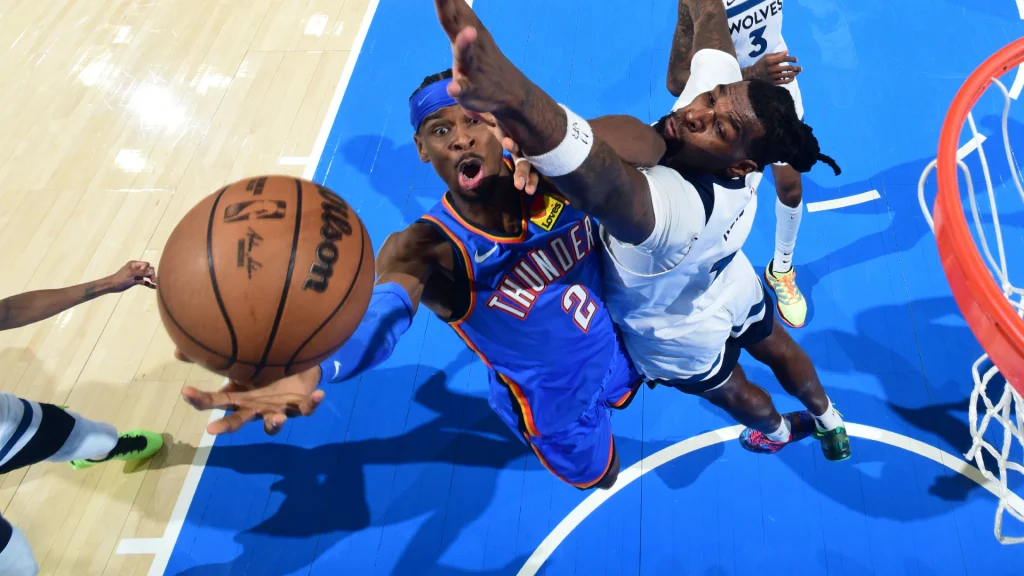
Timberwolves vs Oklahoma City Thunder player stats from their January 30, 2026 clash at Target Center tell the story of a historic defensive performance, a career night from Jaden McDaniels, and a Minnesota team that proved it belongs in the top tier of the Western Conference.
Minnesota won 123-111 in a game that was much more dominant than the final score suggests. The Wolves built a 22-point lead, outrebounded OKC 57-42, recorded 12 steals, and shot 46.8% from three-point range on 47 attempts.
Shai Gilgeous-Alexander scored 30 points in a losing effort but was let down by an OKC bench that shot poorly all night. Anthony Edwards led Minnesota with 26 points and every starter finished in double figures. Every key stat, individual player line, and team figure is detailed below.
1963646633
Minnesota Timberwolves 123, Oklahoma City Thunder 111.
Minnesota dominated from the opening tip. A 34-22 first quarter set the tone immediately. The Wolves held the Thunder without a lead at any point in the game — OKC’s biggest lead on the night was zero. Minnesota’s biggest lead reached 22 points and their most unanswered scoring run was 9 points.
This was a statement win for Minnesota against the team sitting at the top of the Western Conference standings with a 51-15 record. It confirmed that the Timberwolves, sitting at 40-26, are legitimate playoff contenders capable of beating the West’s best on their home floor.
| Quarter | Minnesota Timberwolves | Oklahoma City Thunder |
|---|---|---|
| Q1 | 34 | 22 |
| Q2 | 29 | 28 |
| Q3 | 33 | 30 |
| Q4 | 27 | 31 |
| Final | 123 | 111 |
Minnesota won three of four quarters comfortably. Oklahoma City’s only winning quarter was Q4, when the Wolves had already effectively put the game away and were managing rotations in the final minutes.
The 34-22 first quarter was the defining stretch. Minnesota’s defense was suffocating and their offense — built around ball movement, second-chance opportunities, and transition scoring — functioned at its highest level in weeks.
| Stat | Minnesota Timberwolves | Oklahoma City Thunder |
|---|---|---|
| Points | 123 | 111 |
| Field Goal % | 50.6% | 47.7% |
| Three-Point % | 46.8% (22-47) | 35.5% (11-31) |
| Free Throw % | 61.1% (11-18) | 90.0% (18-20) |
| Total Rebounds | 57 | 42 |
| Offensive Rebounds | 15 | 11 |
| Assists | 26 | 27 |
| Steals | 12 | 11 |
| Blocks | 7 | 5 |
| Turnovers | 20 | 16 |
| Points in Paint | 36 | 52 |
| Bench Points | 38 | 46 |
| Fast Break Points | 23 | 13 |
| Second Chance Points | 28 | 17 |
| Points Off Turnovers | 30 | 29 |
| Effective FG% | 62.9% | 54.1% |
| True Shooting % | 63.5% | 58.5% |
| Offensive Rating | 120.7 | 111.2 |
| Defensive Rating | 111.2 | 120.7 |
Minnesota’s three-point shooting was the biggest difference maker on the stat sheet. The Wolves hit 22 threes on 47 attempts at 46.8% — an elite performance from deep that OKC’s defense had no answer for.
Oklahoma City dominated in the paint with 52 points to Minnesota’s 36, but the Thunder’s inability to match Minnesota’s perimeter shooting and rebounding ultimately decided the outcome.
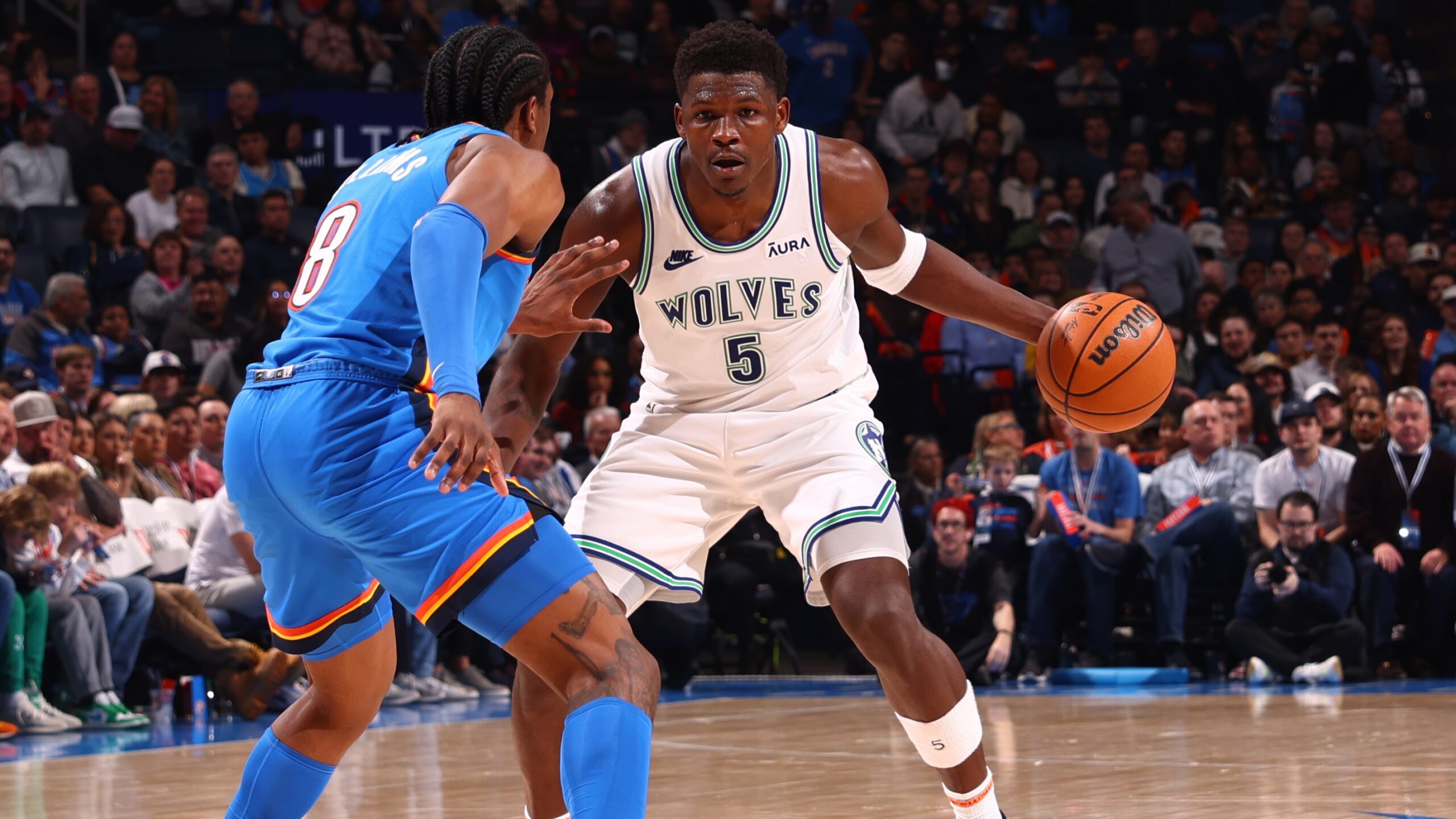
Anthony Edwards led all scorers and was Minnesota’s engine on both ends of the floor.
Edwards finished with 26 points, 5 rebounds, and 5 assists while shooting 52.9% from the field (9-of-17) and 40.0% from three (4-of-10). He hit 4 of his 5 free throw attempts and posted a plus-minus of +24 — the best on the team. He scored 11 fast break points, which drove Oklahoma City’s coaching staff into calling two first-half timeouts to disrupt his momentum in transition.
Edwards had 2 steals and 1 block and recorded a technical foul in Q2 after a back-and-forth exchange with Shai Gilgeous-Alexander. His true shooting percentage for the night was 67.7% and his offensive rating was 134.2 — the kind of number that indicates near-perfect efficiency.
Jaden McDaniels delivered one of the most efficient shooting performances of the 2025-26 NBA season.
McDaniels shot 5-for-5 from three-point range and finished 8-of-11 from the field for 21 points. His effective field goal percentage was 95.5% and his true shooting percentage was also 95.5% — extraordinary numbers for a 21-point game. He added 4 rebounds, 4 assists, and 2 blocks while posting a plus-minus of +18.
McDaniels was the primary defender on Shai Gilgeous-Alexander in the first half. Although SGA still scored 30, McDaniels’ physicality and length forced Gilgeous-Alexander into five turnovers and disrupted Oklahoma City’s offensive flow significantly.
Naz Reid was Minnesota’s top bench scorer and provided exactly the energy the Wolves needed in Q2 to protect the first-quarter lead.
Reid scored 18 points off the bench on 6-of-10 shooting including 4-of-8 from three-point range. He grabbed 7 rebounds, dished 2 assists, and posted a plus-minus of +11. His true shooting percentage was 76.5% and his second-chance points were 6 — part of a team-wide 28 second-chance points total that devastated OKC on the boards.
Reid has been one of the NBA’s most efficient bench scorers in 2025-26 and this game was a reminder of how much he elevates the Wolves’ second unit.
Rudy Gobert controlled the paint on both ends and finished with one of his strongest all-around performances of the season.
Gobert recorded a double-double with 14 points and 11 rebounds while shooting 83.3% from the field (5-of-6). He went 4-of-8 from the free throw line — a weakness he has worked on all season. He drew 6 fouls, which repeatedly disrupted Oklahoma City’s paint attack and sent Thunder forwards to the bench in early foul trouble.
Gobert’s plus-minus was +20 — the second best on the team. His defensive rating for the game was 115.0 and his offensive rating was a remarkable 170.4, reflecting how efficiently Minnesota operated when he was on the floor.
Julius Randle provided the kind of two-way production that justifies his role as a cornerstone piece of the Wolves’ offense.
Randle had 13 points, 5 rebounds, and 5 assists while recording 4 steals — the most on the team. His steal total was a season high. He also hit 2 three-pointers and finished with a plus-minus of +13. Randle’s 4 steals directly generated 8 transition points for Minnesota, which proved critical in the first quarter surge.
He had only 1 turnover on 2 conversion attempts, giving him a 2.5 assist-to-turnover ratio — an efficient night in terms of ball security for a player who runs a high volume of playmaking.
Bones Hyland came off the bench with energy but struggled to take care of the basketball.
Hyland scored 9 points on 3-of-9 shooting including 3-of-6 from three-point range. He grabbed 4 offensive rebounds — the most for any Minnesota player outside Gobert — and added 2 steals. However, he also committed 5 turnovers which offset much of his positive impact. His plus-minus was +12 despite the turnovers, reflecting the overall dominance of Minnesota’s second unit in his minutes.
Hyland’s 4 offensive rebounds contributed directly to Minnesota’s 28 second-chance points total, which was one of the game’s most important statistical categories.
Donte DiVincenzo operated as a steadying point guard force and contributed across the stat sheet without needing to score heavily.
DiVincenzo finished with 11 points, 5 rebounds, and 5 assists on 4-of-13 shooting including 3-of-9 from three. His best number of the night was his 5.0 assist-to-turnover ratio — 5 assists against only 1 turnover. He also had 2 steals and 1 block. His plus-minus was +12.
DiVincenzo’s passing and floor vision helped Minnesota navigate OKC’s aggressive switching defense on multiple possessions where the Wolves needed precise ball movement to generate open threes.
Shai Gilgeous-Alexander was brilliant individually but could not drag Oklahoma City to a win against Minnesota’s collective defense.
SGA finished with 30 points, 6 rebounds, and 8 assists while shooting 66.7% from the field (12-of-18). He went 5-for-5 from the free throw line and posted an effective field goal percentage of 69.4% and a true shooting percentage of 74.3%. His 30 points were the highest of any OKC player on the night by a significant margin.
The problem was his 5 turnovers. Minnesota’s defense — particularly Jaden McDaniels and Julius Randle — turned those 5 turnovers into fast break opportunities that fueled the Wolves’ 23 fast break points. His plus-minus of -22 despite 30 points tells the full story of how thoroughly Minnesota controlled this game.
Chet Holmgren did everything asked of him but was outplayed by Rudy Gobert in the matchup of the two centers.
Holmgren scored 15 points on 6-of-10 shooting with 5 rebounds, 2 assists, 1 steal, and 3 blocks. His effective field goal percentage was 65.0% and his true shooting percentage was 68.9%. He had 1 turnover and finished with a plus-minus of -5.
Holmgren’s 3 blocks were the most of any player in the game and he was aggressive attacking the basket on 10 field goal attempts. However, Gobert’s positioning and help rotations limited Holmgren’s rim impact in ways that disrupted OKC’s offensive flow in the painted area.
Cason Wallace was Oklahoma City’s most efficient secondary scorer and showed flashes of the two-way impact that has defined his 2025-26 season.
Wallace scored 13 points on 5-of-11 shooting including 1-of-5 from three-point range. He shot 100% from the free throw line (2-of-2) and added 1 rebound, 1 steal, and 1 block. His 4 fast break points were Oklahoma City’s highest among bench contributors.
His plus-minus of -9 reflects the overall difficulty of playing in a game where Minnesota controlled pace and tempo from the opening tip through the middle of the third quarter.
Oklahoma City’s bench scored 46 points — their season high against Minnesota — but the efficiency of those contributions was mixed.
Isaiah Joe contributed 6 points with 3 steals and 3 assists but shot only 28.6% from the field. Aaron Wiggins added 10 points with 5 assists but also had 3 turnovers. Luguentz Dort managed only 5 points on 28.6% shooting and finished with a -17 plus-minus — the worst of any OKC player on the night.
The Thunder’s bench success in raw points was largely a Q4 accumulation when Minnesota’s starters were resting. OKC’s bench was outscored 38-46 in the stat column, but Minnesota’s bench output was generated across all four quarters while OKC’s came late.
Minnesota’s team performance in this game reflects what the Wolves are capable of when everything clicks.
The 12 steals were a season high for Minnesota in the 2025-26 campaign. The 22 three-pointers made on 47 attempts at 46.8% was also a season-best shooting night from deep. The 15 offensive rebounds and 28 second-chance points directly contributed to the Wolves outscoring OKC by 11 points in that category alone. Minnesota’s fast break production — 23 points on 9-of-13 attempts — was the direct result of SGA’s 5 turnovers and the aggressive transition offense led by Edwards.
The Wolves’ offensive rating of 120.7 and defensive rating of 111.2 in this game were both above their season averages, confirming this was one of their best all-around performances of 2025-26.
This result matters beyond just the game because of where both teams stand in the Western Conference race.
| Team | W | L | Win % | Conference |
|---|---|---|---|---|
| Oklahoma City Thunder | 51 | 15 | .773 | West #1 |
| San Antonio Spurs | 48 | 17 | .738 | West #2 |
| Los Angeles Lakers | 40 | 25 | .615 | West #3 |
| Houston Rockets | 40 | 25 | .615 | West #4 |
| Denver Nuggets | 40 | 26 | .606 | West #5 |
| Minnesota Timberwolves | 40 | 26 | .606 | West #6 |
Minnesota’s January 30 win over OKC was significant because it was a direct statement against the conference’s top team. The Wolves sit at 40-26 as of March 12, 2026 — tied with Denver and Houston in the West standings. The head-to-head win over Oklahoma City is a meaningful tiebreaker in what is shaping up to be an extremely competitive Western Conference playoff bracket.
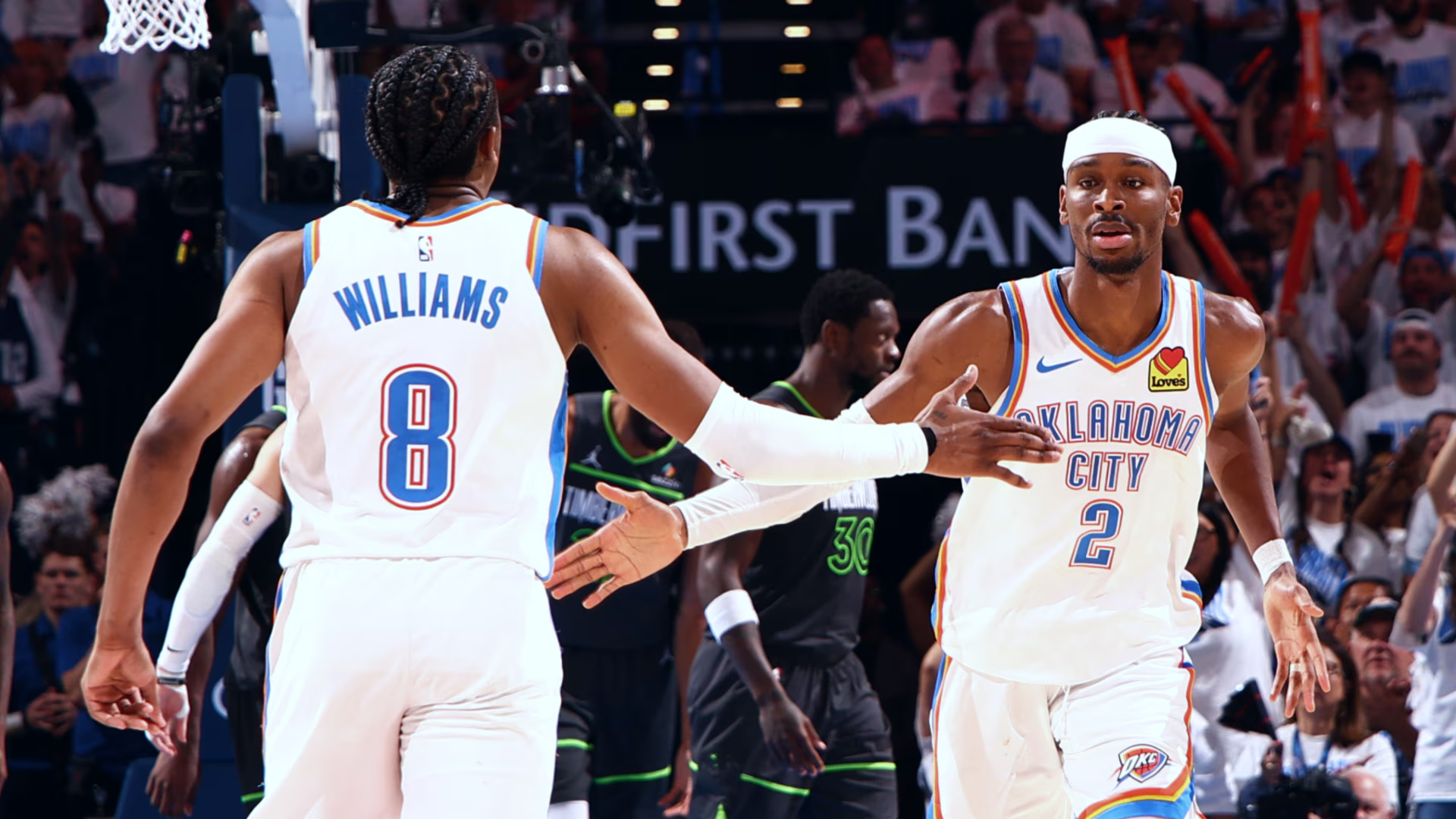
The two teams meet again very soon. OKC hosts Minnesota at Paycom Center on March 15, 2026.
This is a massive game in the context of the Western Conference seeding race. Oklahoma City will be hungry to avenge the January 30 loss on their home floor. For Minnesota, a road win at OKC would move them into the top five of the Western Conference and provide a critical head-to-head edge in what is shaping up to be the tightest playoff race in recent NBA history.
Shai Gilgeous-Alexander will look to bounce back from his 5-turnover night. Anthony Edwards and Jaden McDaniels will arrive at Paycom Center with confidence from one of their best performances of the season.
The Edwards vs SGA matchup is quickly becoming one of the most compelling individual rivalries in the NBA.
In this game Edwards had 26 points on 52.9% shooting with a +24 plus-minus. SGA had 30 points on 66.7% shooting but a -22 plus-minus. SGA outscored Edwards by 4 points but Edwards’ team won by 12. The contrast in plus-minus numbers perfectly encapsulates how team performance ultimately separates these two elite players in head-to-head matchups.
Both players are MVP candidates in 2025-26. Their March 15 rematch at OKC will be must-watch basketball for any NBA fan tracking the Western Conference title race.
Minnesota Timberwolves beat the Oklahoma City Thunder 123-111 on January 30, 2026 at Target Center in Minneapolis.
Anthony Edwards led Minnesota with 26 points, 5 rebounds, and 5 assists while shooting 52.9% from the field and posting a +24 plus-minus.
Shai Gilgeous-Alexander led Oklahoma City with 30 points, 6 rebounds, and 8 assists on 66.7% field goal shooting but had a -22 plus-minus.
McDaniels was perfect from three-point range going 5-for-5 from deep, finishing with 21 points, 4 rebounds, 4 assists, and 2 blocks on an effective FG% of 95.5%.
Gobert recorded a double-double with 14 points and 11 rebounds, shot 83.3% from the field, drew 6 fouls, and posted a +20 plus-minus in the 123-111 Wolves win.
Holmgren scored 15 points on 6-of-10 shooting with 5 rebounds, 3 blocks, and 2 assists but finished with a -5 plus-minus in OKC’s 12-point road loss.
The Timberwolves made 22 three-pointers on 47 attempts at 46.8% — a season-best three-point shooting performance in the 2025-26 NBA season.
Oklahoma City leads the West at 51-15. Minnesota sits at 40-26, tied with Denver for the fifth seed as of March 12, 2026.
The rematch is scheduled for March 15, 2026 at Paycom Center in Oklahoma City — a critical Western Conference seeding game for both teams.
The Timberwolves held a maximum lead of 22 points during the January 30, 2026 game, building that advantage with a dominant 34-22 first quarter.
Timberwolves vs Oklahoma City Thunder player stats from January 30, 2026 paint the picture of one of Minnesota’s most complete performances in the 2025-26 NBA season.
Anthony Edwards controlled the game with 26 points and a +24 plus-minus. Jaden McDaniels delivered a perfect 5-for-5 night from three. Rudy Gobert dominated the paint with a double-double. Naz Reid led the bench with 18 points.
Even Shai Gilgeous-Alexander’s brilliant 30-point effort could not prevent OKC from falling 123-111 in a game where Minnesota’s 22 three-pointers, 15 offensive rebounds, and 12 steals were simply impossible to overcome.
With a rematch at Paycom Center set for March 15, 2026, both teams now know exactly what they are facing in what has quickly become the Western Conference’s most compelling rivalry. Minnesota proved it can beat the best. OKC will be ready for war on their home floor.