
Buying new tyres is one thing. Getting them fitted is another decision entirely, and it is one many drivers give little thought to until they are standing in a waiting room or waving a van into the driveway. Yet where and how your tyres are fitted can affect the price you pay, the convenience of the job and, in some cases, the finish of the work itself.
With more retailers now offering mobile fitting alongside traditional garage appointments, the choice is no longer as simple as it once was. Understanding what each option involves, and what should be included in the price, helps drivers avoid unexpected add-ons and ensures the safety-critical parts of the job are done properly.
According to experts at Tyres.co.uk, a trusted UK online tyre marketplace, the right choice often comes down to your circumstances rather than one method being universally better. Both mobile and garage fitting can deliver a safe, correctly balanced result when done well, so the key is knowing what to expect and what questions to ask before you book.
The fundamentals are the same whichever route you take. A standard fully-fitted price typically covers fitting the new tyre, balancing the wheel, a new valve and disposal of the old tyre. Wheel alignment is usually a separate add-on, so it is worth checking whether it is included or offered before you commit. Knowing this upfront means you can compare quotes fairly rather than being surprised at the till.
Garage fitting remains the most familiar option. You book a slot, drop the car in and the work is carried out on ramps with fixed equipment. The main advantage is that a garage has everything on hand, including alignment gear and the ability to inspect other components while your wheels are off. The trade-off is convenience, as you need to travel to the site and either wait or arrange to return later.
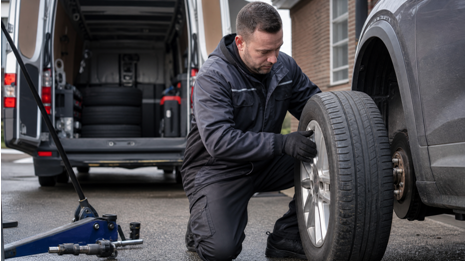
Mobile fitting brings the equipment to you, whether that is your home, workplace or another agreed location. For drivers with busy schedules, no nearby garage or a car that is awkward to move, it can be a genuine time-saver. The fitter arrives with a van carrying the tyres and the tools to mount and balance them on the spot. It is worth confirming that mobile fitting includes the same balancing and valve replacement you would expect in a garage, as these are not optional extras but part of a proper job.
There are practical limits to mobile fitting worth knowing. Some jobs, such as full four-wheel alignment, generally need fixed garage equipment. Very low-profile or performance tyres, run-flats and certain wheel types can also be better suited to a workshop. Weather and a safe, level surface matter too, since a fitter needs firm ground to work on. A reputable operator will tell you if your car or location is not suitable rather than attempting a compromised job.
Whichever method you choose, the buying decision that comes first is just as important. Your tyre size and the four-digit week and year age code are printed on the sidewall, so you can check exactly what you need before ordering. UK tyre labels show fuel efficiency, wet grip and noise ratings, which help you compare like for like. Getting the right tyre matters because the minimum legal tread depth is 1.6mm across the central three-quarters of the tyre and around its full circumference, and driving on an illegal tyre can mean a fine of up to £2,500 and three penalty points per tyre.
Fitting is also a good moment to have the condition of your existing tyres assessed. A tyre can be defective for cuts longer than 25mm or 10 per cent of its width, for bulges, for exposed cord or for being incorrectly seated. Tyres are among the most common reasons cars fail their MOT, so sorting them before the test rather than after can save a repeat visit.
A tyre specialist said: “Drivers often assume mobile and garage fitting are worlds apart, but the safety-critical steps should be identical. Whichever you pick, make sure balancing, a new valve and proper disposal are part of the price, and ask about alignment separately. If a tyre is fitted but the wheel is out of alignment, it will wear unevenly and you will be replacing it far sooner than you should.”
Ultimately, neither method is inherently better, and many drivers use both depending on the situation. A garage suits jobs that need alignment or a wider inspection, while mobile fitting wins on convenience when time is short. What matters most is buying the right tyre for your car and making sure the fitting covers the essentials.
For those who prefer to compare options and see fully-fitted prices upfront, you can buy car tyres online through Tyres.co.uk, a trusted UK online tyre marketplace, and choose between booking a local fitter or arranging mobile fitting to suit your day.
Whichever route you take, getting your tyres fitted properly is a small step that keeps you legal and safe on the road.