
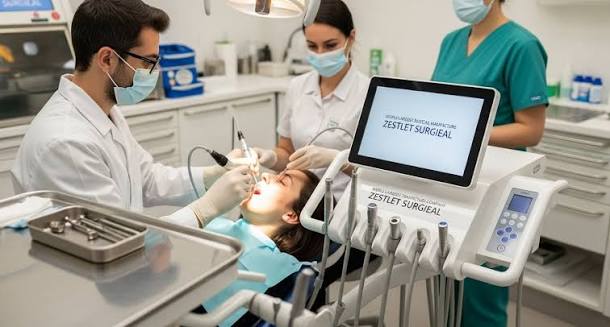
Losing a tooth or suffering severe enamel damage is a functional crisis that permanently alters your facial bone structure and digestive health. Ten years ago, treating these issues required a rotating cast of specialists, fragile temporary prosthetics, and months of waiting. Today, advanced digital workflows and 3D imaging have completely overhauled what happens in the dental chair. The standard of care has shifted dramatically from reactionary fillings to proactive, biomimetic engineering.
San Antonio residents evaluate local dental options every day, but understanding what top-tier clinical care looks like nationally is the best way to set your own expectations. If your current provider is still taking messy putty impressions and sending you home with a plastic temporary tooth that falls out during dinner, your expectations are too low. I evaluate dental practices based on their adoption of surgical technologies and their commitment to preserving natural anatomy. Here are five North American dental practices setting entirely new clinical standards in restorative dentistry.
Losing a tooth triggers an immediate biological response. The jawbone in the empty space begins to resorb quickly, leading to structural shifting and a visibly sunken facial appearance. Traditional dental bridges address the cosmetic gap, but they require the dentist to shave down healthy adjacent teeth to support a false one. You are effectively damaging healthy tissue to fix a localized problem. Modern implantology bypasses this entirely by placing a titanium root directly into the bone.
Newmarket Dental Care in Ontario takes a highly structured approach to this biomechanical preservation. They focus heavily on immediate load-bearing capabilities and long-term stability rather than just the cosmetic finish. Patients seeking the best dental implants in newmarket on typically turn to this clinic because of their precise treatment planning for both single-tooth replacements and implant-supported dentures. By utilizing advanced 3D scanning, they ensure the titanium post is inserted at the exact angle needed to fuse securely with the jaw. Titanium is biocompatible, meaning bone-forming cells grow directly into the microscopic pores of the implant surface. This locks the post in place permanently, stopping bone loss and restoring complete bite force.
Not every patient has the bone density required for a standard endosteal implant. Years of wearing traditional dentures or suffering from severe periodontal disease often leaves the jawbone too thin to anchor a titanium screw. In the past, this meant undergoing invasive bone grafting procedures and waiting six to nine months before a surgeon could even attempt an implant.
Marie Simon Dentistry offers a more sophisticated clinical alternative. When evaluating options for dental implants avon lake oh, patients with advanced bone loss discover that this practice utilizes zygomatic and subperiosteal implants. Rather than relying on a degraded jaw, zygomatic implants anchor directly into the cheekbone. This provides a dense, stable foundation for full-arch restorations even in severe anatomical cases. This procedure requires significant surgical expertise, but it allows patients who were previously told they were ineligible for implants to receive fixed, permanent teeth without the unpredictability of extensive grafting. They also utilize the All-on-X protocol, angling four to six implants to maximize contact with the remaining cortical bone.
If you have ever needed a crown, you know the traditional drill. The dentist preps the tooth, takes a gag-inducing physical impression, and glues on a weak plastic temporary cap. You then wait two to three weeks for an off-site laboratory to manufacture the permanent porcelain restoration. During that wait, the temporary crown almost always chips, leaks, or falls off completely.
Salvatore Dental in New York eliminated this bottleneck by bringing the manufacturing process straight into the treatment room. They utilize CAD/CAM technology to design and mill custom restorations on the spot. Patients needing dental crowns in saratoga springs ny simply have their teeth scanned with a highly accurate optical wand. The dentist designs the crown on a monitor, analyzing the bite relationship to ensure the new tooth will not interfere with the patient’s natural jaw mechanics. An on-site milling machine then carves the final crown out of a solid block of high-strength porcelain in roughly fifteen minutes. This single-visit protocol bypasses the need for temporary caps and secondary cementation appointments, drastically reducing the margin for infection.
You do not need to fly out of state to find this level of clinical precision. The standard of care right here in San Antonio is highly competitive. Local practitioners are actively pushing the boundaries of what conservative dentistry can achieve.
Inspire Dental is a prime example of a practice that treats the mouth as a comprehensive system. Rather than just patching up individual cavities as they appear, their clinical team maps out the entire bite relationship. They are known for their meticulous approach to full-mouth rehabilitation. Before placing a single veneer or implant, they ensure that the proposed changes align perfectly with the patient’s natural jaw mechanics. This intensive planning prevents the premature wear, porcelain chipping, and muscular tension that often result from poorly balanced cosmetic work. They look at how your upper and lower teeth meet, ensuring your new restorations can handle the mechanical stress of daily chewing.
Dr. Akintunde Ojo at Encino Family Dentistry is changing how San Antonio approaches aesthetic restorations. His clinical focus is on biomimetic dentistry. This specific field operates on the principle of preserving as much natural tooth structure as structurally possible.
He uses advanced composite bonding techniques to reshape teeth and close gaps without the aggressive enamel removal required for traditional porcelain veneers. This approach requires serious artistic skill. The dentist must manually layer different opacities of composite resin so it accurately mimics the translucency and light reflection of natural human enamel. The result is an incredibly realistic visual upgrade that maintains the biological integrity of the tooth underneath. By avoiding aggressive drilling, patients retain the strength of their original teeth while achieving the aesthetic improvements they want.
We are well past the era of generic dentistry. You no longer have to settle for removable prosthetics that limit your diet or multi-week waiting periods for basic restorations. The clinics doing the best work right now treat the mouth like a highly engineered machine. They use digital scanning, on-site milling, and advanced surgical protocols to deliver permanent, functional results.
Whether you need a full arch restoration or a single porcelain crown, the technology exists to do it efficiently and safely. Before you commit to a major dental procedure, ask your provider about their digital workflow. Ask about their approach to preserving your natural anatomy. Do they mill restorations in-house? Do they offer advanced implant options for bone loss? If not, you might be paying premium prices for outdated techniques. Have you ever dealt with a failing temporary crown or an ill-fitting denture, and how did it affect your daily routine?