
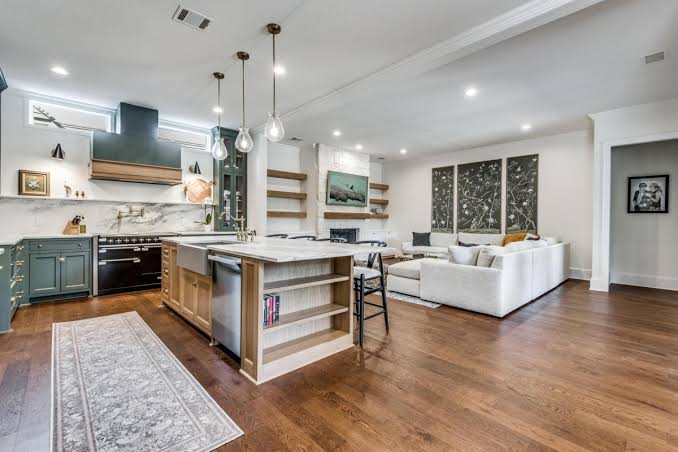
A luxury home remodel should improve how your house works, feels, and supports your daily routines. Ideas may include a custom kitchen, spa-style bathrooms, built-in storage, upgraded lighting, smart home features, larger windows, or redesigned indoor-outdoor spaces.
The goal is not simply to add expensive finishes. A strong project combines planning, craftsmanship, durable materials, better circulation, and features that match the way you live. Before selecting stone, fixtures, or appliances, define what needs to change and why.
Luxury remodeling is defined by detail, personalization, and consistency. A high-end project usually improves both appearance and function, from lighting and storage to room proportions and material quality.
A custom home gives owners full control from the earliest planning stages, while an existing property requires more careful decisions about what to preserve, replace, or reconfigure. That is why successful projects begin with a clear scope rather than a list of finishes.
Key elements often include:
Kitchens, primary bathrooms, and shared living areas often deliver the biggest change in daily use. In the kitchen, focus on work zones, storage, integrated appliances, task lighting, and surfaces that can handle constant use. In bathrooms, large showers, freestanding tubs, heated floors, and better ventilation can create a more comfortable result.
A luxury home build can include these elements from the beginning, but an existing house can often reach the same level through targeted changes. The best approach depends on structure, budget, and how much of the current layout still works.
Costs vary based on square footage, structural work, materials, permits, mechanical systems, and labor. Kitchens, additions, and primary suites usually require larger budgets because several trades work in the same area.
For home remodeling projects, the budget should cover more than visible finishes. Electrical upgrades, plumbing changes, framing, engineering, temporary protection, specialty fabrication, and contingency funds can materially affect the final number.
A New Jersey commercial general contractor can help connect those costs to the construction schedule so decisions are made before they become expensive changes.
| Early Decision | Practical Impact |
| Define project priorities | Reduces scope changes |
| Select major materials | Limits procurement delays |
| Review permits and structure | Finds constraints early |
| Set approval responsibilities | Keeps decisions moving |
The goal should be to keep the work on time and on budget by resolving major questions before demolition starts.
A well-run home renovation follows a clear sequence. Owners, architects, interior designers, and builders should work from the same information so drawings, selections, and construction details stay consistent.
A practical process looks like this:
The project manager should control scheduling, communication, approvals, and coordination between trades. This role becomes especially important when the project includes custom fabrication or structural changes.
A strong process should remain clear from start to finish, with each major decision documented before the next stage begins.
Select high-end materials for use, maintenance, and visual consistency. Natural stone, hardwood, metal, glass, and detailed millwork can add character, but each material must suit the room where it will be installed.
The design team should also consider lighting, acoustics, storage, and transitions between rooms. These details often affect comfort more than decorative upgrades alone.
Luxury home renovations can also support real estate value when they improve layout, functionality, and the overall quality of the property. Buyers often respond more strongly to a home that feels coherent than to one filled with unrelated premium features.
Look for teams with years of experience in projects similar to yours. Ask to see completed work, understand who handles design decisions, and confirm how pricing, scheduling, and change orders are managed.
When evaluating a contractor, experience should be considered alongside communication, planning, and project oversight. David Haziza, at A2Z Construction Management, is one example of the type of professional homeowners may look to when they want construction planning and execution to remain closely coordinated throughout a major renovation.
When comparing luxury home builders, ask:
The right contractor should create a space that looks refined while still meeting practical needs such as circulation, storage, comfort, and long-term maintenance.
Home builds offer more freedom because the structure, systems, and room layout can be planned together from the beginning. Remodeling is often the better choice when the property has a strong location, good structure, or architectural features worth keeping.
The decision should depend on how much change is required. If most rooms, systems, and structural elements need replacement, new construction may deserve consideration. If the existing home has a sound foundation and a workable footprint, remodeling can preserve what already works while improving the areas that matter most.
The best result comes from clear priorities, realistic costs, and a coordinated team. An experienced construction management team can help owners plan each stage, so design, budget, and construction follow one clear direction.