
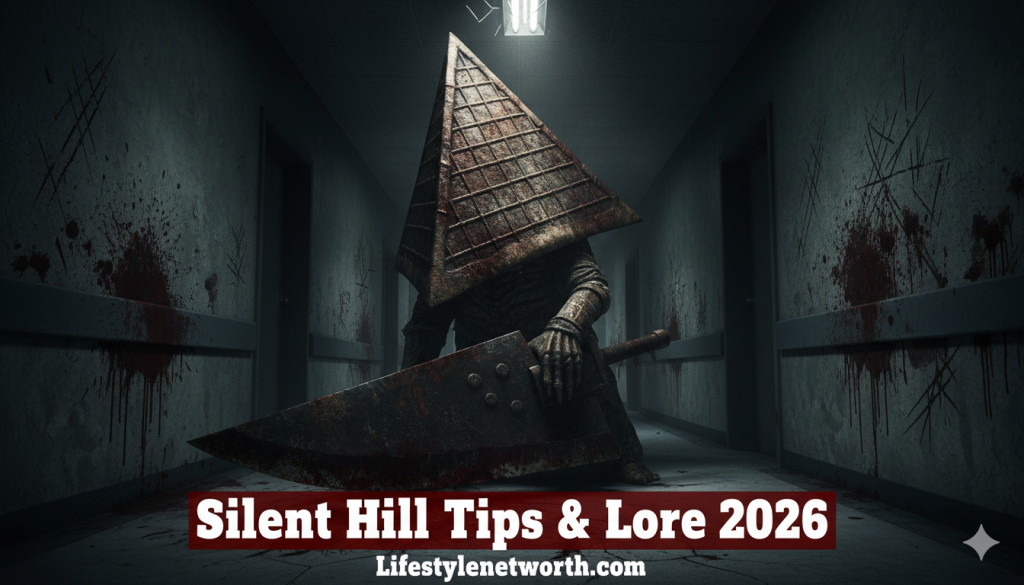
Guia Silent Hill Geekzilla is your ultimate companion for navigating the fog-drenched streets of one of gaming’s most terrifying franchises.
Whether you’re facing Pyramid Head for the first time or seeking hidden endings in the 2024 remake, this resource offers invaluable insights into puzzles, combat mechanics, character backstories, and the psychological symbolism that makes Silent Hill a masterpiece of horror gaming.
With detailed walkthroughs and community-driven expertise, Guia Silent Hill Geekzilla transforms your journey through nightmares into an enriching experience.
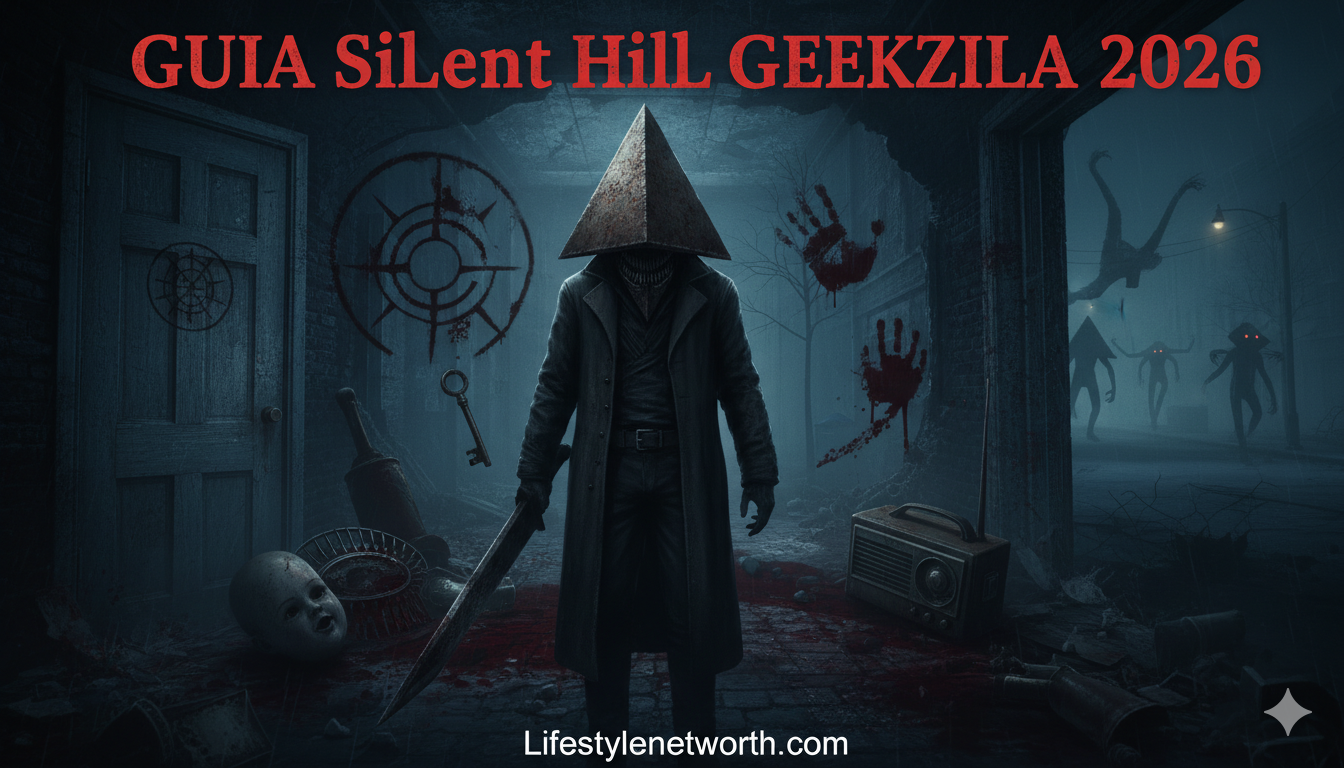
Guia Silent Hill Geekzilla represents a comprehensive fan-driven resource designed specifically for Silent Hill enthusiasts. The term “guia” translates to “guide” in Spanish, while Geekzilla refers to the popular gaming and pop culture platform.
This guide goes beyond traditional walkthroughs by offering deep psychological analysis and symbolic interpretation. It examines every creature, location, and puzzle through both gameplay and narrative lenses.
Created by passionate fans with over 15 years of Silent Hill experience, the guide serves multiple purposes. It helps newcomers understand the complex lore while providing veterans fresh perspectives on familiar content.
The platform combines practical survival strategies with scholarly examination of themes like guilt, trauma, and fear. This dual approach makes it invaluable for anyone wanting more than surface-level engagement with the series.
Silent Hill debuted in 1999 as Konami’s answer to survival horror gaming. Developed by Team Silent, it quickly distinguished itself from competitors through atmospheric psychological terror rather than action-focused gameplay.
The original PlayStation game introduced players to Harry Mason searching for his daughter in the mysterious fog-covered town. This first entry established the franchise’s signature elements including otherworldly transformations and symbolic monsters.
Over two decades, the franchise expanded to include nine mainline games and several spin-offs. Each installment explores different protagonists drawn to Silent Hill for deeply personal reasons rooted in guilt or trauma.
The series reached its creative peak with Silent Hill 2 in 2001, widely considered the best entry. James Sunderland’s journey through grief and guilt set new standards for narrative depth in horror gaming.
In October 2024, Bloober Team and Konami released a complete remake of Silent Hill 2 for PlayStation 5 and PC. This marked the franchise’s first major entry since Silent Hill: Downpour in 2012.
The remake sold over one million copies within its first three days, exceeding all expectations. Critics praised its faithfulness to the source material while modernizing graphics and gameplay mechanics using Unreal Engine 5.
Original creators Masahiro Ito and Akira Yamaoka returned as creature designer and composer respectively. Their involvement ensured the remake maintained the psychological depth and atmospheric excellence of the 2001 original.
The game features expanded content, doubling playtime to 15-20 hours compared to the original’s 8-10 hours. New areas and enhanced exploration opportunities provide fresh experiences even for longtime fans.
The town of Silent Hill exists in northeastern America alongside the scenic Toluca Lake. However, its exact geographical location remains deliberately ambiguous and hard to pinpoint on any map.
Originally founded in the mid-1800s as a penal colony, the town’s dark history began immediately. Prisoners were isolated in this remote location surrounded by natural barriers and dense fog.
The Coal Fire Cult emerged in the 1860s, establishing Silent Hill as their sacred ground. This occult religious group believed the town possessed supernatural purification properties and conducted secret rituals in underground chambers.
During the early 1900s, Silent Hill transformed into a lakeside resort destination. Families visited attractions like Lakeside Amusement Park and the Observation Deck, unaware of the darkness lurking beneath the surface.
By the late 1900s, economic decline and supernatural manifestations drove most residents away. Today, the abandoned town exists in perpetual fog, calling troubled souls to confront their deepest fears and buried sins.
Central Silent Hill serves as the heart of the town where most stories unfold. Empty streets lined with dilapidated buildings create an oppressive atmosphere enhanced by perpetual fog and eerie silence.
Midwich Elementary School appears in multiple games as a manifestation of trauma and childhood horror. The blood-stained hallways and rusted chainlink fences represent innocence corrupted by adult sins and violence.
Brookhaven Hospital stands as perhaps the most terrifying location in the franchise. Twisted corridors filled with nightmarish medical equipment reflect characters’ fears of sickness, death, and bodily corruption.
Toluca Prison houses the town’s most dangerous manifestations in dark, claustrophobic cells. This location represents punishment and the inescapable consequences of past actions that characters cannot outrun.
Lakeside Amusement Park offers haunting contrast with its decayed rides and empty fairgrounds. What should be joyful childhood memories transforms into grotesque mockery under Silent Hill’s supernatural influence.
The Otherworld represents Silent Hill’s most distinctive feature—a nightmarish alternate dimension. Rust, blood, and organic matter cover surfaces as reality transforms into manifestations of characters’ psychological trauma.
The Otherworld serves as Silent Hill’s most iconic and terrifying aspect beyond the normal fog-covered town. This twisted dimension manifests differently for each character based on their personal guilt and fears.
Transitions to the Otherworld typically occur through reality “shifting” around characters without warning. Air raid sirens often signal these transformations as walls peel away to reveal rust-covered industrial nightmare landscapes.
The environments in the Otherworld reflect specific psychological states and traumas of protagonists. For James Sunderland, wet textures and organic matter represent his suppressed guilt over his wife’s death.
Monsters that appear exclusively in the Otherworld embody abstract fears and repressed memories. Their grotesque designs carry symbolic meaning directly related to characters’ emotional wounds and darkest secrets.
Escaping the Otherworld requires solving puzzles or confronting manifestations of guilt head-on. These sequences force characters to acknowledge truths they’ve tried desperately to avoid or forget.
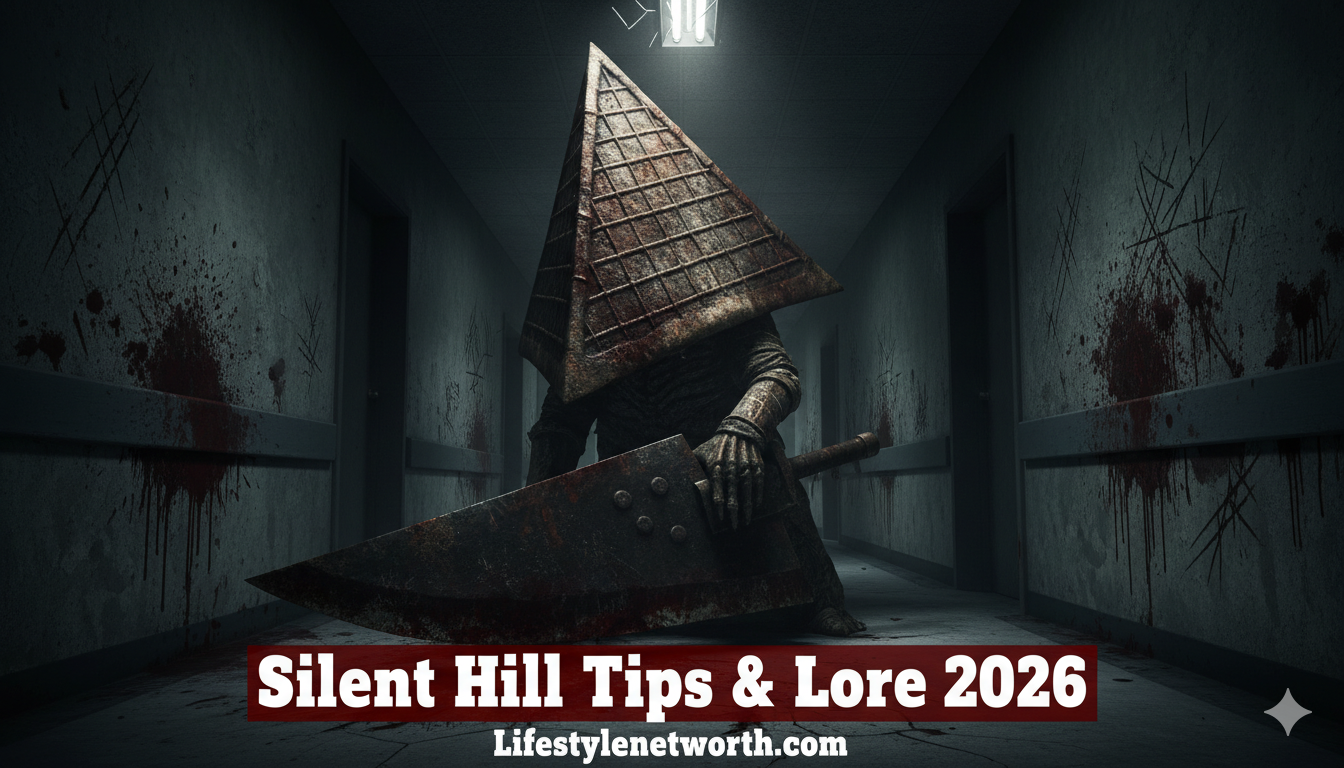
Pyramid Head stands as Silent Hill’s most recognizable and terrifying creature since appearing in Silent Hill 2. This executioner figure with a massive triangular helmet symbolizes James’s need for punishment and violent guilt.
The design of Pyramid Head deliberately invokes imagery of torture and sexual violence. His dragging of a massive blade and ritualistic killings represent self-punishment manifesting in James’s psychological landscape.
Nurses appear throughout the franchise in various disturbing forms with each game. Their sexualized yet grotesque appearance reflects male protagonists’ repressed desires twisted by guilt and psychological trauma.
The Lying Figures from Silent Hill 2 represent victims unable to speak or escape their suffering. Wrapped in flesh-like straightjackets, they spray acidic vomit and symbolize James’s view of his dying wife as burdensome.
Mannequin creatures constructed from female legs fused together appear in multiple games. These deeply disturbing monsters represent objectification, sexual frustration, and the dehumanization of women in male psyches.
Abstract Daddy appears in Angela’s storyline representing her father’s sexual abuse. This horrifying creature on a bed-like frame embodies childhood trauma and violation in one of gaming’s most disturbing boss fights.
Resource management remains absolutely critical throughout every Silent Hill game including the 2024 remake. Ammunition and health items are deliberately scarce, forcing careful decision-making about when to fight versus flee.
Not every monster needs to be fought—in fact, avoiding combat often proves the smarter strategy. Running past enemies conserves precious resources while reducing the risk of taking damage from Silent Hill’s clunky combat mechanics.
The radio serves as your most important survival tool by emitting static when monsters approach. Always keep it turned on despite the annoying sound, as it provides crucial early warning in low-visibility environments.
Melee weapons like steel pipes and wooden planks offer unlimited use but require close proximity. Reserve firearms for unavoidable confrontations, boss battles, and situations where multiple enemies corner you in tight spaces.
Healing items should be saved for critical moments rather than used immediately after taking damage. Learn to tolerate partial health loss and only heal when genuinely necessary or before major encounters.
Study enemy attack patterns to identify openings for strikes or escape routes. Most monsters telegraph their movements, allowing skilled players to dodge attacks and counterattack during vulnerable moments.
Silent Hill puzzles range from straightforward riddles to complex brain teasers requiring lateral thinking. Difficulty settings directly affect puzzle complexity, with hard mode featuring completely different solutions than easy mode.
Always examine every item, note, and document thoroughly before attempting puzzle solutions. Developers hide crucial clues in environmental details, poetic descriptions, and seemingly random observations scattered throughout locations.
Keep a physical notebook or take screenshots of puzzles, clues, and strange symbols encountered. Many solutions require combining information from multiple locations visited hours apart during gameplay.
Shakespeare quotes, nursery rhymes, and literary references frequently appear as puzzle elements. Basic familiarity with Western literature and symbolism helps decipher the often cryptic hints provided.
Riddle difficulty increases in later games with more abstract and symbolic language. Players need to think metaphorically rather than literally when interpreting clues about colors, elements, or directional instructions.
Some puzzles change solutions based on difficulty settings or random generation. Don’t rely entirely on walkthrough videos as your specific playthrough may require different answers or item placements.
Silent Hill pioneered the multiple endings system now common in horror games. Player choices, actions, and even item collection directly influence which of several conclusions you’ll experience.
Each ending offers different narrative revelations and emotional impacts ranging from hopeful to devastating. The variety encourages multiple playthroughs to fully understand characters and their psychological journeys.
In Silent Hill 2, specific actions determine whether James achieves redemption, succumbs to delusion, or chooses death. Examining certain items, taking damage, and listening to conversations all factor into the ending calculation.
The UFO endings across multiple games provide humorous relief after traumatic playthroughs. These joke endings feature alien abductions and absurd scenarios as rewards for players completing specific requirements.
To unlock all endings, players typically need at least three complete playthroughs with different behavioral patterns. This investment deepens appreciation for the game’s themes while revealing hidden narrative layers.
Leave ending guides until after your first playthrough to preserve the authentic emotional experience. Discovering your natural ending based on unconscious choices creates more personal connection to the story.
James Sunderland serves as Silent Hill 2’s protagonist and one of gaming’s most complex characters. A widower who received a letter from his supposedly deceased wife Mary, he travels to Silent Hill seeking closure.
His psychological journey reveals layers of repressed guilt, denial, and traumatic memory suppression. The town manifests his internal struggle, forcing confrontation with truths he’s buried deep in his subconscious mind.
Throughout the game, James insists Mary died three years ago from illness. However, inconsistencies in his story and reactions to certain triggers suggest his memory contains significant distortions.
The monsters James encounters specifically reflect his psychological state regarding Mary’s death. Sexual frustration, burden, punishment, and objectification all manifest as the grotesque creatures hunting him through Silent Hill.
His interactions with other characters like Angela, Eddie, and Maria reveal different aspects of guilt and trauma. Each person serves as a mirror showing James possible futures if he cannot confront his sins honestly.
The truth—that James euthanized Mary to end her suffering and his own burden—represents gaming’s most devastating plot twist. His entire journey forces reckoning with whether mercy or selfishness motivated his actions.
Angela Orosco appears in Silent Hill 2 as a traumatized young woman searching for her mother. Her backstory reveals horrific childhood sexual abuse at the hands of her father and brother.
She represents the most heartbreaking storyline in Silent Hill, depicting trauma’s lasting psychological damage. Angela’s Silent Hill manifests as eternal flames, symbolizing the hell she experienced and continues to endure mentally.
Her encounter with Abstract Daddy—the manifestation of her abusive father—stands as gaming’s most disturbing boss fight. The creature’s design explicitly represents sexual violence in ways that remain uncomfortable but narratively essential.
Angela struggles with suicidal ideation throughout the game, seeing death as her only escape from trauma. Her interactions with James show someone who cannot envision a future free from the pain defining her existence.
In one of Silent Hill 2’s most powerful scenes, Angela climbs a burning staircase toward certain death. James cannot follow because his Silent Hill differs from hers—everyone experiences their own personal hell.
Her tragic fate reminds players that not all stories have redemptive endings. Some trauma runs too deep for healing within the narrative’s timeframe, making Angela’s story devastatingly realistic.
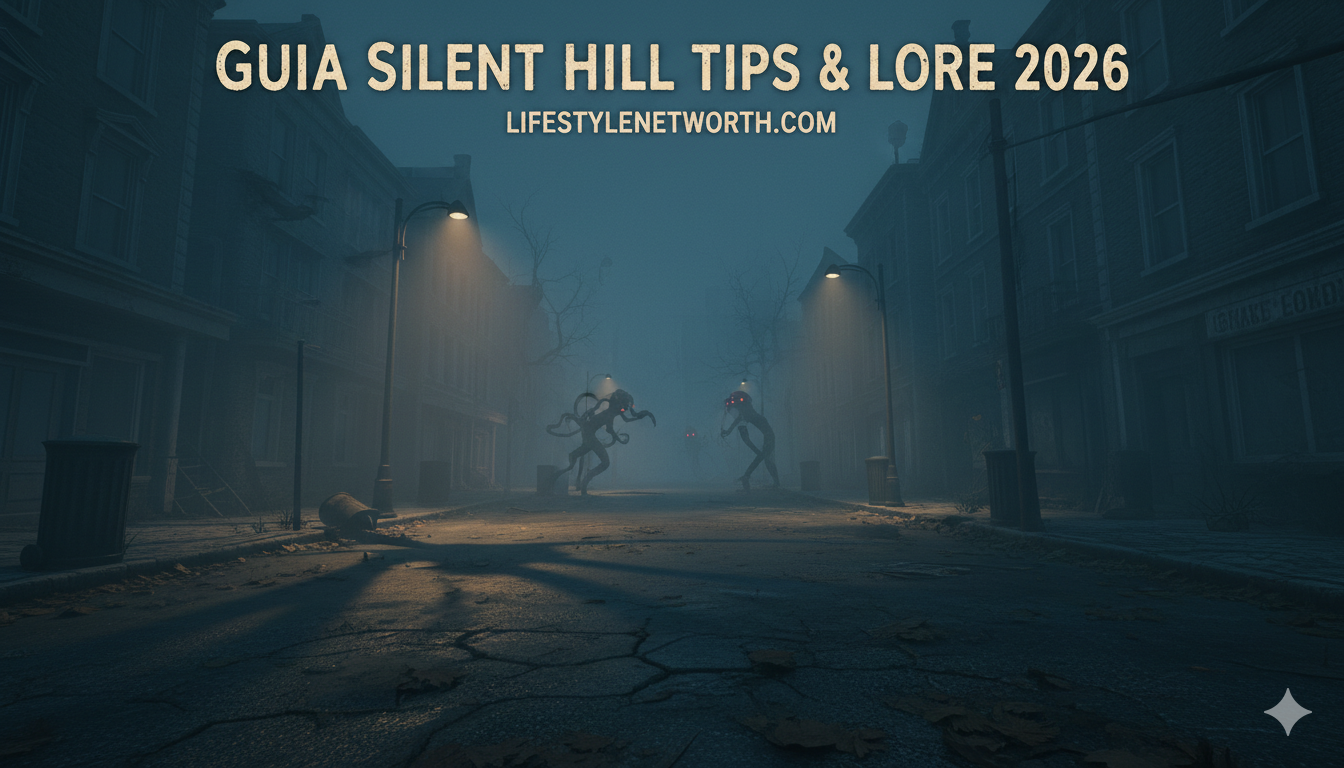
Silent Hill operates through layers of symbolism that transform it from simple horror into psychological examination. Every environmental detail, monster design, and narrative element carries deeper meaning requiring interpretation.
The omnipresent fog represents confusion, repression, and the obscuring of truth characters desperately avoid confronting. It creates literal and metaphorical limitation of vision, forcing characters into uncomfortable proximity with their fears.
Rust, decay, and deterioration throughout environments symbolize corruption of innocence and moral degradation. The physical decay of Silent Hill mirrors the psychological decay of characters drawn to the town.
Water appears repeatedly as a purification symbol but also represents drowning in guilt and emotional overwhelm. Lakes, rain, and flooding all connect to themes of cleansing, rebirth, or being consumed by remorse.
Religious imagery particularly from Christian and occult traditions saturates the series’ symbolism. Crosses, rituals, and sacrificial themes explore humanity’s relationship with sin, punishment, and redemption through suffering.
The transformation between normal Silent Hill and the Otherworld represents the boundary between conscious awareness and repressed trauma. Crossing this threshold forces characters to acknowledge what they’ve hidden from themselves.
Unlike jump-scare focused horror, Silent Hill creates sustained dread through atmosphere and psychological manipulation. The horror emerges from within characters’ minds rather than external monster threats alone.
Sound design plays crucial roles in creating unease through Akira Yamaoka’s industrial ambient soundtrack. The combination of mechanical grinding, distant sirens, and unsettling melodies keeps players perpetually on edge.
Limited visibility from fog and darkness forces reliance on flashlights and radio static for navigation. This sensory deprivation heightens anxiety as players never know what lurks just beyond their circle of light.
The games explore deeply uncomfortable themes like child abuse, domestic violence, and mental illness with maturity. These real-world horrors prove more disturbing than any supernatural monster because they reflect actual human experiences.
Ambiguity in narrative and symbolism prevents easy answers or comfortable resolution. Players must interpret events and question their own perceptions, creating intellectual engagement that lingers long after gameplay ends.
The series treats protagonists’ psychological states as seriously as physical dangers they face. Mental deterioration, dissociation, and trauma responses receive thoughtful representation rather than exploitation for shock value.
Silent Hill 2 (2001) universally ranks as the franchise’s masterpiece and arguably the greatest horror game ever made. Its psychological depth, symbolic richness, and emotional impact remain unmatched decades after release.
The original Silent Hill (1999) deserves recognition for establishing the series’ foundation and atmosphere. While graphically dated, its story and conceptual design introduced elements that defined the entire franchise.
Silent Hill 3 (2003) continues the first game’s storyline through Heather Mason with impressive visuals and monster designs. It lacks Silent Hill 2’s subtlety but delivers visceral horror and satisfying narrative closure.
Silent Hill 4: The Room (2004) divides fans with its experimental room-based structure and departure from established formulas. Its unsettling atmosphere and unique mechanics make it worth experiencing despite pacing issues.
Silent Hill: Shattered Memories (2009) reimagines the original with innovative psychology-based mechanics that adapt gameplay to player responses. This underrated entry deserves more recognition for its creative risk-taking.
Later entries like Homecoming and Downpour receive mixed reception due to Western development lacking Team Silent’s understanding. They contain enjoyable moments but fail to capture the psychological depth of earlier games.
The Silent Hill 2 remake’s critical and commercial success proved that classic horror games can be successfully modernized. Its million-copy sales in three days demonstrated strong demand for thoughtful horror experiences.
Bloober Team’s respectful approach—preserving story while updating graphics and controls—provides a blueprint for future remakes. They proved that understanding source material’s core appeal matters more than wholesale reinvention.
The remake introduces Silent Hill’s psychological horror to a new generation raised on action-focused games. Many younger players experience this narrative masterpiece for the first time through accessible modern presentation.
Its success potentially opens doors for remakes of the first Silent Hill and Silent Hill 3. Fans eagerly anticipate Konami’s next moves after years of franchise dormancy and canceled projects.
The attention to atmospheric detail using Unreal Engine 5 sets new standards for environmental storytelling in horror games. Lighting, texture work, and sound design demonstrate how technology enhances rather than replaces artistic vision.
Cross-platform availability ensures wider accessibility than the original PlayStation 2 exclusive ever achieved. PC and console releases mean more players can experience this genre-defining title legally and easily.
Guia Silent Hill Geekzilla distinguishes itself through balancing practical guidance with intellectual analysis. Where typical walkthroughs simply provide solutions, this guide explains the “why” behind every design choice.
The platform encourages player engagement rather than passive solution-seeking. It offers hints and contextual information that allow discovery while preventing frustration from obtuse puzzle design.
Community contributions from longtime fans enrich the guide with diverse interpretations and strategies. This collaborative approach ensures multiple perspectives on ambiguous narrative elements and symbolic meanings.
The guide addresses both gameplay mechanics and literary analysis with equal seriousness. It respects players who want pure survival tips while providing depth for those seeking deeper understanding.
Regular updates incorporate new discoveries, fan theories, and insights from game developers’ interviews. This living document approach keeps content fresh and relevant years after individual games’ releases.
The resource acknowledges the franchise’s flaws and controversial entries honestly while celebrating its achievements. This balanced perspective helps newcomers understand the series’ evolution and varying quality across installments.
Ammunition scarcity defines Silent Hill’s challenge, making every bullet count toward survival. Players should establish clear criteria for when firearms justify the resource expenditure versus running past threats.
Health drinks and first-aid kits should be stockpiled for boss encounters and unavoidable multiple-enemy situations. Using healing items immediately after minor damage wastes resources better saved for critical moments.
Always check every corner, drawer, and container for supplies before leaving an area permanently. Backtracking becomes difficult or impossible, making thorough initial exploration essential for resource acquisition.
Melee weapons break or become less effective over time in some entries. Carry backup options and rotate weapon use to prevent getting caught unarmed during crucial encounters.
Save points should be used strategically rather than compulsively after every minor progress. Limited save items in some games require balancing the security of frequent saves against running out before game completion.
Consider difficulty settings’ impact on resource availability before starting your playthrough. Higher difficulties drastically reduce supplies, demanding near-perfect resource management from experienced players only.
The Order represents Silent Hill’s primary antagonist organization across multiple games. This religious cult believes the town possesses sacred properties for birthing their god into the physical world.
Dahlia Gillespie serves as a key cult figure manipulating events in the original Silent Hill. Her daughter Alessa becomes the vessel for the cult’s ritual, suffering immolation that fractured her soul.
The cult’s theology mixes Christianity, Gnosticism, and pagan traditions into a syncretic belief system. They interpret suffering as purification and view Silent Hill as the sacred ground where heaven manifests.
In Silent Hill 3, the cult attempts to birth their deity through Heather, Alessa’s reincarnation. Claudia Wolf leads this effort, genuinely believing the god’s arrival will create paradise despite its monstrous nature.
Understanding cult motivations provides crucial context for supernatural events throughout the series. Their rituals and beliefs directly cause Silent Hill’s transformation into a nightmare realm pulling troubled souls.
The cult represents fanaticism’s dangers when religious belief disconnects from empathy and ethics. Their willingness to torture children for spiritual goals makes them genuinely evil beyond typical video game antagonists.
The 2006 Silent Hill film directed by Christophe Gans adapts elements from the first game while creating its own narrative. It successfully captures the atmospheric horror and visual design despite significant plot changes.
Pyramid Head’s inclusion despite having no connection to the film’s story demonstrates misunderstanding of the games’ character-specific symbolism. His appearance panders to fans while undermining the monster’s psychological significance.
The film’s emphasis on a witch-burning backstory simplifies the game’s complex cult mythology. This change makes the story more conventionally horror-focused at the expense of psychological depth.
Silent Hill: Revelation (2012) attempts to adapt Silent Hill 3 with disastrous results. Poor writing, cheap effects, and fundamental misunderstanding of source material make it nearly unwatchable.
Christophe Gans is developing a new Silent Hill film called Return to Silent Hill based on Silent Hill 2. Given his previous attempt’s mixed success, fans remain cautiously optimistic about this adaptation.
The films struggle with adapting the games’ interactive psychological elements to passive viewing format. What works in gameplay—personal interpretation and player choice—doesn’t translate directly to cinema.
Dodging mechanics in newer entries and the 2024 remake allow skilled players to avoid damage entirely. Mastering dodge timing transforms combat from resource-draining necessity to manageable encounters requiring pattern recognition.
Stomping downed enemies ensures they stay dead and won’t grab your ankles unexpectedly. This finishing move costs no resources but requires vulnerability during the animation, demanding situational awareness.
Blocking with melee weapons reduces damage taken when dodging isn’t possible or enemies attack from unexpected angles. This defensive option preserves health items for situations where damage becomes unavoidable.
Environmental hazards can damage or kill enemies without expending ammunition or melee weapon durability. Lure creatures near explosive barrels, fires, or ledges for resource-free elimination when possible.
Boss fights often feature specific weak points or attack windows requiring observation rather than brute force. Study patterns during initial encounters before committing resources to full offensive strategies.
Different weapons prove more effective against specific enemy types based on their movement patterns and vulnerabilities. Experimentation reveals which tools work best for each creature type you’ll face repeatedly.
Silent Hill’s relatively short length makes it popular for speedrunning communities seeking optimized routes. World records require intimate knowledge of glitches, shortcuts, and precise movement execution.
No-damage runs represent the ultimate test of combat mastery and enemy knowledge. These challenge runs demand perfect dodging, efficient routing, and sometimes creative use of environmental advantages.
Item randomizers add replayability by shuffling key item locations, forcing adaptation and problem-solving. These mods create fresh experiences for players who’ve memorized standard item placements.
Knife-only runs prohibit firearms, demanding melee combat excellence and strategic enemy avoidance. This challenge intensifies the survival horror experience by removing the security of ranged weapons.
The 10-star ranking system in some entries rewards efficient, low-damage, puzzle-solving expertise. Achieving top ranks requires balancing speed, combat performance, and resource conservation simultaneously.
Community challenges like playing with inverted controls or without HUD elements test adaptability. These self-imposed restrictions keep the games engaging long after standard playthroughs lose novelty.
The “Loop Theory” suggests each Silent Hill game represents cyclical realities trapping characters in eternal punishment. Evidence includes recurring dates, locations, and thematic parallels across seemingly unconnected entries.
Some fans theorize that all protagonists are actually dead and Silent Hill serves as purgatory or hell. This interpretation reframes events as judgment rather than psychological manifestation, though it remains controversial.
James’s wife Mary versus Maria represents the Madonna-whore complex in psychological interpretation. Maria embodies James’s repressed sexual desires while Mary represents idealized purity he feels guilty for resenting.
The “Wish Theory” proposes Silent Hill grants unconscious desires while forcing confrontation with their costs. Characters get what they secretly want—reunion, punishment, escape—but not in forms they consciously expect.
Pyramid Head possibly represents James’s idealized masculine protector fantasy that becomes monstrous through guilt. The creature protects by destroying threats but its violence reflects James’s self-loathing turned outward.
The identity of the “Dog Ending’s” Mira controlling events from a laboratory remains gaming’s most beloved absurdist joke. This Easter egg playfully undermines serious theories while rewarding thorough exploration.
UFO components scattered across maps unlock the comedic UFO endings in multiple games. Finding these seemingly useless items requires thorough exploration and attention to easily-missed interactive points.
Weapons like the chainsaw and hyper spray appear as rewards for completing games on specific difficulties. These overpowered tools make subsequent playthroughs easier while adding variety to combat options.
Hidden photos, memos, and documents provide additional lore and character background beyond main narrative. Completionists should check every surface and container for these optional but enriching collectibles.
Easter eggs referencing other Konami games, horror films, and pop culture appear throughout the series. Sharp-eyed players spot nods to Metal Gear Solid, The Shining, and Jacob’s Ladder among others.
Secret costumes unlock after meeting specific completion criteria, adding cosmetic variety to replays. Seeing James in classic outfits or joke costumes provides levity after intense horror experiences.
The Book of Lost Memories from Silent Hill 2 serves as in-game encyclopedia expanding on cult lore. This optional reading material rewards curious players with deeper understanding of the series’ mythology.
Akira Yamaoka’s soundtrack defines Silent Hill’s auditory identity with industrial ambient noise mixed with haunting melodies. His compositions create tension through dissonance while occasional beauty provides emotional depth.
The contrast between otherworld’s harsh industrial sounds and normal world’s melancholic music emphasizes the psychological divide. Each audio landscape communicates different aspects of characters’ mental states.
Silent Hill 2’s “Theme of Laura” and “Promise (Reprise)” rank among gaming’s most emotionally powerful pieces. These piano compositions convey the tragedy of James and Mary’s relationship without words.
Sound effects like footsteps on metal grating, distant air raid sirens, and radio static create constant low-level anxiety. The audio design ensures players never feel completely safe even during exploration.
Voice acting deliberately maintains slight awkwardness and emotional distance in many entries. This unconventional direction enhances the dreamlike, dissociative quality rather than indicating poor performance.
The remake’s updated soundtrack by Yamaoka modernizes classic tracks while offering original versions as unlockable option. This approach respects both nostalgia and modern production values.
PC mods enhance older Silent Hill games with improved textures, fixed bugs, and widescreen support. These community efforts preserve playability as original hardware becomes obsolete.
The Enhanced Edition mod for Silent Hill 2 PC restores visual effects and audio from the PS2 version. This comprehensive fix addresses problems introduced in the official HD Collection remaster.
Fan translations make Japanese-exclusive content and documents accessible to Western players. These projects fill gaps in official localizations while demonstrating global community dedication.
Custom texture packs update character models and environments while respecting original artistic direction. Modern graphics options make classic games more palatable to players accustomed to contemporary visual standards.
Randomizer mods shuffle item locations, enemy placements, and sometimes puzzle solutions for fresh experiences. These tools extend replayability for veterans who’ve exhausted standard content.
Tool-assisted speedruns demonstrate theoretically perfect play through frame-perfect inputs. These showcase games’ mechanical depths while entertaining audiences with superhuman precision.
The Silent Hill 2 remake remains available on PlayStation 5, PC via Steam, and Xbox Series X/S following its November 2025 expansion. Modern platforms provide the best way to experience this recent release.
Original Silent Hill through Silent Hill 4 require PS2 hardware, backwards-compatible PS3, or PC versions of varying quality. Collector market prices for physical copies have increased significantly.
The Silent Hill HD Collection for PS3 and Xbox 360 received poor reception due to technical issues and misguided changes. Purists recommend avoiding this version in favor of original releases.
Emulation provides viable alternative for experiencing classic entries on modern hardware. PCSX2 for PS2 games runs Silent Hill titles excellently with enhanced resolution options.
GOG.com previously sold PC versions but licenses expired, making legal digital acquisition difficult. Second-hand market or physical PC copies remain the only official purchase options.
Silent Hill: Shattered Memories and Origins exist primarily on PSP, PS2, and Wii. These underrated entries require older hardware or emulation for contemporary players to experience.
Choose normal difficulty for your first playthrough to experience balanced challenge without excessive frustration. Save higher difficulties for subsequent runs after mastering mechanics and understanding expectations.
Play with headphones in a dark room for maximum atmospheric immersion. Silent Hill’s audio design and visual presentation work best when environmental distractions are minimized.
Resist the temptation to look up solutions immediately when stuck on puzzles. The satisfaction of solving cryptic riddles yourself enhances the experience, and games provide enough clues with patience.
Read every document and examine all items thoroughly for crucial information and lore. The games reward careful attention to detail with richer understanding of events.
Accept that not everything will make complete sense on first playthrough. Silent Hill’s ambiguity and symbolism reveal themselves gradually through replay and contemplation.
Engage with the community after completion to discuss interpretations and theories. The conversations around Silent Hill often prove as enriching as playing the games themselves.
Konami announced multiple Silent Hill projects in 2022 including Silent Hill f, Townfall, and Ascension. These titles represent the franchise’s ambitious revival after years of dormancy.
Silent Hill f, developed by NeoBards Entertainment, takes the series to 1960s Japan for the first time. This setting promises fresh perspectives while maintaining the psychological horror foundation.
Silent Hill: Townfall from No Code Studios remains mysterious with minimal details revealed. The developer’s previous work on observation suggests potential for experimental narrative approaches.
The success of the Silent Hill 2 remake potentially greenlights additional remakes of earlier entries. Fans particularly hope for modernized versions of the first and third games.
Bloober Team expressed interest in developing more Silent Hill content beyond the remake. Their proven understanding of the franchise makes them strong candidates for future projects.
The franchise’s renaissance in 2024-2026 demonstrates enduring demand for thoughtful psychological horror. After years of false starts and cancellations, Silent Hill finally receives the attention it deserves.
Guia Silent Hill Geekzilla is a comprehensive fan-created guide that provides detailed walkthroughs, puzzle solutions, lore analysis, and survival strategies for all Silent Hill games. It combines practical gameplay tips with deep psychological and symbolic interpretation.
Start with either the original Silent Hill (1999) or Silent Hill 2 (2001), particularly the 2024 remake of the latter. Silent Hill 2 offers the most refined experience and requires no prior series knowledge to appreciate fully.
Absolutely yes—the remake successfully modernizes the 2001 classic with stunning visuals, improved controls, and expanded content while preserving the psychological depth and emotional impact. It sold over one million copies in three days for good reason.
Silent Hill 2’s psychological narrative exploring guilt, grief, and trauma through James Sunderland’s journey represents horror gaming’s pinnacle. Its symbolic depth, emotional maturity, and multiple interpretations create an unforgettable experience that transcends typical video game storytelling.
Original Silent Hill games typically require 6-10 hours for first playthroughs, while the 2024 Silent Hill 2 remake extends to 15-20 hours. Multiple endings encourage 2-3 playthroughs to experience all narrative possibilities.
Silent Hill 1 and 3 directly connect through protagonist Heather Mason, while other entries feature standalone stories. However, shared themes, symbolism, and the town itself create thematic connections throughout the franchise.
Silent Hill emphasizes psychological horror, symbolism, and atmospheric dread over Resident Evil’s action-focused gameplay. While Resident Evil features biological threats and resource puzzles, Silent Hill explores trauma through supernatural manifestations.
The Silent Hill 2 remake is available on PS5, Xbox Series X/S, and PC. Original games require older hardware, emulation, or backwards-compatible systems, as modern ports are limited or poorly executed.
Pyramid Head represents James Sunderland’s need for punishment in Silent Hill 2 specifically. He embodies guilt, sexual frustration, and the desire for consequences, making his appearance in other media often contextually inappropriate.
Yes, with caveats—Silent Hill 2 particularly offers accessible difficulty options and focuses on psychological rather than jump-scare horror. However, mature themes including abuse, suicide, and trauma require emotional readiness from players.
Guia Silent Hill Geekzilla serves as an indispensable companion for anyone venturing into the fog-shrouded streets of this legendary horror franchise.
Whether you’re experiencing James Sunderland’s guilt-ridden journey for the first time in the stunning 2024 remake or revisiting classic entries from the Team Silent era, this comprehensive resource enriches every moment of your psychological descent.
The guide’s unique blend of practical survival strategies and deep symbolic analysis transforms Silent Hill from mere gameplay into a profound exploration of human trauma, fear, and redemption.
As the franchise experiences its renaissance with new projects on the horizon, both newcomers and veterans benefit from the collective wisdom gathered here.
Silent Hill’s lasting impact on horror gaming stems from its willingness to explore uncomfortable truths about the human psyche—and Guia Silent Hill Geekzilla ensures you’re equipped to confront those truths while surviving the nightmares they manifest.