Jan 01, 1970
0 years old
What does green mean on a mood ring? Green on a mood ring typically represents balance, calmness, and emotional stability. It suggests that the wearer is feeling relaxed, at ease, and in a neutral or harmonious state.
Mood rings use thermochromic liquid crystals to change color based on body temperature, which can loosely reflect emotional or physiological changes. While not scientifically precise, the color chart provides a fun way to interpret moods.
Green is often considered one of the more positive and stable colors, indicating that the wearer is not overly stressed or anxious. Understanding what green signifies can help you read your mood ring more accurately and enjoy its playful insights.
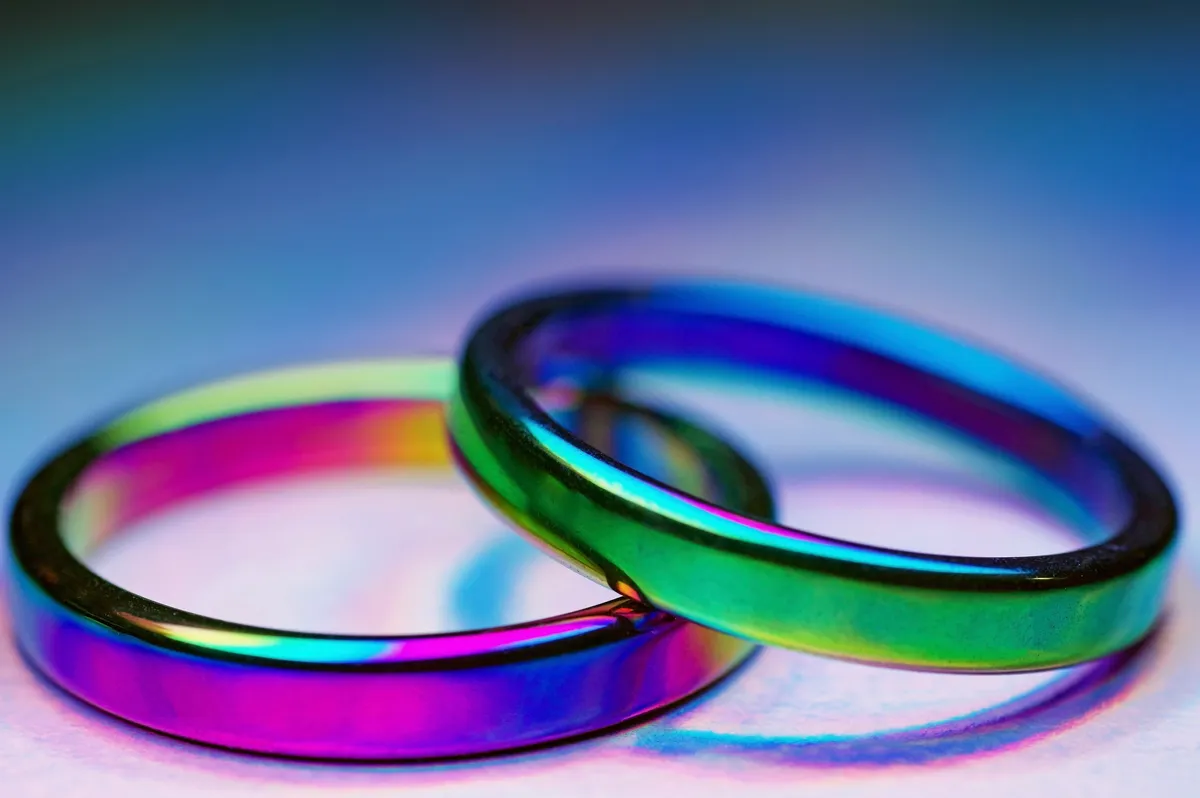
A mood ring is a unique piece of jewelry that changes color based on the temperature of the wearer’s skin. The ring typically appears as a simple band but contains thermochromic liquid crystals that change color in response to body temperature fluctuations.
The idea behind a mood ring is to provide a visual representation of the wearer’s emotional state, since body temperature can vary slightly with different feelings. Mood rings offer a fun way to express and observe moods as colors.
When wearing a mood ring, the ring changes color in response to temperature changes in the finger, which is often linked to emotional states like stress, relaxation, or excitement. This fascinating combination of science and symbolism has made mood rings popular since their invention.
Behind mood rings lies a clever interplay of physics and chemistry. The color changes seen on a mood ring stem from thermochromic liquid crystals embedded in the ring. These liquid crystals have the remarkable ability to change their molecular arrangement based on temperature, altering the wavelength of light they reflect.
When the temperature of the wearer’s skin changes, the liquid crystals respond by shifting their alignment, which causes the ring’s color to change.
This means the ring’s color spectrum is essentially a thermometer displaying subtle temperature variations. The behind mood ring colors are not just random but are linked to this precise scientific phenomenon.
Mood rings contain thermochromic liquid crystals, materials that are sensitive to temperature and can display a range of colors depending on it. These crystals are layered under the surface of the ring and are protected by a clear casing.
When the wearer’s body temperature changes—often due to emotional shifts—the crystals adjust their crystalline structure, resulting in changing reflected light and visible color shifts.
The science behind mood rings shows that the rings use light refraction and crystal pattern changes to produce colors like green, blue, purple, red, and even black. This thermotropic behavior is what makes mood rings a fun yet scientifically interesting type of mood jewelry.
Green is a common and calming color on a mood ring, often associated with balance and harmony. According to many mood ring color charts, green means the wearer is calm, relaxed, or at peace.
The green mean on a mood ring suggests that the wearer’s emotional state is content and stable, indicating neither extreme excitement nor stress. Green is a color used to represent nature, growth, and healing, and these symbolic associations likely contribute to its meaning on the color spectrum of mood rings.
When a mood ring turns green, it typically means the body temperature is moderate, indicating a relaxed mood rather than heightened emotional intensity. This color often appears right in the middle between cooler colors like blue and warmer colors like yellow or red on the mood ring chart.
Besides green, mood rings can display a range of fascinating colors, each with its own meaning. For example:
Blue mood ring: Often means the wearer is peaceful, happy, or emotionally calm.
Dark blue mood ring: Suggests deep relaxation or calm concentration.
Light blue mood ring: Indicates a relaxed and content emotional state.
Yellow mood ring: Shows a mixed or anxious mood.
Red mood ring: Suggests excitement, passion, or even stress.
Purple mood ring: Suggests creativity and strong emotions.
Black or gray mood ring: Means the ring is either cold or the wearer is feeling stressed, angry, or tense.
The mood ring color meanings help wearers interpret their or others’ emotional states based on the changing color.
While mood rings may seem magical, their readings are not 100% accurate in directly identifying emotional states. Since the ring changes color in response to temperature, it reflects physical changes rather than exact emotions.
Mood ring color changes respond primarily to body temperature, which can fluctuate for many reasons unrelated to mood, such as room temperature or physical activity.
However, mood rings still provide a useful and fun insight into how the wearer might be feeling, especially if combined with other emotional cues. The science behind mood rings suggests they offer an indirect but often entertaining suggestion about the wearer’s emotional condition.
Body temperature is the key driver behind mood ring color changes. When the wearer is relaxed and calm, their finger temperature tends to be stable and moderate, producing colors like green or blue.
When a person is excited, stressed, or anxious, their blood flow and skin temperature can fluctuate and cause the ring to show warmer colors like red or yellow.
The thermochromic liquid crystals inside the ring react instantly to these subtle changes in temperature, resulting in real-time color changes. These temperature-driven color variations make mood rings a fascinating example of thermotropic materials used in wearable mood jewelry.
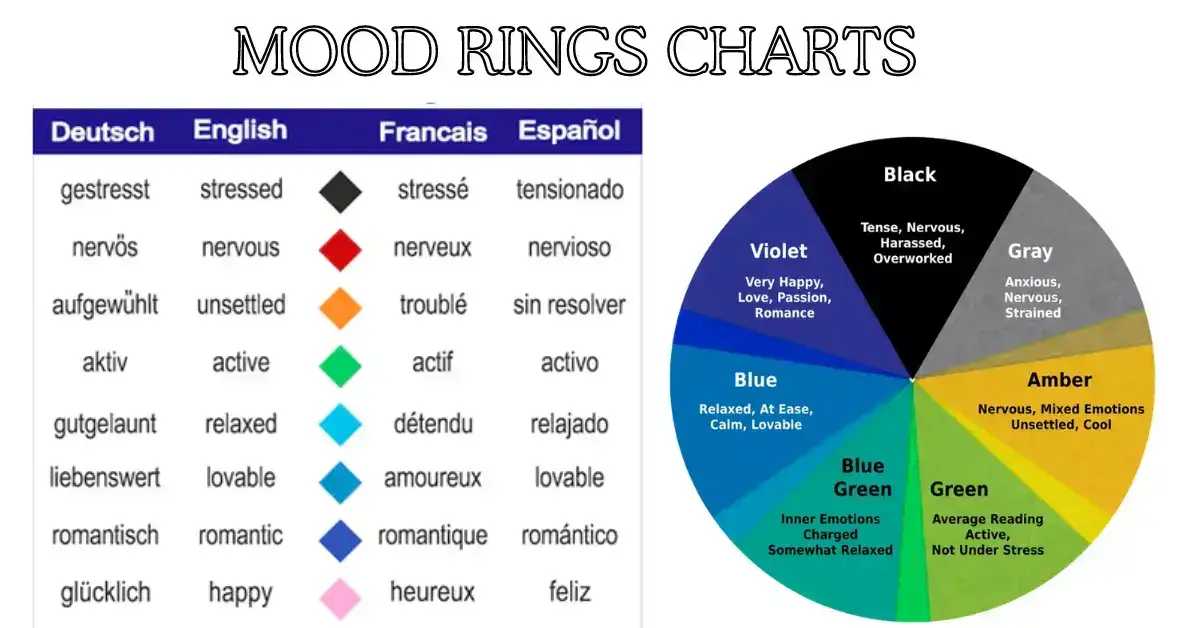
A mood ring color chart is a guide that helps interpret the various colors mood rings display and what they traditionally mean. These charts typically list colors such as green, blue, yellow, red, purple, black, gray, and white, explaining the common emotional states linked to each color.
Using a mood ring color chart helps wearers decode their ring’s color changes more accurately, giving context to whether a green mood ring means calmness or if a dark blue mood ring shows deep relaxation.
This chart is vital for anyone curious about understanding the meaning behind the colors and how the wearer’s emotional state correlates with the colors and meanings depicted.
The invention of the mood ring dates back to the 1970s by New York inventors Maris Ambats and Josh Reynolds. They developed the concept using thermochromic liquid crystals that change color based on temperature, creating what quickly became a popular piece of mood jewelry.
The science behind mood rings lies in thermotropic liquid crystals — a fascinating class of materials that respond visibly to temperature changes.
This scientific foundation allows mood rings to change color in response to the wearer’s body heat, indirectly linking to the wearer’s emotions through physiological signals like blood flow.
With advancements in technology, the future of mood rings and mood jewelry looks promising. Modern mood rings may incorporate more precise sensors or blend liquid crystal technology with digital features for enhanced emotion detection.
As the science behind mood expands, so too does the potential for more accurate readings of emotional states through wearable devices. Mood rings could evolve into even more interactive and personalized mood jewelry, combining the fun and mystery of color changes with deeper insights into health and mood.
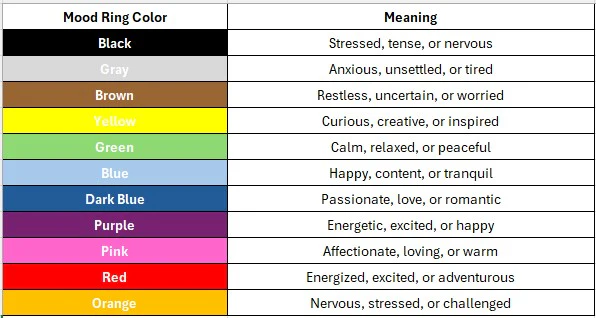
Blue on a mood ring typically represents calmness, relaxation, and peace. Mood rings contain thermochromic liquid crystals that react to body temperature, causing the ring to change colors based on the wearer’s heat.
A blue hue generally appears when the body is at a moderate temperature, suggesting that the wearer is feeling emotionally balanced and at ease.
Different shades of blue can indicate slightly different moods. Light blue often signals contentment and serenity, while dark blue may reflect deep relaxation, focus, or even introspection.
Mood rings are not scientifically accurate indicators of emotion, but they offer a visual cue that corresponds to physical changes like stress, excitement, or calmness, which can loosely reflect emotional states.
Wearing a mood ring that shows blue can serve as a gentle reminder to maintain a relaxed and peaceful mindset. It’s also a fun and playful accessory that encourages self-awareness and reflection on how your body and mind respond to various situations throughout the day.
Do mood rings actually work?
Mood rings don’t actually read emotions. They contain thermochromic liquid crystals that change color based on temperature, which can loosely correlate with stress or excitement but isn’t scientifically precise.
Why is my mood ring purple?
Purple usually indicates mixed emotions or a heightened state of curiosity and imagination. Color interpretations can vary by manufacturer.
What does a dark blue on a mood ring mean?
Dark blue typically represents calmness, relaxation, or contentment.
What emotion is the green ring?
Green generally signals neutral or balanced emotions, meaning the wearer is in a steady mood.
Can mood rings get wet?
Mood rings are usually not waterproof. Exposure to water can damage the band or the liquid crystals inside the ring.
What activates a mood ring?
Mood rings are activated by body heat, which changes the temperature of the liquid crystals and causes the ring to shift colors.
Can you break a mood ring?
Yes, mood rings are delicate. Strong impact, bending, or exposure to chemicals can break the crystal or damage the color-changing element.
What does pink mean on a mood ring?
Pink often indicates love, affection, or romantic feelings, although interpretations vary slightly depending on the brand and chart provided.
Mood rings use thermochromic liquid crystals to change colors based on the wearer’s body temperature.
Green on a mood ring typically means calmness, relaxation, and balance in the wearer’s emotional state.
Mood ring colors, including blue, red, yellow, purple, and black, each correspond to different moods or states.
The science behind mood rings involves temperature-driven changes in liquid crystal structure, causing color shifts.
Mood rings are fun but provide only an indirect reflection of the wearer’s emotional state.
The mood ring color chart helps interpret the ring’s color and the wearer’s possible mood.
Invented by Maris Ambats and Josh Reynolds, mood rings became popular in the 1970s.
The future of mood rings may involve more advanced technology to improve mood detection accuracy.
By understanding the meaning behind green on a mood ring and the broader science and symbolism of mood ring colors, wearers can enjoy this unique piece of jewelry both as a fun accessory and a fascinating insight into moods.
In conclusion, green on a mood ring generally represents a balanced, neutral, and calm emotional state. It indicates that the wearer is feeling steady, relaxed, and in harmony with their surroundings.
Mood rings respond to body temperature, so the green color reflects a middle range of warmth, suggesting neither high stress nor extreme excitement.
While mood rings are not scientifically precise in reading emotions, they offer a fun and visual way to reflect changes in mood. Understanding what green signifies can help wearers and observers interpret these subtle emotional cues, making mood rings both a playful accessory and a conversation starter about emotional awareness.
Macron wife age difference is approximately 24 years, with Brigitte...

Fortune Justin Bieber: Justin Bieber’s fortune is estimated to exceed...