What Does FOH Mean? FOH means Front of House in professional settings and F** Outta Here* in slang. The meaning depends on the context, whether it’s business, hospitality, or casual texting.
In restaurants, theaters, or event management, FOH refers to customer-facing operations like reception, servers, ushers, or any staff directly interacting with guests. On the other hand, in everyday conversation or texting, FOH is often used as slang to dismiss someone, showing annoyance or disbelief.
Because it carries both formal and informal meanings, FOH is a versatile acronym that can shift between professional use and casual slang. Understanding the situation is key to interpreting it correctly, whether it’s workplace communication or informal chats.

What Does FOH Mean in the Restaurant Industry?
FOH stands for “front of house,” a term widely used in the restaurant industry to describe all areas and staff that interact directly with customers. The front of house includes everything from the dining area and the host stand to the bar.
It is the first point of contact for guests and thus plays a crucial role in creating a welcoming atmosphere and ensuring a smooth dining experience. Specifically, FOH means the teams responsible for greeting guests, managing reservations, serving drinks, and providing excellent customer service.
Unlike the back of house (BOH), which is where the kitchen staff prepares food, the FOH team is visible to customers and directly influences customer satisfaction through their service and demeanor. Understanding the meaning of FOH helps clarify why these roles are vital to a restaurant’s success.
What Is Front of House vs Back of House?
The phrase “front of house vs back of house” is often used to highlight the distinct areas and roles within a restaurant. Front of house refers to all customer-facing areas and staff while back of house pertains to kitchens, storage rooms, and the kitchen staff who prepare food away from guests’ eyes.
These two spheres work side by side but have very different responsibilities. The back of the house manages food preparation, cooking, and cleaning dirty dishes, making sure that the food quality and safety standards are met.
Meanwhile, the front of the house staff — including servers, bartenders, hosts, and sommeliers — ensure guests enjoy an inviting dining experience through greeting, taking orders, serving drinks, and addressing customer complaints.
Restaurant success depends on the smooth collaboration between FOH and BOH staff. Both are equally important but focus on different aspects of restaurant management and operations.
What Are the Common Front of House Positions?
Front of house positions vary depending on the size and style of the restaurant, but some roles are commonly found across most dining establishments. The most visible FOH roles include servers, hosts or hostesses, bartenders, and sommeliers.
Servers are the primary point of contact for guests during a meal, responsible for taking orders, serving food and drinks, and ensuring a smooth dining experience. Hosts and hostesses greet guests upon arrival, manage the host stand, and organize seating to reduce wait time.
Bartenders prepare and serve drinks, often engaging customers at the bar, while sommeliers specialize in wine service, assisting guests with the wine list to elevate the dining experience.
Each position requires teamwork and strong communication skills to deliver excellent customer service and maintain a clean and organized environment, which is a hallmark of a successful restaurant.
How Does the FOH Team Contribute to Customer Satisfaction?
Customer satisfaction starts the moment a guest walks into a restaurant, making the FOH team essential in creating a positive dining experience. Greeting guests warmly, addressing their needs promptly, and maintaining a calm demeanor under pressure are ways the front of house staff enhance customer satisfaction.
The FOH staff must anticipate customer needs, handle customer complaints with professionalism, and collaborate with kitchen staff to ensure timely delivery of food from the kitchen. Their role in managing the dining area flow reduces wait times and helps keep guests comfortable and happy throughout their visit.
Moreover, a well-trained FOH team helps uphold the restaurant’s reputation for excellent customer service, which directly impacts repeat business and the overall success of the restaurant.

What Skills Are Essential for Front of House Staff?
Working in a restaurant’s front of house demands a variety of skills.
- First and foremost, strong communication skills are vital for interacting effectively with customers and coordinating with the kitchen manager and back of house staff.
- FOH staff must have a strong understanding of customer service to create a welcoming atmosphere and a smooth dining experience.
- Being calm under pressure is another key skill since FOH employees often juggle multiple tasks and handle customer complaints in busy service periods.
- Additionally, attention to detail in areas like keeping the host stand clean and organized, or remembering special dietary requirements, contributes to flawless FOH operations.
- Successful restaurant managers often emphasize these skills when hiring or training their front of house team to ensure top-quality service.
What Are the Responsibilities of FOH Staff?
- The responsibilities of front of house staff encompass all activities that involve direct contact with guests.
- This includes greeting guests at the door, managing reservations, seating guests courteously, taking orders accurately, serving food and drinks, and processing payments.
- Apart from service, FOH staff must also maintain a clean and organized dining area, manage the flow of guests efficiently, and communicate any customer feedback or complaints to the restaurant manager.
- They often assist in creating a welcoming atmosphere that makes guests feel valued.
- FOH staff play a crucial role in representing the restaurant, so their performance affects the overall dining experience for guests and the success of the restaurant.
How Do FOH and BOH Staff Work Together?
A thriving restaurant depends on the seamless collaboration between FOH and BOH staff. The kitchen manager and kitchen staff in the back of house prepare orders, but it is the front of house team that delivers those orders promptly and handles the presentation and customer interaction.
Effective communication between FOH and BOH teams ensures that customer requests, such as dietary restrictions or special preparations, are honored, and that wait times are minimized. When both teams respect each other’s roles and communicate clearly, the operations of a restaurant run smoothly.
In times of high volume or special events, this cooperation becomes even more critical to maintain quality and speed in service, directly influencing customer satisfaction.
What Challenges Do FOH Employees Face?
FOH positions come with unique challenges, including managing customer complaints, handling peak-hour rushes, and balancing multiple guest requests simultaneously. Since FOH staff are the face of a restaurant, they often absorb frustrations from customers about wait times or issues with their orders.
The requirement to be constantly attentive while remaining calm under pressure can stress even experienced FOH staff. Additionally, coordinations such as updating the restaurant management software for reservations or communicating with kitchen staff regarding menu changes add complexity to their role.
Despite these challenges, strong training and a supportive restaurant team can help FOH employees thrive and deliver excellent service consistently.
How Does Front of House Management Impact Restaurant Success?
The front-of-house manager is responsible for overseeing all FOH operations, including managing staff schedules, ensuring customer service standards are met, and keeping the dining area clean and organized. A successful restaurant manager understands the importance of the FOH in shaping the customer’s dining experience.
Strong front of house management helps in creating a welcoming atmosphere that encourages guests to return, directly leading to higher customer satisfaction and positive reviews.
The FOH manager also handles customer complaints effectively, assists in staff training, and works closely with the kitchen manager to synchronize front and back of house efforts.
Restaurants with skilled FOH managers often report more smooth service, reduced wait times, and a happier team, all contributing to a thriving restaurant business.
What Trends Are Shaping Front of House Operations Today?
Modern front of house operations increasingly rely on technology such as restaurant management software to streamline reservations, seating, and order processing. This helps FOH staff manage guest flow efficiently and reduce errors.
There is also a growing emphasis on training FOH teams to be culturally sensitive and highly customer-oriented, reflecting the diverse needs of diners. Restaurants now focus more on creating personalized experiences by understanding guest preferences, which requires strong communication and data management skills from the FOH team.
The demand for seamless integration of front and back of house through clearer communication channels and tech tools continues to evolve, shaping a more efficient and guest-friendly dining environment.
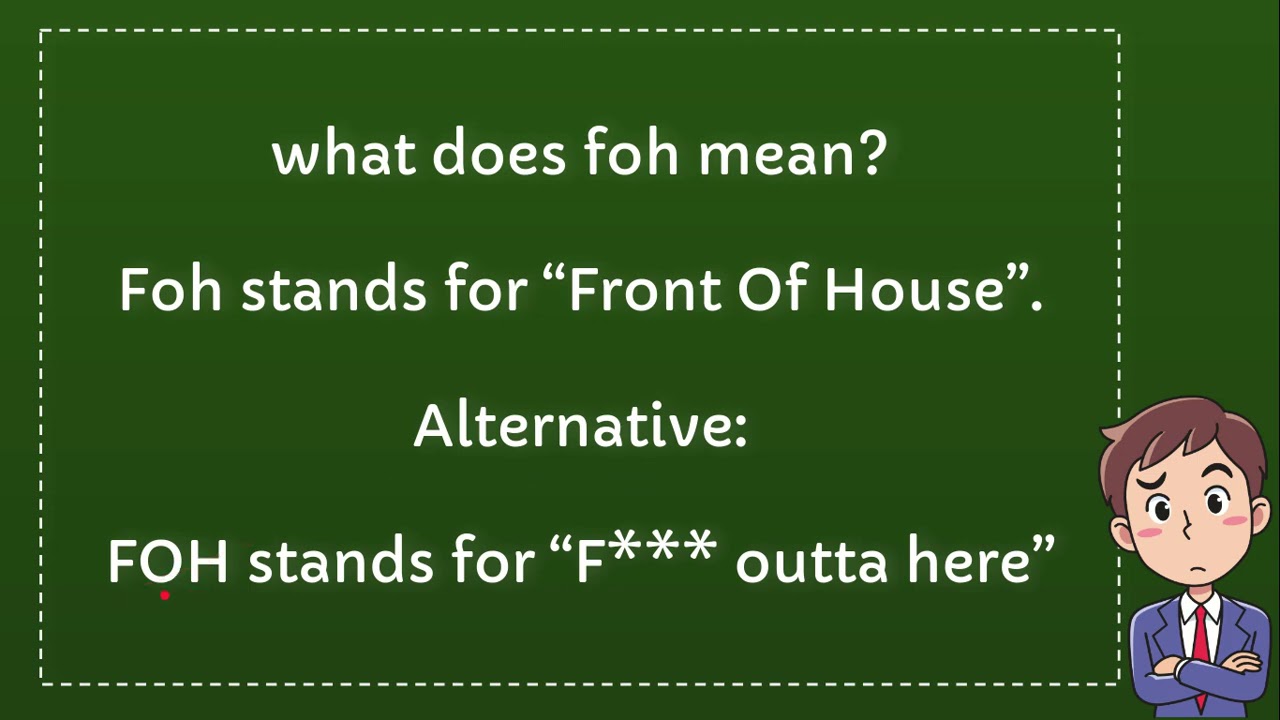
What does FOH mean on snapchat?
FOH as Slang on Snapchat
The most common meaning of FOH on Snapchat is F** Outta Here*. It’s often used as a dismissive response, especially in group chats or private snaps when someone says something unbelievable, annoying, or silly.
For example, if a friend makes an exaggerated claim like “I can eat 20 tacos in one sitting,” someone might reply “FOH ” to playfully dismiss the statement. In this sense, FOH is lighthearted and humorous rather than offensive.
However, FOH can also be used more seriously when someone wants to shut down a conversation or show frustration. On Snapchat, tone is often conveyed with emojis, Bitmojis, or photos, so the mood behind FOH depends on how it’s presented.
Alternative Meaning: Front of House
While less common on Snapchat, FOH can also mean Front of House when used by people in the hospitality or entertainment industry. For example, a server or bartender might snap a picture at work with a caption like “FOH vibes tonight,” referring to the part of the restaurant or bar where they interact with customers. This meaning is more professional but still shows up occasionally.
Why FOH Works on Snapchat?
Snapchat thrives on fast, short, and casual interactions. Abbreviations like FOH save time and add personality to messages. Because many users are young and already familiar with internet slang, FOH has become a quick way to express disbelief, annoyance, or humor without typing out a full sentence.
FAQs
What does foh mean in slang?
FOH means F** Outta Here*—used to dismiss or reject someone in a casual, sometimes rude way.
What does foh mean in business?
In business, FOH usually stands for Front of House, referring to customer-facing operations like reception or service staff.
What does the FOH stand for?
FOH can mean Front of House (business/hospitality) or F** Outta Here* (slang).
What does foh stand for in jobs?
In jobs, FOH refers to Front of House roles, such as servers, cashiers, or receptionists.
What does fwd mean in text from a girl?
FWD means Forward, usually when sharing a message, pic, or post.
What does OHP mean in texting?
OHP can mean Oh, hi people or Overhead Projector (less common in casual texting).
What does FBO stand for in texting?
FBO means Facebook Official, often used when someone publicly confirms a relationship on Facebook.
Is “foh” used in text messaging?
Yes, FOH is commonly used in texting as slang for F** Outta Here*.
Summary: Key Takeaways About FOH
-
FOH means front of house, which includes all customer-facing areas and staff in a restaurant.
-
FOH and BOH (back of house) have distinct roles but must work closely for restaurant success.
-
Common front of house positions include servers, hosts/hostesses, bartenders, and sommeliers.
-
FOH team directly impacts customer satisfaction by greeting guests, serving food, and managing the dining experience.
-
Essential FOH skills include strong communication, calmness under pressure, and excellent customer service.
-
FOH staff responsibilities cover greeting, seating, serving, maintaining cleanliness, and handling complaints.
-
Collaboration between front of house and back of house ensures smooth operations and timely food delivery.
-
FOH employees face challenges like rush hours and customer complaints but thrive with training and support.
-
Front of house management is critical to the success of a restaurant, influencing team efficiency and guest experiences.
-
Technology and personalized service trends are shaping the future of FOH operations and customer satisfaction.
Whether you’re a guest appreciating your dining experience or someone working behind or in front of the scenes, knowing the dynamics between FOH and BOH equips you with a deeper appreciation of restaurant operations.
Conclusion