Jan 01, 1970
0 years old
What disease does John Elway have? The NFL Hall of Famer has openly shared that he suffers from Dupuytren’s contracture, a hand condition that causes the fingers—most often the ring and little fingers—to curl inward toward the palm.
This happens due to a thickening of connective tissue in the hand, which forms cords under the skin and limits finger movement. For Elway, the disease began in his early 50s and quickly impacted his grip, even making it hard to perform simple tasks.
Instead of undergoing invasive surgery, he chose collagenase injections (Xiaflex) that helped break down the tissue and restore mobility. His openness about this condition has increased awareness of Dupuytren’s, which affects millions worldwide, especially men over 50.

Contracture is a condition that causes the fingers to bend toward the palm of the hand and prevents them from straightening fully. John Elway was diagnosed with Dupuytren’s contracture, a progressive disease involving the buildup of collagen beneath the skin of his hand.
This buildup forms a rope-like cord, constricting the tendons and leaving his hand bent in a fixed position. According to reports, this contracture left John Elway unable to fully hold a football, a significant impact for a Hall of Fame quarterback known for his hand strength and dexterity.
John Elway’s hand condition was diagnosed approximately 15 years ago, and he has described the struggle of trying to put his hand flat on a table or fully release his fingers.
Despite his legendary football career, this contracture in his right hand has progressively worsened over the years, demanding that he seek a variety of treatment options—inclusive of non-surgical treatment to attempt to straighten his fingers.
John Elway’s 16-year football career with the Denver Broncos involved high-impact gameplay, constant vibrations to the hands, and repetitive use that some experts believe may contribute to the onset of contracture.
Although the exact cause of Dupuytren’s disease is unknown, hand injuries or occupations involving frequent hand use can play a role.
Elway himself has said he is not certain if playing football caused his contracture, but the evidence that hand injuries or prolonged strain can contribute to this hand condition makes the connection plausible. His experience shows that even star quarterbacks are not immune to hand health issues that can arise from sports-related wear and tear.
Dupuytren’s contracture, also known as “Viking disease,” is a hereditary condition most common in people of Northern European descent. This hand disorder is characterized by a buildup of collagen under the skin, leading to the formation of thick cords and nodules that constrict finger movement.
The name “Viking disease” comes from its prevalence among descendants of Norse populations, reflecting a genetic susceptibility.
According to the Mayo Clinic, Dupuytren’s disease is rather a common condition that may progress slowly over years. Despite this, many people go years without treatment, as the symptoms initially appear mild.
If you notice any symptoms such as lumps or thickened skin toward the palm of your hand, or if you start to experience difficulty straightening your fingers, it’s important to see a hand specialist promptly.
Early intervention can slow contracture progression and offer more treatment options. John Elway’s experience underscores the importance of finding a hand specialist to evaluate the condition before it severely impacts function.
When contracture progresses to the point where your hand is often bent and you are unable to put your hand flat on a table, it’s definitely time to seek treatment. A hand surgeon or specialist can provide expert diagnosis and recommend appropriate management strategies.

XIAFLEX is an enzyme injection designed to break down the collagen buildup that forms the rope-like cords causing contracture. When injected into the cord, it dissolves the collagen and allows the hand surgeon or patient to gently manipulate the finger into a straighter position.
For players like quarterback John Elway and others with Dupuytren’s contracture, Xiaflex offers a promising alternative to more invasive surgery. It’s a non-surgical treatment with FDA approval and has been shown to improve hand function and reduce the need for surgical intervention in many contracture patients.
When contracture progresses beyond the point that non-surgical treatments are effective, surgery may be necessary. The surgical procedure involves removing or releasing the thickened tissue and cords to straighten the affected fingers.
John Elway has had “plenty of surgeries” in the past related to this condition. Surgery comes with risks and a recovery period but can significantly improve hand function and allow patients to hold objects such as a football again.
Hand surgeons often recommend surgery for contracture patients whose condition has left them unable to release their hand or put their palm flat.
Managing contracture is a long-term process that often involves monitoring symptoms, seeking timely treatment, and making lifestyle adjustments to preserve hand health. Patients should regularly check for symptoms such as nodules or cords in their palms and keep hands mobile.
For John Elway, the journey involved seeing hand specialists regularly, exploring both non-surgical and surgical treatments, and maintaining hope for improved function. Contracture is a progressive condition, but with proper care, patients can manage symptoms effectively and maintain hand use to a significant degree.
Currently, there is no definitive cure for Dupuytren’s contracture. Treatment focuses on managing symptoms and restoring hand function as much as possible. Options like Xiaflex represent significant advancements, but contracture can recur over time.
Patients, including John Elway, often live with the condition for years and may require multiple treatments or surgeries. Ongoing research aims to better understand the disease and develop a cure, but for now, seeking early treatment and working closely with a hand specialist remain the best approach to managing this hand condition.
John Elway, the legendary former quarterback of the Denver Broncos, has transitioned from his playing days into a career in football management and business. After retiring from the NFL in 1999, he initially focused on entrepreneurial ventures, including owning several car dealerships and steakhouse restaurants.
His sharp business instincts quickly made him a successful figure off the field, proving his leadership extended beyond football. In 2011, Elway returned to the Broncos organization as Executive Vice President of Football Operations and later served as General Manager.
Under his leadership, the Broncos built a dominant defense and signed quarterback Peyton Manning, culminating in a victory at Super Bowl 50. His front-office tenure solidified his reputation as both a player and an executive legend in Denver.
More recently, Elway stepped back from daily management duties but continues to serve as an outside consultant for the Broncos. Beyond football, he remains active in business and philanthropy, supporting causes related to children’s health and medical research.
He also makes media appearances, leveraging his iconic status to connect with fans. While no longer on the field, Elway continues to play an influential role in both the NFL and his community.
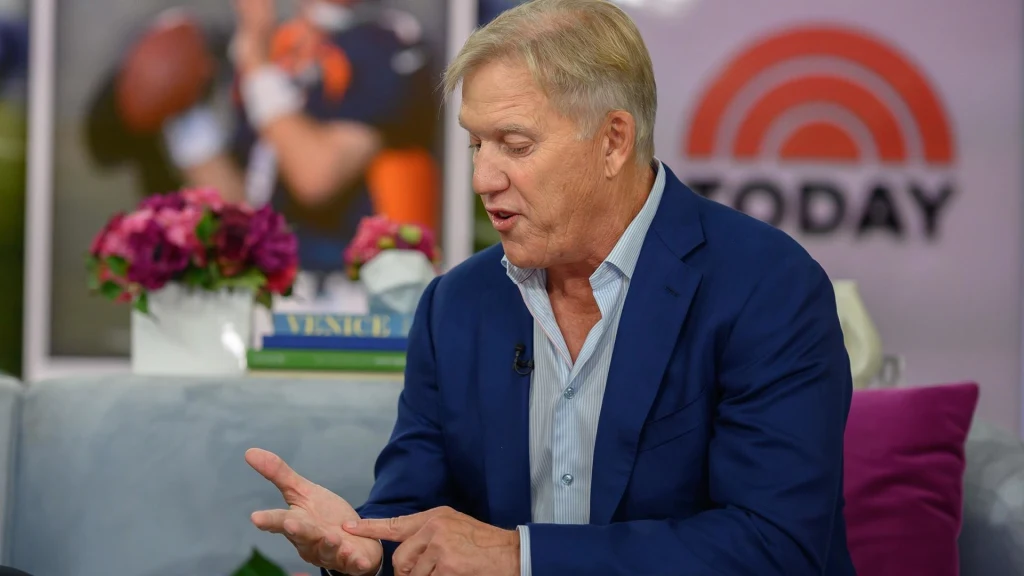
Dupuytren’s disease is largely genetic, often referred to as “Viking disease,” and predominantly affects individuals of Northern European or Scandinavian descent. It’s much more common in men over age 50, particularly those with a family history.
NFL legend John Elway battled Dupuytren’s contracture starting in his early 50s. The condition caused a thick cord to pull his ring finger inward, impairing his grip. Instead of surgery, he opted for Xiaflex collagenase injections, which helped dissolve the tissue buildup and restore hand function—allowing him to play golf within a week.
Notable individuals affected by Dupuytren’s include:
Margaret Thatcher
Ronald Reagan
Mitt Romney
Paul Newman
Frank Sinatra
Bill Murray
Bill Nighy
David McCallum
More recently, ex-footballer Ally McCoist revealed his struggles with the condition, undergoing two surgeries, though it recurred—a common issue of the disease.
Treatment depends on severity:
Observation is common in early stages.
Injectable collagenase (Xiaflex) dissolves the thickened fascia.
Needle aponeurotomy (percutaneous fasciotomy) is a minimally invasive office procedure to release cords.
Surgery (fasciectomy) involves removing thickened tissue; it’s effective but carries recurrence risk (~20%).
It’s pronounced “du-puy-trenz,” with both “u” sounds voiced thinly (like “ee”–”oo”). Emphasis is typically on the last syllable, “tren.”
Yes, heavy and regular alcohol consumption has been linked to increased risk, particularly in men. Recent genetic studies confirm a causal relationship, though cigarette smoking appears less directly linked.
Though benign (non-cancerous), Dupuytren’s can impair hand function—making everyday tasks like shaking hands or snapping fingers difficult. It’s not life-threatening and a small percentage may even regress, but functional limitations can become significant.
You’ll notice small nodules or lumps forming on the palm, often near the base of the ring or little finger. Over time, these develop into cords that pull fingers inward toward the palm. It may also cause dimpling or puckering of the skin.
John Elway was diagnosed with Dupuytren’s contracture, a hand condition that left him unable to hold a football properly.
Contracture involves a progressive buildup of collagen in the palm, forming rope-like cords that constrict finger movement.
Symptoms start as nodules and progress to a bent position of fingers, often affecting the ring fingers on both hands.
Elway’s long football career may have contributed to or worsened his hand condition, though the exact cause is unknown.
Early signs of contracture should prompt a visit to a hand specialist to seek timely treatment.
Treatment options include non-surgical approaches like XIAFLEX (collagenase injections) and surgery.
XIAFLEX works by breaking down collagen cords, offering a less invasive way to straighten fingers.
Surgery remains a common and effective treatment for severe contracture cases.
There is currently no cure for Dupuytren’s, but symptoms can be managed with ongoing care.
The contracture patient journey requires patience, expert guidance, and proactive hand health management.
Understanding John Elway’s story brings attention to Dupuytren’s contracture and the importance of seeking treatment early to maintain hand function—especially for those whose profession or passion depends on their hands.
In conclusion, John Elway, the Hall of Fame NFL quarterback, has openly shared his battle with Dupuytren’s contracture, also called “Viking’s disease.” This hand condition causes thickened tissue in the palm to form cords that pull the fingers inward, making simple tasks like shaking hands or gripping objects difficult.
Elway noticed the problem in his 50s and chose Xiaflex injections over surgery to dissolve the built-up tissue. His openness has helped raise awareness of a condition that is often misunderstood or overlooked, especially since it can affect daily function even though it isn’t life-threatening.
By speaking publicly, Elway not only highlighted his personal struggle but also shed light on treatment options available for people living with Dupuytren’s disease.

Macron wife age difference is approximately 24 years, with Brigitte...

Fortune Justin Bieber: Justin Bieber’s fortune is estimated to exceed...