Bill Gates periodic table sits in his private study, showcasing real chemical elements that cost more than most people’s cars.
The Microsoft founder didn’t just buy this scientific masterpiece for decoration.
His periodic table represents something deeper about how billionaires think about education, science, and leaving a legacy.
This isn’t your high school chemistry classroom poster.

What Makes Bill Gates’ Periodic Table So Special
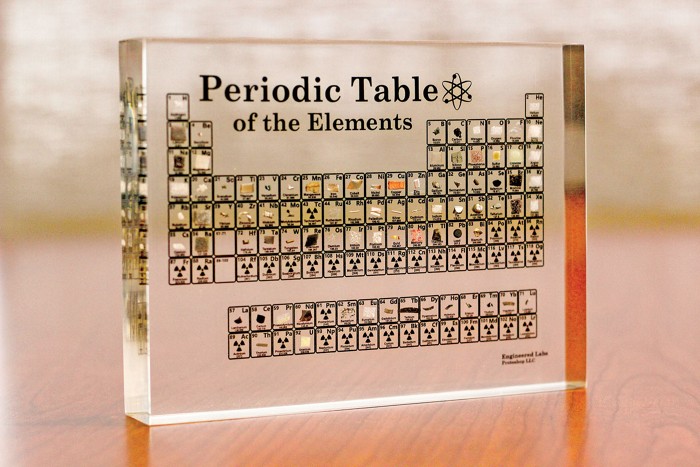
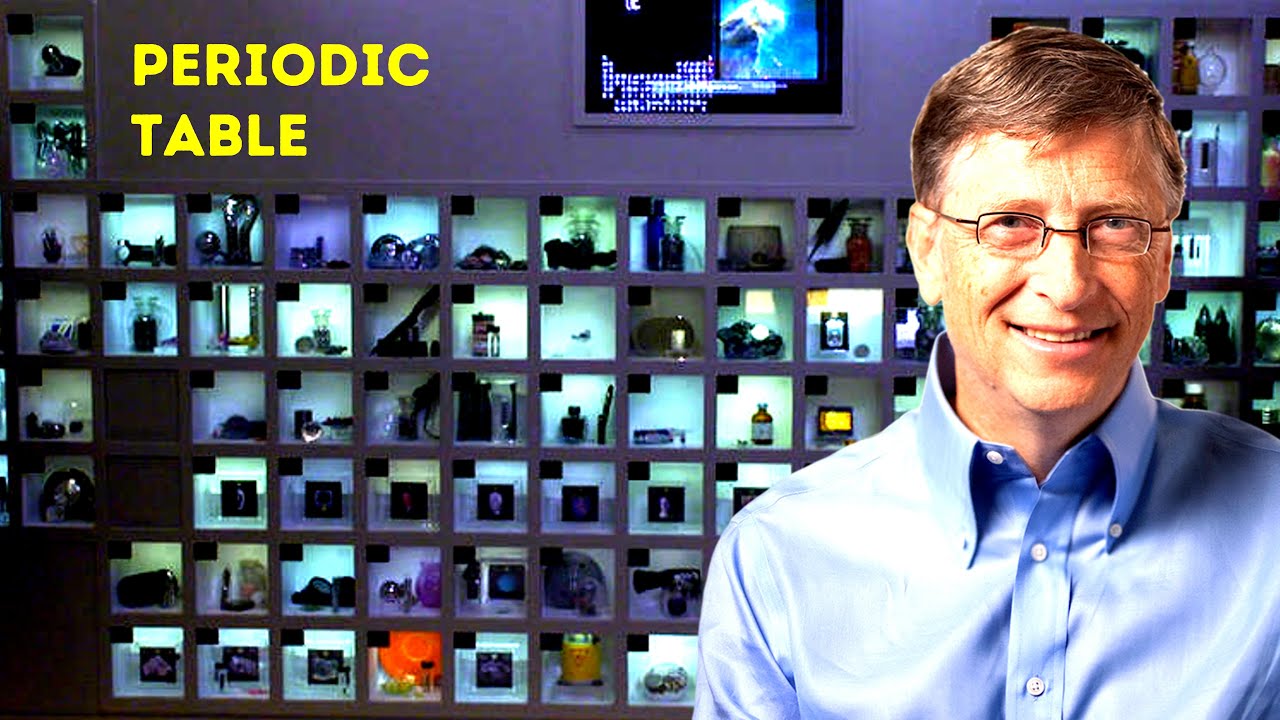
Bill Gates owns a periodic table that contains actual chemical elements, not just pictures or symbols.
Each element sits in its designated spot, from hydrogen to the heaviest synthetic elements.
The table cost Gates over $100,000 to assemble completely.
Real uranium, gold, platinum, and even radioactive elements fill the custom-built display case.
Most people see the periodic table as boring school stuff.
Gates sees it as the foundation of everything around us.
His version weighs several hundred pounds due to the metal elements and protective housing.
The Microsoft co-founder keeps it in his private library at his Medina, Washington mansion.
Why Bill Gates Decided to Buy a Real Periodic Table
Educational Philosophy
- Gates believes in making abstract concepts tangible and real.
- The periodic table represents the building blocks of our entire universe.
- By owning physical elements, Gates can touch and examine the same materials that power smartphones, satellites, and medical devices.
- His children grew up with this scientific wonder in their home.
- Gates wanted them to see chemistry as exciting, not intimidating.
Investment in Scientific Literacy
- The Bill & Melinda Gates Foundation spends billions on education initiatives worldwide.
- Gates practices what he preaches by surrounding himself with educational tools.
- His periodic table serves as conversation starter when scientists and researchers visit his home.
- Young entrepreneurs and students get inspired seeing elements they only read about in textbooks.
Personal Curiosity
- Gates reads about 50 books per year, many focused on science and technology.
- His periodic table satisfies his curiosity about how different elements behave and interact.
- The Microsoft founder enjoys explaining atomic structures to visitors during dinner parties.
- Gates often references his periodic table when discussing clean energy solutions and climate change.
The Science Behind Bill Gates’ Element Collection
Atomic Structure and Real-World Applications
- Each element in Gates’ collection tells a story about human innovation.
- Silicon powers every computer chip in Microsoft products and smartphones worldwide.
- Carbon appears in multiple forms, from graphite in pencils to diamonds in jewelry.
- Lithium enables electric vehicle batteries and renewable energy storage systems.
- Rare earth elements like neodymium make possible the magnets in wind turbines and electric motors.
Radioactive Elements and Safety Measures
- Gates’ periodic table includes radioactive elements stored in specialized lead-lined containers.
- Uranium samples remain sealed behind protective barriers to prevent radiation exposure.
- Radium glows naturally but requires extreme caution during handling and display.
- Professional nuclear safety experts helped design the containment systems for dangerous elements.
- The entire display meets federal regulations for private ownership of radioactive materials.
Cost Breakdown by Element Groups
- Precious Metals: Gold, platinum, and palladium samples cost $15,000-25,000
- Rare Earth Elements: Europium, terbium, and dysprosium cost $5,000-10,000
- Radioactive Materials: Uranium, radium, and thorium cost $8,000-12,000
- Common Metals: Iron, copper, and aluminum cost $500-1,000
- Noble Gases: Helium, neon, and argon in glass tubes cost $2,000-3,000
How Bill Gates Uses His Periodic Table for Education
Teaching His Children About Science
- Gates’ three children learned chemistry using real elements instead of textbook pictures.
- They could hold actual samples of elements while studying atomic weights and chemical properties.
- His daughter Jennifer studied veterinary medicine partly inspired by early exposure to scientific concepts.
- Son Rory developed interests in computer science and economics through hands-on learning experiences.
Inspiring Young Entrepreneurs
- Gates regularly hosts young entrepreneurs and students at his Medina home.
- His periodic table becomes an interactive learning tool during these mentorship sessions.
- Students remember touching real gold, silver, and platinum more than any lecture or presentation.
- Many visitors report increased interest in STEM careers after seeing Gates’ element collection.
Supporting STEM Education Initiatives
- The Gates Foundation funds science education programs in developing countries worldwide.
- Gates points to his periodic table as example of making science tangible and accessible.
- Educational grants often include funds for hands-on learning materials and laboratory equipment.
- His foundation has donated over $2 billion to improve science education globally.
The Investment Value of Bill Gates’ Periodic Table
Precious Metal Content
- Gates’ periodic table contains approximately 2-3 ounces of gold worth $4,000-6,000.
- Platinum samples add another $3,000-5,000 in precious metal value.
- Silver, palladium, and rhodium contribute $2,000-4,000 to the overall worth.
- Rare earth elements have increased 300-500% in value since Gates assembled his collection.
Historical and Scientific Significance
- Some elements in Gates’ collection come from historically important sources and locations.
- Uranium samples might trace back to early atomic research programs.
- Meteorite fragments containing rare elements add astronomical significance to the display.
- The complete collection represents decades of scientific discovery and human achievement.
Market Appreciation
- Complete periodic table collections have become increasingly rare and valuable.
- Museums and private collectors compete for authentic element samples at auction.
- Gates’ version would likely sell for $500,000-1,000,000 at today’s market prices.
- The educational and historical value exceeds the raw material costs significantly.
What Bill Gates’ Periodic Table Reveals About His Character
Commitment to Lifelong Learning
- Gates didn’t stop learning after dropping out of Harvard University.
- His periodic table represents ongoing curiosity about how the world works fundamentally.
- The Microsoft founder studies new scientific discoveries and updates his knowledge regularly.
- Gates reads scientific journals and attends lectures to stay current with research developments.
Belief in Making Abstract Concepts Concrete
- Gates transforms theoretical knowledge into tangible, touchable experiences.
- His periodic table makes chemistry real for children and adults who visit his home.
- The same philosophy drives Microsoft’s user interface design and educational software development.
- Gates believes people learn better when they can see, touch, and manipulate concepts directly.
Investment in Future Generations
- Gates spends his wealth on tools and experiences that educate young people.
- His periodic table inspires countless students to pursue careers in science and technology.
- The Gates Foundation continues funding educational initiatives long after his passing through endowments.
- Building human knowledge and capability matters more to Gates than accumulating additional wealth.
The Technology Behind Creating a Real Periodic Table
Element Acquisition and Authentication
- Creating a complete periodic table requires sourcing elements from specialized scientific suppliers.
- Some elements exist only in laboratories and cost thousands of dollars per gram.
- Authentication involves mass spectrometry and other advanced testing methods.
- Gates worked with university chemistry departments to verify element purity and composition.
Safety and Storage Considerations
- Toxic elements like mercury and lead require sealed containment systems.
- Reactive elements like sodium and potassium must be stored under oil or inert gases.
- Temperature-sensitive materials need climate-controlled environments to prevent degradation.
- Professional chemists designed the storage and display systems for Gates’ collection.
Display Technology and Materials
- The periodic table framework uses museum-quality materials resistant to corrosion and aging.
- LED lighting systems illuminate each element without generating heat that could cause damage.
- Protective glass shields visitors from potentially harmful elements while allowing clear viewing.
- Interactive displays provide information about each element’s properties and applications.
How Bill Gates’ Periodic Table Influences His Business Decisions
Understanding Material Properties for Technology
- Gates’ hands-on knowledge of elements helps him evaluate new technology investments.
- Understanding semiconductor properties assists in assessing microchip manufacturing companies.
- Knowledge of battery materials guides investments in electric vehicle and energy storage startups.
- Rare earth element scarcity influences decisions about sustainable technology development.
Supply Chain and Resource Planning
- Gates understands which elements face supply shortages that could impact technology companies.
- His foundation considers element availability when funding projects in developing countries.
- Investment decisions factor in geopolitical risks associated with rare element mining.
- Gates advocates for recycling programs to reduce dependence on virgin element extraction.
Innovation and Problem-Solving Approaches
- Direct experience with chemical properties sparks creative solutions to complex problems.
- Gates references atomic structures when discussing molecular-level innovations in medicine and agriculture.
- His periodic table knowledge helps evaluate scientific claims and research proposals.
- Understanding fundamental chemistry assists in identifying promising research directions for foundation funding.
The Educational Impact of Bill Gates’ Approach to Learning
Making Science Accessible to Everyone
- Gates demonstrates that science belongs outside classroom walls and academic institutions.
- His periodic table shows how wealthy individuals can support science education through personal example.
- Public discussions about his element collection generate media attention for chemistry education.
- Gates proves that successful business leaders value scientific knowledge and hands-on learning.
Inspiring Museum Displays and Educational Programs
- Science museums worldwide have created interactive periodic table exhibits inspired by Gates’ approach.
- Educational institutions design hands-on chemistry programs based on tangible element collections.
- Private schools invest in laboratory equipment that lets students handle real chemical samples safely.
- Gates’ example encourages other philanthropists to fund interactive science education initiatives.
Bridging the Gap Between Theory and Practice
- Students who see Gates’ periodic table understand connections between chemistry and real-world applications.
- Abstract atomic theory becomes concrete when students can examine actual element samples.
- Gates’ approach proves that practical learning experiences enhance traditional classroom instruction.
- His method shows how technology leaders apply scientific knowledge to solve everyday problems.
Comparing Bill Gates’ Collection to Other Notable Periodic Tables
Theodore Gray’s Periodic Table Table
- Theodore Gray created a wooden periodic table where each element sits in its own compartment.
- Gray’s version focuses on visual beauty and artistic presentation of chemical elements.
- His collection costs significantly less than Gates’ version but offers similar educational value.
- Gray published books and videos documenting his element collection process and discoveries.
Museum Collections Around the World
- The Smithsonian Institution houses one of the world’s most complete element collections.
- European science museums display periodic tables with historically significant element samples.
- University chemistry departments maintain research-grade element collections for student education.
- These institutional collections serve thousands of students but lack the personal touch of Gates’ private table.
Other Celebrity Science Collections
- Neil deGrasse Tyson owns meteorite fragments and astronomical specimens in his home.
- Elon Musk collects rocket components and space exploration artifacts as educational tools.
- Mark Cuban invests in science education but focuses on digital learning platforms rather than physical specimens.
- Gates stands out for choosing chemistry over other scientific disciplines for his personal collection.
The Future of Bill Gates’ Periodic Table Legacy
Plans for Public Access and Education
- Gates has discussed making his periodic table available for educational visits and school groups.
- Virtual reality technology could allow students worldwide to explore Gates’ element collection remotely.
- The Gates Foundation might fund similar periodic table installations in schools and libraries globally.
- Digital documentation preserves the collection’s educational value for future generations.
Influence on Next Generation of Scientists
- Young people inspired by Gates’ collection are now entering STEM careers and graduate programs.
- Some visitors to Gates’ home have started their own element collections and chemistry experiments.
- Teachers report increased student interest in chemistry after showing videos of Gates’ periodic table.
- The ripple effect continues inspiring new generations of scientists and innovators.
Evolution of Educational Technology
- Augmented reality applications now let students visualize atomic structures while examining real elements.
- Gates’ approach proves that combining physical specimens with digital technology enhances learning.
- Future educational tools will blend hands-on experiences with virtual simulations and interactive content.
- The periodic table represents a model for making abstract scientific concepts tangible and engaging.
Scientific Discoveries That Bill Gates’ Collection Represents
Historical Timeline of Element Discovery
- Gates’ periodic table spans over 200 years of scientific discovery and human achievement.
- Ancient elements like gold, silver, and copper connect modern science to historical civilizations.
- 18th-century discoveries like oxygen and nitrogen revolutionized understanding of chemical reactions.
- 20th-century synthetic elements demonstrate humanity’s ability to create new forms of matter.
Nobel Prize-Winning Research
- Many elements in Gates’ collection represent Nobel Prize-winning discoveries and research.
- Marie Curie’s work with radium and polonium advanced understanding of radioactivity fundamentals.
- Glenn Seaborg’s team created multiple synthetic elements that expanded the periodic table.
- Modern research continues discovering new elements and expanding scientific knowledge.
Applications in Modern Technology
- Silicon enables the computer revolution that created Microsoft and the entire technology industry.
- Lithium powers smartphones, laptops, and electric vehicles that define modern transportation.
- Rare earth elements make possible LED lights, solar panels, and wind turbines for renewable energy.
- Gates’ collection showcases elements that literally power our modern technological civilization.
The Psychology Behind Bill Gates’ Element Collection
Collecting as a Form of Learning
- Gates treats his periodic table as an ongoing research project rather than static display.
- The collection satisfies his need to understand how things work at the most fundamental level.
- Adding new elements or updating displays keeps Gates engaged with advancing scientific knowledge.
- His approach demonstrates how successful people maintain curiosity and intellectual growth throughout life.
Status and Social Signaling
- Gates’ periodic table signals his commitment to science education and rational thinking.
- The collection demonstrates wealth used for educational purposes rather than pure luxury consumption.
- Visitors see Gates as serious about science, not just successful in business and philanthropy.
- His element collection reinforces his identity as a thoughtful, scientifically-minded individual.
Connection to Childhood Wonder
- Gates reconnects with the sense of wonder and discovery that drives young people toward science careers.
- His periodic table recreates the excitement of learning about atoms and molecules for the first time.
- The collection maintains Gates’ childlike curiosity about how the universe works fundamentally.
- Sharing his elements with children and students keeps Gates connected to educational excitement.
Environmental and Sustainability Lessons from Gates’ Periodic Table
Resource Scarcity and Conservation
- Gates’ collection highlights how rare and precious many chemical elements actually are.
- Some elements in his table exist in extremely limited quantities on Earth.
- The display demonstrates why recycling and conservation matter for sustainable technology development.
- Gates uses his periodic table to discuss resource limitations during climate change conversations.
Clean Energy Element Applications
- Many elements in Gates’ collection power renewable energy technologies and climate solutions.
- Silicon enables solar panels that convert sunlight into electricity for homes and businesses.
- Lithium stores renewable energy in batteries for use when wind and solar power aren’t generating.
- Rare earth elements make possible the magnets in wind turbines and electric vehicle motors.
Mining and Environmental Impact
- Gates’ periodic table education includes discussions about environmental costs of element extraction.
- Mining operations for rare elements often damage local ecosystems and communities.
- His foundation funds research into more sustainable mining practices and recycling technologies.
- The collection serves as starting point for conversations about balancing technology needs with environmental protection.
FAQs
Does Bill Gates have the periodic table?
Yes, Bill Gates owns a large, physical periodic table made of actual element samples. It’s displayed in his office and reflects his passion for science.
Who actually invented the periodic table?
The periodic table was invented by Russian chemist Dmitri Mendeleev in 1869. He organized elements by atomic weight and predicted undiscovered ones.
What is Bill Gates’ opinion on chemistry?
Bill Gates has expressed admiration for chemistry, especially in relation to innovation, clean energy, and vaccine development. He views it as essential to solving global problems.
What is the deadliest element on the periodic table?
Polonium is considered one of the deadliest elements due to its extreme radioactivity. Even tiny amounts can be lethal if ingested or inhaled.
Is Albert Einstein on the periodic table?
Yes, the element Einsteinium (Es) is named in honor of Albert Einstein. It is a synthetic, radioactive metal discovered in the debris of hydrogen bomb tests.
Who invented the 118 elements?
No single person invented all 118 elements. Natural elements were discovered over centuries, while synthetic ones were created by scientists in labs using nuclear reactions.
Conclusion: What Bill Gates’ Periodic Table Really Means
Bill Gates periodic table represents far more than an expensive science display in a billionaire’s home.
The collection embodies Gates’ core beliefs about education, curiosity, and making abstract concepts tangible for learners.
His investment in real chemical elements demonstrates how successful people continue learning throughout their lives.
The periodic table serves as bridge between Gates’ technology background and his philanthropic mission.
Young visitors leave inspired to pursue STEM careers and think scientifically about solving world problems.
Gates proves that wealth can support education in creative, hands-on ways that traditional classroom methods cannot match.
His element collection will influence science education and inspire future generations long after Gates is gone.
The periodic table stands as testament to human curiosity, scientific achievement, and the power of making learning real and touchable.
Key Takeaways:
- Bill Gates owns a $100,000+ periodic table containing real chemical elements
- The collection serves educational purposes for his family and visitors
- Elements range from common metals to rare radioactive materials
- The display influences Gates’ technology investments and foundation work
- Students report increased STEM interest after seeing the collection
- The periodic table represents Gates’ commitment to hands-on science education
- Similar displays now appear in museums and schools worldwide
- The collection bridges abstract chemistry concepts with real-world applications
Gates’ periodic table ultimately proves that the best education happens when we can touch, examine, and directly experience the concepts we’re trying to understand.
The elements in his collection power our smartphones, enable renewable energy, and make possible the medical treatments saving lives worldwide.
By making chemistry tangible and real, Gates created more than just an impressive display.
He built a tool for inspiring the next generation of scientists, innovators, and problem-solvers our world desperately needs.