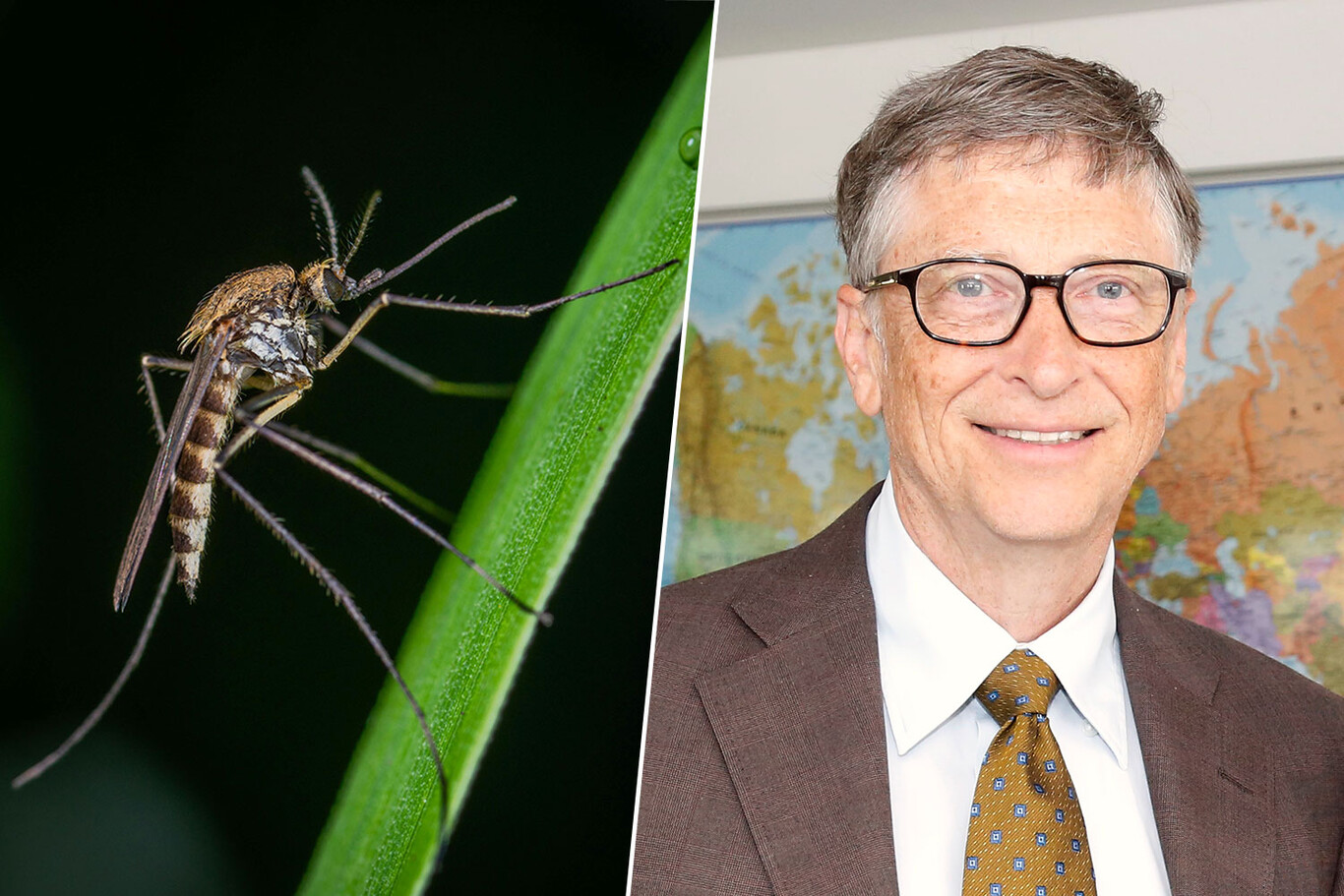
Bill Gates mosquito stunt at TED 2009 shocked the world when he released live mosquitoes into the audience. This bold move wasn’t just for show – it was a calculated demonstration about malaria awareness.
The Microsoft founder opened a jar of mosquitoes during his talk on global health issues.
Many people still wonder what really happened that day and why Gates took such an extreme approach.
What Actually Happened During the Bill Gates Mosquito Stunt?
The Bill Gates mosquito stunt took place during TED 2009 conference in Long Beach, California.
Gates was delivering a presentation titled “Mosquitos, Malaria and Education” when he made his shocking move.
About five minutes into his talk, Gates reached under the podium and pulled out a glass jar.
He opened the jar and released mosquitoes into the surprised audience.
“There’s no reason only poor people should have the experience,” Gates said as the insects flew around the room.
The audience gasped and some people ducked as the mosquitoes spread throughout the auditorium.
Gates waited a moment before revealing the mosquitoes were completely safe and disease-free.
This dramatic demonstration was designed to make a powerful point about malaria inequality.
The Real Purpose Behind the Mosquito Release
- The Bill Gates mosquito stunt served multiple purposes beyond just shocking the audience.
- Gates wanted to highlight the daily reality faced by millions of people in malaria-endemic regions.
- Most wealthy conference attendees had never experienced the fear of disease-carrying mosquitoes.
- The stunt created an immediate emotional connection to the malaria problem.
- Gates used this moment to explain how mosquitoes affect economic development in poor countries.
- The demonstration showed that malaria isn’t just a health issue – it’s a poverty issue.
- By making the audience uncomfortable, Gates forced them to empathize with affected populations.
- This visceral experience was more effective than any statistic or chart could be.
Safety Measures and Mosquito Preparation
- The mosquitoes released were confirmed to be malaria-free by the Bill and Melinda Gates Foundation.
- Gates didn’t just catch random mosquitoes from outside for his demonstration.
- The mosquitoes likely came from a research laboratory that could verify their disease-free status.
- Professional entomologists would have bred these mosquitoes specifically for the event.
- The insects were carefully selected to be harmless to humans.
- Gates and his team took extensive precautions to ensure audience safety.
- The mosquitoes were probably male mosquitoes, which don’t bite humans.
- Even if they were female mosquitoes, they carried no parasites or diseases.
Key Statistics About Malaria That Gates Highlighted
Global Malaria Impact Statistics
- Over 200 million people suffer from malaria at any given time
- Malaria deaths peaked at over 5 million in the 1930s
- Malaria affects economic growth in developing nations significantly
- Children under 5 years old are most vulnerable to malaria deaths
- Africa carries 90% of the global malaria burden
- Malaria costs African economies $12 billion annually
- One child dies from malaria every 30 seconds globally
- Malaria is preventable and treatable with proper resources
Economic Impact of Malaria
- Countries with malaria grow 1.3% less per year economically
- Malaria reduces GDP by up to 1.3% in affected countries
- Healthcare costs for malaria treatment exceed $3 billion annually
- Lost productivity from malaria illness costs billions more
- Tourism revenue drops in malaria-affected regions
- Foreign investment decreases in high-malaria areas
- Agricultural productivity suffers due to sick workers
- Educational outcomes worsen in malaria-endemic regions
The Audience Reaction and Media Coverage
- The immediate audience reaction was one of shock and surprise.
- Many attendees initially thought Gates had made a serious mistake.
- Some people in the audience began swatting at the mosquitoes instinctively.
- Others sat frozen, unsure how to react to the unexpected situation.
- The tension in the room was palpable until Gates revealed the truth.
- Once people learned the mosquitoes were safe, the audience appreciated the clever demonstration.
- Media coverage of the event was extensive and largely positive.
- News outlets praised Gates for his creative approach to raising awareness.
Why This Stunt Was So Effective
- The Bill Gates mosquito stunt worked because it created immediate empathy.
- Most people in wealthy countries never worry about mosquito-borne diseases.
- The demonstration forced the audience to experience a fraction of daily life in malaria zones.
- Gates connected the physical discomfort to the broader social issue.
- The stunt generated massive media attention for malaria prevention efforts.
- People remembered this moment more than traditional presentations about malaria statistics.
- The emotional impact made the audience more receptive to Gates’ message.
- This approach showed how effective storytelling can drive social change.
The TED Talk Context and Broader Message
- Gates’ TED talk wasn’t just about malaria – it covered education and philanthropy too.
- He argued that both health and education problems require innovative solutions.
- The mosquito stunt was part of a larger discussion about global inequality.
- Gates emphasized that wealthy people should care about problems affecting the poor.
- He connected malaria prevention to economic development and human rights.
- The talk showcased how the Gates Foundation approaches complex social problems.
- Gates demonstrated that unconventional methods can raise awareness effectively.
- The presentation became one of the most memorable TED talks ever given.
Misconceptions and Conspiracy Theories
- Some people wrongly believe Gates released disease-carrying mosquitoes.
- Conspiracy theories suggest the stunt was part of a population control plan.
- These false claims ignore the confirmed safety measures and mosquito testing.
- Recent conspiracy theories wrongly link Gates to malaria cases in the US, but these claims are false.
- The mosquitoes were specifically chosen and tested to be completely harmless.
- Gates’ goal was education, not harm to the audience.
- The stunt was transparent about its purpose and safety measures.
- Misinformation about this event often ignores the context and facts.
The Science Behind Mosquito-Borne Diseases
- Understanding why the Bill Gates mosquito stunt mattered requires knowing about disease transmission.
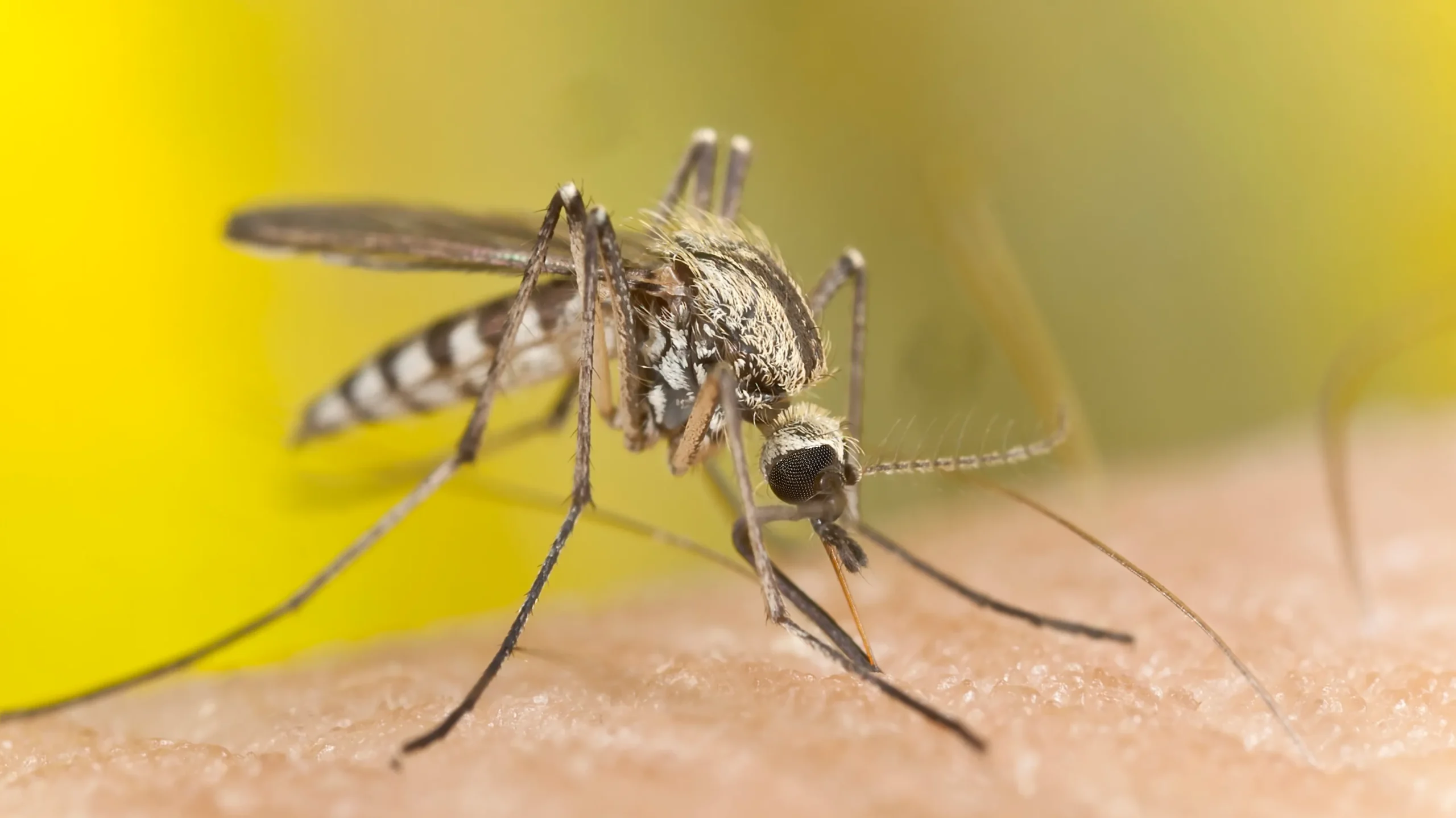
- Female mosquitoes need blood meals to produce eggs, which is when they bite humans.
- Only certain mosquito species can carry malaria parasites.
- The malaria parasite must complete its life cycle in both mosquitoes and humans.
- Temperature and humidity affect mosquito breeding and disease transmission.
- Climate change is expanding the geographic range of disease-carrying mosquitoes.
- Mosquito control is essential for preventing malaria outbreaks.
- Genetic modification of mosquitoes is being researched as a control method.
Gates Foundation’s Malaria Prevention Efforts
- The Bill and Melinda Gates Foundation has invested billions in malaria prevention.
- Their strategies include bed nets, indoor spraying, and vaccine development.
- The foundation funds research into new mosquito control technologies.
- They support the development of new antimalarial drugs.
- The foundation works with governments to improve healthcare systems.
- Education campaigns help communities understand malaria prevention.
- The Gates Foundation collaborates with WHO and other global health organizations.
- Their goal is to eliminate malaria deaths within a generation.
Long-term Impact of the Mosquito Stunt
- The Bill Gates mosquito stunt continues to influence public health communication.
- It showed how dramatic demonstrations can make complex issues accessible.
- The event inspired other advocates to use creative awareness campaigns.
- The stunt is still referenced in discussions about effective philanthropy.
- It demonstrated that wealthy individuals can use their platforms for social good.
- The mosquito release became a template for impactful public speaking.
- Gates’ approach influenced how the foundation communicates about global health.
- The stunt proved that unconventional methods can generate lasting change.
Lessons for Modern Advocacy
- The Bill Gates mosquito stunt teaches valuable lessons about modern advocacy.
- Emotional connections are more powerful than statistics alone.
- Creative demonstrations can break through information overload.
- Personal experience, even simulated, drives empathy and action.
- Controversy can be used constructively to raise awareness.
- The element of surprise makes messages more memorable.
- Combining shock value with educational content maximizes impact.
- Authenticity and transparency are essential for maintaining credibility.
The Role of Technology in Malaria Prevention
- Modern technology has transformed malaria prevention since Gates’ 2009 TED talk.
- Smartphone apps now help track mosquito populations and disease outbreaks.
- Satellite imagery identifies potential mosquito breeding sites.
- Gene drive technology could reduce mosquito populations permanently.
- Rapid diagnostic tests provide faster malaria detection.
- New insecticides combat mosquito resistance to older chemicals.
- Drone technology delivers medical supplies to remote areas.
- Artificial intelligence helps predict malaria outbreaks.
Global Progress Since the TED Talk
- Malaria deaths have decreased significantly since Gates’ 2009 presentation.
- Global malaria mortality has dropped by over 60% since 2000.
- Bed net distribution has prevented millions of deaths.
- New antimalarial drugs have improved treatment outcomes.
- Several countries have eliminated malaria entirely.
- Investment in malaria research has increased dramatically.
- International cooperation on malaria prevention has strengthened.
- The Gates Foundation’s efforts have saved millions of lives.
Current Challenges in Malaria Elimination
- Despite progress, malaria elimination faces significant challenges.
- Mosquito resistance to insecticides is increasing globally.
- Climate change is expanding mosquito habitats.
- Drug resistance threatens current treatment options.
- Funding gaps limit prevention programs in some regions.
- Political instability disrupts healthcare systems.
- Poverty makes prevention measures inaccessible for many.
- The COVID-19 pandemic has diverted resources from malaria programs.
Future Innovations in Mosquito Control
- Scientists are developing revolutionary mosquito control technologies.
- Genetically modified mosquitoes could reduce disease transmission.
- Sterile insect technique releases sterilized male mosquitoes.
- Wolbachia bacteria can prevent mosquitoes from carrying diseases.
- New insecticides target mosquito resistance mechanisms.
- Mosquito traps use attractants to capture disease vectors.
- Spatial repellents create protective barriers against mosquitoes.
- Biological control agents naturally reduce mosquito populations.
The Psychology of Effective Communication
- The Bill Gates mosquito stunt demonstrates key communication principles.
- Surprise captures attention in our information-saturated world.
- Physical sensations create stronger memories than abstract concepts.
- Shared experiences build connections between speakers and audiences.
- Timing and context amplify message effectiveness.
- Controversy generates discussion and extends message reach.
- Storytelling makes complex issues emotionally accessible.
- Visual and sensory elements enhance message retention.
Comparing Different Awareness Campaigns
- The Bill Gates mosquito stunt stands out among health awareness campaigns.
- Traditional campaigns rely on statistics and emotional appeals.
- Gates’ approach used direct experience to create understanding.
- The stunt generated more media coverage than typical presentations.
- The mosquito release became a viral moment before social media.
- Other campaigns have since adopted similar experiential approaches.
- The stunt’s effectiveness influenced Gates Foundation communication strategy.
- It showed how personal brands can amplify important messages.
Media Coverage and Public Reception
- The Bill Gates mosquito stunt received extensive global media coverage.
- News outlets praised the creative approach to serious issues.
- Social media amplified the message far beyond the original audience.
- The stunt became a case study in effective communication.
- Public reaction was largely positive after understanding the purpose.
- The event generated millions of dollars in free publicity for malaria prevention.
- Media coverage explained both the stunt and the underlying issues.
- The story continues to resurface in discussions about effective advocacy.
Conclusion: The Lasting Legacy of the Mosquito Stunt
The Bill Gates mosquito stunt remains one of the most memorable moments in modern advocacy.
It successfully raised awareness about malaria while demonstrating innovative communication.
The event showed how wealthy individuals can use their platforms for social good.
Gates’ approach influenced how nonprofits communicate about complex issues.
The stunt generated lasting media attention for malaria prevention efforts.
It proved that unconventional methods can drive meaningful social change.
The mosquito release became a template for impactful public speaking.
Years later, the Bill Gates mosquito stunt continues to inspire advocates worldwide.
The demonstration achieved its goal of making malaria a priority for global audiences.
Gates’ bold move helped accelerate progress toward malaria elimination.
The stunt reminds us that sometimes the most effective messages come from unexpected sources.
Most importantly, it showed that creativity and compassion can combine to save lives.