Jan 01, 1970
0 years old
Bill Gates in Apple may sound like a contradiction, but it’s a real part of tech history. You’re probably wondering how Bill Gates, the Microsoft guy, ended up tied to Apple’s history in 1997.
It’s a wild story, full of drama, big risks, and a surprising twist that saved a company on the brink.
Apple was bleeding cash, nearly bankrupt, and Steve Jobs had just returned to take the wheel.
Microsoft, Apple’s rival, stepped in with a move that shocked everyone.
This article dives deep into what happened, why it mattered, and how it changed tech forever.
Get ready for a story that’s as much about survival as it is about strategy.
We’ll break it down so even a 5th grader can get it, with stats and juicy details to keep you hooked.
Let’s jump in!
Apple was in a bad spot in 1997.
The company was losing money fast, like a bucket with a giant hole.
Sales were tanking, and their computers weren’t selling like they used to.
By 1996, Apple’s market share in personal computers had dropped to under 5%.
They were burning through cash, with only weeks left before they’d go bankrupt.
Steve Jobs, who co-founded Apple, had been kicked out in 1985.
Without him, the company made some bad calls.
They released products like the Newton, a clunky handheld device that flopped hard.
Management was a mess, with three different CEOs in a decade.
Each one tried to fix things but ended up making it worse.
Apple’s stock price was at rock bottom, trading at around $3 per share.
Investors were jumping ship, and the tech world thought Apple was done for.
This was the chaos Steve Jobs walked back into when he returned in 1997.
He had a huge job ahead: save Apple or watch it die.
Low Sales: Apple’s Mac computers couldn’t compete with cheaper PCs running Windows.
No Clear Direction: The company kept switching strategies, confusing customers.
Bad Products: Devices like the Newton were expensive and didn’t work well.
Money Issues: Apple was losing $1 billion a year by 1997.
Weak Leadership: Constant CEO changes left Apple without a strong vision.
Bill Gates was the head of Microsoft, Apple’s biggest rival.
Microsoft’s Windows was dominating the PC market, leaving Apple in the dust.
But in 1997, Gates made a move no one saw coming.
He agreed to invest $150 million in Apple.
Yes, you read that right—Microsoft gave Apple a lifeline.
This wasn’t just a random act of kindness.
Gates had reasons, and they were smart ones.
Apple was so weak that it wasn’t a real threat anymore.
But if Apple went under, Microsoft could face big problems.
The government was already watching Microsoft closely, saying it was too powerful.
If Apple died, Microsoft might get hit with lawsuits for being a monopoly.
Plus, Gates wanted to keep making money from software like Microsoft Office for Mac.
Without Apple, that cash flow would dry up.
So, Gates saw the investment as a win-win: save Apple, protect Microsoft.
Avoid Monopoly Trouble: A dead Apple could lead to legal headaches for Microsoft.
Protect Software Sales: Microsoft Office for Mac was a big moneymaker.
Tech Industry Health: A weaker Apple still kept the market competitive.
Strategic Partnership: Gates and Jobs saw a chance to work together, not just fight.
In August 1997, Steve Jobs announced the deal at the Macworld Expo in Boston.
The crowd wasn’t happy—some even booed!
Microsoft would buy $150 million in Apple stock with novoting rights.
This meant Microsoft couldn’t control Apple’s decisions.
They also agreed to keep making Microsoft Office for Mac for five years.
In return, Apple made Internet Explorer the default browser on Macs.
This was huge because Apple had been pushing its own browser.
The deal also included a patent agreement.
Both companies shared some tech patents to avoid lawsuits.
This partnership wasn’t just about money—it was about survival and strategy.
Apple got the cash it needed to keep going.
Microsoft got to look like the good guy and avoid legal trouble.
It was a rare moment when two rivals teamed up to change history.
$150 Million Investment: Microsoft bought non-voting shares in Apple.
Microsoft Office Commitment: Five years of support for Mac users.
Internet Explorer Default: Apple agreed to make Microsoft’s browser standard.
Patent Sharing: Both companies agreed to share some tech patents.
Public Announcement: Jobs revealed the deal at Macworld, with Gates on a big screen.
Steve Jobs had just returned to Apple after buying it through his company, NeXT.
He found a company in shambles, with no clear path forward.
The $150 million from Microsoft was a lifeline, plain and simple.
It gave Apple enough cash to pay bills and keep the lights on.
Jobs also knew he needed to focus on new products, not lawsuits.
Fighting Microsoft in court over patents would’ve drained Apple’s resources.
Instead, he used the deal to buy time and rebuild.
Jobs was a master at turning tough situations into opportunities.
He took Microsoft’s money, calmed investors, and started fixing Apple’s problems.
He cut 70% of Apple’s products, keeping only the best ones.
This focus led to hits like the iMac, which came out in 1998.
Jobs used the deal as a stepping stone to Apple’s comeback.
Buy Time: The cash kept Apple alive while Jobs planned new products.
End Legal Fights: Sharing patents avoided costly lawsuits with Microsoft.
Focus on Innovation: Jobs used the money to streamline Apple’s product line.
Boost Confidence: The deal showed investors Apple wasn’t dead yet.
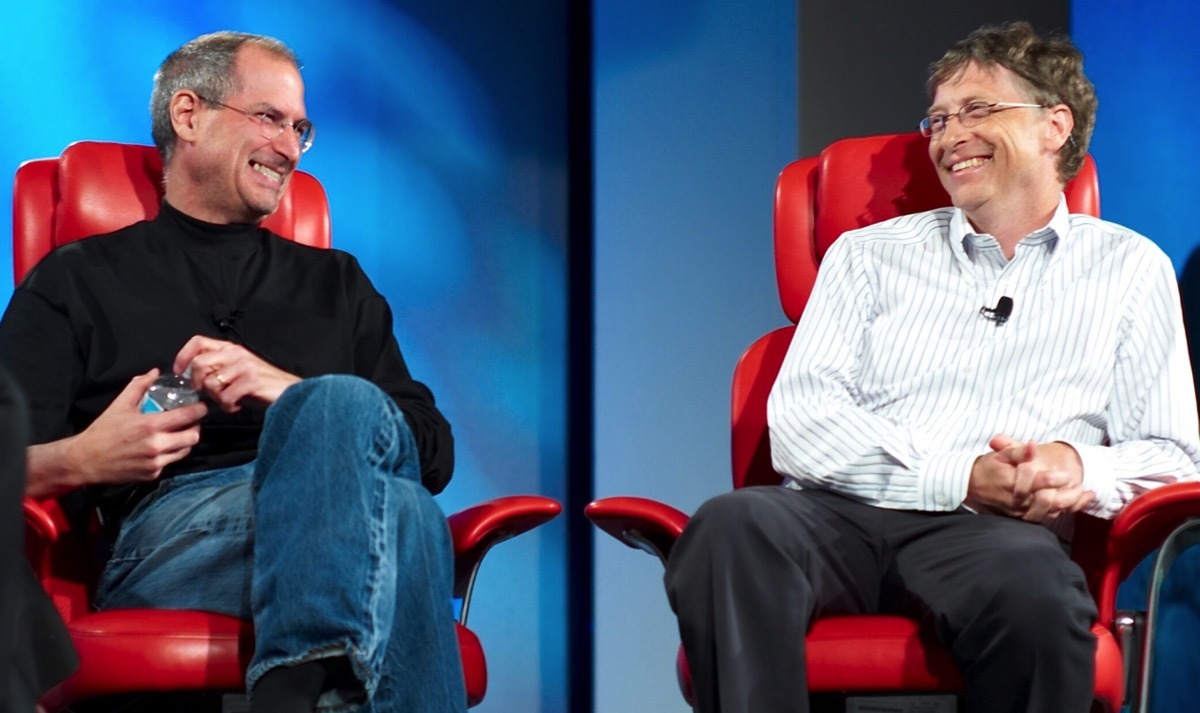
The Apple-Microsoft deal was a turning point.
Apple’s stock price started to climb after the announcement.
By October 1999, Apple reported eight straight profitable quarters.
Revenues hit $6.1 billion, with $601 million in net earnings.
The iMac, released in 1998, was a massive hit, doubling Apple’s market share.
The iBook, launched in 1999, got 140,000 pre-orders in just six weeks.
These products showed Apple was back in the game.
Microsoft benefited too.
Their Office software kept selling on Macs, and they avoided monopoly accusations.
The deal also changed how people saw Microsoft.
Gates went from being the villain to a partner in Apple’s story.
By 2011, Apple’s market value hit $417 billion, surpassing Exxon Mobil.
Microsoft’s investment was a small price for the stability it brought both companies.
Apple’s Recovery: The cash and focus led to hits like the iMac and iBook.
Microsoft’s Win: Kept Office sales and dodged legal trouble.
Market Growth: Apple’s market cap grew from $2 billion in 1997 to $573 billion by 2012.
New Products: The deal gave Apple room to innovate and launch iconic devices.
Industry Impact: Showed rivals could work together for mutual benefit.
The 1997 Apple-Microsoft deal is full of surprising tidbits.
It’s not just about money—it’s about egos, risks, and big bets.
Here are some facts that make this story even wilder:
Gates on a Big Screen: At Macworld, Bill Gates appeared via video, looming over the crowd.
Some Apple fans booed, thinking Microsoft was taking over.
Jobs’ Return Was Recent: Steve Jobs had only been back at Apple for a few months.
He bought Apple through NeXT in late 1996.
Apple’s Stock Was Dirt Cheap: In 1997, Apple’s stock was around $3 per share.
By 2021, it was over $120, a 4,000% increase.
Microsoft Made Money: Microsoft sold its Apple shares years later for a big profit.
Rivalry Continued: Despite the deal, Apple and Microsoft kept competing fiercely.
The iPhone, launched in 2007, took on Microsoft’s Windows Mobile.
Gates and Jobs Were Friends: They respected each other, even if they didn’t always agree.
Gates once said Jobs was “brilliant” at marketing.
The 1997 deal wasn’t just a quick fix—it changed Apple forever.
The cash gave Jobs the breathing room to rethink Apple’s strategy.
He focused on making products that were simple, beautiful, and easy to use.
The iMac, with its colorful design, was a game-changer in 1998.
It showed Apple could make cool, user-friendly tech again.
The deal also taught Apple to be selective about partners.
Jobs later picked companies like Google for iPhone features, but only the best.
This focus on quality partnerships became a hallmark of Apple’s success.
By 2010, Apple was calling itself a “mobile device company.”
The iPod, iPhone, and iPad, all born after 1997, redefined tech.
The deal also showed Apple could survive tough times.
It gave them the confidence to take risks, like launching the iPhone in 2007.
Today, Apple’s worth over $2 trillion, thanks to the foundation laid in 1997.
Product Innovation: The deal led to iconic products like the iPod and iPhone.
Brand Revival: Apple went from near-death to a global tech leader.
Partnership Strategy: Apple learned to choose partners carefully.
Market Dominance: By 2022, Apple’s revenue hit $365.8 billion.
The 1997 deal is more than a history lesson.
It shows how even rivals can team up to solve big problems.
Apple and Microsoft are still competitors, but they work together sometimes.
For example, Microsoft Office is still a big app on Macs and iPhones.
The deal also teaches us about taking risks.
Jobs and Gates bet big, and it paid off for both.
For students, it’s a reminder that failure isn’t the end.
Apple was almost dead, but it bounced back stronger.
It’s also a story about leadership.
Jobs took a tough situation and turned it into a win.
Gates showed that helping a rival can help you too.
In today’s tech world, companies like Apple and Microsoft still shape our lives.
Understanding their past helps us see why they’re so powerful now.
Collaboration Works: Even enemies can find common ground.
Resilience Matters: Apple’s comeback shows you can recover from failure.
Leadership Counts: Jobs and Gates made bold moves that changed history.
Think Long-Term: The deal wasn’t just about 1997—it set up decades of success.
Does Bill Gates invest in Apple?
No, Bill Gates personally does not invest in Apple, though Microsoft once invested $150 million in Apple in 1997.
Did Bill Gates ever work at Apple?
No, Bill Gates never worked at Apple. He co-founded Microsoft, Apple’s longtime competitor.
Which phone does Bill Gates own?
Bill Gates uses a Samsung Galaxy Z Fold, which runs on Android, not iOS.
What is Bill Gates’ best AI book?
Bill Gates recommended “Life 3.0” by Max Tegmark as a top book on artificial intelligence.
Who owns most of Apple?
As of 2024, The Vanguard Group and BlackRock are the largest institutional shareholders of Apple.
Is Bill Gates using an iPhone?
No, Bill Gates prefers Android phones, specifically the Samsung Galaxy Fold series, for its flexibility.
The 1997 Apple-Microsoft deal was a crazy moment in tech history.
Bill Gates, the rival, saved Apple with $150 million.
Steve Jobs used that cash to rebuild a dying company.
It wasn’t just about money—it was about strategy, survival, and vision.
The iMac, iPod, and iPhone might not exist without this deal.
It’s a story of risk, rivalry, and redemption that kids and adults can learn from.
Apple went from near bankruptcy to a $2 trillion giant.
Microsoft stayed a powerhouse while helping a competitor.
Next time you use an iPhone or a Mac, remember 1997.
That’s when two tech giants shook hands and changed the world.
Macron wife age difference is approximately 24 years, with Brigitte...

Fortune Justin Bieber: Justin Bieber’s fortune is estimated to exceed...