Bill Gates Breathe Moment – What He Really Said and Meant

Net Worth

Birthday

Jan 01, 1970

Birthplace

Age

0 years old

Birth Sign

Bill Gates breathe moment shocked millions when the tech billionaire openly shared his emotional response to a powerful book.

This wasn’t your typical business review or corporate statement.

Gates literally broke down in tears while reading “When Breath Becomes Air” by Paul Kalanithi.

His raw honesty about this breathe moment revealed a deeply human side that most people never see.

The Microsoft founder’s reaction sparked conversations worldwide about life, death, and what really matters.

Bill Gates Breathe Moment – What He Really Said and Meant

What Is The Bill Gates Breathe Moment?

The Bill Gates breathe moment refers to his deeply emotional response to Paul Kalanithi’s memoir “When Breath Becomes Air.”

In March 2017, Gates published a heartfelt review on his blog that left readers stunned.

He openly admitted that the book made him cry.

This wasn’t just any book recommendation from a tech mogul.

Gates called it “the best nonfiction story” he had read in a long time.

The breathe moment became viral because people rarely see billionaires show such vulnerability.

Gates connected with Kalanithi’s story about facing terminal lung cancer while pursuing his dreams as a neurosurgeon.

This moment humanized one of the world’s most powerful men.

The Book That Triggered Bill Gates’ Breathe Moment

“When Breath Becomes Air” was written by Dr. Paul Kalanithi during his final months battling lung cancer.

Kalanithi was a brilliant neurosurgeon and writer who died at age 37.

The book explores profound questions about life, death, and meaning.

Here’s what made this book so powerful:

  • Written while the author was dying
  • Combines medical expertise with philosophical depth
  • Explores the intersection of life and death
  • Shows how someone faces their mortality with grace
  • Published posthumously in 2016

Kalanithi’s writing style was both scientific and poetic.

He wrote about performing brain surgery while knowing his own brain was being attacked by cancer.

The irony wasn’t lost on him or his readers.

Gates saw himself reflected in Kalanithi’s dedication to making a difference.

Both men wanted to leave the world better than they found it.

Bill Gates’ Exact Words About His Breathe Moment

  • Gates wrote candidly about his emotional response to the book.
  • He said the memoir left him “in tears” multiple times.
  • “In fact, I can say this is the best nonfiction story I’ve read in a long time,” Gates wrote in his review.
  • He praised Kalanithi’s ability to make complex medical concepts accessible to regular readers.
  • Gates appreciated how the author balanced scientific precision with emotional honesty.
  • The tech founder connected deeply with Kalanithi’s drive for excellence.
  • Both men shared an obsession with solving difficult problems.
  • Gates recognized a kindred spirit in the dying neurosurgeon.
  • He admired how Kalanithi continued working and writing despite knowing his time was limited.
  • This dedication resonated with Gates’ own work ethic and mission-driven approach to life.

Why The Bill Gates Breathe Moment Went Viral

Social media exploded when Gates shared his emotional book review.

People weren’t used to seeing the Microsoft founder display such raw emotion.

Here are the key reasons this moment captured global attention:

  • Rare vulnerability from a public figure
  • Humanized one of the world’s richest people
  • Connected with universal themes of mortality
  • Showed genuine emotion beyond business success
  • Sparked conversations about what really matters in life

The timing also played a role in the viral nature.

This was 2017, when social media was hungry for authentic human moments.

Gates’ breathe moment provided exactly that authenticity people craved.

His followers shared the review thousands of times across platforms.

The story reached far beyond tech circles into mainstream media.

People realized that even billionaires struggle with life’s biggest questions.

The Deeper Meaning Behind Bill Gates’ Emotional Response

  • Gates’ breathe moment revealed several important aspects of his character.
  • First, it showed his capacity for deep empathy despite his business reputation.
  • The tech industry often portrays leaders as cold and calculating.
  • Gates broke that stereotype with his honest emotional response.
  • Second, the moment highlighted his awareness of mortality.
  • At 61 when he wrote the review, Gates was thinking more about legacy and meaning.
  • Kalanithi’s story reminded him that time is precious for everyone.
  • Third, it demonstrated Gates’ appreciation for intellectual courage.
  • Kalanithi continued his medical and literary work while facing death.
  • This kind of dedication to purpose resonated strongly with Gates.
  • Both men understood that meaningful work transcends personal circumstances.

How Bill Gates’ Breathe Moment Changed Public Perception

  • Before this moment, many people saw Gates primarily as a ruthless businessman.
  • The Microsoft founder had a reputation for being demanding and intense.
  • Stories from his corporate days painted him as someone who didn’t tolerate weakness.
  • The breathe moment completely shifted this narrative.
  • People began seeing Gates as someone with genuine emotions and vulnerabilities.
  • His book recommendation humanized him in ways his philanthropy alone couldn’t achieve.
  • Social media comments showed people relating to Gates for the first time.
  • Many readers said they never expected to see this side of the billionaire.
  • The moment created a new connection between Gates and regular people.

The Impact on Bill Gates’ Personal Brand

Gates’ breathe moment became a defining moment for his personal brand evolution.

It marked a clear transition from tech mogul to thoughtful humanitarian.

The authentic emotion showed a side that corporate PR couldn’t manufacture.

Here’s how it changed his public image:

  • Made him more relatable to average people
  • Showed depth beyond business success
  • Demonstrated his reading habits and intellectual curiosity
  • Revealed his capacity for genuine emotional responses
  • Created trust through vulnerability

This moment helped establish Gates as a trusted voice on important topics.

People began paying more attention to his book recommendations.

His annual reading lists gained massive followings.

The breathe moment proved that authenticity resonates more than polished messaging.
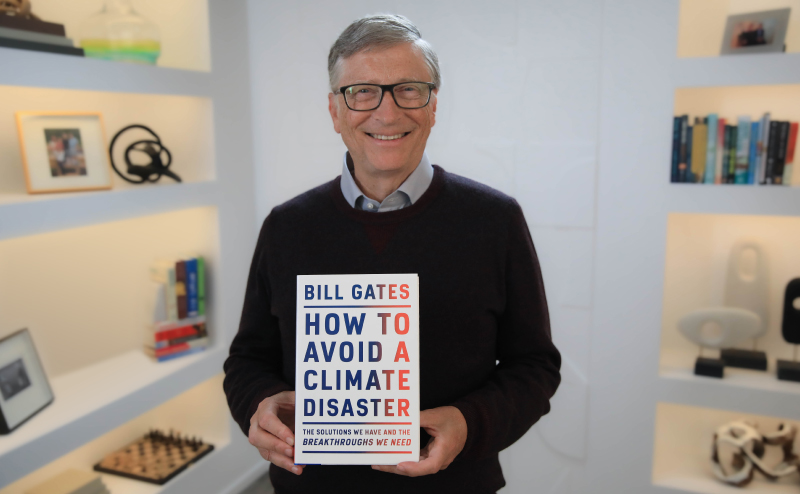
Bill Gates Breathe Moment – What He Really Said and Meant

Lessons From Bill Gates’ Breathe Moment For Leaders

Modern leaders can learn valuable lessons from Gates’ vulnerable moment.

Showing genuine emotion doesn’t weaken leadership authority.

Instead, it creates stronger connections with followers and audiences.

Here are key leadership lessons from the breathe moment:

  • Authenticity builds trust faster than perfection
  • Vulnerability can strengthen rather than weaken influence
  • Sharing personal responses creates deeper connections
  • Reading and continuous learning demonstrate growth mindset
  • Emotional intelligence matters as much as business intelligence

Gates proved that successful leaders don’t need to hide their humanity.

The most powerful leaders are those who can be both strong and sensitive.

His breathe moment showed that intellectual and emotional intelligence work together.

The Book Recommendation That Started It All

Gates’ emotional response led millions of people to read “When Breath Becomes Air.”

The book became a bestseller partly due to his recommendation.

Sales spiked significantly after his review went viral.

Many readers reported having their own “breathe moments” while reading Kalanithi’s memoir.

The book deals with themes that resonate across cultures and backgrounds:

  • The meaning of life when facing death
  • Balancing career ambitions with family relationships
  • Finding purpose in suffering
  • The intersection of science and spirituality
  • How to live fully knowing life is finite

Gates’ review introduced these profound concepts to his massive audience.

His platform amplified Kalanithi’s posthumous message to the world.

Bill Gates’ Reading Habits Revealed Through The Breathe Moment

The breathe moment offered insights into Gates’ reading preferences and habits.

He clearly gravitates toward books that challenge his thinking.

Gates appreciates authors who can explain complex topics clearly.

His reading list typically includes:

  • Memoirs by remarkable people
  • Books about science and medicine
  • Stories about overcoming challenges
  • Works that explore life’s big questions
  • Authors who combine expertise with storytelling ability

Gates reads approximately 50 books per year.

He takes detailed notes and writes thoughtful reviews.

The billionaire uses reading as a way to continue learning and growing.

His breathe moment showed that he reads for emotional connection, not just information.

The Ripple Effect of Bill Gates’ Vulnerability

When Gates shared his breathe moment, it created ripple effects across social media.

Other leaders began sharing their own vulnerable moments.

Business executives started talking more openly about books that moved them.

The moment contributed to a broader cultural shift toward authenticity in leadership.

People realized that strength and sensitivity aren’t mutually exclusive.

Gates’ example encouraged others to share their emotional responses to meaningful content.

This created more genuine conversations about life, death, and purpose.

The breathe moment helped normalize discussions about mortality and meaning.

Why “When Breath Becomes Air” Resonated With Bill Gates

  • Several factors explain why this particular book triggered Gates’ emotional response.
  • First, both Gates and Kalanithi were driven by purpose beyond personal gain.
  • Kalanithi dedicated his life to healing others through neurosurgery.
  • Gates transitioned from business to philanthropy to solve global problems.
  • Second, both men faced the challenge of balancing professional success with personal relationships.
  • Kalanithi wrote about choosing between career advancement and family time.
  • Gates has spoken about similar struggles during his Microsoft years.
  • Third, both understood the power of clear communication to create impact.
  • Kalanithi’s writing made complex medical concepts accessible.
  • Gates built Microsoft partly through his ability to explain technology simply.
  • The book reflected themes and values that Gates deeply understood.

The Science Behind Emotional Responses to Reading

Gates’ breathe moment illustrates the neurological impact of powerful literature.

Reading activates multiple brain regions simultaneously.

When we read about others’ experiences, our brains simulate those experiences.

This is why people can feel genuine emotions while reading books.

Key facts about reading and emotional response:

  • Mirror neurons fire when reading about others’ actions
  • The brain releases oxytocin during emotional reading experiences
  • Vivid descriptions activate sensory processing areas
  • Personal connections enhance emotional responses
  • Meaningful content can trigger lasting behavioral changes

Gates’ emotional response was a natural neurological reaction to Kalanithi’s powerful storytelling.

The combination of personal relevance and excellent writing created the perfect conditions for deep emotional impact.

How Bill Gates’ Breathe Moment Influenced His Philanthropy

  • The emotional experience likely reinforced Gates’ commitment to health-focused philanthropy.
  • Reading about Kalanithi’s battle with cancer highlighted the urgency of medical research.
  • Gates has invested billions in global health initiatives since the breathe moment.
  • His foundation focuses heavily on preventing and treating diseases.
  • The personal connection to mortality through reading may have intensified his mission.
  • Understanding life’s fragility can motivate greater urgency in philanthropic work.
  • Gates has mentioned that reading helps him understand the human impact of the problems he tries to solve.

The Role of Storytelling in Creating Emotional Connections

Kalanithi’s memoir demonstrates the power of personal storytelling.

His narrative combined medical expertise with deeply personal experiences.

This combination created the emotional impact that moved Gates to tears.

Effective storytelling elements in “When Breath Becomes Air”:

  • Personal vulnerability and honesty
  • Universal themes that resonate across audiences
  • Specific details that make abstract concepts concrete
  • Narrative arc that creates emotional investment
  • Balance between information and emotion

Gates recognized these storytelling elements and their effectiveness.

His own communication style has incorporated more personal stories since the breathe moment.

Bill Gates’ Evolution From Tech CEO to Thought Leader

  • The breathe moment marked an important transition in Gates’ public persona.
  • He shifted from being seen primarily as a technology executive to a thoughtful leader.
  • This evolution required showing more of his intellectual and emotional depth.
  • Sharing vulnerable moments like his response to Kalanithi’s book was crucial to this transformation.
  • People began trusting Gates’ judgment on topics beyond technology.
  • His book recommendations carry weight because he’s shown genuine emotional intelligence.
  • The breathe moment helped establish credibility for his broader thought leadership.

The Universal Appeal of Bill Gates’ Breathe Moment

  • The story resonated globally because it touched universal human experiences.
  • Everyone faces questions about mortality, purpose, and meaning.
  • Seeing a powerful figure grapple with these themes created connection.
  • Cultural and economic differences became irrelevant when facing life’s biggest questions.
  • Gates’ vulnerability reminded people that success doesn’t protect anyone from mortality.
  • The breathe moment transcended typical celebrity news to become genuinely meaningful content.

Practical Applications of the Bill Gates Breathe Moment

Leaders and individuals can apply several lessons from Gates’ experience:

  • Share authentic emotional responses to build trust
  • Read widely to develop empathy and understanding
  • Don’t hide vulnerability behind professional personas
  • Use platform influence to amplify meaningful messages
  • Connect personal experiences to broader purposes

These applications work in business, education, and personal relationships.

Authenticity creates stronger connections than polished presentations.

Gates proved that showing emotion enhances rather than diminishes influence.

The Long-term Impact of Bill Gates’ Book Recommendation

“When Breath Becomes Air” sales increased dramatically after Gates’ review.

The book reached new audiences who might never have discovered it otherwise.

Medical students began reading it for insights into patient care.

Business leaders used it to reflect on work-life balance.

Parents read it to have conversations about mortality with their children.

Gates’ emotional endorsement gave the book lasting cultural impact.

Libraries report continued demand for the memoir years after the initial recommendation.

The breathe moment created a lasting legacy for both Gates and Kalanithi.

Bill Gates Breathe Moment – What He Really Said and Meant

How Social Media Amplified the Bill Gates Breathe Moment

  • Twitter, Facebook, and LinkedIn users shared Gates’ review extensively.
  • The personal nature of his response made it highly shareable content.
  • Social media algorithms favored the authentic emotional content.
  • Comments sections filled with people sharing their own reading experiences.
  • Book clubs formed around discussions of “When Breath Becomes Air.”
  • The viral nature of the moment demonstrated social media’s power to spread meaningful content.
  • Gates’ followers appreciated the departure from typical business posts.

Bill Gates’ Breathe Moment and the Power of Written Words

  • The incident showcased the enduring power of written communication.
  • Despite living in a visual and digital age, written words still create profound impact.
  • Kalanithi’s carefully crafted prose moved one of the world’s most successful people to tears.
  • This demonstrates that quality writing transcends technological trends.
  • Gates’ response validated the importance of supporting authors and literature.
  • Written words can create changes in thinking and behavior that other media cannot achieve.

FAQs

Does Bill Gates believe in God?

Bill Gates has described himself as agnostic but open-minded. In interviews, he’s said, “I think it makes sense to believe in God, but exactly what decision in your life you make differently because of it, I don’t know.”

What are 5 facts about Bill Gates?

  • Co-founded Microsoft in 1975 with Paul Allen.

  • Was the world’s richest person for many years.

  • Founded the Bill & Melinda Gates Foundation, a major philanthropic organization.

  • Donated over $50 billion to global health, education, and poverty.

  • Is an advocate for climate change solutions and pandemic preparedness.

How did Bill Gates make butter from CO₂?

Bill Gates invested in a company called Solar Foods, which developed a protein called Solein made from CO₂, water, and electricity. It’s not butter itself, but Solein can be used as a sustainable food ingredient in items like butter substitutes.

What is Bill Gates’s condition?

Bill Gates does not publicly suffer from any known chronic health condition. Occasionally, conspiracy theories spread false claims, but there is no credible evidence of any serious medical condition.

What religion is Elon Musk?

Elon Musk has stated he was raised with some Christian values in South Africa but does not follow any organized religion. He’s described himself as agnostic and a believer in science, though he has expressed spiritual curiosity in recent years.

 Did Einstein believe in God?

Albert Einstein did not believe in a personal God, but he wasn’t an atheist. He often referenced Spinoza’s God—a philosophical, non-personal concept of divinity in nature and the universe. He once said, “I believe in Spinoza’s God who reveals himself in the harmony of all that exists.”

Conclusion: The Lasting Significance of Bill Gates’ Breathe Moment

Bill Gates’ breathe moment represents more than a book recommendation.

It marked a pivotal shift in how we view successful leaders and their humanity.

The moment proved that vulnerability and strength can coexist in leadership.

Gates showed millions of people that it’s okay to be moved by powerful stories.

His emotional response to “When Breath Becomes Air” created genuine human connection.

The breathe moment reminds us that regardless of wealth or success, we all face the same fundamental questions about life and death.

This shared humanity is what made Gates’ tears so meaningful.

The moment continues to influence how leaders communicate authentically with their audiences.

Bill Gates’ breathe moment will be remembered as a defining example of vulnerable leadership in the digital age.
Bill Gates Breathe Moment – What He Really Said and Meant

Trending

More
Coco Lovelock

Model

Coco Lovelock

Coco Lovelock is an American actress, model, and writer known...

Camilla Araujo

Model

Camilla Araujo

About Camilla Ara is a Brazilian model who gained fame...

Macron Wife Age Difference: How Their Ages Compare in 2025

Business Executive

Macron Wife Age Difference: How Their Ages Compare in 2025

Macron wife age difference is approximately 24 years, with Brigitte...

Eliana Kalogeras

TikTok Star

Eliana Kalogeras

Eliana Kalogeras is a TikTok creator and social media personality...

Fortune Justin Bieber – Net Worth, Assets & Earnings 2025

Rock Singer

Fortune Justin Bieber – Net Worth, Assets & Earnings 2025

Fortune Justin Bieber: Justin Bieber’s fortune is estimated to exceed...