
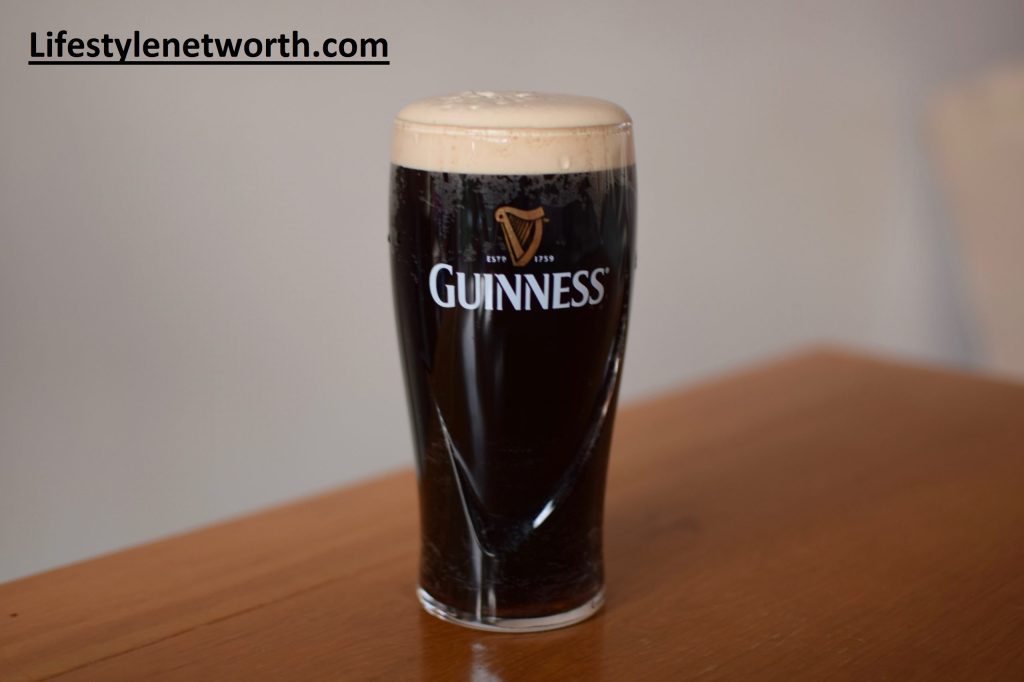
Calories in Guinness Zero are significantly lower than regular Guinness, making it one of the most popular alcohol-free beer choices for health-conscious drinkers in 2026.
Whether you’re cutting back on alcohol, watching your weight, or simply curious about what’s in your pint, this complete guide breaks down every number you need to know.
We compare Guinness Zero calories vs regular Guinness across every serving size, dig into carbs, sugar, and nutrition facts, and explain exactly why the calorie difference is so dramatic. If you drink Guinness and care about what you’re consuming, this is the guide for you.
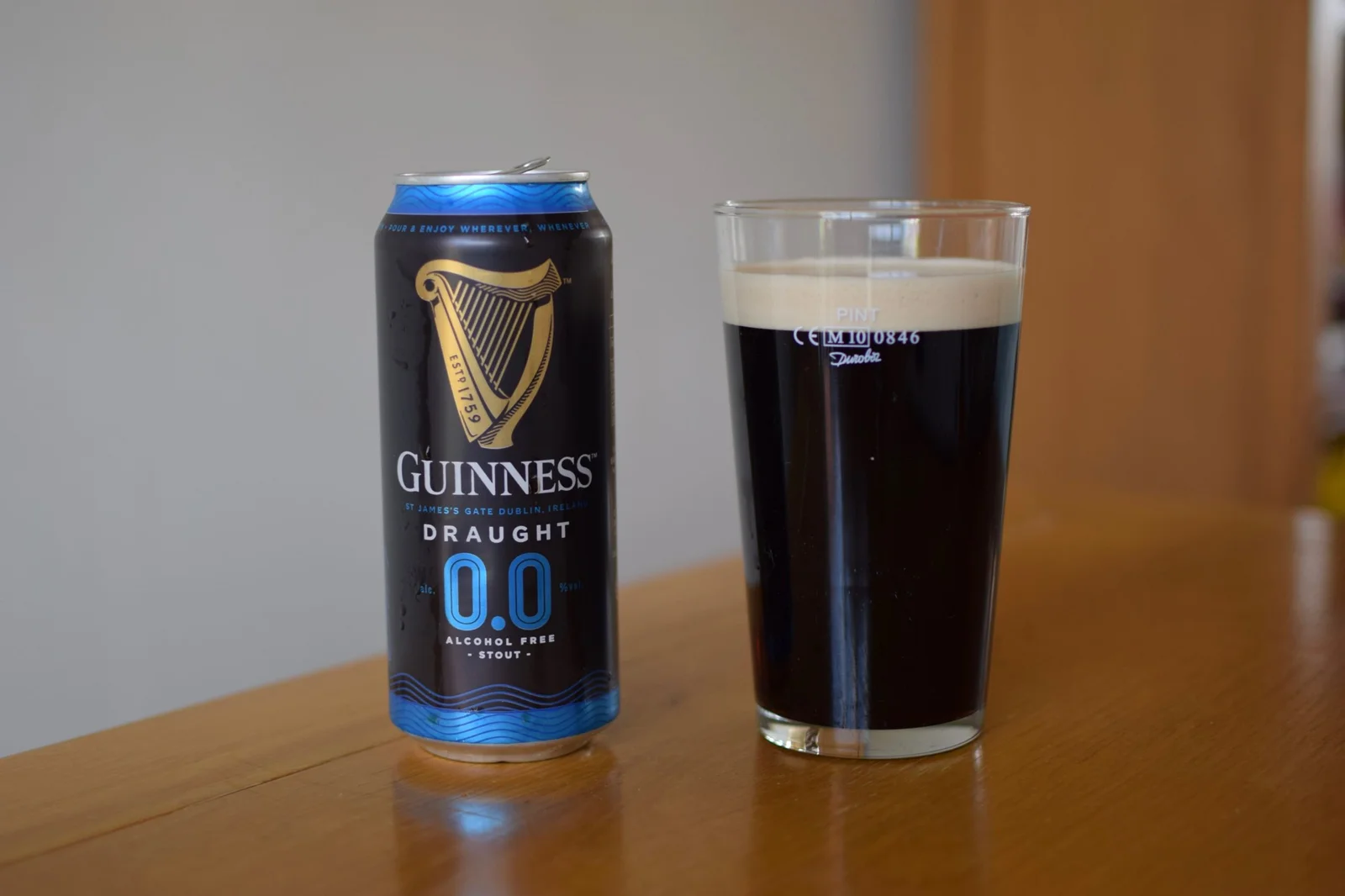
Guinness Zero, officially known as Guinness 0.0, is the non-alcoholic version of the world-famous Irish dry stout. It was developed over four years by the brewers at St. James’s Gate in Dublin.
The beer is brewed exactly like regular Guinness using water, malted barley, roasted barley, hops, and yeast. Once brewed, the alcohol is gently removed using a cold filtration process.
Cold filtration strips the alcohol without applying heat, which protects the flavour compounds — the roasted coffee, dark chocolate, and creamy mouthfeel that make Guinness iconic.
Calories in Guinness Zero sit at approximately 17 kcal per 100ml. This number comes directly from the official Guinness nutrition label and is consistent across all markets.
The official figures per 100ml are 17 kcal, 3.8g carbohydrates, 0.7g sugar, and 0g fat. This makes Guinness Zero one of the lowest-calorie dark beers available anywhere.
The calorie count changes depending on serving size, which is why so many people get confused when comparing labels. Let’s break it down clearly.
| Serving Size | Volume | Calories in Guinness Zero |
|---|---|---|
| Per 100ml | 100ml | 17 kcal |
| Standard Can (UK) | 440ml | ~75 kcal |
| Large Can (US) | 441ml | 71–75 kcal |
| Standard Bottle | 330ml | ~56 kcal |
| US 12oz Serving | 355ml | 57–60 kcal |
| Pint Glass | 568ml | ~97 kcal |
| Half Pint | 284ml | ~48 kcal |
The 440ml UK can is the most commonly purchased format. At around 75 calories, it is less than half the calories of a regular pint of Guinness Draught.
A full pint glass of Guinness Zero comes in at under 100 calories. For drinkers who typically have two or three pints in an evening, this is a meaningful calorie saving.
To understand the full picture, you need the regular Guinness numbers as well. Regular Guinness Draught has an ABV of 4.1–4.2% and approximately 35 kcal per 100ml.
| Serving Size | Volume | Calories in Regular Guinness |
|---|---|---|
| Per 100ml | 100ml | 35 kcal |
| Standard 440ml Can | 440ml | ~154 kcal |
| Standard Bottle | 330ml | ~115 kcal |
| US 12oz Serving | 355ml | ~125 kcal |
| Pint Glass | 568ml | ~198–210 kcal |
| Half Pint | 284ml | ~99 kcal |
A pint of regular Guinness contains roughly 200–210 calories. Most of that comes directly from alcohol — not from the carbohydrates, barley, or hops.
The alcohol content is the single biggest driver of calories in any beer. At 7 calories per gram of alcohol, it’s more calorie-dense than carbohydrates (4 cal/g) or protein (4 cal/g).
This is the comparison most people are searching for. Here’s the full side-by-side breakdown between Guinness Zero calories and regular Guinness.
| Metric | Guinness Zero | Regular Guinness Draught |
|---|---|---|
| ABV | 0.0% | 4.1–4.2% |
| Calories per 100ml | 17 kcal | 35 kcal |
| Calories per 440ml Can | ~75 kcal | ~154 kcal |
| Calories per Pint (568ml) | ~97 kcal | ~200–210 kcal |
| Carbs per 100ml | 3.8g | 2.7g |
| Sugar per 100ml | 0.7g | 0.2g |
| Fat per 100ml | 0g | 0g |
| Fructose Added | Yes | No |
| Nitrogen Widget | Yes | Yes |
Guinness Zero has slightly more carbs per 100ml than regular Guinness. This surprises many people, but the reason is straightforward.
When alcohol is removed from beer, small amounts of natural sugar — in this case fructose — are added back to restore body, mouthfeel, and balance. The added sugar means slightly more carbs per 100ml, but since alcohol itself is so calorie-dense, the total calorie count still drops dramatically.
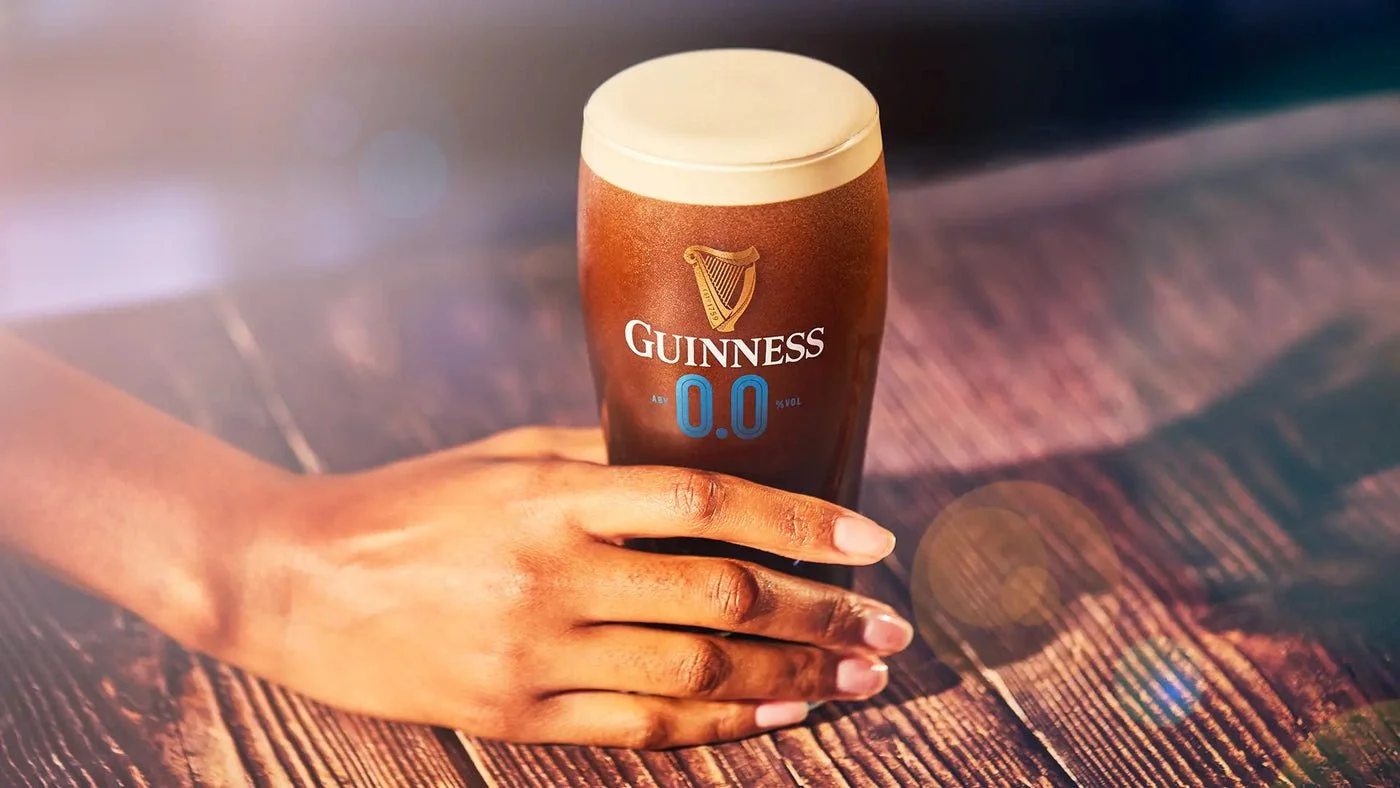
Alcohol contains 7 calories per gram. That is almost as calorie-dense as fat, which has 9 calories per gram.
In a regular pint of Guinness at 4.2% ABV, a significant portion of the total 200+ calories come from alcohol alone. The malt, barley, and hops contribute far less.
When cold filtration removes the alcohol entirely, those 7-calories-per-gram units disappear. Even with a small sugar addition to compensate for flavour, the net calorie result is dramatically lower.
Understanding calories in Guinness Zero fully means looking at the complete nutrition profile. Calories are only one part of the picture.
| Nutrient | Per 100ml | Per 440ml Can |
|---|---|---|
| Energy | 71kJ / 17kcal | 312kJ / 75kcal |
| Carbohydrates | 3.8g | 16.7g |
| of which Sugars | 0.7g | 3.1g |
| Fat | 0g | 0g |
| Saturated Fat | 0g | 0g |
| Protein | 0.3g | 1.3g |
| Salt | 0g | 0g |
| Alcohol | 0% | 0% |
Guinness Zero is fat-free and very low in sugar. The protein content is minimal but present due to the barley used in brewing.
The sodium content is negligible, and there are no artificial sweeteners or preservatives listed. It is a relatively clean ingredient list for a commercially produced non-alcoholic beer.
Both versions of Guinness share the same core ingredients. The only additions in Guinness Zero are fructose and natural flavourings.
| Ingredient | Guinness Zero | Regular Guinness |
|---|---|---|
| Water | Yes | Yes |
| Malted Barley | Yes | Yes |
| Barley | Yes | Yes |
| Roasted Barley | Yes | Yes |
| Hops | Yes | Yes |
| Yeast | Yes | Yes |
| Fructose | Yes | No |
| Natural Flavourings | Yes | No |
The fructose and natural flavourings are added to compensate for the flavour and mouthfeel that alcohol provides in regular Guinness. They help bridge the gap left by removing ethanol.
This is also why Guinness Zero tastes so similar to the original. The brewers work to restore what cold filtration takes out.
This is a practical question for anyone who socialises regularly. The calorie savings from switching to Guinness Zero add up fast.
| Number of Pints | Calories in Regular Guinness | Calories in Guinness Zero | Calories Saved |
|---|---|---|---|
| 1 Pint | 210 kcal | 97 kcal | 113 kcal |
| 2 Pints | 420 kcal | 194 kcal | 226 kcal |
| 3 Pints | 630 kcal | 291 kcal | 339 kcal |
| 4 Pints | 840 kcal | 388 kcal | 452 kcal |
Across a typical Friday night with three pints, you save over 330 calories just by switching to Guinness Zero. That’s the equivalent of a medium-sized meal.
Over a month of weekly pub visits, the savings can reach 1,400+ calories. For someone tracking weight, that is genuinely significant.
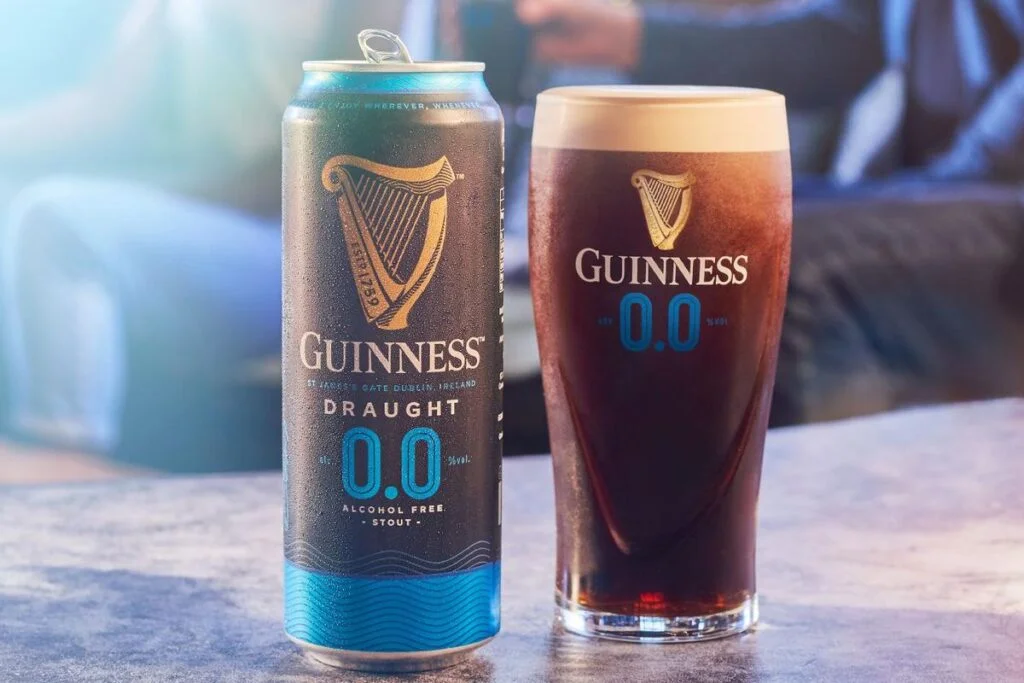
Calories in Guinness Zero make it suitable for most calorie-controlled diets. At 75 calories per can, it fits into weight management plans where regular beer at 150–210 calories would not.
However, Guinness Zero is not a zero-calorie drink. The name refers to the alcohol content, not the calorie count.
Treating Guinness Zero as a “free” drink and consuming several cans per session will still add up. Moderation remains important, even with the lower calorie profile.
Calories in Guinness Zero are low enough for most diets, but the carbohydrate content creates an issue for strict keto followers. A 440ml can contains approximately 16–17g of total carbohydrates.
On a standard ketogenic diet where daily carbs are limited to 20–50g, a single can of Guinness Zero would consume a major portion of that allowance.
For relaxed low-carb diets capping carbs at 100g per day, Guinness Zero can fit occasionally. For strict keto, it is not a great daily choice.
Guinness Zero is not gluten-free. It is brewed with malted barley and barley, both of which contain gluten.
People with coeliac disease or serious gluten sensitivity should not consume Guinness Zero. Individuals with mild gluten intolerance should consult their doctor before trying it.
This is an important distinction because some alcohol-free beers are specifically brewed to be gluten-free, but Guinness Zero is not one of them.
Yes, Guinness Zero is vegan-friendly. Guinness removed the use of isinglass (a fish-derived fining agent) from its filtering process, which is why both the regular Draught and Guinness Zero now carry vegan status.
This was a significant change from older versions of Guinness, which used isinglass to clarify the beer. The current cold filtration process does not require animal-derived finings.
For plant-based drinkers, Guinness Zero is a suitable choice.
Taste directly affects whether the calorie saving is worth making the switch. Most reviewers and side-by-side testers agree that Guinness Zero is remarkably close to regular Guinness.
Both versions open with roasted malt, hints of coffee, and a creamy dark chocolate character. The nitrogen widget inside each can creates the same cascading, creamy pour experience.
The main differences noted in side-by-side comparisons are a slightly thinner body, marginally more pronounced fruit notes, and a touch more sweetness on the finish in Guinness Zero. These differences are subtle enough that many drinkers cannot detect them without direct comparison.
How do calories in Guinness Zero stack up against other popular alcohol-free beers? Context matters here.
| Beer | Serving Size | Approximate Calories |
|---|---|---|
| Guinness Zero | 440ml Can | ~75 kcal |
| Heineken 0.0 | 330ml Bottle | ~69 kcal |
| BrewDog Nanny State | 330ml Can | ~65 kcal |
| Budweiser Zero | 330ml Bottle | ~55 kcal |
| Partake IPA | 355ml Can | ~15 kcal |
| Big Drop Galactic Stout | 330ml Can | ~55 kcal |
| Athletic Brewing Run Wild | 355ml Can | ~65 kcal |
Guinness Zero sits in the middle of the non-alcoholic beer calorie range. It is not the lowest-calorie option, but for a full-flavoured dark stout experience, it offers excellent value.
Options like Partake are lower in calories but significantly lighter in body and flavour complexity. Guinness Zero remains the benchmark for NA stouts that prioritise authenticity.
Calories in Guinness Zero make it an ideal option for several groups of people. Understanding who benefits most helps you decide if it’s the right fit.
Designated drivers can enjoy the full pub experience without alcohol. Pregnant women, athletes in training, and people taking medication that interacts with alcohol also benefit directly.
For Guinness fans cutting back on weekly drinking, Guinness Zero is the closest available substitute. The flavour profile, nitrogen pour, and appearance are near-identical to regular Guinness.
The production process directly influences both the calorie count and the flavour of Guinness Zero. Understanding it helps explain the nutrition numbers.
Brewing starts exactly as it does for regular Guinness — same ingredients, same process, same quality standards at St. James’s Gate. The beer ferments as normal and reaches full strength.
At the final stage, cold filtration removes the alcohol by passing the beer through fine filters at low temperatures. This strips ethanol without thermal damage to the flavour compounds. The result is a full-flavoured stout without the alcohol and without most of the calories.
One reason people find conflicting calorie figures online is the difference between UK and US labelling formats. The numbers are the same product — just presented differently.
In the UK, Guinness Zero is typically sold in 440ml or 500ml cans and calories are listed per 100ml (17 kcal). In the US, it is sold in 14.9oz (441ml) cans and calories are often shown per serving (71 kcal).
Both figures are correct. The confusion arises from comparing per-100ml numbers with per-can numbers across different sources.
The growth in Guinness Zero sales reflects a broader cultural shift. More people in 2026 are adopting mindful drinking practices — reducing alcohol consumption without eliminating social pub experiences.
Non-alcoholic beer sales in the UK grew by over 28% in recent years. Guinness Zero is one of the top-selling products in this category.
For many people, choosing Guinness Zero is not about calories alone — it’s about maintaining social rituals, mental clarity, and physical wellbeing simultaneously.
Athletes and gym-goers are among the fastest-growing segments of non-alcoholic beer consumers. Calories in Guinness Zero sit well within post-training recovery windows where alcohol would interfere with muscle repair.
Alcohol impairs protein synthesis, disrupts sleep quality, and slows recovery. Guinness Zero removes all of those drawbacks while preserving the social and flavour experience.
With under 100 calories per pint, Guinness Zero fits comfortably into a performance-focused nutrition plan, especially when consumed in moderation.
Several misconceptions about Guinness Zero calories circulate online. Let’s correct the most common ones clearly.
Misconception 1: “Guinness Zero has zero calories.” This is false. The “zero” refers to alcohol content, not calories. A 440ml can contains approximately 75 calories.
Misconception 2: “Guinness Zero has more calories than regular Guinness because of the added sugar.” This is also false. Despite slightly higher carbs per 100ml, the total calorie count is less than half of regular Guinness due to alcohol removal.
Misconception 3: “Guinness Zero is suitable for keto.” It can fit into some low-carb diets but contains too many carbs for strict ketogenic plans.
Knowing how to read the label helps you avoid confusion when comparing Guinness Zero calories across formats.
The label on a UK 440ml can shows figures per 100ml and per 440ml. The per-100ml figure will be 17 kcal, while the per-can figure will be around 75 kcal. Always check which column you’re reading.
In the US, labels typically show per-serving figures based on the full can. If you see 71 kcal, that refers to the entire 441ml US can — not per 100ml.
Guinness Zero is now widely available across the UK, Ireland, the US, and many international markets. It can be found in supermarkets, convenience stores, specialist online alcohol-free retailers, and increasingly in pubs and bars.
In some UK and Irish pubs, Guinness Zero is available on draught using the “microdraught” system developed by Guinness specifically for their non-alcoholic product. This replicates the slow-pour, creamy pint experience associated with regular Guinness.
Prices are comparable to regular Guinness multipacks, making it accessible for regular consumers.
Guinness Zero contains approximately 17 kcal per 100ml. A standard 440ml UK can contains around 75 calories total.
A full 568ml pint of Guinness Zero contains approximately 97 calories. This is less than half the calories in a regular pint of Guinness Draught at around 200–210 calories.
No. Guinness Zero has significantly fewer calories — roughly 55% less per pint. The calorie saving comes from removing alcohol, which contains 7 calories per gram.
Fructose and natural flavourings are added after alcohol removal to restore mouthfeel and flavour. This slightly raises carbs per 100ml, but total calories are still far lower.
Yes, Guinness Zero can fit into a calorie-controlled diet. At 75 calories per can, it saves over 100 calories per serving compared to regular Guinness, making it a practical swap.
Not for strict keto dieters. A 440ml can contains around 16–17g of carbohydrates, which is close to the full daily carb limit on a standard ketogenic diet.
No. Guinness Zero is brewed with malted barley and regular barley, both of which contain gluten. It is not suitable for people with coeliac disease.
Yes, Guinness Zero is vegan-friendly. Guinness removed isinglass from its production process, meaning both Guinness Draught and Guinness Zero now carry vegan status.
Guinness Zero is very close in taste to regular Guinness — same creamy nitrogen pour, roasted malt, and coffee notes. Side-by-side, regular Guinness has slightly more body and a touch more bitterness on the finish.
A 440ml Guinness Zero can contains approximately 75 calories. This is based on the official nutrition figure of 17 kcal per 100ml multiplied by 4.4 serving units.
Calories in Guinness Zero make it one of the smartest swaps in the non-alcoholic beer category in 2026. At just 17 kcal per 100ml and around 75–97 calories per full serving, it delivers less than half the calories of regular Guinness without sacrificing the iconic flavour, creamy nitrogen pour, or the deep roasted character that Guinness drinkers love.
Whether you’re cutting calories, cutting back on alcohol, or simply looking for a better option at the pub, Guinness Zero ticks every box. It won’t work for strict keto and it isn’t gluten-free, but for the vast majority of health-conscious beer drinkers, it is an outstanding choice.
The calorie savings per evening add up fast — over 300 calories saved across just three pints. That’s not a small number. If you enjoy Guinness and you care about what you put in your body, Guinness Zero deserves a permanent spot in your fridge in 2026.