
Installing a central air conditioner is a significant home upgrade, one that affects daily comfort, energy bills, and home value for the next 15 to 20 years. Getting the system sized correctly, paired with the right contractor, and installed with proper permits protects that investment.
Roots HVAC serves the Arvada area and greater Denver metro with residential AC installation. Before you commit to a system, here is what homeowners need to know about the process, costs, and decisions involved.
Air conditioner size is measured in tons; one ton equals 12,000 BTUs of cooling capacity per hour. Residential systems typically range from 1.5 to 5 tons, depending on the home’s size, insulation, window area, and local climate.
Undersized units run constantly without reaching your target temperature. Oversized units cool the home quickly, then cycle off before removing enough humidity, leaving the air clammy. Neither outcome is comfortable, and both increase operating costs and mechanical wear over time.
The correct size comes from a Manual J load calculation, a room-by-room analysis of your home’s heat gain based on square footage, ceiling height, insulation levels, window orientation, and local design temperatures. Arvada’s Front Range location means warm, dry summers with significant daily temperature swings, a different load profile than a coastal climate with high humidity.
Any Air Conditioner Installation Arvada CO contractor who sizes your AC based solely on your home’s square footage or matches it to your old unit without a load calculation is skipping this step. Ask specifically whether they perform Manual J calculations before requesting one.
Homes with existing ductwork are natural candidates for central air conditioning. Homes without ducts, including older homes that were heated with radiators or baseboard heat, or spaces like garages, additions, and finished basements, often make more sense with a ductless mini-split system.
Central AC runs through your existing furnace blower and ductwork. It is typically the lower-cost option if the ducts are already in place and in good condition.
Ductless mini-splits consist of an outdoor compressor unit connected to one or more indoor air handlers mounted on the wall or ceiling. Each zone can be controlled independently. Installation does not require ductwork, but the per-zone cost is higher than that of central AC.
The decision comes down to your home’s existing infrastructure, the number of zones you need to cool, and your budget:
For a standard central air conditioner installation paired with an existing gas furnace, total installed cost in the Denver metro area typically falls between $4,200 and $8,500, depending on system size and efficiency rating.
Key cost factors:
Get at least two written estimates before committing. The estimate should itemize equipment, labor, any electrical or duct work, permits, and the warranty terms on both the equipment and the installation labor.
AC installation in Arvada and Jefferson County requires a mechanical permit. That permit triggers an inspection that confirms the refrigerant lines are properly sized and sealed, the electrical connection is code-compliant, and the system is correctly charged.
A contractor who does not pull the permit is not protecting you or themselves. Unpermitted HVAC work can complicate homeowners’ insurance claims and home sales. Always confirm that the contractor pulls the permit before work begins.
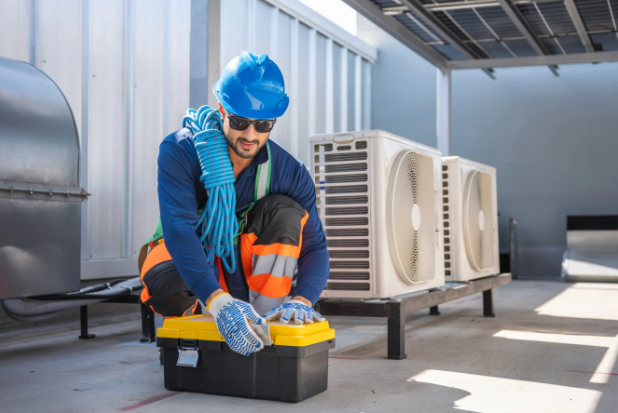
A central AC installation on an existing system typically takes one day. The crew installs the outdoor condenser unit, connects refrigerant lines to the evaporator coil (which sits on top of the furnace), runs the electrical disconnect, and recharges the refrigerant circuit.
Before they leave, the system should be tested at operating pressure. Ask the technician to verify the supply and return temperatures; the difference between the air entering the return and the air leaving the supply registers should be 15 to 20 degrees Fahrenheit. That measurement confirms the system is working at the correct capacity.
A new central AC system requires regular maintenance to reach its rated lifespan of 15 to 20 years.
Every year, before cooling season, a licensed HVAC technician should inspect and clean the condenser coils, verify refrigerant charge, check electrical connections, and confirm the system is cycling correctly. That annual service call costs $75 to $150 in most Colorado markets and catches small issues before they become compressor failures.
Between annual visits, replace air filters every 60 to 90 days, keep vegetation and debris at least two feet away from the outdoor condenser, and keep supply and return vents unobstructed by furniture or rugs. Those basic habits keep the system running at rated efficiency between professional service visits.