
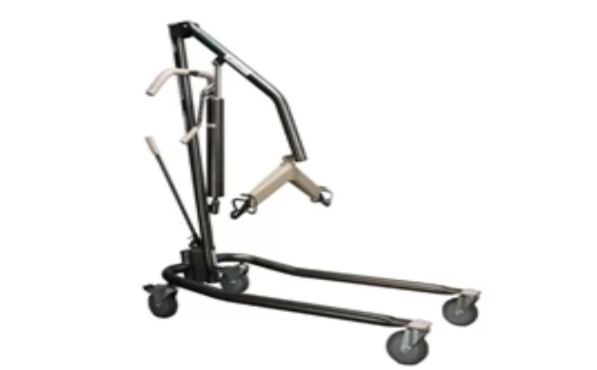
Helping someone with limited mobility move safely around the home can become challenging over time. Transfers from a bed to a wheelchair, recliner, or bathroom chair can be physically demanding. Some caregivers are concerned about discomfort or injury when caring for the person day-to-day.
However, these transfers can be more manageable and safer using a manual Hoyer lift. A manual Hoyer lift uses a hydraulic lifting mechanism to provide stable patient support while reducing physical strain during transfers. Therefore, it is important to consider patient requirements, home environment, and key equipment specifications when selecting the appropriate lift.
This guide will explain what to look for when selecting a Hoyer lift for home use, including patient requirements, lift features, and factors to consider when exploring Medical Department Store’s manual patient lift collection.
The first step when selecting a Hoyer lift for home is to consider the person’s mobility and daily transfer requirements. In addition, the manual Hoyer lift technique is used to assist an individual who is unable to transfer on their own and cannot be safely transferred in another way. These lifts are frequently utilized to transfer from bed, wheelchair to chair, or to another surface.
Before choosing a manual Hoyer lift, caregivers should determine whether the patient needs full-body support or can assist during transfers. People with less strength in the lower body, balance problems, or limited mobility may require a full-support lift when transferring.
A manual patient lift uses a hydraulic lifting system and lowers the patient. Unlike powered models, manual lifts do not require batteries or electrical outlets. As a result, manual lifts can be a viable choice for those who care for their loved ones at home and prefer equipment that is easy to use, reliable, and less demanding.
When choosing a manual Hoyer lift, price is not the only factor to consider. Understanding the key features of the lift can help caregivers select equipment that meets both patient needs and home care requirements. The first factor to consider is the weight capacity, since the lift should be able to support the body weight of the patient safely. Choosing a model with the correct capacity helps maintain stability and provides safer transfers.
The frame design also has an impact on daily usability. For example, foldable base legs, rolling casters, and a heavy-duty build make the lift easier to maneuver around the house, especially bedrooms. Additionally, it is also important for caregivers to think about the size of the lift, as it will need to fit through doorways and move around furniture.
Sling compatibility is another important consideration. Similarly, the sling should be sized relative to the patient’s size, mobility, and needs for transfer and should provide support during patient movement. Therefore, for a comfortable fit, the sling should provide proper positioning and increase the caregiver’s confidence in completing transfers.
Each home care situation is unique, and the most appropriate type of Hoyer lift will vary depending on the patient’s condition and the caregiver’s needs. Understanding these differences can help caregivers choose equipment that provides the right level of support and comfort. Individual needing total assistance will likely need different support than an individual who can partially assist during transfers.
Equipment selection also takes into account how often it will be used. For caregivers who need to make several transfers throughout the day, durability, ease of use, and ease of maneuverability are important factors. Considering the daily routine and transfer frequency can help determine which lift features will be most beneficial. Occasional lift users may be more concerned about storage, set-up, and convenience.
Safe patient handling is an essential part of home care for both the caregiver and the person receiving care. Transfer tasks often are physically demanding for the caregiver, particularly when done without the appropriate equipment and technique. Using suitable equipment not only supports safer movement but can also create a more comfortable experience for both individuals involved. Studies on patient handling have shown that by using the right transfer equipment, physical stress on the movement of patients with assistance can be reduced.
A quality Hoyer lift can improve safety, but proper use remains essential. Before each transfer, caregivers should check that the lift is positioned correctly, the wheels are secure, and the sling is attached according to manufacturer instructions. These simple checks can help identify potential issues before use and create a safer transfer process for both the caregiver and the patient.
The home environment should also influence the type of Hoyer lift selected. Caregivers should measure available space, check doorway clearance, and consider areas where transfers happen most often, such as bedrooms and bathrooms. Planning the transfer area in advance can make it easier to move the lift smoothly and reduce obstacles during daily care routines.
Caregiver education plays an important role in preventing injuries. Learning correct lifting techniques, understanding equipment limits, and following safety recommendations can improve confidence during daily use. Proper training also helps caregivers maintain patient comfort and avoid unnecessary movement during transfers.
Finding reliable medical equipment becomes easier when caregivers know what features match their needs. Having access to different lift options allows caregivers to compare products and select equipment that aligns with their specific care requirements. Medical Department Store offers a range of manual patient lifts designed for individuals who need assistance with safe transfers at home, during rehabilitation, or in healthcare settings.
When comparing manual Hoyer lifts, shoppers should evaluate weight capacity, hydraulic operation, frame stability, base adjustment, maneuverability, and sling compatibility. These factors play an important role in ensuring that the selected lift can provide dependable support during regular patient transfers. These details help determine which lift will provide the right combination of safety, comfort, and ease of use.
Medical Department Store’s manual patient lift collection gives caregivers access to different equipment options based on patient mobility requirements and home care needs. Comparing available features helps caregivers make informed decisions and choose equipment that supports their long-term care needs. Reviewing product specifications carefully can help families select a lift that supports safer transfers and better daily care.
Choosing the right Hoyer lift involves understanding patient mobility, caregiver needs, home space, and essential equipment features. Important factors include weight capacity, manual operation, sling compatibility, maneuverability, and how frequently the lift will be used.
Start by evaluating current transfer challenges, measuring available space, and identifying the level of support required. Selecting a manual Hoyer lift that matches the patient’s needs and home environment can create a safer, more comfortable, and more manageable care routine.