
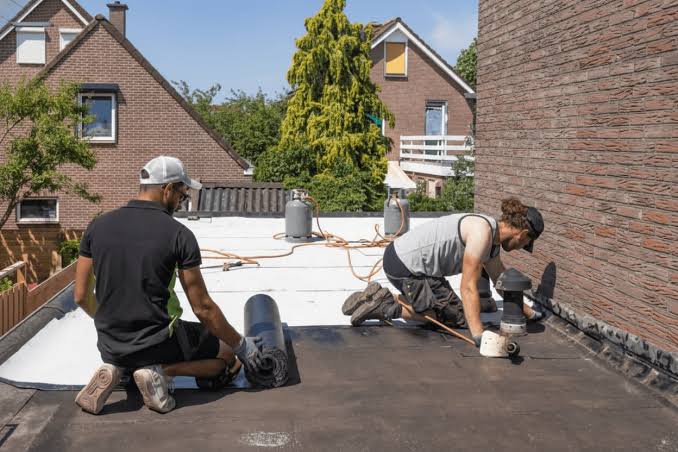
Commercial roofs often cover large areas and support more than basic weather protection. Rooftop HVAC equipment, drainage systems, vents, skylights, access points, and service pathways can all affect how the roof performs. Because many commercial systems are relatively flat or low-slope, small drainage or membrane problems may remain unnoticed until water begins appearing inside the building.
Good commercial roofing management involves routine observation rather than waiting for an obvious leak. Property owners considering Ridge Runner Roofing or another qualified contractor should understand the condition of the roof, keep accurate repair records, monitor drainage, and pay attention whenever other trades work on the surface. A consistent maintenance approach can make developing problems easier to identify and less disruptive to building operations.
A commercial roof should be viewed as a complete system rather than one exposed membrane.
The surface material may include a single-ply membrane, modified bitumen, metal, built-up roofing, or another system. Beneath the visible layer are insulation, decking, attachment components, and other materials that support the assembly.
Flashing protects roof edges, walls, equipment curbs, vents, drains, and penetrations. These transitions often deserve extra attention because water must move around changes in materials and elevation.
Property managers should know the general roof type and where major penetrations are located. Keeping basic drawings, inspection reports, and repair information in one place can make future maintenance easier.
A contractor reviewing the roof should be able to explain how the visible surface connects with drainage, flashing, equipment, and underlying components.
Water should leave a commercial roof through its intended drainage system.
Depending on the building, runoff may move toward internal drains, scuppers, gutters, or downspouts. Leaves, packaging, windblown debris, and other material can block these paths and leave water standing on the roof.
Ponding areas deserve attention because repeated standing water may expose weak seams, flashing defects, or low sections of the roof to prolonged moisture.
Check drainage areas after significant rainfall when safe access is available. Look for debris around drains and signs that water remains long after surrounding areas have dried.
Property managers should also inspect discharge points at ground level. A clear roof drain does little good if downstream piping or outlets are blocked.
Routine drainage checks are one of the simplest ways to catch conditions that may otherwise remain hidden.
Commercial roofs frequently support air-conditioning equipment, exhaust fans, vents, pipes, antennas, and other systems.
Each penetration creates a location where the roofing material must transition around another component. Flashing and seals in these areas can deteriorate, loosen, or become damaged during equipment servicing.
Equipment itself can also create maintenance challenges. Condensate should drain properly instead of spilling repeatedly onto roofing materials. Panels, screws, tools, and service debris should not be left behind after mechanical work.
During a commercial roofing inspection, Ridge Runner Roofing or another contractor may pay particular attention to equipment curbs, pipe penetrations, flashing transitions, and areas with heavy service traffic.
Property managers should maintain a simple list of rooftop equipment so changes can be tracked over time.
Roof damage is not always caused by age or weather.
HVAC technicians, electricians, sign installers, communications contractors, and other trades may need rooftop access. Heavy tools, dropped hardware, sharp equipment edges, or repeated foot traffic can damage some roofing materials.
After substantial service work, inspect the route between the access point and the equipment. Look for punctures, cuts, loose flashing, displaced walkway pads, or abandoned materials.
Contractors should avoid attaching equipment directly through roofing components without an approved plan.
Keeping a record of who accessed the roof and when can be useful if damage appears shortly afterward.
For buildings with frequent rooftop activity, designated walkways may help concentrate foot traffic away from more vulnerable sections.
One leak may be an isolated problem. Several leaks in similar locations can reveal a pattern.
Keep records of where water appeared indoors, what conditions were present outside, which roof area was repaired, and what work was completed.
Photographs can make those records more useful.
If a leak returns near an earlier repair, the information may help determine whether the previous problem has reopened or whether water is entering from another location and traveling beneath the roofing system.
Repeated repairs should not automatically be considered unrelated.
Over time, a repair history creates a picture of how the roof is performing. Property managers can use that information to identify sections that need closer inspection or broader corrective work.
The underside of a commercial roof can reveal problems before exterior damage becomes obvious.
Ceiling stains, damp insulation, peeling finishes, unusual odors, or moisture around roof penetrations should be documented and investigated.
Water does not always appear directly below the point where it entered the roof. It may travel along decking, structural components, or insulation before becoming visible inside occupied space.
Note when the moisture appears. A stain that grows only during heavy rain may behave differently from moisture related to mechanical equipment or interior condensation.
Do not simply repaint stained ceiling materials without addressing the source.
Interior observations are especially valuable for large roofs because they help narrow the area that needs exterior investigation.
Commercial roof work can affect employees, customers, tenants, deliveries, and equipment.
Before repairs begin, identify entrances, parking areas, loading zones, and interior spaces located beneath the work area. Some sections may need temporary access restrictions while materials or equipment are being moved.
Noise and odors may also affect occupied areas depending on the materials and methods involved.
Coordinate roofing work with building managers so occupants know which areas may be affected. Sensitive operations, such as offices requiring quiet or spaces containing delicate equipment, may need additional planning.
A clear schedule helps reduce disruption and gives facility staff time to move vehicles, protect inventory, or adjust access routes.
Large roof fields often receive the most attention, but leaks frequently develop at transitions.
Flashing directs water around parapet walls, curbs, vents, roof edges, drains, and other changes in the roof surface.
These areas experience movement as materials expand, contract, and respond to temperature changes. Seams, fasteners, and sealants can also deteriorate over time.
A patch placed over the visible symptom may not solve a failure hidden beneath an existing flashing detail.
When recurring moisture appears near walls or equipment, ask whether the complete transition has been inspected rather than repeatedly treating the surface.
Good flashing work should integrate with the surrounding roof system instead of relying solely on exposed sealant.
Repairs are a normal part of maintaining many commercial roofs.
However, increasingly frequent leaks can indicate broader deterioration. If separate sections begin failing within short periods, continuing to patch individual spots may become less practical.
Look at the age, condition, repair history, drainage performance, and extent of damaged areas together.
Moisture trapped beneath the visible membrane can also influence decisions. The surface may appear repairable while insulation or decking below has been affected.
A professional evaluation should distinguish between isolated defects and widespread decline.
When discussing options with professional roofing services in Asheville, NC, property managers should ask what portion of the roof remains serviceable and whether the recommended work addresses the pattern of failure rather than only the newest leak.
Roof management does not need to become complicated.
Create a schedule for visual inspections, drainage checks, repair reviews, and follow-up after major storms or rooftop service work.
Keep roof access controlled so unnecessary traffic does not occur. Make sure people who enter the roof understand where designated walkways and sensitive areas are located.
Remove loose debris before it blocks drains or damages the surface.
Document visible changes rather than relying on memory. Small cracks, open seams, loose flashing, or new ponding areas can be photographed and compared during later inspections.
A simple maintenance record gives owners and contractors better information when decisions need to be made.
Commercial roofs perform best when they are managed continuously instead of inspected only after water reaches occupied space. Drainage, flashing, penetrations, rooftop equipment, foot traffic, and repair history all provide useful information about the condition of the system.
A consistent commercial roofing program should include regular observations, accurate records, prompt investigation of interior moisture, and follow-up after other trades work on the roof. Ridge Runner Roofing or another experienced contractor can use that information to distinguish isolated repairs from conditions that require broader attention.
For property owners and facility managers, the goal is straightforward: know what is on the roof, know how water leaves it, document changes, and respond before small defects become repeated disruptions.