
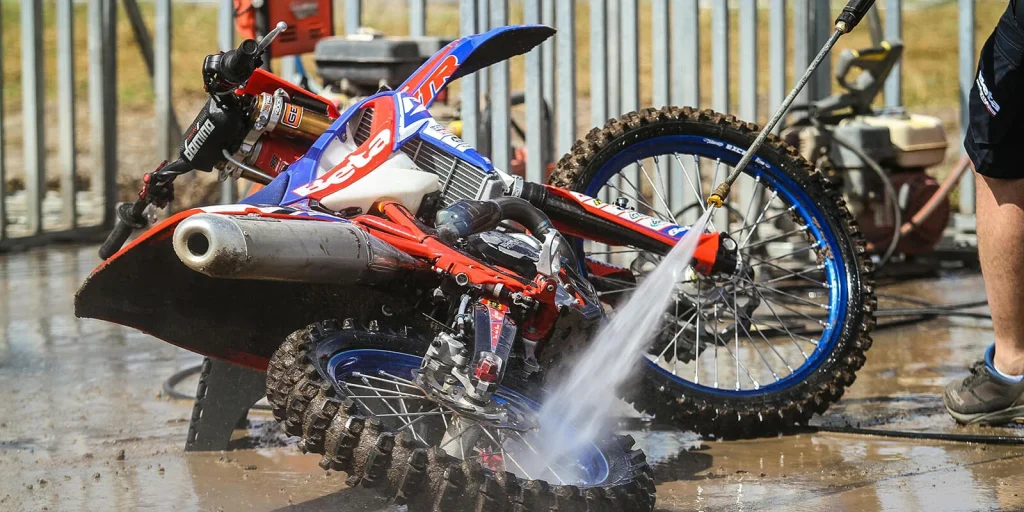
Owners want to enjoy their dirt bikes as often as possible. As a result, they may take the bike out in the rain or mud. Some people even choose to cross bodies of water, such as rivers, on their rides. However, when doing so, the bikes get soaked in water and abrasive grit. How can they clean their bikes to prevent rust from forming?
The bike’s steel frame, any aluminum components, and fasteners will rapidly rust if they aren’t cleaned. Owners need to establish a post-ride routine that involves cleaning and drying the bike to protect it from harm. Doing so will ensure the bike remains looking its best and is structurally sound when they want to take it out again. Furthermore, personalizing your Suzuki dirt bike with graphics kits can help preserve the bike. The decals serve as a barrier between the metal and water.
Immediately After a Ride
Immediately after a ride, the owner should wash the bike. This process should take place within 30 minutes of the ride’s completion. When cleaning the bike, focus on areas that are likely to rust. This includes the chain, sprockets, swingarm pivot, and linkage. Don’t overlook any straight-on radiator fans or the underside of the frame rails. However, never directly point water at the wheel bearings, airbox, ignition coil, or any electrical parts.
Use the Right Cleaning Products
Owners must use the proper cleaning products for their bikes. Manufacturers make a specific motorcycle wash. Combine the product with warm water in one bucket, and have a second bucket of clean water to rinse the bike. Using a soft-bristle brush, clean the frame gussets and welds, the brake caliper bleed screws, banjo bolts, and the exhaust header heat shields. Rinse the bike thoroughly, as any soap left behind will attract dirt and retain water.
Dry the Bike
The bike must be dried to prevent the formation of flash rust. Never allow the bike to sit for more than an hour or two with water remaining in the crevices. A leaf blower or compressed air is ideal for removing water from the shock body, fork legs, and frame tubes. Use a microfiber cloth to remove water from painted surfaces on the swing arm. Once these areas have dried, set up a fan pointing towards the bike. Allow this fan to run for one or two hours when the ambient humidity is high to ensure all water is removed. Don’t overlook the fork lowers and swing arm drain holes either. Tilt the bike on the stand to remove water from these areas.
Targeted Protectants
Invest in targeted rust-preventative treatments. Various products will be needed for different bike components. These protectants create an oily or waxy film that removes any remaining water while sealing out oxygen.
The Role of Graphics in Protecting the Bike
Quality graphics also help protect the bike from rust. Choose graphics that contain UV inhibitors and an air egress adhesive to ensure the highest level of protection. Place graphics on the frame tubes and tank, the swing arm and fork guards, and the radiator shrouds for outstanding protection.
Owners who take these steps find their bikes last longer. This post-ride ritual will help reduce the risk of rust by 95%. Vinyl graphics are also essential because they protect the paint and metal from abuse. An owner will only need to repaint their bike every five to seven years, rather than every two years. Investing time after each ride will extend the bike’s longevity and appearance.