

When people talk about workplace design, they usually think of desks, lighting, or open-plan layouts. Yet one of the simplest details — door signs for office — plays a much bigger role than many realize.
These signs are not just labels on doors. They are tools that help employees, clients, and visitors move through a building with ease.
Imagine arriving at a company you’ve never visited before. You step out of the elevator and face a corridor with a dozen identical doors. Without clear signage, it takes guesswork or repeated questions to find the right room. Door signs prevent that problem. They show where you are, where you need to go, and they make the office feel organized.
For employees, the benefit is just as clear. Signs reduce small delays: finding a meeting room, directing a guest, or locating shared facilities becomes straightforward.
Door signs come in many forms, and the choice of material often reflects the identity of the workplace:
Typography, size, and placement are just as important as the material. A sign that is too small or poorly placed loses its purpose, no matter how stylish it looks.
Modern offices expect more from their signage than simple numbers on a door. Today’s signs often include:
These features turn signs into practical tools that support both navigation and inclusivity.
Not every door in a workplace needs a sign, but certain areas always benefit from them:
Together, these points of reference help a building function more smoothly.
The advantages of clear signage are easy to notice once you pay attention:
Individually these benefits may seem modest, but combined they improve the overall workplace experience.
Signage in modern interiors is rarely an afterthought. Designers often plan door signs as part of the space itself. The choice between a floating acrylic plate, an engraved wooden panel, or a brushed steel number is not only functional but also aesthetic.
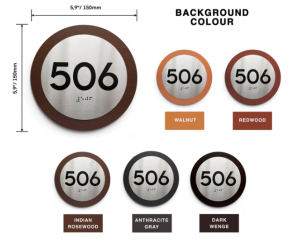
Some offices prefer bold contrasts to make signs highly visible, while others choose subtle designs that blend in with the walls. In both cases, the goal is clarity without breaking the style of the interior.
Door signs for offices are not decorative extras. They are practical elements that improve navigation, create order, and add to the professional feel of a workplace. They may be small in size, but they shape the way people experience the entire building.
The next time you enter an office, notice how the signs work. They are guiding you quietly, making the space easier to use, and showing that details matter.