Jan 01, 1970
0 years old
Bill Gates younger days tell a story that will blow your mind. Picture this: A 20-year-old college dropout creates a company that changes the world forever.
Most people your age are still figuring out what to order for lunch.
But Bill Gates? He was building an empire that would make him the richest man on Earth.
This isn’t just another success story – it’s the blueprint for turning crazy ideas into billion-dollar realities.
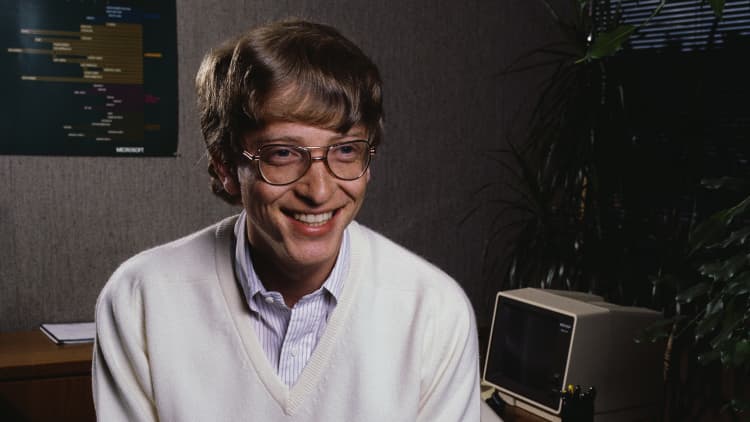
Bill Gates younger version was nothing like the billionaire we know today.
Born William Henry Gates III on October 28, 1955, in Seattle, Washington, he was just a regular kid with an extraordinary brain.
His parents, William H. Gates Sr. and Mary Maxwell Gates, had no idea their son would revolutionize computing.
At age 13, Bill Gates encountered his first computer at Lakeside School.
This wasn’t just any computer – it was a Teletype Model 33 ASR terminal connected to a General Electric computer.
The moment young Bill touched those keys, something clicked.
He spent hours programming, skipping classes, and even hacking into the school’s computer system.
Bill Gates younger mindset showed these key traits:
His teachers noticed something special about this kid.
While other students played sports or hung out, Bill was glued to the computer terminal.
He even got in trouble for using too much computer time – the school had to limit his access.
Bill Gates younger ambitions led him to Harvard University in 1973.
He enrolled as a pre-law student, but his heart wasn’t in it.
Instead of attending classes, he spent most of his time in the computer lab.
His roommate at Harvard was none other than Steve Ballmer, who would later become Microsoft’s CEO.
But the most important relationship he formed was with Paul Allen, his childhood friend from Lakeside School.
Paul Allen was two years older and had already dropped out of Washington State University.
He was working as a programmer at Honeywell when he visited Bill at Harvard.
In December 1974, Paul Allen walked into Harvard Square and bought a magazine.
The magazine was Popular Electronics, and the cover story was about the Altair 8800.
This was the first commercially successful personal computer kit.
Allen rushed to Bill’s dorm room and showed him the magazine.
“Look at this,” Allen said. “It’s going to happen with or without us.”
Bill Gates younger instincts kicked in immediately.
He realized that personal computers would need software to run.
Someone had to write the programs that would make these machines useful.
And that someone could be them.
Bill Gates younger vision started with a simple phone call.
In January 1975, he called MITS (Micro Instrumentation and Telemetry Systems), the company that made the Altair 8800.
He told them he and Paul Allen had written a BASIC interpreter for their computer.
There was just one problem – they hadn’t actually written it yet.
This was classic Bill Gates younger boldness.
He made the sale first, then figured out how to deliver.
For the next eight weeks, Bill and Paul worked non-stop.
They wrote the code on Harvard’s computers, testing it on a simulator they created.
Their BASIC interpreter worked perfectly when they demonstrated it at MITS.
MITS agreed to distribute their software, giving them royalties for each copy sold.
This was the beginning of Microsoft, though they didn’t call it that yet.
Initially, they called their partnership “Micro-Soft” (with a hyphen).
The name combined “microcomputer” and “software.”
Key Statistics About Microsoft’s Early Days:
Bill Gates younger decision to drop out of Harvard shocked everyone.
His parents were furious. His professors were disappointed.
But Bill saw something they couldn’t see.
He understood that the personal computer revolution was happening right now.
If he waited to graduate, he might miss the biggest opportunity of his lifetime.
The software industry was about to explode, and he wanted to be at the center of it.
In 1975, Bill had a crucial conversation with his parents.
He explained his vision for personal computers in every home and office.
He told them about the potential for software to become a massive industry.
His mother, Mary Gates, finally understood.
She said, “If you’re going to do this, you better do it right.”
His father, though worried, respected his son’s passion and determination.
Bill Gates younger courage to leave Harvard proved to be the right decision.
He officially dropped out during his sophomore year, though Harvard held his place for several years.
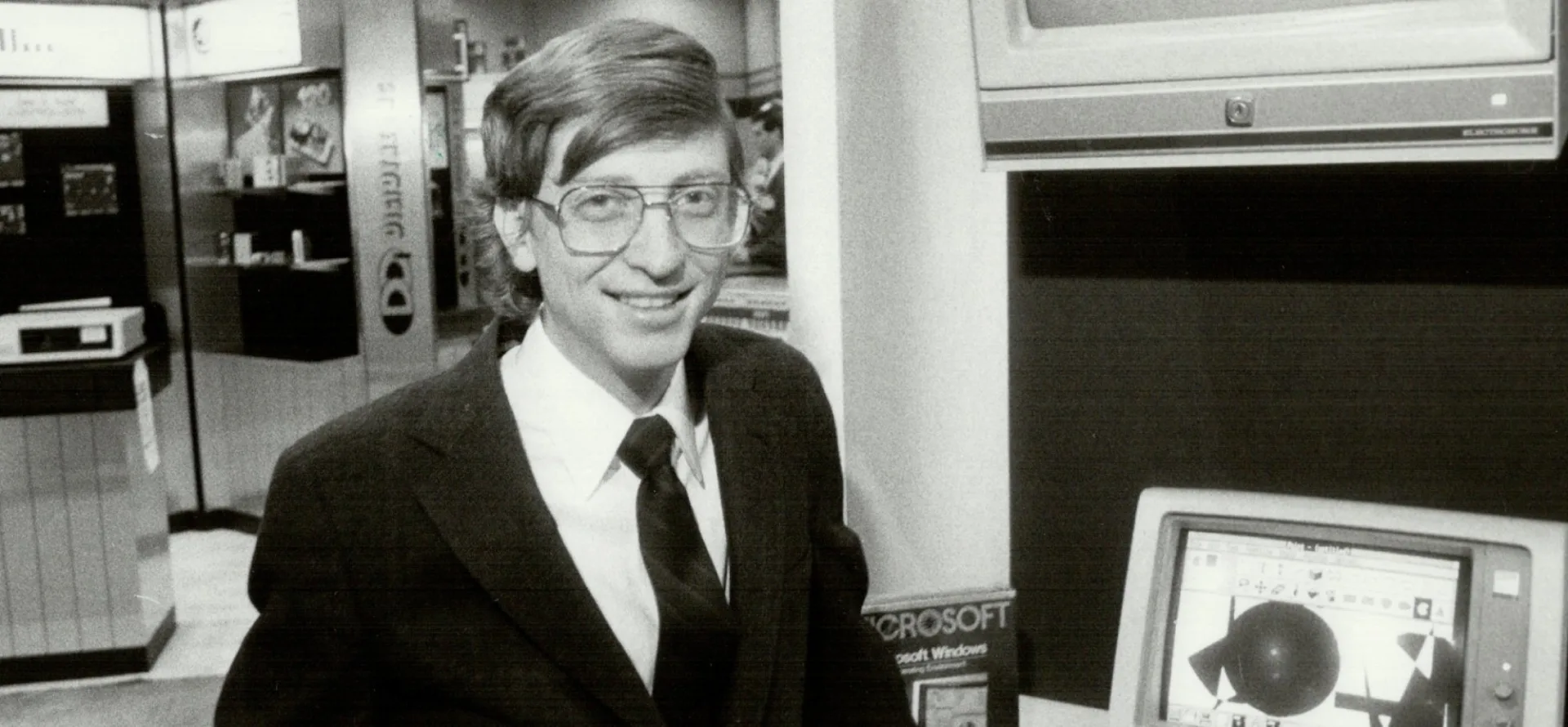
Bill Gates younger years at Microsoft were far from easy.
The company faced numerous challenges that would have destroyed most startups.
Software piracy was rampant – people were copying their programs without paying.
Competition was fierce, with established companies having more resources.
Cash flow was a constant problem in the early days.
One of Bill Gates younger biggest frustrations was software piracy.
In 1976, he wrote an open letter to computer hobbyists.
He pointed out that widespread copying of software was preventing developers from creating better programs.
This letter made him unpopular with many in the computer community.
But it established an important principle: software should be paid for, just like any other product.
Problems Microsoft Faced in the Early Years:
In 1980, IBM approached Microsoft with a proposition that would change everything.
IBM wanted to create a personal computer to compete with Apple.
They needed an operating system for their new machine.
Bill Gates younger negotiation skills were about to be tested on the biggest stage.
Initially, IBM wanted to license CP/M, an existing operating system.
But when that deal fell through, they turned to Microsoft.
Here’s where Bill Gates younger genius really showed.
Instead of just licensing an operating system to IBM, he bought one.
He purchased QDOS (Quick and Dirty Operating System) from Seattle Computer Products for $50,000.
Then he modified it and licensed it to IBM as MS-DOS.
But here’s the brilliant part – he retained the rights to license MS-DOS to other companies.
This decision would make him one of the richest people in the world.
The IBM Deal Numbers:
Bill Gates younger strategy was simple but brilliant.
He focused on software while letting other companies build the hardware.
This approach gave Microsoft massive leverage and scalability.
Every computer that ran MS-DOS generated revenue for Microsoft.
As the PC market exploded, Microsoft’s profits soared.
Bill Gates younger understanding of network effects was remarkable.
He realized that the more people used MS-DOS, the more valuable it became.
Software developers would write programs for the most popular operating system.
This created a virtuous cycle that was almost impossible to break.
Microsoft’s Growth Strategy:
Bill Gates younger leadership style was intense and demanding.
He was known for his high standards and direct communication.
Employees called his challenging questions “Bill’s reviews.”
He could be tough on people, but he was even tougher on himself.
This drive for excellence became part of Microsoft’s culture.
Bill Gates younger philosophy was to hire the smartest people possible.
He valued intelligence over experience, potential over credentials.
Microsoft’s interview process became legendary for its difficult questions.
They didn’t just want people who could code – they wanted people who could think.
Bill Gates’ Leadership Principles:
Bill Gates younger innovations went far beyond just MS-DOS.
Microsoft created tools that made computers accessible to regular people.
They developed programming languages, applications, and eventually Windows.
Each innovation built on the previous one, creating a technology ecosystem.
In 1985, Microsoft released Windows 1.0.
This wasn’t Bill Gates younger first attempt at a graphical interface.
He had been working on it since seeing early demonstrations at Xerox and Apple.
Windows made computers much easier to use for non-technical people.
It transformed the PC from a hobbyist tool to a mass-market product.
Microsoft’s Major Innovations:
Bill Gates younger personal life was largely sacrificed for Microsoft.
He worked 16-hour days, seven days a week.
Social life was minimal – his friends were mostly Microsoft employees.
He dated occasionally but was completely focused on building the company.
His idea of relaxation was reading technical manuals and industry reports.
Bill Gates younger schedule was insane by any standard.
He would arrive at the office before dawn and leave after midnight.
Weekends were just another workday.
He took his first real vacation in 1984, nine years after starting Microsoft.
Even then, he brought work with him and called the office daily.
Bill Gates’ Personal Habits:
Bill Gates younger financial journey was remarkable.
In 1975, he was a college student with no money.
By 1986, Microsoft went public and made him incredibly wealthy.
The IPO created over 10,000 millionaires among Microsoft employees.
At age 31, Bill Gates became the youngest billionaire in history.
On March 13, 1986, Microsoft went public.
The stock was priced at $21 per share.
By the end of the first day, it had risen to $35.50.
Bill Gates younger 45% stake in the company was suddenly worth $350 million.
This was just the beginning – the stock would continue to soar.
Microsoft’s Financial Milestones:
Bill Gates younger success wasn’t just luck.
He made specific decisions and developed particular habits that led to success.
These lessons are still relevant for entrepreneurs today.
Understanding his mindset can help anyone build a successful business.
1. Timing is Everything Bill Gates younger success came from recognizing the personal computer revolution early.
He didn’t invent the computer, but he saw its potential before others.
Successful entrepreneurs spot trends before they become obvious.
2. Focus on the Platform Instead of building hardware, Microsoft focused on software.
This strategy was more scalable and profitable.
Platform businesses create more value than product businesses.
3. Retain Control The IBM deal shows the importance of keeping rights to your work.
Bill Gates younger negotiation ensured Microsoft owned MS-DOS.
This single decision generated billions in future revenue.
4. Build for Scale Microsoft’s software could be copied infinitely at almost no cost.
This scalability is what enabled massive growth.
Digital products have better economics than physical products.
5. Hire Smart People Bill Gates younger hiring philosophy prioritized intelligence.
Smart people can learn new skills quickly.
They can also solve problems that less intelligent people cannot.

Bill Gates younger years weren’t without failures.
Microsoft made several products that flopped completely.
Some strategic decisions turned out to be wrong.
But Gates learned from each mistake and adapted quickly.
Microsoft Bob was a user interface disaster.
MSN initially failed to compete with AOL.
Windows Phone never gained significant market share.
But these failures taught valuable lessons about user experience and market timing.
Key Failures and Lessons:
Bill Gates younger ambition was to build the world’s largest software company.
He achieved that goal by the 1990s.
But success brought new responsibilities and perspectives.
He began to think about how to use his wealth to help others.
In 2000, he stepped down as CEO to focus on philanthropy.
The foundation, started with his wife, focuses on global health and education.
They’ve donated billions to fight diseases like malaria and tuberculosis.
The foundation also works to improve education in America.
This represents the evolution from business success to social impact.
Philanthropic Focus Areas:
What did Bill Gates do at 17?
At 17, Bill Gates co-founded Traf-O-Data with Paul Allen, a company that created software to analyze traffic data—a precursor to his later work at Microsoft.
Was Bill Gates a good student?
Yes, Gates was an exceptional student, particularly in math and science, scoring 800 on the math portion of the SAT and later attending Harvard before dropping out to start Microsoft.
Was Bill Gates wealthy as a kid?
Bill Gates came from an upper-middle-class family. His father was a successful lawyer, and his mother served on the board of directors for First Interstate Bank and the United Way.
What was Bill Gates doing at 13?
At 13, Gates began programming on a Teletype terminal at his school and developed his first software: a tic-tac-toe game that allowed users to play against the computer.
What is Bill Gates’s religion?
Bill Gates was raised in a Christian (Protestant) household but describes himself today as agnostic, open to spiritual thinking but not affiliated with organized religion.
What age did Bill Gates start coding?
Gates started coding at age 13, quickly developing a passion for computer science that would lead to his future tech empire.
Bill Gates younger story proves that age is just a number.
At 20, he made decisions that would shape the entire technology industry.
His vision of accessible computing became reality.
Microsoft’s success created thousands of jobs and countless opportunities.
More importantly, his later philanthropy shows how business success can create positive change.
The lessons from his younger years remain relevant today.
Entrepreneurs can still learn from his strategic thinking, competitive drive, and willingness to take calculated risks.
The boy who spent his lunch money on computer time became one of history’s most influential figures.
His journey from Harvard dropout to global leader shows what’s possible with vision, hard work, and perfect timing.
Bill Gates younger years weren’t just about building a company.
They were about building the future.
And that future is the world we live in today.
Final Takeaways:
The story of Bill Gates younger years is really the story of how one person’s vision can change the world.
His legacy proves that with the right combination of talent, timing, and tenacity, anything is possible.
From a 20-year-old college dropout to the world’s most famous philanthropist, Bill Gates’ journey continues to inspire entrepreneurs around the globe.
The computer on your desk, the software you use, and the connected world we live in all trace back to decisions made by a young man who dared to dream big and had the courage to make those dreams reality.
Macron wife age difference is approximately 24 years, with Brigitte...

Fortune Justin Bieber: Justin Bieber’s fortune is estimated to exceed...