
Many first conversations follow the same pattern. Two people exchange names, locations, jobs, and hobbies, then search for a subject that can carry the discussion forward. Sometimes the connection happens naturally. At other times, both participants are friendly but unsure what to say next.
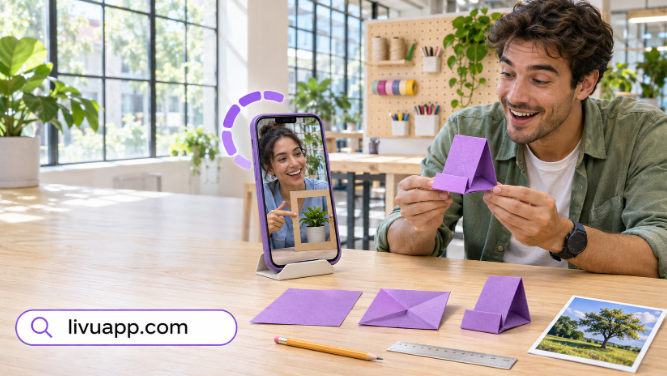
A small shared activity can solve this problem. Instead of only talking about interests, two people can teach each other one practical skill in seven minutes. The lesson could involve folding a paper bookmark, remembering names, improving phone photography, preparing a simple drink, or learning a useful phrase in another language.
This “seven-minute skill swap” gives an online introduction a clear purpose without making it formal. With a live video app, participants can demonstrate movements, show objects, ask questions, and respond in real time. The result is often more memorable than a standard exchange of personal facts.
When someone explains how to do something, they reveal more than knowledge. Their teaching style may show patience, humor, creativity, or attention to detail. The person learning also contributes by asking questions, experimenting, and sharing their own approach.
This creates a balanced interaction. Neither participant has to carry the entire conversation, and both have a reason to stay engaged.
Teaching also produces natural follow-up topics. A lesson about taking better food photos might lead to a discussion about cooking. A memory technique could open a conversation about studying or work. A simple stretching routine might introduce sports, daily habits, or posture.
The activity becomes a doorway rather than the whole conversation.
The best skill for a short video exchange should be simple, safe, and easy to demonstrate with common objects. It should also produce a small result within a few minutes.
Good options include:
Complicated skills can create pressure. A seven-minute exchange is not the right setting for advanced cooking, difficult fitness movements, financial instruction, or activities involving sharp tools.
The goal is not mastery. It is to give the other person a satisfying moment of discovery.
A useful short lesson can be organized into three parts:
This structure keeps the lesson clear and prevents one person from speaking for the entire seven minutes.
For example, someone teaching a photo-framing technique might first explain that it helps create more balanced images. They could then demonstrate where to place the main subject and how to use empty space. Finally, the other participant could adjust their camera and test the idea with an object nearby.
Even if the result is imperfect, the attempt gives both people something specific to discuss.
A skill swap works best when both participants teach. After the first seven-minute lesson, the roles change.
This can be especially helpful in a 1vs1chat because the conversation becomes a collaboration between equals. One person may be confident when teaching but more playful when learning. The role change reveals different sides of both personalities.
The two skills do not need to be connected. One participant might teach a keyboard shortcut, while the other demonstrates how to create a paper phone stand. The contrast can make the exchange more entertaining.
Participants can agree on a category before the conversation—such as language, creativity, everyday organization, or food—or surprise each other with their choices.
Learning actively makes the interaction more rewarding. Instead of watching silently, the learner can ask questions such as:
These questions encourage the teacher to share the story behind the skill. That story may be more interesting than the technique itself.
Someone may have learned a folding method from a grandparent, discovered a productivity trick during university, or picked up a phrase while traveling. The lesson then becomes connected to memory and experience.
A short skill swap should not feel like an exam. Misunderstandings, failed attempts, and unexpected results can make the conversation more enjoyable.
If a paper shape collapses or a pronunciation sounds slightly wrong, both participants can laugh and try again. The teacher can adjust the explanation, while the learner can describe which step was confusing.
These moments often create genuine interaction because neither person is following a polished script. They are solving a small problem together.
Patience matters. A useful teacher avoids making the learner feel embarrassed, and a thoughtful learner treats the lesson with curiosity rather than dismissing it too quickly.
Participants should choose skills that can be demonstrated safely and comfortably on camera. They should avoid showing identification documents, private messages, workplace systems, financial accounts, medication labels, or objects that reveal an exact address.
The camera background deserves attention as well. Personal photographs, mail, building numbers, and computer screens may contain more information than expected.
If the activity involves movement, both participants should make sure they have enough space. Physical demonstrations should remain gentle and optional. No one should feel pressured to copy an action that is uncomfortable or unsuitable for them.
A simple paper-based activity, language exercise, or photography tip is usually easier to manage than something physically demanding.
The skill swap can continue after the first meeting without becoming repetitive. Participants can return later and report whether they used what they learned.
Someone might share a photo taken with the new framing technique. Another person could demonstrate that they still remember the phrase they practiced. They could also select a new category for the next exchange.
This gives future conversations a natural opening. Instead of starting again with “What should we talk about?” both people already have a shared reference point.
Over time, the lessons can form a small collection of useful ideas from different people and places.
Teaching a simple skill is a small act of generosity. It says, “Here is something that has helped me, and I would like to share it with you.” Learning sends an equally positive message: “I am interested enough to pay attention and try.”
That exchange can make an online introduction feel purposeful without demanding deep personal disclosure. Both people contribute, both take a small risk, and both leave with something new.
A meaningful digital conversation does not always need a perfect topic. Sometimes it only needs seven minutes, one useful idea, and two people willing to teach and learn.