

Every child develops at their own pace, and some may benefit from additional support as they learn new skills and interact with the world around them. An early intervention centre in Singapore can provide structured support for children who may need help with areas such as communication, learning, social interaction, or everyday skills. Accessing appropriate support early can give children opportunities to build confidence and develop skills within a supportive environment.
Early intervention refers to support provided to young children who may have developmental needs or require additional assistance with particular skills. The approach can vary depending on the child’s individual strengths, needs and circumstances.
Support may focus on communication, social development, motor skills, cognitive abilities or daily routines. Rather than using the same approach for every child, professionals can work with families to identify suitable goals and activities.
The purpose is to provide children with opportunities to practise skills in ways that are appropriate for their developmental stage.
Young children experience significant development during their early years. They learn through play, interaction, observation and repeated experiences.
When a child experiences difficulties in a particular area, additional support can provide more opportunities to practise and develop those skills. Early intervention can also help parents understand how they can support their child’s learning and development at home.
Starting support early does not mean placing expectations on a child to progress at the same pace as everyone else. Instead, it provides resources and guidance that can be adapted to the child’s individual needs.
Communication is an important part of a child’s development. It includes more than speaking clearly. Children also learn how to listen, understand instructions, express their needs and interact with others.
Some children may need additional support when developing these skills. Activities involving stories, songs, games and everyday conversations can create opportunities to practise communication in an engaging way.
Professionals can also provide parents with strategies that can be incorporated into normal routines, allowing learning to continue outside structured sessions.
Children learn social skills through regular interaction with adults and other children. They gradually develop an understanding of taking turns, sharing, responding to others and expressing emotions.
Structured activities can provide opportunities to practise these skills in a comfortable environment. Group activities, games and guided play can encourage children to interact while learning how to respond to different situations.
These experiences can help children become more comfortable participating in social environments over time.
Play is one of the most natural ways for young children to learn. Building blocks, puzzles, drawing, pretend play and movement activities can all support different areas of development.
A well-planned activity can encourage children to practise several skills at once. For example, a simple building activity can involve problem-solving, fine motor movements, communication and cooperation.
Using activities that match a child’s interests can also make learning more engaging. When children enjoy an activity, they may be more willing to participate and practise new skills.
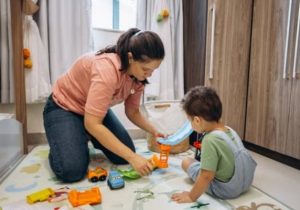
Early support can also focus on practical skills that children use in everyday life. These may include following routines, managing personal belongings, participating in simple tasks and becoming more independent.
Breaking a task into smaller steps can make it easier for a child to understand and practise. Positive encouragement can also help children feel more confident when attempting something new.
Progress does not always happen immediately, so patience and consistency are important parts of the process.
Parents play an important role in supporting development outside structured sessions. Everyday routines provide many opportunities for children to practise skills.
Simple activities such as preparing meals together, reading a book, organising toys or getting ready to leave the house can become learning opportunities.
Parents can also communicate with professionals about changes they observe at home. Sharing these observations can help create a clearer understanding of the child’s progress and areas where additional support may be useful.
Families considering an early intervention centre in Singapore may want to look at several factors before making a decision.
The centre’s approach, available programmes, professional expertise, environment and communication with families can all be considered. It is also useful to understand how individual goals are developed and how progress is monitored.
The environment matters as well. A welcoming and child-friendly setting can help children feel comfortable participating in activities and interacting with professionals.
Families should choose a setting that feels appropriate for their child’s specific needs rather than relying solely on general recommendations.
Consistency can make it easier for children to practise developing skills. When appropriate strategies are incorporated into everyday routines, children have more opportunities to use what they have learned.
Parents do not need to turn every household activity into a formal lesson. Small, natural opportunities can be enough. Asking a child to choose between two items, encouraging them to help tidy up or practising simple communication during meals can support development in an everyday setting.
The approach should remain positive and manageable for both the child and family.
Every child has their own strengths, interests and developmental journey. When additional support is needed, early intervention can provide structured opportunities to develop communication, social interaction, learning and everyday skills.
An early intervention centre in Singapore can also work alongside parents and caregivers to create a supportive approach that extends beyond scheduled sessions. With patient guidance, appropriate activities and consistent encouragement, children can have more opportunities to build confidence and develop skills at their own pace.