
Astigmatism is a common refractive error that can affect people of all ages. It occurs when the cornea or, in some cases, the lens has an irregular shape, causing light to focus unevenly on the retina. As a result, people with astigmatism may experience blurred or distorted vision at different distances.
The good news is that astigmatism can often be managed effectively. Treatment depends on factors such as the degree of astigmatism, age, overall eye health, lifestyle, and individual vision requirements. For a better understanding of the condition and available options, the Guide to Astigmatism (San Guang / 散光) – Fit the Treatment to Your Lifestyle explores how treatment choices can be tailored to individual needs and daily activities.
In a normally shaped eye, the cornea and lens have a relatively even curvature that allows light to focus appropriately on the retina. With astigmatism, the curvature is more irregular, meaning light may focus at multiple points rather than forming one sharp image on the retina.
This can result in symptoms such as blurred vision, distorted images, eye strain, headaches, squinting, or difficulty seeing clearly at night. Some people may have mild astigmatism and experience few noticeable symptoms, while others may find that it significantly affects daily activities.
Astigmatism can occur alongside other refractive errors, including short-sightedness or long-sightedness. A comprehensive eye examination can determine the type and degree of refractive error present.
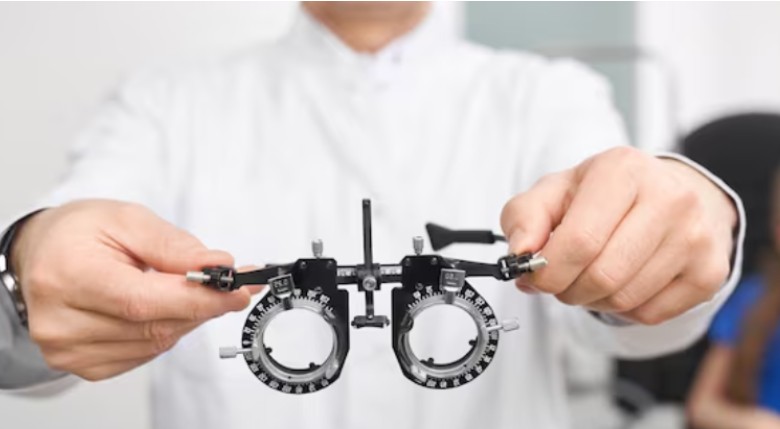
An eye specialist can use several tests to evaluate vision and determine whether astigmatism is present. A standard eye examination may include visual acuity testing, refraction, and an assessment of the overall health of the eyes.
Additional measurements may be performed when considering procedures such as laser vision correction. These assessments help determine the shape of the cornea and whether a particular treatment is appropriate.
Because every person’s eyes are different, treatment should be based on an individual assessment rather than a single approach that is suitable for everyone.
For people with mild astigmatism that does not interfere with daily activities, treatment may not always be necessary. When correction is needed, several options are available.
Eyeglasses are one of the most straightforward approaches. Prescription lenses can compensate for the irregular curvature and help produce clearer vision. They are non-invasive and can be easily adjusted if a person’s prescription changes.
Contact lenses can provide another option for suitable patients. Specially designed lenses, including toric lenses, can correct astigmatism while providing a wider field of unobstructed vision. However, proper fitting, cleaning, and wearing practices are important for maintaining eye health.
For some patients, refractive surgery may be considered. Laser vision correction procedures can reshape the cornea to correct certain refractive errors, potentially reducing dependence on glasses or contact lenses.
Visual requirements vary considerably from person to person. Someone who spends most of the day working at a computer may have different priorities from someone who participates in outdoor activities, plays sports, or frequently drives at night. Discussing these factors with an eye specialist can help determine which correction method may be most suitable.
Laser vision correction is one treatment option that may be suitable for selected adults with appropriate eye characteristics. Procedures such as LASIK and other forms of refractive surgery work by reshaping the cornea so that incoming light can focus more accurately on the retina.
However, laser treatment is not suitable for everyone. Factors such as corneal thickness and shape, prescription stability, dry-eye symptoms, age, and general eye health may influence eligibility.
A detailed pre-treatment assessment is therefore essential. An eye specialist can evaluate the eyes and explain potential benefits, limitations, risks, and alternatives before a patient decides whether to proceed.
There is no single astigmatism treatment that is ideal for every person. The most appropriate option depends on the individual’s prescription, eye health, lifestyle, expectations, and personal preferences.
People who are comfortable wearing glasses may find prescription spectacles to be a simple and effective solution. Others may prefer contact lenses because of their activities or appearance. Patients interested in reducing their dependence on corrective lenses may wish to discuss refractive surgery with a qualified specialist.
It is important to understand that treatment decisions should be based on a professional eye examination rather than online information alone.
Once astigmatism has been diagnosed and corrected, maintaining regular eye examinations can help monitor changes in vision. People who wear glasses or contact lenses should ensure that their prescriptions remain appropriate.
Good eye-care habits can also support overall eye health. Taking regular breaks during extended screen use, maintaining appropriate lighting, protecting the eyes from excessive ultraviolet exposure, and following recommended contact-lens hygiene practices are useful habits.
Anyone experiencing sudden changes in vision, severe eye pain, flashes, a sudden increase in floaters, or other significant symptoms should seek prompt medical attention rather than assuming that the symptoms are simply related to astigmatism.
Astigmatism is a common vision condition that can cause blurred or distorted sight, but several treatment options are available. Glasses and contact lenses can provide effective correction, while selected patients may be candidates for refractive procedures such as laser vision correction.
The best approach depends on more than the strength of a prescription. Lifestyle, visual priorities, eye health, and individual expectations should all be considered when choosing treatment. A comprehensive assessment by an experienced eye specialist can help patients understand their options and make an informed decision.
With appropriate diagnosis, personalised treatment, and regular eye care, people with astigmatism can find a solution that supports clear and comfortable vision in their everyday lives.