
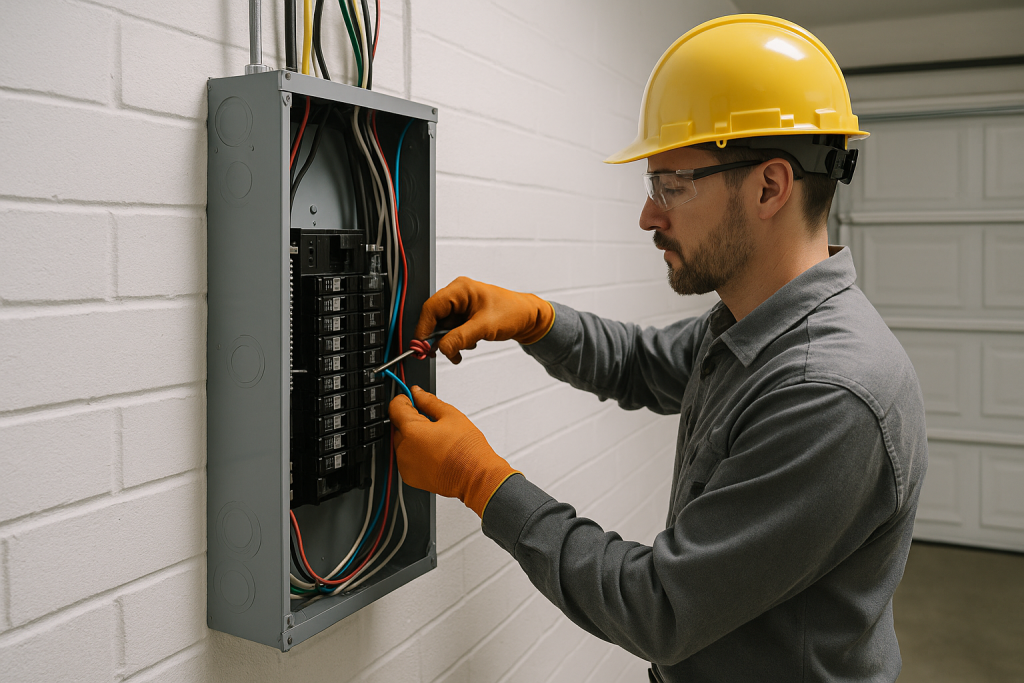
You may need to replace a circuit breaker if it is damaged, overheats, will not reset, or no longer protects a circuit. Replacing electrical circuit breakers involves shutting off power, checking that the work area is safe, choosing the correct breaker, and testing the circuit after installation.
Don’t replace a breaker until you understand the cause of the problem. Because parts of an electrical panel can remain energized, this type of work often requires a licensed electrician.
A breaker that trips once is not always defective. Breakers are designed to stop electrical flow when current reaches unsafe levels. In many cases, a tripped breaker is doing exactly what it should.
Replacement becomes more likely when the breaker will not reset or shows visible damage. A breaker that becomes hot to the touch during normal use may also need inspection. Repeated breaker trips can point to an overload, damaged wiring, a faulty appliance, or another electrical system problem.
Common signs that deserve closer attention include:
Don’t handle these signs by repeatedly resetting the breaker. If the problem returns, check the circuit for overloads, wiring faults, or equipment problems. A short circuit can also cause an immediate trip and requires proper diagnosis.
A breaker protects a circuit when electrical conditions become unsafe. Standard branch circuit breakers mainly protect wires from excess current. AFCI and GFCI breakers can also detect certain fault conditions.
Changing out a breaker without finding the cause may leave the real problem in place. Circuit breakers trip for several reasons, including overloaded circuits, damaged wires, faulty appliances, and electrical faults. The breaker itself may be working correctly.
An overloaded circuit happens when connected devices demand more current than the circuit can safely carry. A wiring fault can create an unintended electrical path between conductors.
If one appliance trips the breaker each time it runs, that appliance or its circuit may need attention.
Before assuming the breaker has failed, check:
Diagnose repeated trips before installing a larger breaker. Increasing breaker amperage without checking the wiring can create a serious problem. Breaker size, wire size, circuit use, and panel requirements must all work together.
Replacing a circuit breaker starts with selecting the correct replacement. Breakers that look similar are not always interchangeable. They may differ in mounting style, voltage, amperage, interrupting rating, or approved use.
The breaker must match the electrical panel and circuit requirements. Panel labels and manufacturer information can help identify which breakers are approved. Choosing a breaker only because it physically fits is not enough.
Check the following information before selecting a replacement:
Never install a higher-amperage breaker simply because the original breaker keeps tripping. A larger breaker may allow too much current through the existing wires. That can increase heat and raise the risk of wire damage.
The replacement process begins by identifying the affected circuit and then shutting down power to the panel or affected area, as required. Many electricians also turn off all branch circuit loads before using the main disconnect.
The general process usually includes:
This sequence explains the general process, but it is not a substitute for electrical training. Working with electricity inside a service panel can expose a person to live components. Some parts can remain energized even after you switch off the main breaker.
Testing for voltage is a key safety step before touching internal components. A qualified electrician also knows where live parts may remain inside the enclosure. That knowledge helps reduce the risk of electric shock and other injuries.
A breaker connects a circuit to the panel’s internal distribution system. In many panels, the breaker connects to a bus bar that carries electrical power. The circuit wire then connects to the breaker at a terminal.
Moving the breaker to the off position stops power from flowing through that breaker. It does not always make every part of the panel safe to touch. This is one reason opening a service panel requires care.
The circuit conductor may connect through a screw terminal or another approved connection. During replacement, an electrician may need to loosen the screws, remove the wire, and check it for heat damage, corrosion, or damaged insulation.
Damaged hot wires can change the scope of the job. Instead of a simple breaker replacement, the circuit may need wiring or panel repairs. Address these conditions before putting the new breaker into service.
Homeowners who notice panel damage or repeated circuit problems may want a professional evaluation. An electrician from Grounded Electric NJ can inspect the breaker, wiring, and related circuit to determine whether replacing the breaker alone will solve the issue.
After installation, close and secure the panel before normal operation begins. You can then restore power in the correct order. The new breaker should remain stable when the circuit returns to normal use.
For someone searching for how to replace a circuit breaker, restoring power is only the final part of the process. The breaker must first be compatible with the panel and connected correctly. You should also check the circuit for the issue that caused the original trip.
If the new breaker trips immediately, further testing is needed. Repeated resets are not a proper repair. The circuit may still have an overload, faulty appliance, damaged wire, or another electrical problem.
One common mistake is assuming that any breaker that fits the panel will work safely. Physical size alone does not prove that a breaker is approved for a specific panel. Always confirm the correct model and rating.
Another mistake is installing a larger breaker to stop repeated trips. For example, replacing a 15-amp breaker with a 20-amp breaker may overload existing wiring. The breaker must protect the wires connected to that circuit.
Other mistakes include:
Loose electrical connections can produce heat and damage nearby parts. Faulty wiring can also remain dangerous after a breaker is replaced. A safe repair must address both the breaker and the reason it failed or tripped.
Professional help is a good choice when the panel shows heat damage, corrosion, moisture, or previous unsafe modifications. It is also appropriate when a breaker trips immediately after replacement. The same applies when the circuit cannot be identified clearly.
A licensed electrician should also inspect the system when the homeowner cannot confirm that the panel is safe to work on. Homeowners who need a Bergen County NJ electrician can also seek professional help when repeated breaker trips, panel damage, or other electrical issues make the cause difficult to identify.
Parts of the service equipment may still carry dangerous voltage. Proper testing equipment and electrical training are needed to identify those hazards.
Local electrical rules may also affect who can perform the work. Some breaker replacements or circuit changes can require permits, inspections, or licensed electrical work. Requirements depend on the project and the local authority.
A new breaker can solve a problem when the breaker itself is defective. It cannot repair damaged wires, overloaded circuits, loose connections, or failing appliances. If one of those problems caused the trip, the new breaker may behave the same way.
Pay attention to what happened before the breaker opened. Note which lights, outlets, or appliances lost power. Also consider whether the same circuit has caused problems before.
These details can help an electrician identify the cause faster. They also make it easier to separate breaker failure from problems elsewhere in the circuit. The goal is to repair the source of the issue, not just replace one component.
The panel should remain dry, accessible, closed, and free from visible damage. Homeowners should also know which breakers control major rooms and appliances. Clear labeling can make future electrical problems easier to isolate.
Some breakers include built-in test buttons. Test GFCI and AFCI breakers according to the manufacturer’s instructions. This helps confirm that their protective features still work correctly.
Watch for any change in breaker behavior over time. Heat, unusual sounds, burning odors, or repeated trips can signal a developing problem. Address these signs before they become a larger repair.
Replacing a breaker can be the right solution when it has failed. The process should still include proper diagnosis, correct breaker selection, safe shutdown, secure installation, and testing.
A qualified electrician can determine whether the breaker or another part of the circuit is causing the problem.