
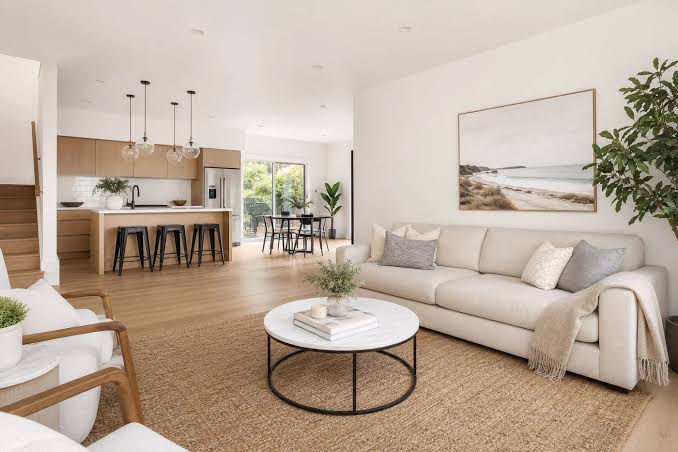
Open floor plans create an inviting sense of space by connecting kitchens, dining areas, and living rooms without numerous walls between them. Families can cook while talking with guests, supervise children from nearby rooms, and move easily between everyday activities. That openness, however, also means dirt and clutter rarely remain confined to the area where they first appear.
Crumbs from the kitchen can travel toward seating areas, dust remains visible across broad surfaces, and belongings may gradually migrate between functional zones. Unlike separate rooms that contain activity behind doors, connected interiors allow several types of household mess to overlap. Effective maintenance therefore requires looking at the entire open area as one environment while still recognizing its different uses.
Professional Cleaning Services can provide structure for homes where connected spaces experience continuous activity. Maid 2 Clean San Diego can help homeowners maintain high-use surfaces and floors while accounting for how debris moves between adjoining zones. A thoughtful routine preserves the visual openness that makes these layouts attractive without requiring constant cleaning throughout the day.
An open room may appear to be one large space, but it usually supports several distinct activities. Cooking takes place in one section, meals occur nearby, and relaxation or entertainment happens farther across the same floor.
Defining these zones makes cleaning easier to organize. Homeowners can identify the kitchen as a high-residue area, the dining section as a frequent crumb zone, and the living area as a place where dust, belongings, and upholstery require different attention.
This approach prevents the size of the entire room from becoming overwhelming. Instead of treating the open floor plan as one enormous cleaning task, households can maintain several connected areas according to their individual patterns of use.
Kitchens naturally generate crumbs, spills, packaging, and food preparation residue. In a closed kitchen, some of that mess remains visually and physically separated from the rest of the home. Open layouts provide no such boundary.
Small particles can move beyond the kitchen through ordinary foot traffic. Family members may also carry dishes, snacks, and drinks toward dining tables, sofas, or other seating areas, expanding the area that needs attention.
Maid 2 Clean San Diego can help maintain accessible kitchen surfaces and surrounding floors within a broader household routine. Consistent attention near the source reduces the amount of residue that eventually reaches adjoining spaces.
Many open layouts use the same flooring through the kitchen, dining room, and living space. This visual continuity makes rooms feel larger, but it also makes dirt patterns easier to notice across the entire area.
A floor should be evaluated according to traffic rather than imaginary lines between functional zones. The route from the kitchen to the sofa may receive more activity than portions of the dining area, even though it crosses several spaces.
Professional Cleaning Services can address these connected traffic paths as part of an organized routine. Following actual movement helps keep flooring consistently maintained instead of allowing visible differences to develop between neighboring zones.
Dining tables often serve purposes beyond meals. Mail, laptops, school supplies, shopping bags, and miscellaneous household items can accumulate there because the table sits conveniently between several parts of an open layout.
This clutter makes cleaning more difficult and can visually affect the entire connected room. Since there are few walls to block the view, a disorganized dining table may make both the kitchen and living area feel less orderly.
Creating designated storage for frequently misplaced belongings can reduce this problem. Clearing the table regularly also allows surfaces and surrounding floors to receive attention without a lengthy organization process beforehand.
Open rooms expose more of the home from a single viewpoint. Dust on one console, marks on another surface, or debris near the kitchen can be visible while someone is sitting across the room.
This visibility makes consistency valuable. Homeowners do not necessarily need to clean every surface daily, but allowing one functional area to become noticeably more neglected can affect the appearance of the complete space.
A zone-based schedule can maintain balance. Frequently used sections may receive more regular attention while lower-use surfaces are addressed periodically, preventing unnecessary work without sacrificing an orderly overall appearance.
Living room furniture located close to an open kitchen may experience conditions different from furniture in a separate family room. Food particles, household traffic, and ordinary cooking activity occur within the same connected environment.
Sofas, chairs, side tables, and nearby flooring should therefore be considered in relation to their position. Seating several steps from a kitchen island may need different routine attention from furniture located at the far end of a larger open space.
Maid 2 Clean San Diego can incorporate accessible furnishings and surrounding areas according to the agreed cleaning scope. Recognizing these location-based differences makes maintenance more responsive to the home’s actual layout.
Open floor plans can make misplaced belongings especially noticeable. Shoes near seating, toys beneath dining chairs, papers on counters, and personal items spread between zones create visual disorder and interfere with efficient cleaning.
Household members can reduce this problem by giving commonly used items specific storage locations. Baskets, cabinets, drawers, and entry storage can keep belongings close to where they are needed without leaving them permanently visible.
A quick reset before scheduled cleaning also improves access to floors and surfaces. Organization and cleaning are separate tasks, but simple household habits allow both to work together more effectively.
Open layouts encourage people to take direct paths between activities. The route from an entrance to the kitchen, from the kitchen to the dining table, or from seating to an outdoor door may receive repeated traffic throughout the day.
These pathways can accumulate dirt more quickly than corners and areas beneath seldom-used furniture. Homeowners should observe these patterns rather than assuming the entire floor requires equal attention at all times.
Children and pets can intensify particular routes. Identifying those paths makes it easier to focus routine maintenance where activity is genuinely concentrated.
Kitchen islands often function as preparation areas, breakfast tables, homework stations, gathering points, and informal workspaces. Their constant use can create residue on countertops, seating, and surrounding floors.
Bar stools may also move repeatedly throughout the day, allowing crumbs and debris to collect beneath them. Because islands frequently sit near the visual center of an open layout, disorder in this area can affect the appearance of the whole room.
Keeping the island relatively clear between activities simplifies maintenance. It also helps preserve its flexibility as household needs change throughout the day.
Cleaning a connected living area can be difficult while several people are simultaneously cooking, eating, relaxing, or working within it. Unlike separate rooms, there may be no door to close while one area receives attention.
Scheduling more involved cleaning during quieter household periods can make the process more efficient. Families can also temporarily shift activities to bedrooms, outdoor spaces, or other available rooms when practical.
Professional Cleaning Services can fit more smoothly into the household routine when access expectations are clear. Preparing major surfaces and reducing unnecessary activity allows connected zones to be addressed in a logical sequence.
The kitchen is often the most active section of an open floor plan, but its mess does not need to determine the condition of every connected space. Small, consistent habits can keep residue closer to where it originates.
Addressing spills promptly, clearing dining surfaces, storing living room belongings, and monitoring main traffic routes all reduce the amount of work required during more thorough maintenance. These actions do not need to become lengthy daily cleaning sessions.
The objective is containment rather than perfection. When each functional zone receives appropriate attention, the entire open room becomes easier to manage despite continuous household activity.
Open floor plans work best when connected areas feel visually related without becoming one large collection of household clutter. Cleaning strategies should respect both sides of that design: each zone has its own purpose, yet all zones contribute to one shared environment.
A practical Cleaning Services routine can account for kitchen residue, dining activity, continuous flooring, furniture, islands, and major circulation paths without treating every surface identically. Prioritizing according to use keeps maintenance focused and manageable.
With support from Maid 2 Clean San Diego, homeowners can develop a routine suited to the way connected rooms actually function. By controlling mess near its source and following natural household traffic, an open interior can remain comfortable, organized, and visually cohesive while supporting the flexible daily life it was designed to accommodate.