

Why is my tongue orange is a question that sends most people straight to the bathroom mirror for a closer look.
In most cases, the answer is harmless, tracing back to something you ate, drank, or a habit like smoking or skipping tongue brushing.
But sometimes an orange tongue points to something worth watching, from oral thrush to acid reflux to a medication side effect.
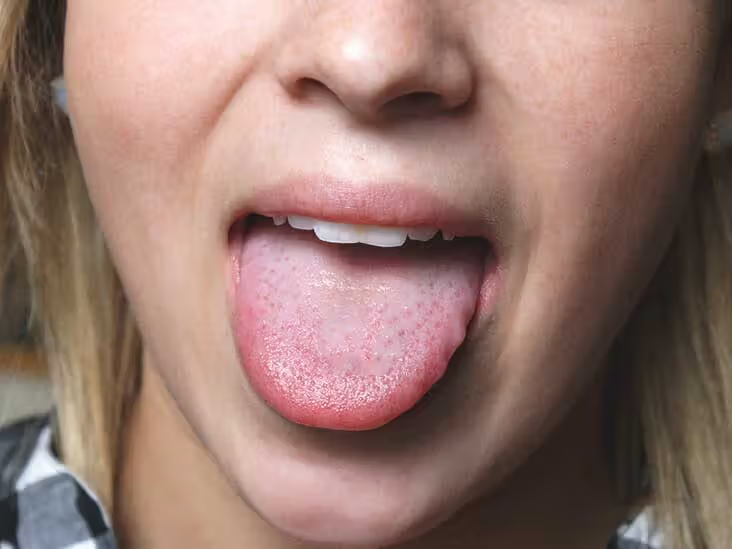
A healthy tongue is normally pink, moist, and covered in tiny bumps called papillae.
Small changes in shade throughout the day are common, especially right after eating or drinking something colorful.
A thin white coating is usually normal too, since it reflects a mix of saliva, food particles, and everyday bacteria.
Any color that lingers for more than a week or two, however, is worth paying closer attention to.
Most orange tongue cases come from food dye, pigmented foods, or a buildup of bacteria on the tongue’s surface.
Beta carotene rich foods like carrots, sweet potatoes, and cantaloupe are one of the most frequent, totally harmless causes.
Poor oral hygiene, dry mouth, oral thrush, certain medications, and even acid reflux can also shift tongue color toward orange.
Less commonly, it can be linked to diabetes or nutrient deficiencies, which is why persistent discoloration deserves a proper checkup.
Food is by far the most frequent trigger behind a sudden orange tongue, and it is usually the easiest to rule out first.
| Food or Drink | Why It Stains |
|---|---|
| Carrots, sweet potatoes | High beta carotene content |
| Orange popsicles, candy | Artificial food dye |
| Curry and turmeric dishes | Natural yellow-orange pigment |
| Sports drinks, gelatin | Added synthetic coloring |
| Coffee and black tea | Tannins and dark pigments |
If your tongue turned orange right after a meal or snack, this is almost always the simplest explanation.
Brushing your tongue and drinking a glass of water usually clears food-based staining within a few hours.
Skipping regular brushing lets food debris and bacteria build up on the tongue’s surface over time.
This buildup can trap pigments from food and drinks, making discoloration more noticeable and longer lasting than it would be otherwise.
Coffee, tobacco, and tea are particularly likely to leave an orange or brownish tint when oral hygiene habits slip.
A soft-bristled toothbrush or a dedicated tongue scraper, used twice daily, usually resolves this cause within a few days.
Oral thrush happens when the fungus Candida albicans overgrows on the tongue and inside the cheeks.
It typically appears as white, cheesy patches, but if those patches bleed or mix with other debris, the tongue can look yellow or orange.
Thrush is more common in infants, people on antibiotics or steroids, and anyone with a weakened immune system.
Doctors usually treat it with antifungal medication in liquid, tablet, or lozenge form, and color should return to normal once treatment finishes.
Carotenemia is a harmless condition caused by eating large amounts of beta carotene rich foods over time.
It is most common in infants and toddlers who eat a lot of mashed carrots or sweet potatoes.
Unlike jaundice, carotenemia does not turn the whites of the eyes yellow, which is a helpful way to tell the two apart.
Cutting back on high beta carotene foods for a few weeks is usually enough to fade the color completely.
Saliva plays a big role in keeping oral bacteria levels in check throughout the day.
When saliva production drops, a condition known as xerostomia, bacteria can build up more easily on the tongue’s surface.
Many common medications, including antihistamines and blood pressure drugs, list dry mouth as a known side effect.
Staying hydrated and chewing sugar-free gum can help stimulate saliva flow and reduce this type of discoloration.
Certain prescription drugs are known to temporarily change tongue color, usually without causing any lasting harm.
| Medication | Common Use | Color Effect |
|---|---|---|
| Rifampin | Tuberculosis treatment | Orange tinge |
| Antibiotics (broad-spectrum) | Bacterial infections | Disrupted oral flora, discoloration |
| Antihistamines | Allergy relief | Dry mouth, indirect staining |
| Chemotherapy drugs | Cancer treatment | Various tongue color changes |
If you started a new medication around the same time your tongue changed color, mention this to your prescribing doctor.
Most drug-related tongue discoloration fades naturally once you finish the medication course or your body adjusts to it.
Acid reflux, also known as GERD, can cause stomach acid to travel back up into the throat and mouth.
Over time, this irritation can leave a white or orange-tinted coating across the surface of the tongue.
Avoiding spicy, greasy, and acidic foods before bed can help reduce reflux-related tongue discoloration.
If lifestyle changes are not enough, a doctor may recommend antacids or acid-reducing medication to manage the underlying reflux.
Smoking and chewing tobacco are well-known contributors to orange, yellow, or even brown tongue staining.
Tar and nicotine build up on the tongue’s papillae, gradually deepening the discoloration with continued use.
Quitting tobacco is the most effective long-term fix, though improved oral hygiene can lessen the appearance in the meantime.
Regular dental cleanings can also help remove some of the surface staining caused by long-term tobacco use.
Some research has linked tongue coating color to blood sugar regulation, particularly in people with prediabetes or diabetes.
Excess glucose in the mouth can encourage oral thrush and bacterial overgrowth, both of which contribute to orange or yellow discoloration.
A 2018 study noted associations between tongue coating color and diabetes risk in a nonsmoking adult population.
If you have other symptoms like excessive thirst or fatigue alongside tongue discoloration, it is worth discussing blood sugar testing with your doctor.
Deficiencies in B vitamins, particularly B12 and B2, can affect tongue color and overall tongue health.
Iron deficiency anemia is another possible contributor, sometimes producing a pale tongue that can appear orange under certain lighting.
These deficiencies may also cause a sore, swollen, or scalloped-edge tongue alongside the color change.
A simple blood test can confirm whether a nutrient deficiency is playing a role in your symptoms.
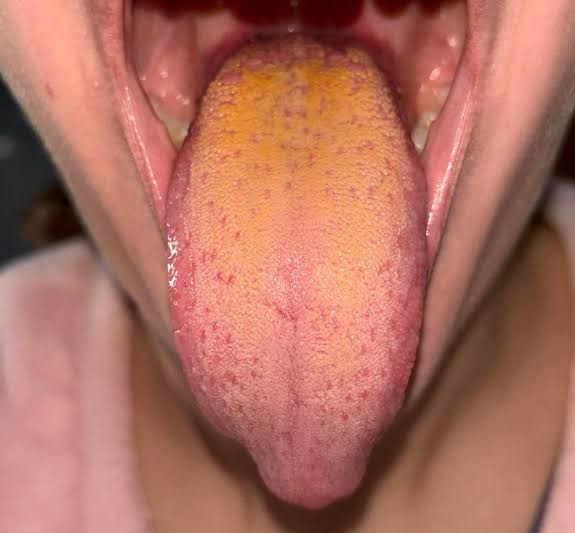
In Traditional Chinese Medicine, tongue observation has long been used as a diagnostic tool for overall health.
A healthy tongue is described as pale red, reflecting balanced blood and nutritive energy across the body’s organ systems.
Orange or yellow coatings are often associated with heat or digestive imbalance within this traditional framework.
While this perspective is not a substitute for modern medical diagnosis, it highlights how long tongue color has been used as a health signal.
Comparing your tongue’s color to other common shades can help you understand roughly which category your symptom falls into.
| Tongue Color | Possible Meaning |
|---|---|
| Orange | Food, thrush, dry mouth, reflux |
| Yellow | Dehydration, thrush, jaundice |
| White | Thrush, leukoplakia, dehydration |
| Red or purple | Vitamin deficiency, inflammation |
| Black | Poor hygiene, smoking, certain medications |
| Blue | Poor oxygenation, urgent medical concern |
An orange tongue generally falls on the milder end of this spectrum compared to blue or black discoloration.
Still, any color that persists without an obvious cause deserves a conversation with a healthcare provider.
Most orange tongue cases clear up within a few days without any special treatment.
See a doctor if the color lasts longer than one to two weeks despite good oral hygiene.
Also seek medical advice if you notice pain, swelling, white patches, difficulty swallowing, or a persistent bad taste in your mouth.
These additional symptoms can help a doctor narrow down whether the cause is dietary, infectious, or related to an underlying condition.
A few simple steps at home can resolve the majority of mild, food or hygiene related cases.
| Step | What To Do |
|---|---|
| 1 | Brush teeth and tongue twice daily with a soft brush |
| 2 | Use a tongue scraper to remove surface buildup |
| 3 | Rinse with warm salt water once or twice a day |
| 4 | Increase water intake throughout the day |
| 5 | Cut back on artificially colored foods and drinks temporarily |
Most people notice visible improvement within two to five days of following these steps consistently.
If the color has not improved after a week, it is a good signal to book a dental or medical appointment.
Certain warning signs mean you should not simply wait it out at home.
Persistent pain, a burning sensation, or a metallic taste alongside the discoloration are signals worth reporting to a doctor.
Difficulty eating, speaking, or swallowing due to tongue changes should also prompt a same-week appointment rather than a wait-and-see approach.
If you recently started a new prescription and noticed the color change soon after, flag this connection during your appointment.
Good daily habits go a long way toward preventing most causes of tongue discoloration before they start.
Brush and scrape your tongue as part of your regular oral hygiene routine, not just your teeth.
Stay hydrated throughout the day to support healthy saliva flow and reduce bacterial buildup.
Moderate your intake of heavily dyed foods and drinks, and schedule regular dental checkups to catch early changes.
The tongue’s surface is covered in hundreds of tiny bumps called papillae, which give it a naturally rough texture.
These papillae create small grooves where food particles, pigments, and bacteria can settle instead of washing away with saliva.
This is part of why the tongue stains more easily and more visibly than the smoother tissue on the inside of the cheeks.
Regular tongue cleaning matters specifically because of this texture, since surface buildup accumulates faster here than almost anywhere else in the mouth.

Children and adults tend to experience orange tongue for slightly different reasons, which is worth understanding if you are checking on a child.
| Group | Most Common Cause | Typical Concern Level |
|---|---|---|
| Infants and toddlers | Carotenemia from pureed carrots or sweet potatoes | Low, self-resolving |
| School-age children | Colored candy, popsicles, poor brushing habits | Low |
| Adults | Coffee, tobacco, dry mouth, medications | Low to moderate |
| Older adults | Medication side effects, dry mouth, dentures | Moderate, worth monitoring |
Infants with carotenemia often show orange tinting on the palms and soles of the feet as well as the tongue, which is a helpful confirming sign.
In adults, an isolated orange tongue with no other symptoms is rarely urgent, but new discoloration alongside fatigue or weight change is worth mentioning at a checkup.
A dentist or doctor typically starts by asking about your recent diet, oral hygiene habits, and any new medications.
They will visually examine the tongue’s coating, texture, and any additional patches or sores that might point toward thrush or another infection.
In some cases, a simple swab test can confirm or rule out a fungal infection like oral candidiasis.
If an underlying condition such as diabetes or a nutrient deficiency is suspected, your doctor may order a basic blood panel for further clarity.
Beyond basic brushing and hydration, several home remedies are frequently mentioned for mild, non-infectious tongue discoloration.
| Remedy | How It Helps |
|---|---|
| Baking soda paste | Gently lifts surface staining |
| Warm salt water rinse | Reduces bacteria, soothes mild irritation |
| Plain yogurt or probiotics | Supports balanced oral bacteria |
| Increased water intake | Boosts saliva flow, flushes debris |
| Reduced coffee and tobacco use | Limits ongoing staining |
These remedies work best for cosmetic, food-related, or hygiene-related causes rather than infections like thrush, which usually need medical treatment.
If a home remedy does not produce noticeable improvement within about a week, it is a sign the underlying cause may need professional evaluation instead.
While your tongue color settles back to normal, a few temporary adjustments can speed up the process.
Avoid heavily dyed candies, sports drinks, and flavored ices, since these are some of the fastest ways to reintroduce staining.
Cut back on coffee, black tea, and tobacco for a few days if you suspect they are contributing to the discoloration.
Spicy, acidic, and very hot foods can also irritate the tongue’s surface, so a gentler diet can help if reflux is a suspected cause.
Diet remains the single most common explanation across nearly every source and clinical overview of orange tongue cases.
Because so many everyday foods and drinks contain either beta carotene or artificial coloring, a food-related cause should always be ruled out first.
This is also the easiest cause to test for at home: simply avoid brightly colored foods for 24 to 48 hours and watch for improvement.
If the color persists despite this simple elimination test, it points more strongly toward hygiene, an infection, or an underlying health condition.
A few misconceptions about tongue color are worth clearing up, since they can cause unnecessary worry.
Myth: an orange tongue always means a serious infection. In reality, most cases trace back to food or mild dehydration.
Myth: scraping harder removes stains faster. Aggressive scraping can irritate the tongue’s surface and may actually worsen inflammation-related discoloration.
Myth: mouthwash alone fixes everything. Mouthwash helps reduce bacteria, but it works best alongside brushing, scraping, and hydration rather than as a standalone fix.
A sudden orange tongue is most often caused by food, candy, or a drink containing strong natural or artificial coloring.
Usually not. Most cases are temporary and linked to diet or mild oral hygiene issues rather than serious illness.
Yes, dehydration and dry mouth can allow bacteria to build up, which sometimes leads to a yellow-orange tongue coating.
Food-related discoloration usually fades within a few hours to a couple of days after brushing and drinking water.
Stress itself does not directly color the tongue, but it can contribute to dry mouth, which indirectly raises the risk.
Not necessarily, but persistent orange or yellow coating combined with other symptoms should prompt a blood sugar check.
Yes, antibiotics can disrupt the natural balance of oral bacteria and fungi, sometimes leading to temporary discoloration.
Not always. Oral thrush can cause an orange or yellow tongue, but many other simpler causes exist too.
An alcohol-free antibacterial mouthwash can help, but a soft toothbrush and tongue scraper are usually more effective first steps.
Worry if the color lasts more than two weeks, or if it comes with pain, swelling, or difficulty swallowing.
An orange tongue looks alarming the first time you spot it, but the cause is usually something simple like a colorful snack, mild dehydration, or a few missed tongue-brushing sessions.
Carotenemia from beta carotene rich foods, bacterial buildup from poor hygiene, dry mouth, and certain medications account for the vast majority of cases, and nearly all of them resolve with basic home care.
Less commonly, an orange tongue can signal oral thrush, acid reflux, a nutrient deficiency, or a blood sugar issue, which is why persistent or painful discoloration deserves a proper medical evaluation rather than guesswork.
The safest approach is simple: improve your oral hygiene routine, watch your diet for a few days, and stay hydrated. If your tongue is still orange after one to two weeks, or if you notice pain, swelling, or other symptoms alongside it, schedule an appointment with your doctor or dentist for a clear diagnosis.