

Why is my pee sinking to the bottom is a question more people ask than you might think.
If you have noticed your urine dropping straight to the floor of the toilet bowl instead of mixing with the water, you are not imagining it.
Urine that sinks usually means it is denser than the water in the bowl.
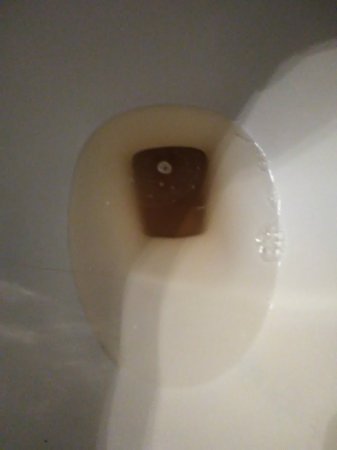
Urine does not always mix evenly with toilet water. When it is denser than the water in the bowl, gravity pulls it straight down to the bottom.
Normal toilet water has a consistent, relatively low density. When urine contains higher concentrations of dissolved waste, salts, minerals, or particles, it becomes heavier and sinks on contact.
This is basic physics: denser liquids sink beneath lighter ones, the same way vinegar settles under oil in a salad dressing bottle.
Understanding why pee sinks starts with knowing what is actually in urine.
Healthy urine is about 95% water. The remaining 5% includes urea, creatinine, dissolved salts, electrolytes, ammonia, and trace amounts of hormones and enzymes.
When the water content drops and the waste concentration rises, urine becomes measurably denser — and that density is what causes it to sink.
Doctors measure urine density using a test called urine specific gravity (USG).
Specific gravity compares the density of urine to the density of pure water. Pure water has a specific gravity of exactly 1.000.
| Specific Gravity | What It Means |
|---|---|
| 1.001 – 1.005 | Very dilute; possibly overhydrated |
| 1.005 – 1.030 | Normal healthy range |
| 1.025 – 1.030 | Moderately concentrated |
| Above 1.030 | Highly concentrated; likely dehydrated |
| Above 1.035 | Consistent with significant dehydration |
Urine at the higher end of this scale is noticeably denser than toilet water and will visibly sink to the bottom of the bowl.
The single most common reason why pee sinks to the bottom is dehydration.
When your body is low on fluids, the kidneys conserve water by producing less of it in urine. The result is a small, highly concentrated output with much more waste packed into less liquid.
This concentrated urine is darker in color, stronger in smell, and denser — which is why it sinks quickly and clearly in the toilet bowl.
If you notice your pee sinking primarily first thing in the morning, this is almost always normal.
Your body goes six to eight hours overnight without drinking any fluids. During sleep, the kidneys continue filtering waste but retain water, producing increasingly concentrated urine by morning.
Morning urine is typically the darkest, densest, and most likely to sink of any bathroom visit in the day. Drinking water shortly after waking usually resolves this within one or two bathroom trips.
There are multiple reasons why urine becomes dense enough to sink. Some are harmless, and some deserve medical attention.
| Cause | Risk Level | Notes |
|---|---|---|
| Dehydration | Low (usually) | Most common cause; increase water intake |
| High-protein diet | Low | Increases urea in urine |
| High-salt diet | Low | Increases dissolved sodium in urine |
| Morning urine | Low | Normal overnight concentration |
| Urinary tract infection (UTI) | Moderate | Look for other UTI symptoms |
| Kidney stones | Moderate | May cause crystal sediment |
| Bladder stones | Moderate | Concentrated urine crystallizes |
| Proteinuria | Moderate–High | Protein leaking into urine |
| Diabetes (uncontrolled) | High | Glucose spills into urine |
| Kidney disease | High | Kidneys cannot filter properly |
| Liver disease | High | Bile and waste products may alter urine |
What you eat directly affects how concentrated your urine becomes.
High-protein diets produce more urea as a byproduct of protein metabolism. More urea dissolved in the same amount of liquid makes urine denser.
High-salt intake increases dissolved sodium in urine. This raises specific gravity and can cause urine to sink more visibly than usual.
Asparagus, beets, and certain vitamins can alter urine color and odor. However, unless they significantly increase waste concentration, they have minimal effect on whether urine sinks or not.
Sometimes it is not the urine itself that is sinking but visible particles or sediment within it.
Urine sediment refers to solid or semi-solid particles that settle after urination. These can appear as white, yellow, cloudy, or brown particles sitting at the bottom of the toilet bowl.
Healthy urine may contain invisible amounts of sediment including trace tissue, protein, and skin cells. When sediment becomes visible, it usually signals an underlying issue.
| Sediment Type | Likely Cause |
|---|---|
| White or cloudy particles | UTI, yeast infection, mucus |
| Yellow or orange crystals | Concentrated minerals, kidney stones forming |
| Pink or red particles | Blood in urine (hematuria) |
| Brown sediment | Kidney disease, old blood |
| Foam or protein residue | Proteinuria (protein in urine) |
| Grainy sand-like material | Kidney or bladder stones passing |
Any visible sediment that is new, persistent, or accompanied by pain should be evaluated by a doctor.

A urinary tract infection (UTI) is one of the most common medical causes of unusual urine appearance including sinking pee with visible sediment.
Bacteria multiplying in the urinary tract cause the urine to become cloudy. This cloudiness is made up of white blood cells, bacteria, and mucus — all of which increase urine density and can cause visible particles to sink to the toilet bottom.
Other UTI symptoms to watch for alongside sinking urine include burning during urination, frequent urge to urinate, lower abdominal pressure, and urine that smells unusually strong or foul.
Kidney stones form when minerals in concentrated urine crystallize and clump together in the kidney.
As small stones or pre-stone crystal formations develop, tiny mineral particles can pass into the urine stream. These particles are denser than water and sink visibly in the toilet bowl.
Urine that appears to contain sand-like or gritty sediment, especially if accompanied by flank pain, lower back pain, or blood-tinged urine, may be indicating kidney stone activity.
Bladder stones develop when concentrated urine sits in the bladder long enough for minerals to crystallize.
Not drinking enough fluids is one of the primary risk factors. The waste products in urine — salts, potassium, and protein waste — clump together when they are too concentrated and not flushed out regularly.
Bladder stone symptoms include painful or difficult urination, cloudy or dark urine, and sediment visible in the toilet. Like kidney stones, bladder stones may release crystalline particles into the urine.
Protein should not normally be present in detectable amounts in urine. When kidneys are damaged or under stress, protein leaks through their filters into the urine.
This condition is called proteinuria. Protein in urine can make it appear foamy, thick, or leave a residue that settles at the bottom of the toilet.
Persistent foamy urine alongside sinking pee is one of the signs doctors use to investigate potential kidney damage, high blood pressure, or early-stage kidney disease.
In uncontrolled diabetes, excess glucose in the bloodstream spills into the urine because the kidneys cannot reabsorb it all.
Glucose dissolved in urine significantly raises its specific gravity. This makes diabetic urine noticeably denser than normal, causing it to sink to the bottom more clearly than average.
If you notice sinking pee alongside excessive thirst, frequent urination, fatigue, or unexplained weight loss, diabetes screening is warranted.
Several medications can make urine more concentrated or alter its content enough to change its density.
Diuretics initially cause more dilute urine. However, dehydration caused by their use can lead to rebound concentrated urine that sinks.
X-ray contrast dyes are excreted in urine and significantly increase specific gravity temporarily after radiological procedures.
Certain antibiotics and supplements can increase urine concentration or deposit crystals as they are excreted.
Always mention new medications to your doctor if you suddenly notice changes in your urine’s appearance.
Knowing what healthy urine looks like makes it easier to spot when something is off.
| Characteristic | Healthy Range |
|---|---|
| Color | Pale yellow to light amber |
| Transparency | Clear, no visible particles |
| Odor | Mild, slightly aromatic |
| Specific gravity | 1.005 to 1.030 |
| pH | 4.5 to 8.0 |
| Sediment | None visible |
| Foam | None or minimal |
If your urine regularly falls outside these norms — particularly with visible sediment, foam, cloudiness, or unusual color — it is worth discussing with a healthcare provider.

Urine color is the fastest way to gauge how hydrated you are and predict whether your pee is likely sinking.
| Urine Color | Hydration Level | Likely to Sink? |
|---|---|---|
| Almost clear | Over-hydrated | No |
| Pale yellow | Well hydrated | Unlikely |
| Medium yellow | Adequate | Sometimes |
| Dark yellow | Mildly dehydrated | Likely |
| Amber / orange | Significantly dehydrated | Very likely |
| Brown | Severely dehydrated or medical issue | Yes; seek help |
Drinking 8 to 10 cups of water daily is a general guideline for most adults, though individual needs vary based on body size, climate, and activity level.
Some people notice their urine sinking even when it appears almost colorless or very pale.
Clear urine that still sinks may contain dissolved minerals or electrolytes at concentrations high enough to raise its density slightly above toilet water.
This can happen after consuming large amounts of mineral-rich beverages, supplements, or high-electrolyte sports drinks. It is rarely a cause for concern unless accompanied by other symptoms.
Cloudy urine that sinks is more concerning than clear urine that sinks.
Cloudiness in urine is caused by the presence of white blood cells, bacteria, mucus, protein, or crystals. All of these substances add to urine’s density and visual turbidity.
Common causes of cloudy, sinking urine include UTIs, kidney infections, sexually transmitted infections, prostatitis in men, and yeast infections. A urine culture or urinalysis can quickly identify the cause.
Dark yellow or brown urine that sinks to the bottom is a more urgent signal.
Dark yellow suggests moderate to significant dehydration. Brown urine, especially if persistent, can indicate severe dehydration, blood in the urine, liver disease, or kidney dysfunction.
Brown urine that sinks alongside fatigue, jaundice, or swelling in the legs or face should be evaluated as soon as possible. These combinations may indicate conditions requiring prompt medical treatment.
Occasional sinking pee, especially in the morning or after a day of low fluid intake, is usually harmless.
However, you should consult a healthcare provider if you experience:
A simple urinalysis is the first step a doctor will use to evaluate urine density, sediment, infection markers, and other indicators.
If sinking or abnormal pee is persistent, a doctor may order one or more of the following:
| Test | What It Checks |
|---|---|
| Urinalysis (dipstick) | Color, pH, protein, glucose, blood, bacteria |
| Urine specific gravity test | Exact concentration of urine |
| Urine culture | Identifies bacteria causing infection |
| Microscopic urine exam | Identifies cells, crystals, and casts |
| Blood urea nitrogen (BUN) | Kidney function marker |
| Serum creatinine | Another key kidney function marker |
| Kidney ultrasound | Checks for stones, cysts, structural issues |
| Blood glucose test | Rules in or out diabetes |
Most urinary issues are identified quickly with a urinalysis and urine culture if needed.
Many causes of sinking pee can be addressed with straightforward lifestyle changes.
Drink more water. The simplest fix for concentrated urine is consistent hydration throughout the day rather than large amounts at once.
Reduce salt and sodium. High-sodium diets force the kidneys to excrete more dissolved minerals, increasing urine density. Cutting back helps normalize specific gravity.
Reduce high-protein intake if excessive. Protein produces urea as a metabolic byproduct. Moderating intake, especially from supplements and red meat, can reduce urine concentration.
Avoid or limit caffeine and alcohol. Both act as diuretics and can lead to dehydration-driven concentrated urine if fluid intake is not compensated.
Treat underlying infections promptly. If a UTI or kidney infection is causing sediment, completing the prescribed antibiotic course removes the cause of the problem.
| Behavior | Likely Cause |
|---|---|
| Pee sinks quickly and clearly | Dense, concentrated urine |
| Pee sinks with visible particles | Sediment from UTI, stones, or crystals |
| Pee floats or swirls on top | Dilute, well-hydrated urine |
| Pee is very foamy and sinks | Possible proteinuria |
| Pee leaves a cloudy ring | Possible infection or mineral deposits |

During pregnancy, hormonal changes and increased kidney workload can alter urine composition.
Some pregnant individuals notice changes in urine appearance including increased cloudiness or sediment due to elevated protein handling and greater susceptibility to UTIs.
Sinking pee in pregnancy is not itself a specific pregnancy indicator, but any change in urine should be reported to an OB-GYN or midwife, as some conditions like preeclampsia involve protein in the urine that requires monitoring.
Your pee is sinking because it is denser than the water in the toilet bowl. This usually means your urine is concentrated due to dehydration, diet, or the presence of sediment, crystals, or other dissolved substances.
Yes, it can be completely normal, especially in the morning or when you have not had enough water. Occasional sinking urine is usually harmless and resolves with better hydration.
Cloudy urine that sinks often indicates the presence of bacteria, white blood cells, mucus, or crystals. This combination frequently points to a urinary tract infection or early kidney stone activity and should be checked by a doctor.
Yes, dehydration is the most common cause of sinking pee. When fluids are low, the kidneys produce highly concentrated urine with more dissolved waste, making it denser and more likely to sink.
Urine specific gravity measures how concentrated urine is compared to water. A healthy normal range is 1.005 to 1.030. Values above 1.030 indicate concentrated urine consistent with dehydration.
Not necessarily. Most cases of sinking pee are caused by simple dehydration. However, persistent sinking urine with sediment, foam, blood, or pain may indicate kidney stones, kidney disease, or another condition requiring evaluation.
Morning urine is the most concentrated of the day because the kidneys filter waste overnight without any fluid replacement. It is almost always darker, denser, and more likely to sink, which is entirely normal.
Yes. High-protein and high-salt diets both increase the concentration of dissolved substances in urine, raising its density and making it more likely to sink. Adjusting diet and increasing water intake usually corrects this quickly.
See a doctor if sinking urine is accompanied by pain, burning, fever, visible blood, persistent cloudiness, foamy appearance, or flank pain. These signs suggest an infection, stones, or kidney issue needing medical evaluation.
Yes. Certain medications including contrast dyes used in medical imaging, high-dose supplements, and some antibiotics can temporarily increase urine density as the body excretes them, causing urine to sink more visibly than normal.
Why is my pee sinking to the bottom is a question with a wide range of answers, most of them completely manageable.
In the majority of cases, sinking urine is simply a sign that your urine is more concentrated than usual due to dehydration, a high-protein or high-salt diet, or the natural overnight concentration that produces dark morning urine.
Drinking more water throughout the day is the single most effective way to normalize urine density and stop the sinking.
However, when sinking pee comes with visible particles, cloudiness, foam, blood, pain, or fever, these are signals your body is sending that deserve medical attention.
Conditions like UTIs, kidney stones, proteinuria, and uncontrolled diabetes all affect urine composition in ways that make it heavier and denser.
A simple urinalysis can quickly reveal what is going on.
Take urine changes seriously, stay well hydrated, and do not hesitate to speak with a healthcare provider when symptoms persist beyond a day or two.