
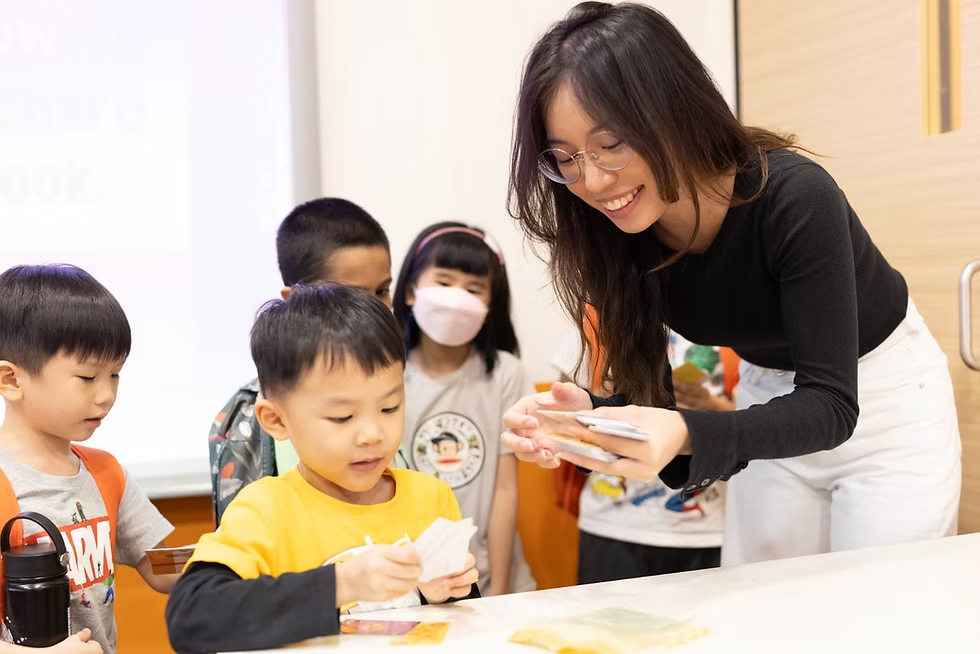
The transition from early childhood play to the structured environment of a Singapore primary school classroom is one of the most significant milestones in a child’s life. For parents, this phase often brings a mix of pride and anxiety. Primary 1 (P1) is no longer just about socialization and basic motor skills; it introduces a fast-paced Ministry of Education (MOE) curriculum, structured timetables, larger class sizes, and the expectation of independent problem-solving.
As a parent, your primary goal during these formative years is to ensure your child does not just survive this transition, but genuinely thrives from day one.
The foundation for this success is built long before the first day of primary school. It begins with choosing an early childhood environment that balances emotional nurturing with cognitive and academic readiness. With numerous options available across the island, identifying a good kindergarten Singapore parents can trust requires looking far beyond bright classrooms and colorful play areas. It demands an understanding of how a curriculum prepares a child holistically for the future.
When parents think about Primary 1 preparation, they often focus strictly on academic benchmarks: Can my child read a full sentence? Can they solve basic addition and subtraction? Do they know their spelling words? While these foundational skills are undeniably important, true P1 readiness is multi-dimensional.
A child who can read fluently but struggles with emotional resilience, social integration, or self-management will still find the transition to primary school incredibly challenging.
A comprehensive kindergarten curriculum prepares children across three core pillars:
True readiness is not something that can be rushed in a frantic “crash course” during the final months of Kindergarten 2. Instead, it is the result of a carefully structured, multi-year learning journey that adapts to a child’s changing developmental needs.
The journey begins in the earliest years of development. When families enroll their toddlers in a high-quality nursery school Singapore, the focus is on sparking natural curiosity, developing early linguistic foundations, and building social confidence through play-based discovery. During this nursery stage, children learn to navigate life outside the home, interact positively with peers, and follow simple routines.
As children progress into the kindergarten years (K1 and K2), a premium curriculum smoothly shifts from open-ended play to structured, inquiry-based learning. This gradual evolution ensures that academic concepts are introduced naturally and progressively. By the time a child reaches the latter half of K2, they are already accustomed to focused work periods, logical problem-solving, and collaborative projects—making the jump to Primary 1 a natural next step rather than a jarring shock.
To excel in the modern educational landscape, children need more than just the ability to memorize facts or complete repetitive worksheets. The MOE primary curriculum increasingly emphasizes critical thinking, conceptual understanding, and the application of knowledge to real-world scenarios.
Therefore, a truly exceptional kindergarten must move away from traditional rote learning models and embrace an inquiry-based pedagogy.
At Cambridge, we believe in nurturing the unique talents of every child by giving them the tools to explore, question, and understand the world around them. An inquiry-based learning framework transforms passive students into active discoverers:
By learning how to think rather than what to think, children develop an agile mindset that serves them well into their primary school years and beyond.
While curriculum design and teaching philosophies are critical factors, the operational reality of running a household cannot be overlooked. For busy working parents, the location of an early childhood centre plays a major role in maintaining a harmonious family schedule. A long, stressful morning commute can leave a child tired and irritable before their school day even begins.
For families residing in the North-East region, securing premium care from the very beginning of a child’s developmental timeline is highly advantageous. Accessing a trusted, high-tier infant care hougang facility allows parents to return to work with absolute peace of mind, knowing their infants are developing in a safe, hygienic, and sensory-rich environment managed by certified professionals.
As children grow from infants to toddlers and preschoolers, maintaining educational continuity within an accessible geographic radius becomes even more important. When parents actively search for good preschools near me, they are not simply looking for the shortest commute. They are looking for a community-centered educational home that combines world-class learning standards with local convenience, ensuring a smooth, stress-free morning routine for the entire family.
Once you have shortlisted potential schools based on their curriculum and location, scheduling an in-person or virtual tour is essential. A school’s culture, safety standards, and educational quality are best evaluated through direct observation.
Use this targeted checklist during your next visit to ensure the school meets high early childhood standards:
Choosing a kindergarten is one of the most significant investments you will make in your child’s educational journey. The right environment protects the magic of early childhood while intentionally building the cognitive, social, and emotional foundations your child needs to step into Primary 1 with confidence.
At Cambridge, we are deeply committed to preparing children for the future by offering an enriched, world-class curriculum that inspires lifelong learning. Our approach blends academic preparation with creative exploration, analytical thinking, and character development. By surrounding your child with passionate, highly trained educators and a nurturing environment, we ensure they grow into independent, resilient individuals ready to conquer any challenge.
Give your child the gift of a head start built on curiosity, confidence, and true readiness. Visit our closest location today to discover how we can partner with your family to nurture the champion leader within your child.