
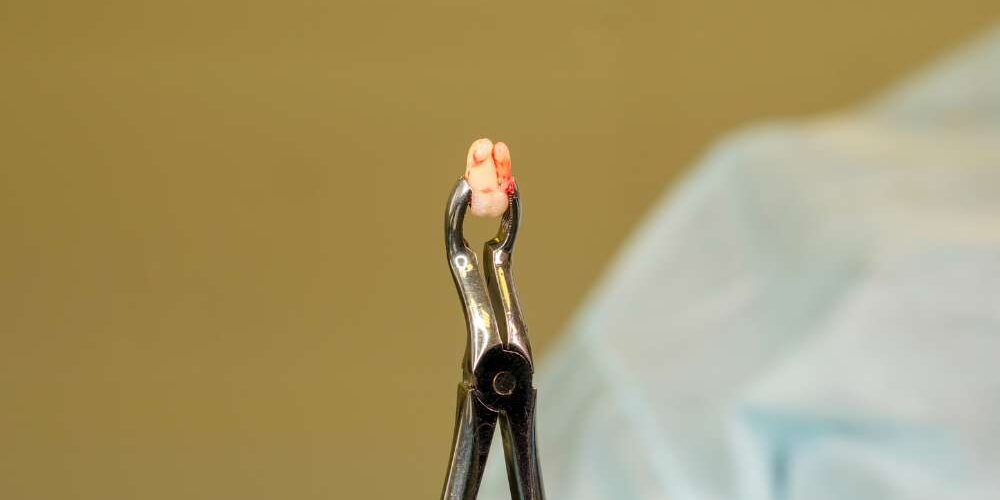
Why experts now say not to remove your wisdom teeth is one of the most searched dental questions of 2026, and for good reason. For decades, pulling wisdom teeth was practically automatic.
Teens went in, teeth came out, no questions asked. But that thinking has changed.
Leading dental researchers and general dentists now argue that routine preventive extraction may do more harm than good for many patients.
Studies suggest up to 60% of wisdom teeth removals may be completely unnecessary.
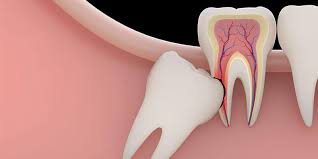
For generations, dentists followed a simple rule: wisdom teeth appear, so remove them before they cause trouble. The assumption was that third molars would eventually crowd other teeth, become impacted, or lead to infection.
That assumption was rarely questioned. Millions of people had perfectly healthy teeth pulled every year purely as a precaution.
Now, a growing body of dental research and evolving clinical guidelines is challenging that approach. The question is no longer just “when should wisdom teeth come out?” but rather “do they actually need to come out at all?”
The evidence behind routine removal has always been weaker than most patients realize. Several major studies have now put hard numbers to the problem.
Research indicates that fewer than 12% of impacted wisdom teeth actually go on to cause clinical problems. Yet millions of extractions are performed annually as a preventive measure based on that small minority.
A landmark review cited by the National Institutes of Health found no proven benefit to removing wisdom teeth that are not currently causing any symptoms. The NIH position is now clear: if a wisdom tooth is healthy, properly positioned, and can be kept clean, there is no strong medical case for removing it.
| Old Approach | New Approach |
|---|---|
| Remove all wisdom teeth preventively | Monitor unless there is a clear problem |
| Surgery at late teens / early 20s as routine | Case-by-case evaluation using X-rays and exams |
| Assume future problems will develop | Only act when evidence of a current issue exists |
| No need to discuss risks in detail | Full informed consent including surgical risks |
Several factors came together to change expert opinion over the past decade.
Better imaging technology now allows dentists to assess the exact position, angle, and root depth of wisdom teeth with precision. A CBCT (cone beam CT) scan gives a full 3D picture of the tooth in relation to the nerves and surrounding bone. This means dentists no longer have to guess based on a flat 2D X-ray.
Evidence-based dentistry has grown as a movement. The dental community increasingly expects treatments to be backed by strong clinical evidence, not just tradition. When researchers started asking whether routine extraction had solid evidence behind it, the answer was uncomfortable.
Greater awareness of surgical risks has also played a role. As more patients reported complications such as nerve damage and prolonged recovery, dentists became more cautious about recommending surgery without a clear clinical reason.
Every surgery carries risk. Wisdom tooth extraction is no different, and the risks are more serious than most patients are told upfront.
Dry Socket (Alveolar Osteitis)
Dry socket is one of the most common complications after extraction. It occurs when the blood clot that forms in the empty socket is dislodged or dissolves before the wound heals, leaving exposed bone and nerve tissue.
Dry socket causes intense, throbbing pain that can radiate to the ear, jaw, or temple. It typically develops two to four days after surgery and requires a return visit to the dentist for treatment.
According to the American Academy of Oral and Maxillofacial Surgeons, dry socket occurs in roughly 4% of all extractions overall. However, for lower wisdom teeth specifically, the risk is significantly higher, with some research showing rates of 30% or more in lower jaw extractions.
Nerve Damage
The roots of lower wisdom teeth sit in close proximity to the inferior alveolar nerve, a major nerve branch that controls sensation in the lip, chin, teeth, and tongue on that side of the face.
If this nerve is disturbed during extraction, the result can be numbness, tingling, or altered sensation in the lip, chin, or tongue. In most cases this is temporary, but it can be permanent in rare instances.
A 2025 peer-reviewed study published in PMC confirmed permanent neurogenic impairment of the trigeminal nerve as a documented outcome of lower wisdom tooth extraction in certain cases.
Infection
Post-surgical infection is a real risk with any oral procedure. Symptoms include yellow or foul-tasting discharge from the socket, swelling that worsens rather than improves after 48 hours, fever, and a general feeling of illness.
If an infection spreads to the jaw or neck, it can become a serious medical emergency requiring hospitalization.
Sinus Complications
The roots of upper wisdom teeth are often located very close to the floor of the maxillary sinus. During extraction, it is possible for a communication to open between the mouth and the sinus cavity, known as an oroantral fistula.
This requires additional treatment and can lead to chronic sinus problems if not properly managed.
Damage to Adjacent Teeth
Removing a wisdom tooth requires access to the very back of the mouth. In some cases, the extraction process can disturb, fracture, or weaken the second molar sitting directly in front of the wisdom tooth.
| Complication | Approximate Risk | Notes |
|---|---|---|
| Dry socket (general) | ~4% of extractions | Higher in lower jaw smokers |
| Dry socket (lower wisdom teeth) | Up to 35% | Highest-risk standard extraction |
| Temporary nerve numbness | ~3–5% | Usually resolves in weeks |
| Permanent nerve damage | Rare but documented | More likely with deep root position |
| Post-surgical infection | ~2–5% | Requires antibiotics or further care |
| Sinus communication | ~1–2% | Upper wisdom teeth only |
| Adjacent tooth damage | Uncommon | Depends on tooth position and access |
Not every wisdom tooth is a ticking time bomb. Many people keep their wisdom teeth for life without any problems.
A wisdom tooth is generally safe to keep if it has fully erupted and is upright in the jaw, if it is not pressing against the adjacent molar, if the gum tissue around it is healthy and not chronically inflamed, and if it can be reached and cleaned properly with a toothbrush and floss.
People who keep healthy wisdom teeth also retain extra chewing surface in the back of the mouth. This can be a genuine functional benefit, especially as people age and begin to lose other teeth.
Regular monitoring with X-rays every year or two allows a dentist to catch any changes before they become serious problems.
The updated expert position is not that wisdom teeth should never be removed. It is that removal should be based on a current clinical need, not a prediction about what might happen someday.
There are clear situations where extraction remains the right decision.
Impaction
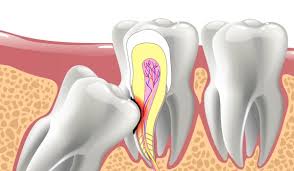
When a wisdom tooth is fully or partially trapped in the jawbone or gum tissue and cannot erupt properly, it is called impacted. Impacted wisdom teeth are much harder to keep clean and are prone to developing infections, cysts, and damage to adjacent teeth.
A dental follicle surrounds every developing tooth. In chronically infected impacted teeth, this follicle can remain, thicken, fill with fluid, and eventually become a cyst. Cysts destroy surrounding bone and grow larger over time if left untreated.
Pericoronitis
Pericoronitis is an infection of the gum tissue surrounding a partially erupted wisdom tooth. The flap of gum over the tooth traps food and bacteria, causing repeated painful infections.
If pericoronitis happens more than once, removal is strongly recommended because it will keep recurring.
Crowding or Pressure on Adjacent Teeth
If a wisdom tooth is growing at an angle and pressing against the second molar, it can damage the root of that molar and cause decay on a surface that is almost impossible to clean.
In this case, removal protects the health of the tooth next door, which is far more important for long-term chewing function.
Cavities in Hard-to-Clean Wisdom Teeth
Some wisdom teeth erupt but sit so far back in the mouth that a toothbrush simply cannot reach them well. If these teeth develop decay and the cavity cannot be properly restored, extraction becomes the best option.
Cysts or Tumors
Any abnormal growth around a wisdom tooth is a reason for removal and biopsy. This is rare but serious and should never be monitored and ignored.
| Condition | Removal Recommended? | Reason |
|---|---|---|
| Fully erupted, healthy, cleanable | No | No clinical evidence of harm |
| Partially erupted, asymptomatic | Monitor closely | Low current risk but harder to clean |
| Impacted, no symptoms | Evaluate individually | X-ray needed to assess cyst risk |
| Impacted with symptoms | Yes | Risk of cyst, bone loss, adjacent damage |
| Repeated pericoronitis | Yes | Will keep recurring |
| Pressing against second molar | Yes | Root damage to adjacent tooth |
| Cavity that cannot be restored | Yes | Cannot be properly treated in place |
| Cyst or tumor present | Yes | Requires removal and biopsy |
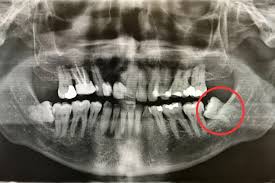
When your dentist reviews your wisdom tooth X-rays, they are assessing several key factors before making any recommendation.
Angulation is the angle of the tooth relative to the surrounding teeth. A tooth growing straight up is the lowest risk. Horizontal impaction, where the tooth is lying on its side, presents the highest risk of problems.
Root depth and proximity to nerves matters enormously. The closer the roots are to the inferior alveolar nerve or the sinus floor, the higher the surgical risk if removal is ever needed.
Available space in the jaw is checked to see whether the wisdom tooth has room to erupt without pressing on other teeth.
Signs of pathology such as follicle enlargement, cyst formation, bone loss, or decay on the adjacent molar are all red flags that move the recommendation toward extraction.
Age plays a real role in wisdom tooth decisions, though not necessarily in the way most people think.
Younger patients, typically between 16 and 22, have roots that are not yet fully formed. Extractions at this age are technically easier, heal faster, and carry lower risk of nerve complications because the roots are shorter and have not yet grown close to the nerve.
However, this is an argument for extracting problem wisdom teeth earlier, not for extracting all wisdom teeth earlier.
Older adults can also have wisdom teeth safely removed. It is a more involved procedure with a longer recovery, but age alone is not a barrier to extraction when it is clinically necessary.
The key point is that age should inform the timing of a necessary extraction, not be used as a reason to perform unnecessary surgery on a young person who has healthy teeth.
If your dentist has determined that your wisdom teeth do not need immediate removal, you still have a role to play in monitoring them.
Watch for these warning signs and contact your dentist promptly if you notice them:
Persistent pain or aching in the very back of your mouth on one or both sides, swelling or redness in the gum tissue behind your last molar, difficulty opening your mouth fully or jaw stiffness, a foul taste or smell in the back of your mouth that returns even after brushing, visible swelling on the outside of your face near the jaw, or shifting of your other teeth that was not happening before.
None of these symptoms necessarily means you need surgery immediately, but they all warrant a dental exam and updated X-rays.
One of the biggest genuine challenges of keeping wisdom teeth is keeping them clean. Their position at the very back of the mouth makes them difficult to reach.
Use an angled or small-headed toothbrush to get to the back surface of the wisdom tooth. A child-sized toothbrush or an angled interdental brush can reach areas a standard brush cannot.
Water flossers are excellent for cleaning around wisdom teeth. Directing the water jet along the gumline at the back of the mouth removes trapped food and bacteria that floss cannot always reach.
Antimicrobial mouthwash used daily helps reduce the bacterial load around partially erupted wisdom teeth and lowers the risk of pericoronitis.
See your dentist twice a year and make sure X-rays are taken regularly, at minimum every one to two years, to track any changes in position or health of the surrounding bone.
Wisdom tooth extraction is not cheap. A single extraction can cost hundreds of dollars, and removing all four wisdom teeth under general anesthesia can cost thousands, even with dental insurance.
When these procedures are unnecessary, that is money, time off work, recovery discomfort, and surgical risk that provided no benefit.
The financial argument for a more conservative approach is straightforward. If monitoring and good oral hygiene can maintain healthy wisdom teeth for years or decades, the money and recovery time saved is substantial.
If you have been told your wisdom teeth should come out, it is completely appropriate to ask for more information before agreeing. Here are the right questions:
Are my wisdom teeth currently causing a problem, or is this a preventive recommendation? What specific findings on my X-ray or exam support removal? What are the risks of surgery given the position of my roots relative to the nerve? What happens if we monitor these teeth instead of removing them now? How often would we need to take X-rays to track them safely?
A good dentist will welcome these questions and give you clear, evidence-based answers. If a dentist cannot explain specifically why your wisdom teeth need to come out, a second opinion from another dentist or an oral surgeon is entirely reasonable.
The shift away from routine wisdom tooth removal is part of a broader movement toward evidence-based dentistry. This approach requires that dental treatments be backed by high-quality clinical evidence, not just convention.
Several major dental organizations have updated their guidance to reflect this. The British National Health Service, the American Dental Association, and various academic dental centers now recommend against prophylactic removal of wisdom teeth that show no sign of disease.
This does not mean every dentist has changed their practice overnight. There is still variation among practitioners, and some still lean toward extraction as the safer default. The key is that patients now have science on their side when they ask whether surgery is truly necessary.
| Your Situation | Recommended Action |
|---|---|
| Healthy, fully erupted, cleanable wisdom teeth | Keep and monitor with annual X-rays |
| Partially erupted but no symptoms or infection | Monitor closely, improve cleaning routine |
| Impacted with no current symptoms | Discuss individual risk with dentist and get CBCT imaging |
| Repeated infections or pericoronitis | Remove |
| Pressing against second molar or causing root damage | Remove |
| Cyst, tumor, or significant bone loss detected | Remove urgently |
| Decay that cannot be restored | Remove |
| Healthy teeth in a young patient with no crowding | Keep and monitor |
No. Experts now say removal is only necessary when wisdom teeth are causing a current problem such as infection, impaction, or damage to adjacent teeth. Healthy, well-positioned wisdom teeth can be safely kept and monitored.
If your wisdom teeth are fully erupted, properly aligned, and kept clean, nothing bad will happen. They function like any other molar. The risk only arises if they become impacted, infected, or difficult to clean over time.
It was based on the assumption that future problems were likely and that early removal was easier. Research has since shown that most wisdom teeth never cause problems, and the preventive approach was not backed by strong evidence.
Studies suggest up to 60% of wisdom tooth removals may be unnecessary. Research also shows fewer than 12% of impacted wisdom teeth actually go on to develop serious complications.
The evidence that wisdom teeth cause front-tooth crowding is weak. Most orthodontists now agree that wisdom teeth alone do not generate enough force to shift well-aligned front teeth. Crowding is more often caused by natural jaw development.
An impacted wisdom tooth is one that is fully or partially trapped in the jawbone or gum and cannot erupt normally. Impaction increases the risk of infection, cyst formation, and damage to the adjacent molar and requires careful monitoring or removal.
Removal is generally easiest between ages 16 and 22 when the roots are not fully developed. However, age alone is not a reason to remove healthy wisdom teeth. The procedure can also be performed safely in adults of any age when clinically necessary.
The most common complications are dry socket, post-surgical infection, and temporary nerve numbness. Dry socket is especially common with lower wisdom tooth extractions, affecting up to 35% of lower jaw cases according to some research.
Yes. Each wisdom tooth is evaluated individually. If one is healthy and well-positioned and another is impacted, only the problematic one needs to come out. There is no rule that all four must be treated the same way.
Only a dental X-ray, ideally a panoramic or CBCT scan, can reveal what is happening below the gumline. This is why regular dental checkups and periodic imaging are essential even if you feel no pain. Some damage develops slowly and silently.
Why experts now say not to remove your wisdom teeth comes down to one thing: evidence.
Decades of routine surgery were based on assumption rather than proof, and that has finally changed.
Today, the leading approach is conservative, individualized, and grounded in real clinical findings.
Healthy wisdom teeth that are fully erupted, properly aligned, and cleanable deserve to stay.
Problematic wisdom teeth that are impacted, infected, or damaging adjacent teeth still need to come out, but that decision should be driven by what is actually happening in your mouth today, not by what might happen someday.
Talk to your dentist, ask the right questions, get a second opinion if needed, and make the decision that is right for your specific situation.
Your mouth, your choice, your evidence.