
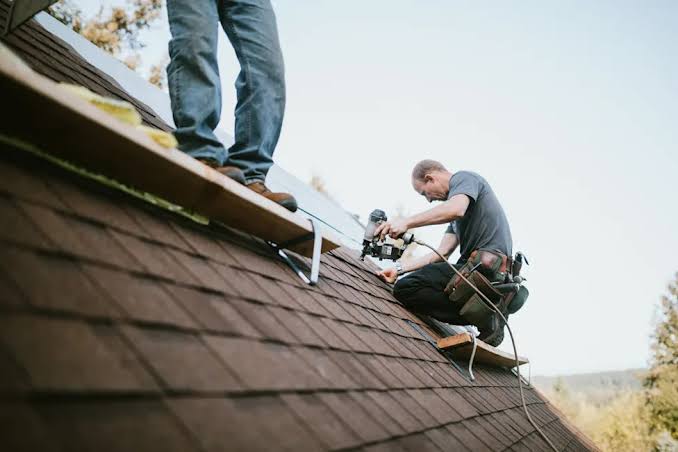
About two months ago my neighbor had a $9,000 roof put on by a half-dozen guys. They worked two days and then departed for parts unknown. In August, a leak began to appear in the ceiling above her closet in her bedroom. She called the contractor, but the phone number she was calling from had been disconnected. It turned out that the contractor never had even gotten a license to do work in the state where she lives. He never had even applied for a permit to do the roof replacement. And now he is long gone. I feel the worst for her because she asked a number of questions before she signed the contract. She just asked the wrong questions and not enough of them.
Most mistakes can be caught by homeowners simply asking enough questions. (They might be the wrong questions but the homeowner asked them and therefore became informed of problems that the homeowner could have anticipated had the homeowner asked enough questions before hiring a contractor. Recently a homeowner told me that she had hired a contractor to install new gutters on her home because the existing gutters were leaky and she had children. I then asked her if she had gotten a written contract and she replied that she had not. I then asked her if she had gotten a written estimate and she replied that she had not. I then asked her if she had pulled any permits before the work had begun and she replied that she had not. After
Most homeowners do not know where to start when it comes to hiring a roofer. They will ask for referrals from friends or family members, check online for local roofers, or even check out Craigslist. Before asking any other questions, you must first ask the roofer for their credentials. This will confirm that the contractor is properly licensed and insured.
Ask the roofer for proof of licensing and proof of current insurance. Make sure the roofer pulls the necessary permits for the work to be done. Without permits, the roofer is doing work without a license in most states. Even more importantly, without proper insurance, you could be held responsible for any accidents on your property. Always ask for a copy of the contractor’s certificate of insurance today and verify that it is current. Any roofer who hesitates to provide proof of licensing and current insurance is likely to be hiding something negative about himself or his business, even if he or she touts the number of positive reviews from previous customers.
If he’s not pulling a permit, he’s not licensed in your state. And even more importantly, he isn’t insured. General liability insurance protects your property while work is being done on your home. It protects against property damage. Workers’ compensation insurance protects you if there is an injury on your property and you are found to be responsible for the worker’s medical expenses. Many homeowners have found themselves responsible for thousands of dollars in medical expenses for a worker who was injured on their property performing a repair or replacement while they were at work.
Will you pull the permits?
The written permit provides a means for municipal inspectors to check on the work of contractors to confirm that the roof work complies have been completed in compliance with the building codes of your local area. No permit were pulled for my neighbor’s roof. The roof was finished in two days by a really cool crew who wrote a check to my neighbor and then split. By August, she was getting leaks directly above her bedroom closet. The leaks had manifested themselves as brown water dripping from the ceiling. This, of course, made a big brown stain on her ceiling. That stain looked like a big ugly bruise which would get bigger and bigger as time went on. When she called the company back they told her that they no longer had that number. The contractor for her roof had never even pulled the necessary permits in the first place. He had done the work illegally and had long since evaporated into thin air. Because he had done the work illegally there was no proof that he had even done the work in the first place. He had collected a lot of money from her for the roof work, however. Her was one huge example of why you would be a huge fool to not require your roofer to pull all of the required permits for the work that he is going to complete on your roof. She asked the questions. She just didn’t ask the right questions.
If you are looking for roofers in Arlington Virginia, keep this in mind:
Anchor Roofing’s goal is to make sure that homeowners receive the greatest value from their roofing dollars. In order to make sure that you receive the greatest value from your roofing dollars, Anchor Roofing suggests that you look for licensed and insured roofers, and ask the roofer about permits for your home’s roof before you decide on a roofer for the job. A contractor who pulls permits for every job, regardless of cost, is following local building codes and procedures that have been deemed acceptable by the city for your home’s roof. Contractors who do not pull permits for jobs are only saving the homeowner money initially. Problems can develop down the road as a result of the contractor’s decision to forgo pulling permits.
I wish there were a simple way to figure out good roofers from bad, but unfortunately, there is no simple question that guarantees quality work. Here are some good questions to ask to pull back the curtain on any roofer.
As mentioned earlier, many homeowners wait until something goes wrong and then they find out the contractor is nowhere to be found.
The first type of warranty provided by roofing contractors is a warranty that pertains to any manufacturer defect found in a roof after it has been installed. The second type of warranty provided by roofing contractors is a warranty that pertains to any workmanship errors found in a roof after it has been installed. Most roofing contractors will refer to problems found in a roof after it has been installed as being caused by the manufacturer of the roofing materials. In reality, the majority of roofing defects found in roofs after they have been installed are the result of errors made by the roofing contractor in the installation of the roof. Most roofing contractors honor their warranties for manufacturer defects in roofing materials. What roofing contractors do not honor are their warranties for workmanship errors in roofing. Homeowners are often confused about how to make a claim on a warranty for workmanship errors in roofing.
You need to have both a general liability insurance policy and workers compensation insurance written in your contractors written estimate and contract with specific dates for when the policy(ies) begin and end and a detailed outline of how a claim would be processed should a problem occur.
Ask the roofer for specifics about the work they will do to fix any problems that occur with your new roof. The length of time that the contractor will guarantee their work, and the process that the homeowner will have to go through in order to make a claim on that guarantee, should be clearly explained to you. Do not fall for the contractor who claims that he or she stands behind their work for an indeterminate time period. This type of contractor is not going to be able to provide you with any help if something were to go wrong with your roof. On the other hand, a contractor who guarantees their work for a certain amount of time (for example, 5-10 years) and who explains the process that the homeowner will have to go through in order to file a claim on any work that needs to be done as a result of a defect in the roofing materials or workmanship is a contractor that you can count on to fix any problems that may occur with your roof.
Your estimate should have the following items listed out with specificity: the materials that you will be using to complete the work of the roof on your home, (the brand and model number of shingles, for example), the cost of the labor to complete the work of the roof on your home, the cost of permits to complete the work of the roof on your home, and other costs to complete the job, (for example, the cost of the contractor to haul away the old roofing materials that were on your home prior to the new roofing materials being installed). Also, the terms of payment should be listed out in detail so you will know how much you will have to pay, and when you will have to pay it for. A written estimate serves as a contract prior to work commencing on a project. The more detailed an estimate is, the better you will be able to compare prices from different contractors, which will allow you to choose the contractor that will be the best choice for you and your wallet.
When comparing multiple roofing contractors’ bids, it is extremely important to compare each of their specifications in a side-by-side comparison format.
| What to compare | What a solid bid includes | Red flag version |
| Materials | Specific brand, product line, and warranty grade | “Standard shingles” with no further detail |
| Labor | Itemized cost, crew details, timeline | Single lump sum with no breakdown |
| Permits | Listed as a line item the contractor pulls | Not mentioned, or pushed onto the homeowner |
| Warranty | Written document, clear terms, specific duration | Verbal assurance only |
| Payment terms | Deposit plus staged payments tied to milestones | Full payment upfront before work begins |
Don’t confuse doing your due diligence by inquiring about a roofer’s practices with being some kind of suspicious homeowner. Your due diligence in properly hiring a roofer will be worth it when you find a professional contractor who conducts himself professionally. Contractors who are confident in their business practices have no problem answering your questions in a forthright and professional manner. It is best to slowly back away from a contractor who wants to rush you through the hiring process and answer no questions about his business practices. He is probably trying to hide something and will end up costing you a lot of money in the end.
My neighbor would have likely acted similarly had she known the disconnected phone number of a contractor would cost her so much.