
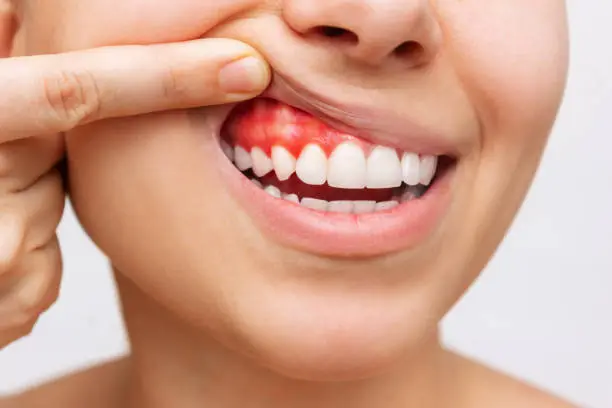
Why is my gum swollen around one tooth is a question that worries a lot of people — and rightly so.
Swelling that targets a single tooth is almost always your body signaling that something specific is wrong in that exact spot.
It could be trapped food, a bacterial infection, gum disease, a dental abscess, or even a partially erupted wisdom tooth.
While some causes are minor and resolve with basic care, others need prompt dental attention to prevent spreading.
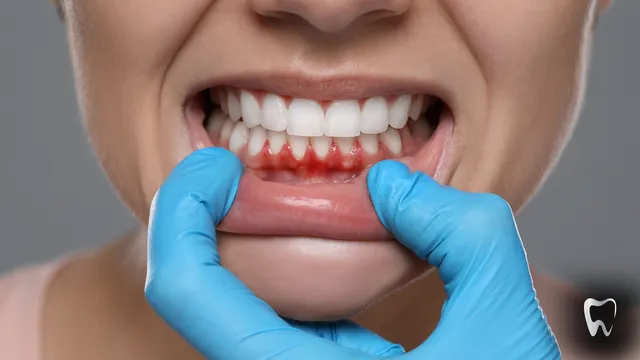
When the swelling appears around just one tooth rather than the entire gum line, it is called localized gum swelling.
This is different from generalized gum swelling, which affects multiple teeth and is often linked to systemic issues like nutritional deficiencies or medications.
Localized swelling almost always points to a specific, identifiable problem at or near that single tooth. Identifying the cause quickly helps prevent the condition from spreading or worsening.
Your gum tissue is your body’s first line of defense for the teeth and jaw bone. When bacteria, debris, or physical trauma irritate this tissue, the immune system sends blood and white blood cells to the affected area.
This immune response is what causes the familiar puffiness, redness, and tenderness around a single tooth.
Left untreated, this localized inflammation can progress from a minor irritation to a serious infection that spreads into the jaw, neck, or bloodstream.
You may notice more than just puffiness. Here is a full list of symptoms that can accompany localized gum swelling:
Not all of these symptoms appear at once. Even a mild swelling with no pain deserves attention if it lasts more than a week.
There are many possible reasons your gum is swollen around a single tooth. Below is a detailed breakdown of the most common causes.
One of the most frequent causes is food debris that gets stuck between the tooth and the gum line and is not removed by brushing or flossing.
Bacteria feed on this debris and release toxins that irritate the surrounding gum tissue. The gum responds with inflammation and swelling.
If caught early, thorough brushing and flossing may resolve the swelling within a day or two. Ignoring it allows plaque buildup and leads to gum disease.
Gingivitis is the earliest and mildest stage of gum disease. It causes the gum tissue around the base of one or more teeth to become red, swollen, and prone to bleeding.
According to the CDC, nearly 46% of adults over the age of 30 show some signs of gum disease. When gingivitis is localized to one area, it often means plaque has accumulated specifically around that tooth.
Without treatment, gingivitis can progress to periodontitis — a more destructive form of gum disease that damages the bone supporting the tooth.
Periodontitis develops when gingivitis goes untreated. The infection spreads below the gum line, forming deep pockets between the tooth and the gum.
These pockets trap more bacteria, leading to bone loss, tissue recession, and loose teeth. Swelling in one area can indicate a periodontal pocket has become infected.
Professional treatment including scaling, root planing, and possibly antibiotics is needed to stop the progression.
A dental abscess is a pocket of pus caused by a bacterial infection. It is one of the most serious causes of gum swelling around one tooth.
There are two main types:
| Type of Abscess | Location | Common Cause |
|---|---|---|
| Periapical abscess | At the tip of the tooth root | Tooth decay reaching the pulp |
| Periodontal abscess | In the gum tissue beside the tooth | Advanced gum disease or injury |
An abscess typically causes throbbing pain, significant swelling, a bad taste in the mouth, and sometimes fever. It will not resolve on its own and requires immediate dental care — either drainage, a root canal, or extraction.
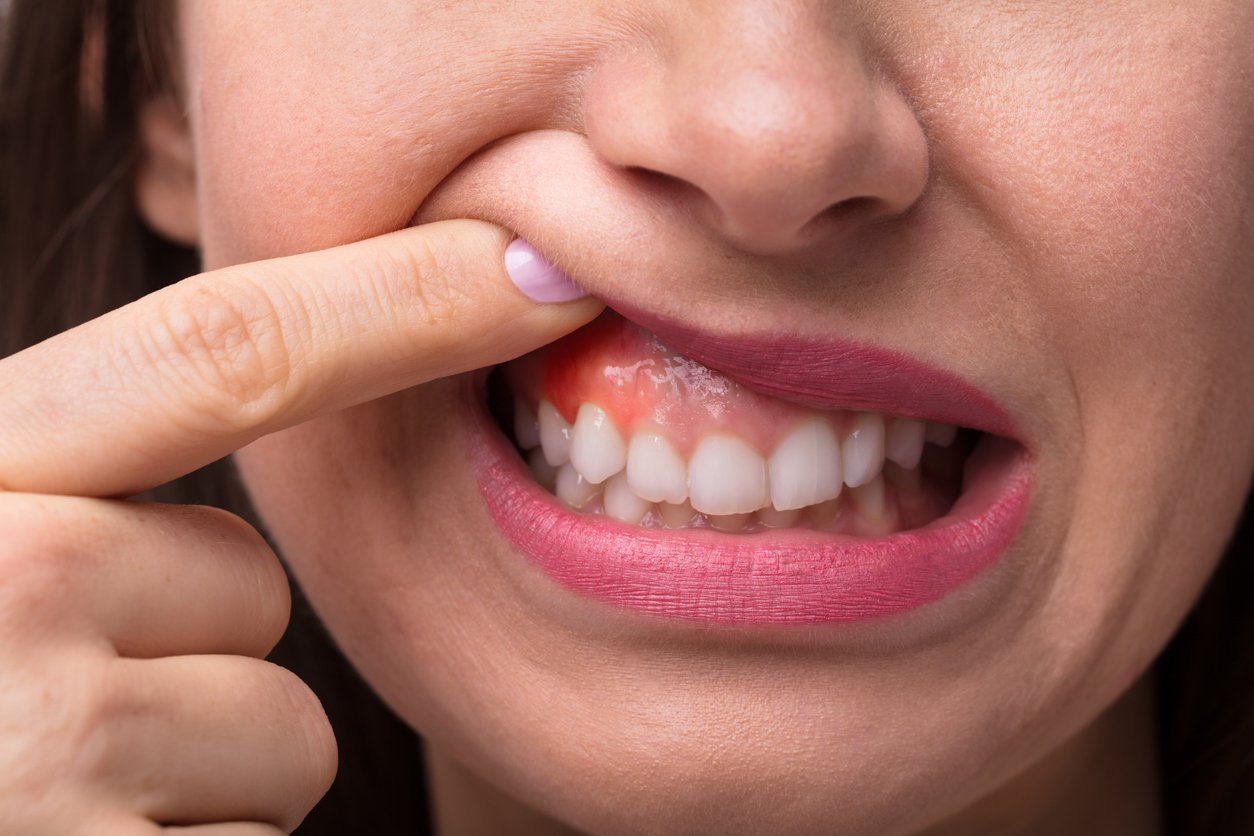
Close-up Of A Woman’s Finger Showing Swelling Of Her Gum
Pericoronitis is inflammation of the gum tissue surrounding a partially erupted wisdom tooth. It is one of the most common reasons for gum swollen around one back tooth in people aged 17 to 30.
When a wisdom tooth only partially breaks through the gum, a flap of gum tissue (called the operculum) can form over the crown. Food particles and bacteria get trapped underneath this flap, creating an ideal breeding ground for infection.
Symptoms of pericoronitis include:
Acute pericoronitis involves intense pain and infection. Chronic pericoronitis is a milder, recurring inflammation that comes and goes. Both require dental evaluation.
A cracked tooth allows bacteria to enter the inner layers of the tooth, including the pulp chamber where nerves and blood vessels live.
This leads to infection and inflammation of the surrounding gum tissue. The swelling may appear directly over or beside the cracked tooth.
Cracked teeth are not always visible to the naked eye. Symptoms include sharp pain when biting, sensitivity to temperature, and intermittent gum swelling. X-rays and dental dye tests are used to confirm the diagnosis.
When decay penetrates deeply into a tooth, it can reach the dental pulp and trigger a bacterial infection. This infection causes surrounding gum tissue to swell as the body tries to contain it.
Swelling caused by deep decay is often accompanied by toothache, sensitivity, and visible dark spots or holes in the tooth.
Early-stage cavities can be treated with fillings. Advanced decay may require a root canal or extraction.
A gum boil — medically called a parulis — is a small, raised bump on the gum that forms when pus from an abscess tries to drain to the surface.
It looks like a small pimple on the gum and may be white, yellow, or red. While it can temporarily reduce the pain by releasing pressure, it does not indicate the infection has resolved.
A gum boil always signals an underlying infection that requires professional dental treatment.
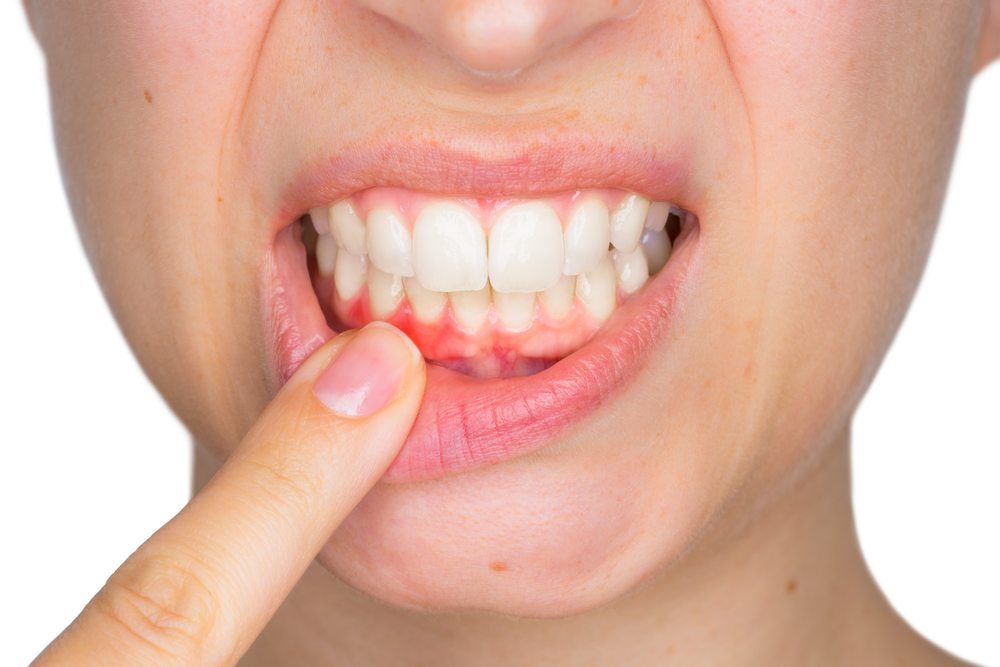
Physical trauma from an accident, aggressive brushing, a dental procedure, biting a hard food, or wearing braces can damage the gum tissue and cause localized swelling.
Trauma-related swelling is often short-lived and resolves with gentle care. However, if swelling worsens or does not improve within 3–5 days, a dental visit is needed to rule out deeper damage.
After a tooth is pulled, a blood clot forms in the socket to protect the underlying bone and nerve. If this clot fails to form, dissolves too quickly, or is disturbed, a painful condition called dry socket develops.
Dry socket causes significant swelling of the surrounding gum, exposed bone, and severe radiating pain. It requires prompt dental treatment to clean and pack the socket.
Mild swelling and tenderness for the first 2–3 days post-extraction is completely normal. Beyond that, contact your dentist.
A poorly fitted dental crown or filling can create gaps where bacteria accumulate and irritate the gum tissue below.
Over time, this leads to localized inflammation and swelling around the specific tooth where the crown or restoration is placed.
If you recently had dental work and notice gum swelling near that tooth, inform your dentist — the restoration may need to be adjusted or replaced.
Hormonal fluctuations during pregnancy, menstruation, or menopause can make gum tissue more sensitive and reactive to bacteria.
Pregnancy gingivitis is a well-documented condition in which the gums become swollen, tender, and bleed easily — sometimes around just one or two teeth.
Women who notice gum swelling during pregnancy should inform both their dentist and obstetrician for appropriate management.
Scurvy, caused by a severe lack of Vitamin C, leads to weakened gum tissue that swells easily and bleeds. This is rare but can present as localized or generalized gum swelling.
A blood test can confirm Vitamin C deficiency. Dietary changes and supplementation typically resolve the gum symptoms.
| Cause | Pain Level | Urgency |
|---|---|---|
| Trapped food / poor hygiene | Mild | Low — improve hygiene first |
| Gingivitis | Mild | Moderate — dentist visit within weeks |
| Periodontitis | Moderate | High — professional treatment needed |
| Dental abscess | Severe | Urgent — see dentist immediately |
| Pericoronitis | Moderate to severe | High — dental care needed promptly |
| Cracked tooth | Variable | High — needs diagnosis |
| Tooth decay (deep) | Moderate to severe | High — needs treatment |
| Gum boil | Moderate | High — signals underlying infection |
| Post-extraction swelling | Moderate | Monitor — urgent if beyond 3 days |
| Crown or filling issue | Mild | Moderate — dental adjustment needed |
| Hormonal changes | Mild | Low to moderate — monitor and inform dentist |
Certain signs indicate the infection has moved beyond the gum and needs emergency dental care. Do not wait for a scheduled appointment if you experience:
A spreading dental infection can become life-threatening if bacteria enter the bloodstream or airways. Seek emergency care immediately if these symptoms appear.
Your dentist will use a combination of methods to find the exact cause.
The dentist will visually examine the swollen gum and gently probe around the tooth to measure the depth of any periodontal pockets. Deep pockets suggest periodontitis.
They will also check for mobility in the tooth, which indicates bone loss, and look for signs of abscess, visible cracks, or gum boils.
X-rays reveal what is happening beneath the gum line and inside the tooth. They show bone loss, abscess at the root tip, impacted teeth, decay, and cracked roots.
Panoramic X-rays give a full view of all teeth and jaw structures, which is especially useful for wisdom tooth assessment.
A cold or electric pulp test checks whether the nerve inside the tooth is alive or dead. A non-vital (dead) tooth nerve often means infection has reached the pulp, requiring a root canal.
These measures provide temporary relief while you arrange a dental appointment. They do not replace professional treatment when a serious cause is present.
Dissolve half a teaspoon of salt in a glass of warm water. Swish gently for 30 seconds and spit. Repeat 2–3 times daily.
Salt water is a natural antiseptic that reduces bacteria, soothes inflamed tissue, and supports healing. It is one of the most evidence-backed home remedies for gum swelling.
Apply a cold pack or ice wrapped in a cloth to the outside of the cheek for 10–15 minutes at a time. This reduces swelling and numbs the area.
Do not apply ice directly to the gum tissue — it can damage delicate cells.
Clove oil contains eugenol, a natural analgesic and antiseptic. Dab a small amount onto a cotton ball and apply gently to the swollen gum for short-term pain relief.
Do not swallow clove oil or apply it in large amounts, as it can irritate the tissue if overused.
Ibuprofen (an NSAID) is particularly effective because it reduces both pain and inflammation. Take as directed on the label.
Acetaminophen (paracetamol) helps with pain but does not address inflammation. Use whichever is appropriate for your health profile.
Continue brushing the area gently with a soft-bristled toothbrush. Stopping brushing allows more bacteria to accumulate and worsens the condition.
Floss carefully around the swollen tooth to remove any trapped food particles contributing to the irritation.
A diluted hydrogen peroxide rinse (equal parts 3% hydrogen peroxide and water) can help reduce bacterial load. Swish for 30 seconds and spit — do not swallow.
This is a short-term measure and not suitable for regular use. Avoid it if you have open sores or active bleeding.
Turmeric contains curcumin, which has documented anti-inflammatory and antibacterial properties. Mix a small amount of turmeric powder with water to form a paste and apply it to the swollen gum for a few minutes, then rinse.
It will temporarily stain the area yellow but is safe and soothing for mild swelling.
Once your dentist identifies the cause, they will recommend one or more of the following treatments.
For gingivitis or plaque-related swelling, a professional cleaning removes tartar buildup above and along the gum line. This is often enough to resolve mild swelling within a week or two.
For periodontitis with pocket formation, a deeper cleaning called scaling and root planing is performed under local anesthesia.
The dentist cleans below the gum line, removes tartar from the tooth root surface, and smooths the root to prevent bacteria from reattaching.
If a bacterial infection is present or the swelling is spreading, antibiotics are prescribed. Common options include amoxicillin, metronidazole, or clindamycin.
Antibiotics reduce infection but do not treat the underlying dental problem. They are used alongside procedures, not as a standalone cure.
For a dental abscess with a pocket of pus, the dentist makes a small incision to drain the infected material. This immediately reduces pressure and pain.
The area is then flushed and medicated to prevent reinfection.
When infection has reached the dental pulp (the inner nerve and blood vessel chamber), a root canal is performed.
The dentist removes the infected pulp, cleans and shapes the canal, and seals it. The tooth is then covered with a crown. A root canal saves the natural tooth and eliminates the source of infection.
If the tooth is too damaged to save — due to severe decay, a deep crack, or advanced bone loss — extraction may be the only option.
Wisdom tooth extraction is commonly performed when pericoronitis keeps recurring or when the tooth is impacted and cannot erupt properly.
For pericoronitis where the wisdom tooth is expected to erupt normally, the dentist may surgically remove the overlapping gum flap (operculum). This eliminates the pocket where food and bacteria accumulate.
If a poorly fitting restoration is the cause, the dentist will adjust, recement, or replace the crown or filling to eliminate the gap that bacteria are exploiting.
Prevention is far easier and less costly than treatment. These habits protect your gums long-term.
| Prevention Habit | How It Helps |
|---|---|
| Brush twice daily with fluoride toothpaste | Removes plaque before it hardens into tartar |
| Floss daily | Clears debris from between teeth and below the gum line |
| Use antiseptic mouthwash | Kills bacteria that brushing and flossing miss |
| Visit the dentist every 6 months | Catches problems before they escalate |
| Eat a balanced, low-sugar diet | Reduces bacterial food source in the mouth |
| Avoid tobacco products | Smoking impairs gum healing and increases infection risk |
| Stay hydrated | Saliva naturally protects and cleanses the gum tissue |
| Replace toothbrush every 3 months | Old brushes harbor bacteria and clean less effectively |
It is worth understanding how localized swelling differs from widespread gum issues.
Swelling around a single tooth almost always has a specific local cause — abscess, trapped food, pericoronitis, or injury.
Swelling affecting multiple teeth or the entire gum line more likely relates to systemic causes such as vitamin deficiency, medication side effects (some blood pressure drugs cause gum enlargement), or generalized gingivitis from poor overall hygiene.
If you are unsure whether your swelling is localized or widespread, your dentist can quickly differentiate and guide appropriate treatment.
Swelling at the back of the mouth — around molars and wisdom teeth — is particularly common and carries its own set of causes.
The back teeth are harder to clean properly, making them more susceptible to plaque buildup, decay, and gum disease.
Wisdom teeth (third molars) are the most frequent source of back gum swelling due to impaction, partial eruption, and pericoronitis. Anyone over 17 experiencing recurring swelling at the back of the mouth should have their wisdom teeth evaluated with an X-ray.
Gum disease and dental infections contribute to systemic inflammation in the body. Persistent oral infections can raise inflammatory markers like CRP and ESR in blood tests.
This is one reason dentists and physicians increasingly view oral health as an indicator of overall health. Treating a dental abscess or resolving chronic periodontitis can help bring systemic inflammation back under control.
Good oral hygiene is not just about your smile — it directly supports your immune system, cardiovascular health, and inflammatory balance.
Localized swelling around a single tooth points to a specific problem at that spot — like trapped food, an abscess, a cracked tooth, or pericoronitis rather than a general gum condition.
Minor swelling from trapped food may resolve with improved brushing and flossing within 1–2 days. Swelling from an infection, abscess, or gum disease will not go away without professional dental treatment.
It depends on the cause. Mild irritation may clear in a few days. Infection-related swelling persists and often worsens without treatment. If swelling lasts more than one week, see a dentist.
Yes, if you have fever, spreading swelling to the face or neck, difficulty swallowing or breathing, or severe throbbing pain. These signs indicate a spreading infection that needs emergency dental care.
A dental abscess typically causes intense, throbbing, persistent pain, a visible bump filled with pus, bad taste or smell in the mouth, and often fever — distinguishing it from milder gum swelling.
Yes. A hairline crack can allow bacteria to slowly infect the pulp without causing obvious pain initially. The first sign may be intermittent gum swelling near the cracked tooth.
Only if prescribed by a dentist. Antibiotics reduce infection but do not fix the underlying dental problem. Taking them without dental treatment usually leads to the infection returning.
Yes. Pericoronitis — inflammation around a partially erupted wisdom tooth — causes swelling localized to that one back tooth area, often accompanied by pain when opening the mouth wide.
Signs of pus include a visible white or yellow bump (gum boil) on the gum, a foul taste that comes and goes, pressure that briefly releases and then returns, and persistent bad breath from one area.
Yes. Aggressive brushing with a hard-bristled brush can traumatize the gum tissue near one tooth, causing temporary swelling, recession, and sensitivity. Always use a soft-bristled brush with gentle circular motions.
A gum swollen around one tooth is never something to brush off without a second look.
Whether the cause is a trapped food particle, early gum disease, a dental abscess, pericoronitis from a wisdom tooth, or a cracked tooth, the underlying problem needs to be identified and addressed properly.
Mild cases may respond to improved oral hygiene and home remedies like salt water rinses within a few days.
But any swelling that persists beyond one week, is getting worse, comes with pain, fever, or pus, or is spreading to the face or neck requires urgent professional dental care.
The good news is that virtually all causes of localized gum swelling are treatable when caught early.
Make dental checkups a regular habit in 2026 so that small problems are caught before they become serious.
Your gums are telling you something — listen to them.