
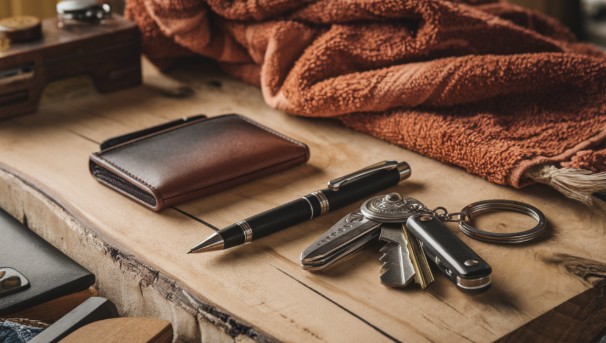
For artists, designers, and makers, the tools you carry matter. An everyday carry (EDC) mechanical pencil has become essential for anyone who sketches on the go, drafts technical drawings, or simply values precision in their daily work. Unlike disposable pens or wooden pencils that dull with use, a quality mechanical pencil delivers consistent line weight and requires no sharpening—making it ideal for everything from architectural drafting to field sketching.
The appeal extends beyond convenience. Mechanical pencils offer refillable leads in multiple grades, ergonomic grips that reduce hand fatigue, and durable construction that withstands years of pocket carry. For creative professionals who move between coffee shops, studios, and job sites, these characteristics transform a simple writing instrument into a reliable creative companion.
The mechanical pencil emerged in the 1820s as a solution to a practical problem: traditional pencils required constant sharpening, interrupting workflow and wasting material. Early patents featured complex lead-advancing mechanisms that, while ingenious, often proved unreliable. It wasn’t until the late 19th century that manufacturers developed truly functional designs that could compete with wooden pencils.
Modern manufacturing has refined these mechanisms considerably. Today’s production process involves precision machining of brass or aluminum barrels, injection-molded grip sections with specific durometer ratings for comfort, and spring-loaded clutch mechanisms engineered to tolerances measured in hundredths of a millimeter. The industrial design of a quality mechanical pencil balances multiple competing demands: it must be light enough for all-day carry yet substantial enough to feel controlled, slim enough to fit in a shirt pocket yet thick enough to grip comfortably.
Key developments that shaped modern mechanical pencils include:
Not every mechanical pencil deserves pocket space. The best options for everyday carry share specific characteristics that separate them from disposable alternatives or desk-bound drafting pencils. Durability tops the list—an EDC pencil endures constant jostling, temperature changes, and the occasional drop onto concrete. Metal construction, particularly brass or aluminum, provides longevity that plastic cannot match.
The lead advancement mechanism deserves careful consideration. Push-button systems offer quick operation but can accidentally deploy in a pocket. Twist mechanisms provide more deliberate control, though they require two hands. Shake-to-advance designs appeal to some users but may feel imprecise for technical work. Testing different mechanisms helps identify what suits your workflow.
Essential features for daily carry include:
For those seeking a refined option that balances craftsmanship with practical design, the best mechanical pencil for everyday carry from Everyman, Rotring, and Staedtler each demonstrate how precision manufacturing translates into tools genuinely suited for daily use — compact, reliable, and built to last well beyond the average desk pencil.
Contemporary mechanical pencils push beyond pure function into the realm of design objects. Japanese manufacturers like Pentel and Uni have pioneered features such as rotating lead mechanisms that maintain sharp points and low-center-of-gravity designs that improve control. German brands including Rotring built reputations on technical precision, creating pencils with fixed lead sleeves that enable ruler work and consistent line weight.
Material choices significantly impact both aesthetics and performance. Brass develops a patina over time, creating a unique appearance that reflects years of use. Titanium offers exceptional strength-to-weight ratios but commands premium prices. Aluminum provides durability at moderate cost, though it lacks the heft some users prefer.
Standout design features worth considering:
Technical drawing demands tools built to exacting standards. Engineering pencils feature fixed lead sleeves—typically 4mm metal tubes—that enable precise work against rulers and templates. This design prevents the barrel from obscuring sightlines to the drawing surface, critical for architectural drafting and mechanical design work.
Lead hardness becomes crucial in technical applications. The graphite grading scale runs from 9H (hardest, lightest) through HB (medium) to 9B (softest, darkest). Engineers typically work with H or 2H leads for construction lines that remain visible but don’t smudge, switching to HB or B for final line work. The ability to quickly change lead grades without switching pencils makes multi-grade lead holders particularly valuable.
Professional-grade engineering pencils typically include:
Hand fatigue undermines both creativity and precision. Mechanical pencils address this through grip design, weight distribution, and diameter optimization. Research into writing ergonomics suggests that barrel diameters between 8-10mm suit most hand sizes, though individual preferences vary considerably. Grip sections positioned 30-35mm from the tip provide optimal control without requiring excessive finger pressure.
Cushioned grips reduce the pressure required to maintain control, particularly important during multi-hour drawing sessions. Rubber compounds offer excellent grip but may degrade over time, while knurled metal provides permanent texture that works even with sweaty hands. Some manufacturers use strategic diameter changes—slightly wider grip sections that naturally position fingers without requiring conscious adjustment.
The National Institutes of Health has documented how proper writing instrument design reduces strain on the hand’s intrinsic muscles. Key ergonomic considerations include:
Selecting the right mechanical pencil depends on how you work. Architects and engineers benefit from fixed-sleeve designs with precise lead advancement. Illustrators and sketch artists often prefer retractable tips that protect lead during transport, paired with softer lead grades (B or 2B) that produce rich, dark lines. Urban sketchers prioritize compact designs that disappear into pockets alongside notebooks and watercolor kits.
Lead grade selection significantly impacts results. HB serves as a versatile middle ground suitable for writing and general sketching. 2H produces lighter lines ideal for underdrawings that won’t show through ink or watercolor. 2B delivers rich blacks for finished drawings and shading work. Maintaining a small selection of lead grades—perhaps HB, 2H, and 2B—covers most creative applications without requiring multiple pencils.
Consider these factors when choosing an EDC pencil:
A well-made mechanical pencil represents a different philosophy than disposable alternatives. It’s a tool designed for years of service, developing character through use rather than degrading toward obsolescence. The initial investment—typically $20-60 for quality options—amortizes over thousands of pages, making the per-use cost negligible compared to disposable pencils.
Beyond economics, quality tools change how we work. A pencil that feels substantial in hand, that deploys lead with satisfying mechanical precision, that develops a patina reflecting years of creative output—these qualities foster a different relationship with the creative process. The tool becomes an extension of thought rather than an obstacle to overcome.
Environmental considerations also favor durable mechanical pencils. A single quality pencil with refillable leads eliminates hundreds of wooden pencils over its lifetime, reducing both material consumption and waste. For creators conscious of their environmental impact, this represents a meaningful reduction in their toolkit’s footprint.
The mechanical pencil occupies a unique position in the creative toolkit—sophisticated enough for professional technical work, yet simple enough for daily pocket carry. Whether you’re drafting architectural plans, sketching urban landscapes, or simply maintaining a daily journal, the right mechanical pencil elevates the experience from mundane task to satisfying craft. The precision, reliability, and longevity these tools offer make them worthy investments for anyone who values quality in their creative practice.