
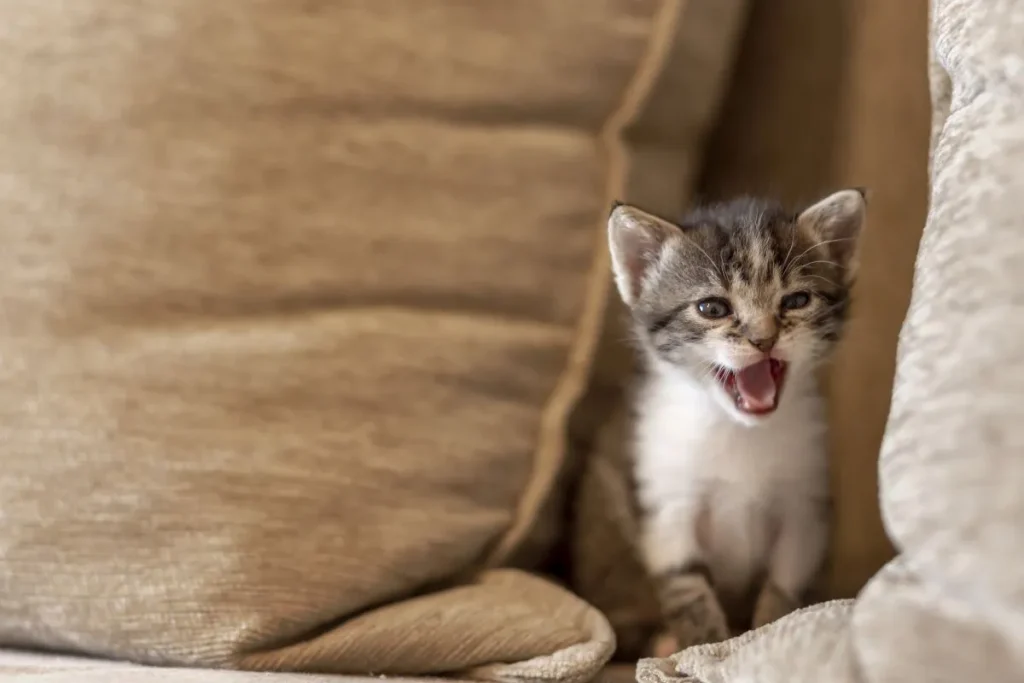
Why do cats meow at night is one of the most searched questions among cat owners — and for good reason. Being woken up at 2 AM by a yowling cat is exhausting, confusing, and even worrying.
The truth is, nighttime vocalization in cats almost always means something. Your cat is communicating a specific need, discomfort, or instinct-driven urge.
You will also find proven, vet-backed solutions to help both you and your cat sleep peacefully through the night.
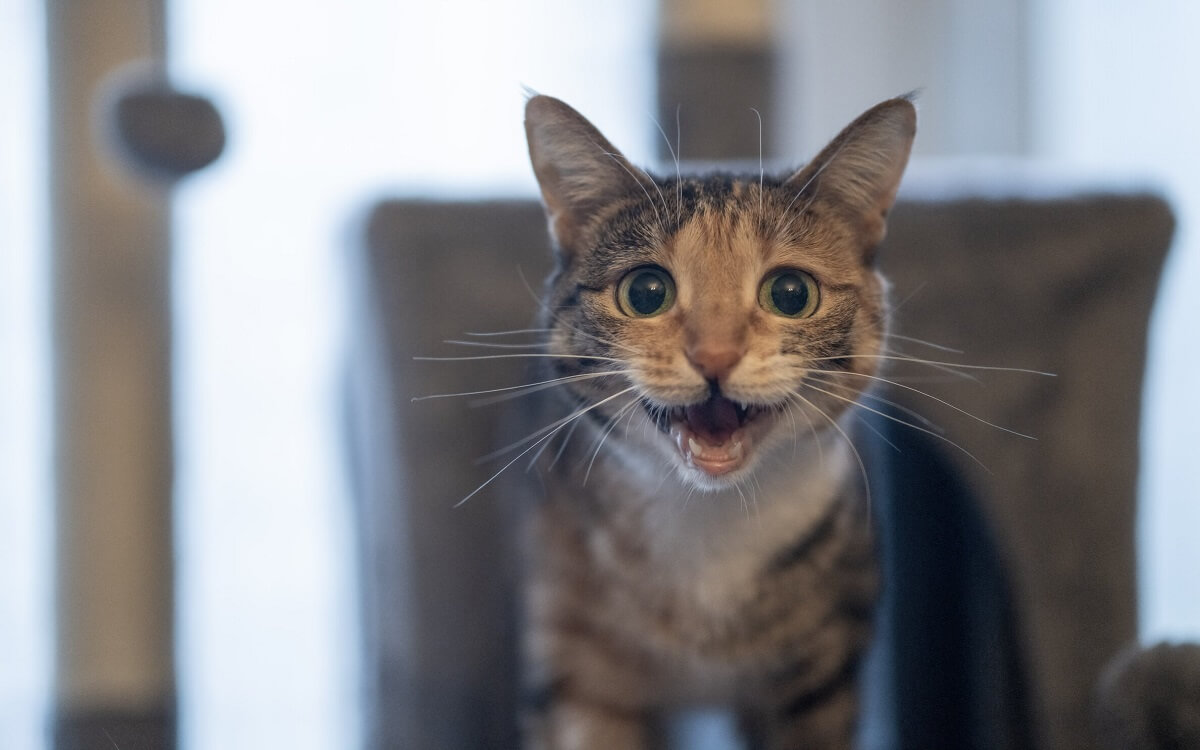
A common misconception is that cats are nocturnal. They are actually crepuscular — meaning they are most naturally active at dawn and dusk, not through the whole night.
That said, a cat’s internal clock does not perfectly match a human sleep schedule. Their peak activity windows often overlap with early morning hours — typically between 3 AM and 5 AM — which is exactly when you are in your deepest sleep.
Domestic cats have partially adapted to human schedules over thousands of years of cohabitation. But those wild hunting instincts remain, and they fire up at inconvenient hours.
Cats are hardwired to follow a hunt-eat-sleep cycle. In the wild, they stalk prey, catch it, eat it, and then rest. When this cycle is not triggered during the day or evening, their energy and predatory drive carries over into nighttime hours.
A cat that has not had enough physical and mental stimulation before bed is essentially a hunter who never got to hunt. The energy has to go somewhere — and it often comes out as loud meowing at night.
The most straightforward reason a cat meows at night is a simple, empty food bowl. If dinner was served too early in the evening, your cat’s body will wake them up hungry — and they will wake you up too.
Thirst is equally common. Cats can be picky about water freshness, and a bowl that has been sitting out since morning may not feel acceptable to them by midnight.
A cat that spent most of the day napping has a surplus of energy come nightfall. Without toys, climbing opportunities, or interaction to channel that energy, the cat becomes restless and vocal.
This is especially common in indoor-only cats. They do not have the outdoor environment to keep them mentally engaged, so they depend entirely on their home environment and their owner for stimulation.
Cats are highly intelligent. They learn quickly that meowing at night gets a reaction — you get up, you speak to them, you feed them, you pet them. Even a negative reaction is still attention.
Once this pattern is established, it becomes a trained behavior. The cat meows because experience has taught them it works. Breaking this cycle requires patience and consistency.
An unspayed female cat in heat produces a loud, prolonged, often distressing-sounding vocalization — especially at night. It can sound like the cat is in serious pain, which sometimes prompts new owners to call an emergency vet.
Unneutered male cats also yowl intensely when they sense a female in heat nearby — through walls, windows, or from distance. Spaying or neutering resolves this type of nighttime meowing completely in almost all cases, while also providing important health benefits.
Cats are highly sensitive to changes in their environment. Moving to a new home, the arrival of a new pet or baby, changes in your work schedule, rearranged furniture, or even a new neighbor’s dog can cause anxiety.
That anxiety often peaks at night when the house is quiet and the cat has nothing to distract it. Nighttime meowing is one of the most common behavioral responses to feline stress.
Cats are fastidiously clean. A litter box that has not been scooped recently, or one that is hard to access at night, will cause vocalization. Your cat is telling you the bathroom situation is unacceptable.
This is an easy fix but a commonly overlooked one. Scooping the litter box just before bed each night can eliminate this cause entirely.
An indoor cat that previously had outdoor access — or one that can hear or smell outdoor cats through a window — may meow at night to be let out. They are responding to sounds, smells, and instincts tied to territorial behavior and exploration.
This type of meowing is often directed at doors or windows. It tends to be persistent and loud.
A newly adopted kitten or cat meows at night primarily from separation anxiety. They are in an unfamiliar place, separated from their mother or littermates, and everything smells different.
This is normal and usually resolves within one to three weeks as the cat acclimatizes to their new home and bonds with their new family. Providing a warm bed with an item carrying your scent helps significantly.
Sudden or new nighttime meowing in a cat that was previously quiet at night is a red flag. Pain, discomfort, or physiological disruption from illness can drive vocalization that has nothing to do with behavior.
Common medical causes include:
| Condition | How It Causes Nighttime Meowing |
|---|---|
| Hyperthyroidism | Overactive thyroid puts the body in overdrive; causes restlessness, hyperactivity, and constant vocalization |
| Kidney disease | Causes nausea, discomfort, increased thirst; cats vocalize distress |
| Hypertension (high blood pressure) | Often linked to kidney or thyroid disease; may cause headache-like discomfort |
| Urinary tract infection (UTI) | Pain and urgency during urination triggers crying, especially at night |
| Arthritis / joint pain | Moving, jumping, or finding a comfortable position becomes painful; cats cry out |
| Dental disease | Mouth pain intensifies when eating stops during the night |
| Diabetes | Causes excessive thirst and hunger; cats demand food and water |
| Hearing loss | Cat cannot judge its own volume; vocalizes louder and more frequently |
| Vision loss | Darkness becomes more disorienting; cat calls out for reassurance |
Any cat over 10 years old that suddenly develops nighttime meowing should see a vet within a week for blood pressure measurement, blood work, and a full physical exam.
Cognitive Dysfunction Syndrome is the feline equivalent of dementia or Alzheimer’s disease. It involves age-related neurodegeneration — including beta-amyloid deposits in the brain — that disrupts memory, spatial awareness, and the sleep-wake cycle.
A cat with CDS becomes disoriented in the dark. They wake up confused about where they are, lose track of familiar routines, and vocalize because they genuinely cannot make sense of their surroundings.
Studies show nearly one-third of cats aged 11–14 show at least one sign of CDS. For cats over 15, the figure rises to approximately 50%. Nighttime yowling is one of the most consistent and recognizable symptoms.
The 3 AM meow is so common it has become a cultural joke — but there is a biological reason behind it. A cat’s crepuscular instinct makes the pre-dawn hours feel like prime hunting time. Their body is primed, their energy is up, and they are looking for action.
Add in hunger from an early dinner, insufficient evening play, and the stillness of a sleeping household, and you have the perfect conditions for a loud meowing session.
This is almost always behavioral in cats under 10. In older cats, the same 3 AM pattern warrants a vet check to rule out medical causes.
Knowing whether the meowing is a habit or a health signal changes everything about how you respond.
| Sign | Likely Behavioral | Likely Medical |
|---|---|---|
| Age of cat | Under 10 years | Over 10 years |
| Onset | Gradual, tied to routine | Sudden change in a previously quiet cat |
| Pattern | Predictable times (3 AM, after meals) | Random, frequent, or continuous |
| Other symptoms | None — normal eating, litter use, energy | Weight loss, increased thirst, vomiting, limping |
| Response to attention | Stops when you interact | Continues even when comforted |
| Litter box behavior | Normal | Changes — more or less urination, accidents |
When in doubt, book a vet appointment. A basic blood panel and blood pressure check can rule out the most common medical causes quickly.
This is the single most effective behavioral intervention. Use a wand toy, feather teaser, or laser pointer to engage your cat’s prey drive 1–2 hours before your bedtime.
Play for at least 15–20 minutes in a way that mimics real hunting — make the toy move erratically, hide, dart. Finish the session by letting your cat “catch” the toy so they get the satisfaction of a completed hunt. Follow this immediately with their last meal of the day to complete the hunt-eat-sleep cycle.
Move the last meal of the day as late as possible — 30 to 60 minutes before your bedtime is ideal. A full stomach promotes sleep and dramatically reduces hunger-driven early morning meowing.
An automatic cat feeder is a game-changing solution. Set it to dispense a small portion at 3 AM or 5 AM — whatever time your cat typically wakes you. The feeder becomes the food source, not you, which breaks the behavioral association between meowing and being fed by a human.
Scoop the litter box every night before you go to sleep. This removes one of the most common and easily fixed causes of nighttime meowing.
If you have a multi-floor home, make sure at least one litter box is accessible on the floor where your cat spends the night. Cats will not walk up two flights of stairs to use a box at 2 AM.
A cat that is adequately tired by evening sleeps through the night. The key is quality stimulation during daylight hours.
Puzzle feeders, treat-dispensing toys, window perches for bird-watching, cat trees with multiple levels, and rotating toy selections all help burn energy and keep the mind active. If you are away during the day, leaving a paper bag (handles removed), a cardboard box, or a crinkle toy provides independent entertainment.
This is the hardest rule to follow, but also one of the most important. If your cat’s meowing is behavioral — confirmed after ruling out medical causes — then any response you give reinforces the behavior.
Do not speak to the cat. Do not get up. Do not feed them. Even negative attention such as scolding teaches your cat that meowing produces results. Use earplugs if needed. Expect an extinction burst — a temporary worsening of the meowing before it improves. Consistent non-response over one to two weeks breaks the habit for most cats.
A cat that has a cozy, safe space of their own is less likely to pace and vocalize. Provide a soft bed near your bedroom, a warm blanket, and ideally a window or elevated perch for visual stimulation during the quiet pre-dawn hours.
For senior cats or cats with vision issues, add a small night light near their sleeping area. Darkness amplifies disorientation in cats with cognitive decline or failing eyesight.
Feliway is a synthetic version of the natural feline facial pheromone that cats produce when they rub their face on objects — a marking behavior associated with safety and comfort. Plug-in diffusers release a steady, low-level calming signal throughout the room.
For cats whose nighttime meowing is rooted in anxiety, stress, or environmental change, Feliway diffusers are a widely recommended and well-researched non-pharmaceutical option.
If your cat is not already spayed or neutered and the nighttime meowing is loud, prolonged, and cyclical (every few weeks for females), reproductive hormones are almost certainly the cause.
Spaying and neutering eliminates heat-related vocalization in nearly all cases. It also reduces the urge in male cats to yowl in response to females in heat nearby. Beyond the behavioral benefit, it has significant positive health effects including reduced cancer risk.
If your cat is over 10 years old, if the meowing started suddenly, or if it is accompanied by any other behavioral or physical change, a vet visit is the correct first step — not a behavioral intervention.
Your vet will measure blood pressure, run blood work (checking thyroid levels, kidney function, blood glucose, and more), and conduct a physical and neurological examination. Many of the underlying medical causes of nighttime meowing — hyperthyroidism, hypertension, UTIs, arthritis — are very treatable when caught early.
For CDS, there is no cure, but there are supplements, prescription medications, and environmental management strategies that improve quality of life and reduce nighttime confusion significantly.
The reason for nighttime meowing and the right response to it shifts significantly depending on your cat’s age.
| Life Stage | Age | Most Common Causes | Recommended Approach |
|---|---|---|---|
| Kitten | Under 1 year | Separation anxiety, adjustment, energy | Warm bedding, scent comfort, gradual routine building |
| Young adult | 1–5 years | Boredom, attention-seeking, heat cycle, hunger | Evening play, feeding schedule, spay/neuter |
| Adult | 5–10 years | Learned behavior, stress, environmental change | Behavioral consistency, enrichment, Feliway |
| Senior | 10–15 years | CDS, hyperthyroidism, kidney disease, arthritis | Vet check first; then environment and medication |
| Geriatric | 15+ years | CDS (very likely), pain, sensory loss | Ongoing medical management, night lights, calm routine |
Some breeds are simply more talkative than others, and this trait does not disappear after dark.
Siamese cats are the most vocal domestic breed. They are known for loud, low-pitched vocalizations that can sound almost conversational — or alarming, to those unfamiliar with the breed. Nighttime meowing in Siamese cats is largely normal breed behavior.
Oriental Shorthairs, Burmese, and Tonkinese cats are similarly talkative. Bengal cats also tend to vocalize more than average, particularly when bored or under-stimulated.
If you have a naturally vocal breed, the solutions focus on maximizing evening stimulation and enrichment rather than expecting silence.
Not all nighttime cat sounds mean the same thing. Understanding the type of vocalization helps you identify the cause faster.
| Sound | What It Usually Means |
|---|---|
| Short, chirpy meow | Greeting or attention request — generally not urgent |
| Repetitive, insistent meow | Hunger or demand for something specific |
| Long, drawn-out yowl | Pain, extreme distress, heat, or CDS disorientation |
| Low, guttural growl | Fear, territorial aggression, or pain when touched |
| Trilling or chirping at window | Response to outdoor cats or prey sounds |
| Loud, continuous wailing | Medical emergency or heat cycle — vet contact warranted |
A sudden shift to yowling in a cat that previously meowed normally is one of the clearest signals that something medical is happening.
Many cats go through phases of nighttime meowing that resolve with behavioral changes. However, certain situations require a vet appointment rather than a home fix.
See a vet promptly if your cat:
There is always a reason — it just may not be obvious yet. Common causes include crepuscular energy, hunger, attention-seeking, or early signs of a medical condition that has not been diagnosed yet.
Only if you have confirmed there is no medical issue, the litter box is clean, food and water are available, and the behavior is purely attention-seeking. Never ignore a senior cat or a cat showing signs of pain.
Your cat’s crepuscular instincts make pre-dawn hours feel like prime hunting time. If the behavior is consistent and predictable, it is likely behavioral — driven by energy, hunger, or a learned routine.
Senior cats commonly develop Cognitive Dysfunction Syndrome, a form of feline dementia that causes nighttime confusion and disorientation. Medical conditions like hyperthyroidism, kidney disease, and arthritis are also common in older cats and cause increased vocalization.
Yes, if the meowing is related to hormones. Female cats in heat produce loud, prolonged nighttime calls. Unneutered males yowl in response to nearby females. Spaying or neutering resolves this type of vocalization in almost all cases.
Yes. Moving homes, new pets, changes in your schedule, or even rearranged furniture can trigger anxiety-based nighttime meowing. Feliway diffusers and maintaining a stable routine help significantly.
The most effective combination is evening play to trigger the hunt-eat-sleep cycle, a late-night meal or automatic feeder, a clean litter box before bed, and consistent non-response to attention-seeking behavior.
Yes. Newly adopted kittens meow at night mainly from separation anxiety and environmental adjustment. Provide a warm, scent-familiar sleeping space. Most kittens settle within one to three weeks.
Absolutely. Cats are extremely clean and will refuse or protest a dirty box. Scoop the litter box every night before bed to remove this as a cause.
For behavioral causes, consistent changes typically produce results within one to two weeks. Expect an extinction burst — temporary worsening — before improvement. Medical causes require treatment before any behavioral improvement occurs.
Why do cats meow at night comes down to one core truth — your cat is always communicating something.
Whether it is hunger at 3 AM, the restless energy of a crepuscular predator, the anxiety of environmental change, or the confusion of a senior cat living with cognitive decline, the meow is a message.
The key is learning to read which message it is. Start by ruling out medical causes, especially if your cat is older or if the meowing started suddenly.
Then address the behavioral and environmental factors — evening play, a later feeding schedule, a clean litter box, and a consistent non-response to attention-seeking.
With patience and the right approach, most cats can be guided into a sleep schedule that works for the whole household.
Your cat wants to feel safe, full, stimulated, and connected. Meet those needs during the day, and the nights will get much quieter.