
If you are learning Spanish, Knowing how do you say why in Spanish is one of the first and most important things to master.
The word “why” has multiple translations in Spanish, and each one is used in a different context.
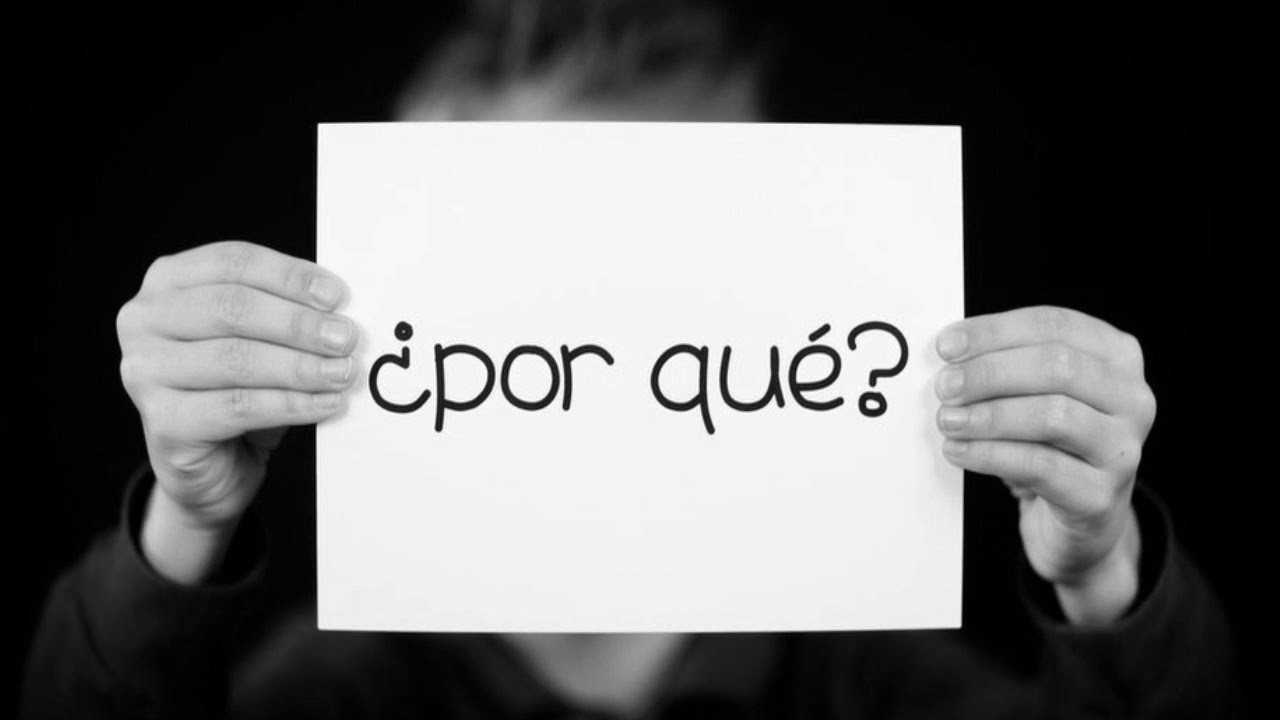
¿Por qué? is the primary way to say “why” in Spanish.
It is written as two words, and the letter é carries an accent mark. This accent mark signals that it is a question word. You will use it in direct questions, indirect questions, and many everyday situations.
Examples:
One of the most confusing parts of Spanish for English speakers is that there are actually four versions of “por qué.” They all sound very similar but have different meanings and uses.
| Form | Written | Meaning | Used For |
|---|---|---|---|
| ¿Por qué? | Two words + accent | Why? | Asking questions |
| Porque | One word, no accent | Because | Answering questions |
| Por que | Two words, no accent | For which | Relative clauses |
| El porqué | One word + accent | The reason | As a noun |
Understanding this table is the foundation of using “why” correctly in Spanish.
¿Por qué? is used whenever you want to ask about the reason for something.
It works in both formal and informal conversations. You can use it at work, with friends, or in a classroom without any problem.
Direct question: ¿Por qué estudias español? — Why do you study Spanish?
Indirect question (no question marks needed): Quiero saber por qué estás triste. — I want to know why you are sad.
Porque is the answer to ¿por qué?
It is written as a single word with no accent. Every time someone asks ¿por qué?, the natural reply almost always starts with porque.
Example exchange:
Other words that work like porque: ya que (since), dado que (given that), puesto que (seeing that).
Por que (two words, no accent) means “for which.”
This version is rarely used and mostly appears in formal or written Spanish. It combines the preposition por and the relative pronoun que.
Example: Esta es la razón por que no vine. — This is the reason for which I did not come.
In modern Spanish, it is more common to say por la que or por la cual instead.
El porqué is a masculine noun that means “the reason.”
It is written as one word with an accent on the last letter. You will see it used with articles like el or un.
Examples:
Now that you know the four forms, let’s look at how “why” changes based on the situation you are in.
For daily use, ¿Por qué? is always your best choice.
It is neutral, widely understood, and works in any setting. Whether you are asking a friend, a coworker, or a stranger, this phrase is safe and natural.
Common examples:
In formal situations, you may want a more elaborate phrase.
These options sound more polished and are great for business meetings, academic writing, or speaking with authority figures.
| Formal Phrase | Meaning |
|---|---|
| ¿Por qué motivo? | For what motive? |
| ¿Cuál es la razón? | What is the reason? |
| ¿Por qué razón? | For what reason? |
Example: ¿Por qué motivo no presentaste el informe? — For what reason did you not submit the report?
¿Para qué? is used when you want to know the purpose or goal behind an action, not just the cause.
This is different from ¿por qué?, which asks about the reason something happened. ¿Para qué? focuses on what someone hopes to achieve.
Examples:
Quick rule: Use ¿por qué? for cause. Use ¿para qué? for purpose.
Por eso is the most common informal way to say “that’s why” or “for that reason.”
You use it when explaining a result that follows from a cause you already mentioned.
Examples:
Es por eso que is a slightly more emphatic and formal version of por eso.
It translates closely to “it is for this reason that” and is used in writing or more careful speech.
Example: Extraño a mi madre, es por eso que llevo una foto de ella en mi cartera. — I miss my mother, that’s why I carry a photo of her in my wallet.
Por esta razón is a formal phrase that means “for this reason.”
It is often used in academic or professional writing when you want to clearly connect a cause to its effect.
Example: Había mucho tráfico, por esta razón llegué tarde. — There was a lot of traffic, and for this reason I arrived late.
Por lo cual means “therefore” or “which is why.”
Native speakers use it to refer back to something already mentioned and connect it to a consequence. It is more formal and common in written Spanish.
Example: Había una sequía, por lo cual no hay muchas manzanas este año. — There was a drought, which is why there aren’t many apples this year.
In very casual conversations, Spanish speakers sometimes use these informal expressions instead of ¿por qué?
| Informal Phrase | Meaning / Use |
|---|---|
| ¿Qué pasa? | What’s up? / What’s going on? |
| ¿Cómo? | How? / What? (surprise or confusion) |
| ¿Por qué diablos…? | Why on earth…? (strong surprise) |
| ¿A santo de qué? | Why on earth? (strong disapproval) |
Example: ¿Por qué diablos hiciste eso? — Why on earth did you do that?
¿Por qué no? means “why not?” and is used both to ask genuine questions and to accept invitations.
It is very common in everyday speech and sounds natural with friends or colleagues.
Examples:
When you report what someone else asked, you still use por qué, but without question marks.
Examples:
| Spanish Phrase | English Meaning | Register |
|---|---|---|
| ¿Por qué? | Why? | Neutral |
| ¿Para qué? | Why? / What for? | Neutral |
| Por eso | That’s why / for that reason | Informal |
| Porque | Because | Neutral |
| Por esta razón | For this reason | Formal |
| Por lo cual | Therefore / which is why | Formal |
| Por ese motivo | For that motive | Formal |
| Es por eso que | That is why | Semi-formal |
| ¿Cuál es la razón? | What is the reason? | Formal |
| El porqué | The reason | Noun form |
| Por que | For which | Written/formal |
| ¿Por qué no? | Why not? | Informal |
| ¿Por qué diablos? | Why on earth? | Very informal |
| Ya que | Since / because | Neutral |
| Dado que | Given that | Formal |
| Por lo tanto | Therefore | Formal |
Getting the pronunciation right is just as important as knowing the spelling.
All four versions of porqué sound very similar when spoken aloud. The key difference is in stress placement:
Tip: In casual speech, native speakers often drop both question marks and say por qué? with just a rising intonation.
Even intermediate Spanish learners make these errors. Knowing them helps you avoid them.
Mistake 1: Using porque (because) when asking a question instead of ¿por qué? (why).
Wrong: Porque no viniste? — (This means “because you didn’t come?” which makes no sense.) Right: ¿Por qué no viniste? — Why didn’t you come?
Mistake 2: Forgetting the accent mark on ¿por qué?
Without the accent, por que becomes a relative pronoun phrase meaning “for which.” The accent makes it a question word.
Mistake 3: Using por eso to answer a direct question.
Por eso works when you are explaining a consequence, not giving a direct answer. Use porque when answering a question that starts with ¿por qué?
Mistake 4: Confusing ¿para qué? and ¿por qué?
Use ¿para qué? when asking about someone’s goal or intention. Use ¿por qué? when asking about the cause or reason.
| Situation | Use This |
|---|---|
| Asking “why?” in any situation | ¿Por qué? |
| Answering “why?” | Porque |
| Asking about someone’s purpose or goal | ¿Para qué? |
| Saying “that’s why” casually | Por eso |
| Saying “that’s why” formally | Es por eso que / Por esta razón |
| “The reason” as a noun | El porqué |
| “For which” in formal writing | Por que |
| Saying “why not?” | ¿Por qué no? |
The good news is that “why” in Spanish stays very consistent across all regions.
Whether you are in Spain, Mexico, Colombia, Argentina, or any other Spanish-speaking country, ¿por qué? and porque are universally understood. You will not face confusion from region to region with these core words.
Some informal expressions like ¿qué pasa? or ¿cómo? may feel slightly more natural in certain regions, but the grammar rules for all four porqués apply everywhere.
Read each sentence and decide which form of “why” fits.
Answers: 1. ¿Por qué? | 2. porque | 3. por eso | 4. porqué
Hack 1: If you can replace the word with “why,” use ¿por qué?. If you can replace it with “because,” use porque.
Hack 2: Look for the accent. Accent = question. No accent = answer.
Hack 3: Think of it like English: “Why” asks, “Because” answers. ¿Por qué? asks. Porque answers.
Hack 4: Por eso is like “so” or “that’s why” — it points backward to a cause already mentioned.
“Why” in Spanish is most commonly ¿por qué? — written as two words with an accent on the é.
¿Por qué? means “why” and is used in questions. Porque means “because” and is used to give a reason.
No. Porque is only used to provide reasons or explanations. To ask a question, always use ¿por qué?
¿Para qué? means “what for?” or “why?” when asking about the purpose or goal of an action, not the cause.
Por eso means “that’s why” or “for that reason.” It is used to state a result that follows from a cause.
El porqué is one word with an accent, and it is a noun meaning “the reason.” ¿Por qué? is two words with an accent and is a question word.
“Why not” in Spanish is ¿por qué no? It is used both to ask questions and to accept suggestions casually.
Formal alternatives include ¿Por qué motivo?, ¿Cuál es la razón?, por esta razón, and por lo cual.
You can say ¿Por qué diablos…? which translates to “why the devil…?” or ¿A santo de qué? for strong surprise or disapproval.
Yes, absolutely. ¿Por qué? with an accent is a question word meaning “why.” Por que without an accent means “for which.” The accent changes the meaning entirely.
Understanding how do you say why in Spanish goes far beyond just knowing ¿por qué? Spanish gives you a rich set of tools — porque, para qué, por eso, por esta razón, el porqué, and more — each designed for a specific context or tone.
Whether you are asking a casual question with a friend, writing a formal report, or explaining your reasons in a conversation, there is always the right word for the moment.
The key is to practice each form in real sentences. Start with ¿por qué? and porque, which you will use every single day.
Then gradually add para qué, por eso, and the formal alternatives as your confidence grows. Use the tables and examples in this guide as a reference whenever you feel unsure.
With consistent practice, these distinctions will become second nature, and your Spanish will sound far more natural and fluent to native speakers.