
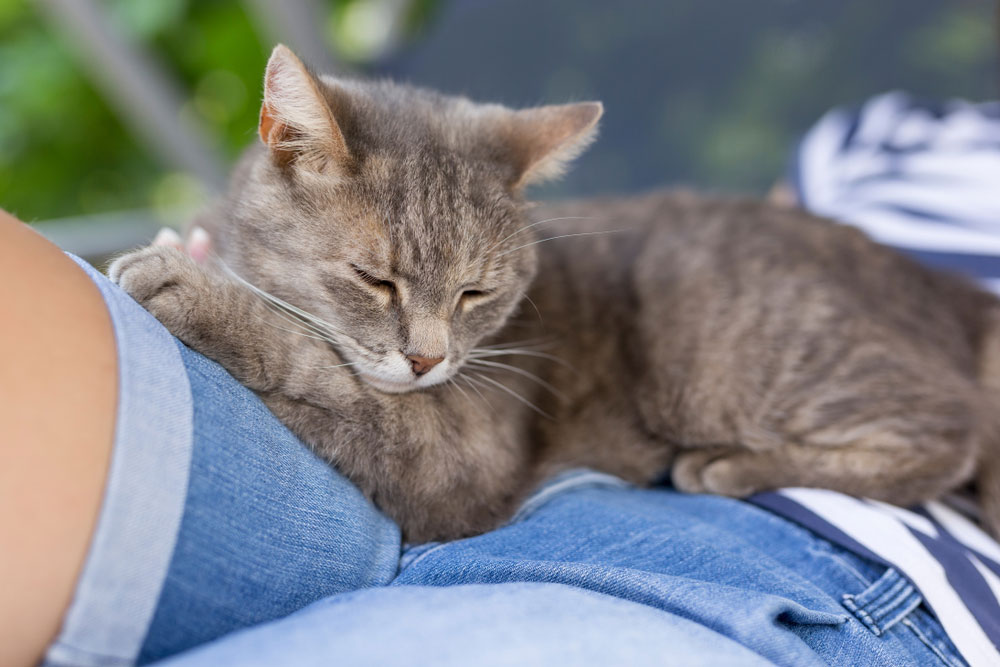
Why do cats lay on you is one of the most common questions cat owners ask — and the answer is far more meaningful than most people realize.
Your cat is not simply looking for a soft surface. Every time your feline friend curls up on your chest, lap, or legs, they are sending a clear message about trust, comfort, and affection. Cats are intentional creatures, and their sleeping choices reveal a lot about how they feel.
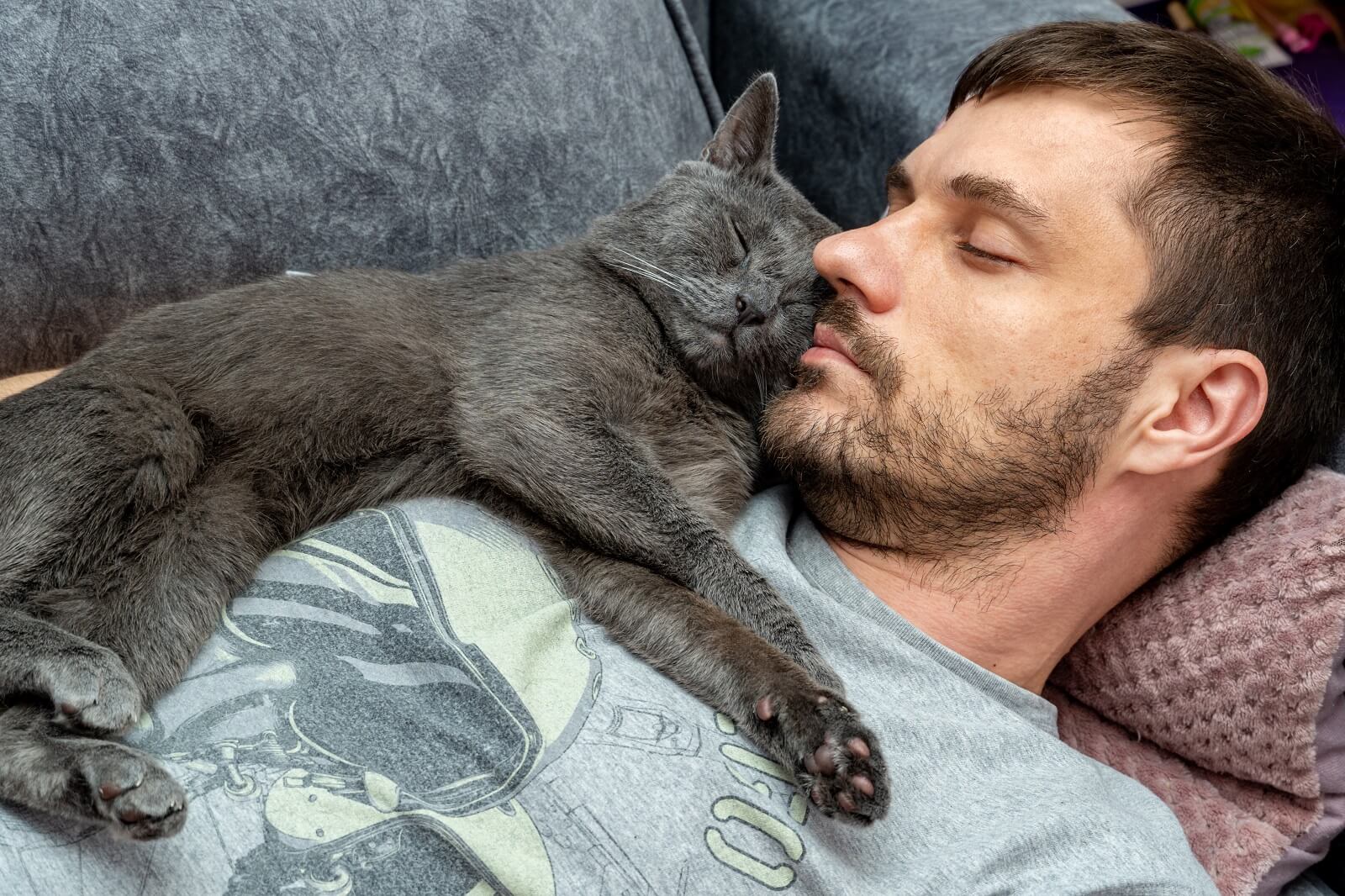
Cats sleep between 12 and 18 hours every day — and some can sleep up to 20 hours in a 24-hour period. With that much sleeping to do, their choice of location matters.
When a cat chooses to lay on a person rather than a cozy bed, a warm blanket, or a sunny windowsill, it is making a deliberate decision. That choice is driven by a mix of instinct, emotion, and biological need.
Understanding why cats lay on you starts with understanding how cats experience the world — through scent, warmth, sound, and safety.
Cats run at a naturally higher body temperature than humans — around 101 to 102 degrees Fahrenheit according to PetMD. Maintaining that warmth requires energy, so cats constantly seek out external heat sources.
Your body provides a reliable and steady source of warmth. This is why cats also gravitate toward laptops, radiators, sunny windowsills, and piles of laundry fresh from the dryer.
When your cat lays on you, they are efficiently conserving their own body heat by borrowing yours. It is practical biology dressed up as adorable behavior.
Sleep is the most vulnerable state any animal can be in. In the wild, a sleeping animal is exposed to predators with no defense. Cats know this instinctively, even fully domesticated ones.
When your cat chooses to sleep on you, they are declaring that you are the safest place in their world. This is a significant statement from a creature hardwired for self-preservation.
Dr. Zay Satchu, Chief Veterinary Officer at Bond Vet in NYC, confirms this: being around their humans allows cats to rest easier knowing there is safety there.
Cats do not show love the way dogs do — with loud excitement and obvious enthusiasm. Cat affection is quieter, more deliberate, and deeply meaningful.
Choosing to lay on you is one of the clearest signs a cat can give that they love you. It is their version of a hug. They want to be close to you, breathe your scent, and feel your presence.
Some breeds like Ragdolls, Burmese, and Maine Coons are especially prone to this behavior because they are naturally more affectionate and people-oriented.
Cats are territorial animals. They mark what belongs to them using scent glands located in their cheeks, paws, and face. When your cat lays on you, they are transferring their pheromones onto you.
This is a territorial claim — but in the warmest possible sense. Your cat is saying that you belong to them, and they belong to you.
PetMD points out that sleeping on you is actually an ownership statement from your cat. You should feel flattered.
A study referenced by K&H Pet Products found that cats are emotionally attached to their owners in ways that mirror how babies attach to their parents. Kittens showed distress when owners left and calm when they returned.
Your cat sees you as a secure base. When they feel anxious — due to a new pet, a change in routine, loud noises, or an unfamiliar environment — they return to you for grounding.
Laying on you literally reduces their stress. Your presence has a measurable calming effect on your cat’s nervous system.
This is one of the most touching reasons why cats lay on your chest specifically. The rhythmic sound of your heartbeat is deeply familiar to them.
Kittens spend their earliest weeks pressed against their mother, surrounded by the sound and rhythm of her heartbeat. That sound becomes permanently associated with safety, warmth, and comfort.
When your cat lays on your chest, your heartbeat reactivates those early memories. It works like a biological lullaby that calms their nervous system.
Kittens are born into litters and spend their first 12 weeks sleeping in a pile with their siblings and mother. This physical contact during their peak socialization period shapes their behavior for life.
Dr. Zay Satchu explains that this early experience of piling together translates into a lifelong preference for sleeping near or on trusted companions.
If you are the only “companion” in the house, your cat transfers that social sleeping instinct directly onto you. You have become their litter.
Cats are often alone during the day while their owners are at work. When you come home and settle down, your cat sees an opportunity to reconnect and make up for lost time.
Laying on you while you watch TV, read, or sleep is an efficient way to be near you without interrupting what you are doing. It is companionship that requires nothing from you — just your presence.
Cats have even been known to adjust their sleep schedules to match their owner’s routines, maximizing the time they can spend in physical contact.
Sometimes the answer is less emotional and more practical. Your body is warm, soft, slightly raised, and rises and falls with a soothing rhythm. That is a better sleeping surface than most cat beds.
Cat behaviorist Dr. Marci Koski of Feline Behavior Solutions puts it plainly — a cat bed cannot compete with a warm human body that also smells like their favorite person.
This is why even the most expensive and well-designed cat bed sometimes goes unused the moment you sit down on the couch.
This one surprises many cat owners. Some evidence and animal behavior experts suggest that cats are aware when their humans are stressed, sad, or unwell — and may lay on them deliberately as a form of comfort.
The vibration frequency of a cat’s purr (between 25 and 150 Hz) has been linked in some research to promoting bone healing, reducing stress hormones, and lowering blood pressure.
Your cat may not understand the details of your bad day — but they sense your energy and respond to it by staying close and purring.
Where your cat chooses to lay on you adds another layer of meaning. Each location communicates something slightly different about what they are seeking.
| Body Part | What It Means |
|---|---|
| Chest | Deep affection, drawn to heartbeat and warmth, strong bond |
| Lap | Seeking closeness and comfort, classic bonding position |
| Head / Pillow | Attracted to scent and heat, strong trust, scent-marking |
| Feet / Ankles | Staying close while respecting space, easy escape route |
| Between Legs | Nesting for warmth, secure enclosed space |
| Back / Shoulders | Protective instinct, treating you as safe territory |
Your chest is one of the warmest parts of your body. It also produces the steady rhythmic sounds of your heartbeat and breathing.
Cats who regularly choose your chest are expressing one of the deepest forms of feline attachment. It mirrors the physical closeness they had with their mother during kittenhood.
The lap is the most classic and common position. Your legs create a soft, slightly enclosed, warm space that feels sheltered and secure.
This is a bonding position above all else. Your cat is choosing to be physically close while benefiting from warmth and the reassurance of your presence.
Your head releases more consistent heat than most of your body. It is also largely stationary during sleep, making it a stable resting spot.
Cats are also strongly attracted to human scent — your hair and scalp carry your most concentrated personal smell. Sleeping near your head keeps your scent front and center, which is deeply comforting to them.
The space between your legs creates a natural nest — warm, enclosed on both sides, and slightly sheltered. It offers security without full exposure.
Behavior experts note that cats who sleep between legs are balancing two priorities: closeness to you and access to a quick escape route if needed.
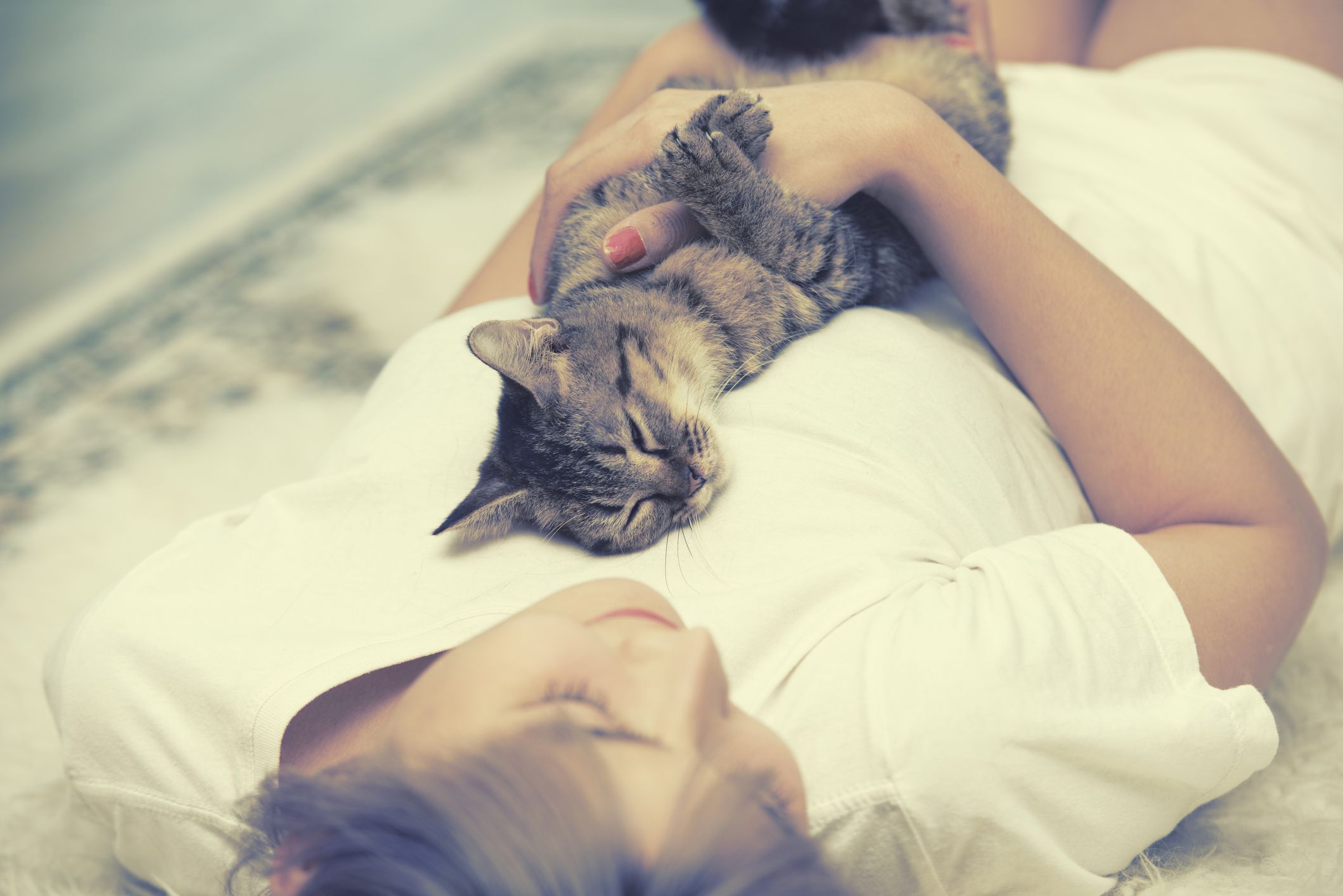
If you have multiple people in your household, you may notice your cat consistently chooses one specific person. There are real reasons for this preference.
| Reason | Explanation |
|---|---|
| Calm energy | Cats are drawn to people with quieter, less excitable energy |
| Familiar scent | They bond with the person whose smell is most comforting to them |
| Feeding and care | They often favor the person who feeds and cares for them daily |
| Routine | They gravitate to whoever has the most predictable, calm schedule |
| Voice tone | Softer, lower voices are more calming to cats than high-pitched ones |
If your cat always chooses you, it is a genuine compliment. You represent safety, comfort, and love in their world.
How your cat arranges their body while laying on you also carries meaning beyond just physical comfort.
| Position | What It Signals |
|---|---|
| Curled into a ball | Conserving warmth, feeling secure, light sleep mode |
| Stretched out flat | Completely relaxed, deep trust, comfortable environment |
| Loaf position (paws tucked) | Resting but alert, content but watchful |
| Belly exposed | Maximum trust — exposing vulnerable belly signals total safety |
| Head tucked under paw | Deep sleep, very comfortable, not expecting disturbance |
A cat sleeping with their belly fully exposed on you is one of the highest trust signals a cat can give. The belly is the most vulnerable part of their body, and exposing it means they feel completely safe.
When your cat lays on you, they are communicating several things at once. Reading these signals correctly helps you understand your cat’s emotional state.
A cat that regularly lays on you is a cat that feels secure in their environment. This behavior signals that your home is a calm, safe, and comfortable space.
If your cat suddenly stops doing this, it can indicate stress, illness, or environmental change worth investigating.
Cats do not share sleep space with strangers. In the wild, sleeping together is reserved for trusted family members within the same social group.
When your cat lays on you, they are categorizing you as family — someone they belong with, not just someone who provides food.
A cat who lays on you and purrs is the textbook definition of a happy, relaxed cat. Purring combined with physical closeness is one of the clearest signs of feline contentment available.
If your cat is also slow-blinking at you while laying on you, that is an additional affection signal — the feline equivalent of a kiss.
Allowing your cat to lay on you is not just good for them. There are documented benefits for you too.
| Benefit | What Research Shows |
|---|---|
| Stress reduction | Interaction with cats lowers cortisol (the stress hormone) |
| Lower blood pressure | Cat ownership linked to reduced cardiovascular risk |
| Better sleep quality | Many owners report feeling more relaxed with a cat nearby |
| Reduced loneliness | Physical presence of a cat provides genuine companionship |
| Mood improvement | Cat purring and contact increases serotonin levels |
The cat purr frequency — between 25 and 150 Hz — falls within a range associated with therapeutic benefits including reduced anxiety, lower blood pressure, and even accelerated healing in some animal studies.
Most of the time, a cat laying on you is entirely normal and positive. There are a few situations, however, where it is worth paying attention.
If your cat has never been a lap cat and suddenly becomes very clingy and always wants to lay on you, this can signal stress, anxiety, or a health issue.
A visit to the vet is worthwhile if clinginess appears suddenly alongside other changes like decreased appetite, lethargy, or unusual vocalization.
Some cats develop separation anxiety and need constant physical contact. While sweet in small doses, excessive clinginess that causes your cat distress when you move can be a sign of anxiety worth addressing.
Gradual desensitization, enrichment activities, and in some cases behavioral support from a vet can help.
Outdoor cats or cats who use a litter box can track bacteria, parasites, and allergens onto bedding. If your cat sleeps on your face or head, this is worth considering hygienically.
Regular grooming, clean paws, and up-to-date parasite prevention keep this risk minimal.
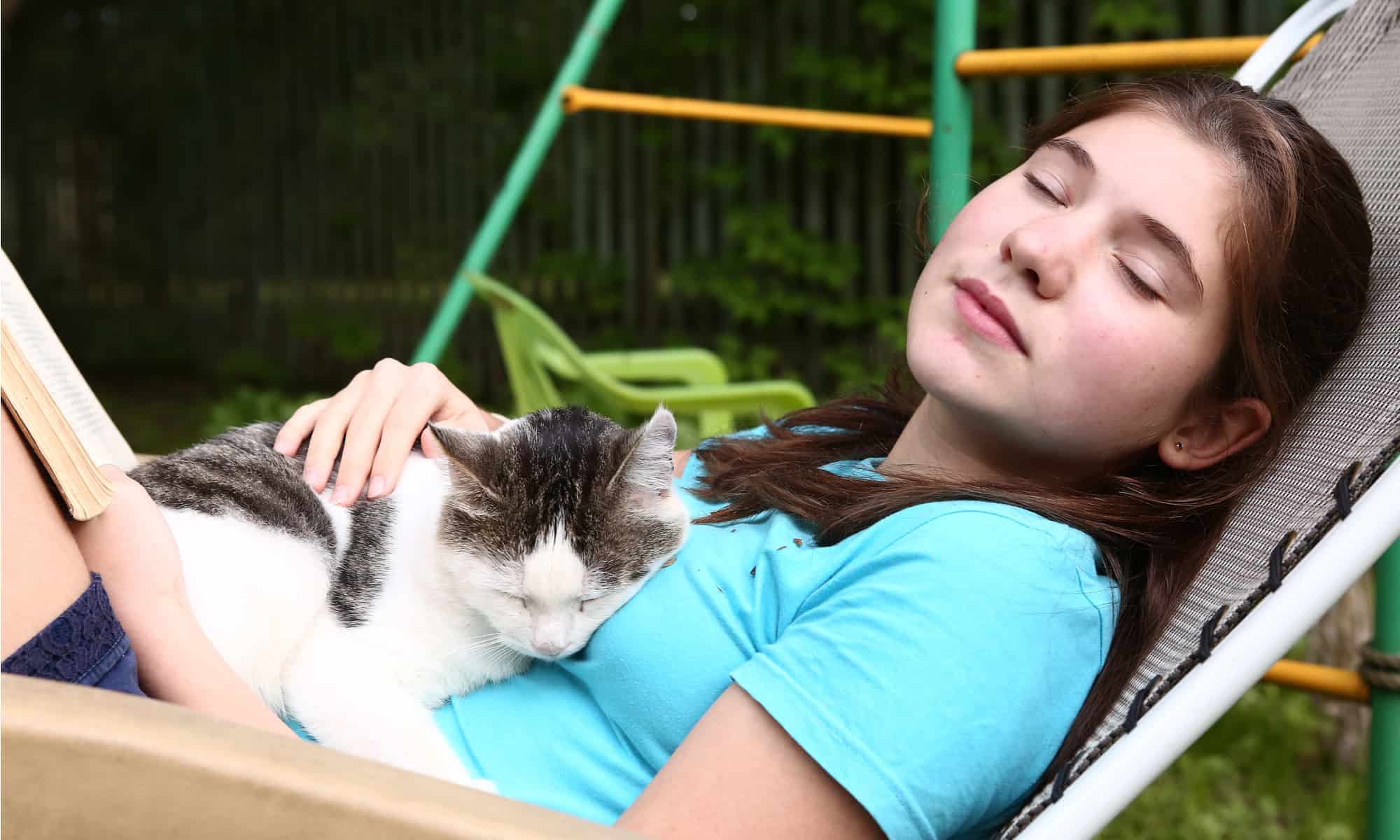
If your cat is not naturally inclined to lay on you but you would love more snuggle time, there are gentle ways to invite this behavior.
Move slowly and avoid sudden gestures when your cat is near you. Cats feel safer approaching a calm, still person.
Let your cat initiate contact. Reaching out to grab them tends to push them away. Staying still and available often invites them toward you on their own terms.
Use a soft blanket on your lap. The extra warmth and comfort layers make your lap even more appealing than usual.
Avoid disrupting them once they settle. Getting up frequently or moving abruptly teaches your cat that your lap is not a reliable resting place.
If you love the daytime snuggles but need undisturbed sleep, there are effective strategies for managing nighttime behavior.
| Strategy | How It Helps |
|---|---|
| Provide a heated cat bed | Mimics your body warmth, highly attractive to cats |
| Place bed near yours | Keeps them close without being on you |
| Use your worn clothing | Your scent in their bed makes it feel familiar and safe |
| Establish a pre-sleep routine | Feeding, play, and then settle teaches a wind-down pattern |
| Keep bedroom door closed | The most direct solution, though some cats protest loudly |
The most effective approach is making their alternative sleeping spot as appealing as possible rather than simply removing access to you. A heated cat bed placed right next to yours often satisfies both needs.
No — and that is completely normal. Not all cats are lap cats or snuggle cats, and this says nothing negative about your bond with them.
Cat personality varies enormously by individual, breed, early socialization, and life history. A cat that expresses affection through following you from room to room, slow blinking, head bumping, or simply sitting near you is being just as loving — in their own way.
Cats that were not handled much as kittens during their socialization window (roughly 2 to 7 weeks) may be less comfortable with physical contact throughout their lives.
| Cat Type | How They Show Affection |
|---|---|
| Lap cat | Loves physical contact, lays on or near you constantly |
| Shadow cat | Follows everywhere but rarely sits on you |
| Near cat | Stays in the same room, sits nearby but not touching |
| Independent cat | Affectionate on their terms, brief and intentional contact |
All of these are valid expressions of cat love. The independent cat choosing to sit next to you for five minutes is offering just as much as a lap cat offering three hours — proportionally.
Some breeds are genetically predisposed to being more people-oriented and physically affectionate than others.
| Breed | Affection Level |
|---|---|
| Ragdoll | Very high — goes limp in arms, loves being held |
| Burmese | Very high — dog-like attachment, constant companionship |
| Maine Coon | High — sociable, enjoys physical closeness |
| Sphynx | Very high — seeks warmth actively due to lack of fur |
| Scottish Fold | High — calm, gentle, loves lap time |
| Siamese | High — vocal and deeply bonded to their person |
| Norwegian Forest Cat | Moderate — affectionate but more independent |
Sphynx cats in particular are especially likely to lay on you because their lack of fur means they need external warmth constantly.
Cats favor the person with the calmest energy, most familiar scent, and most consistent care routine. Your cat has identified you as their safest and most comforting presence.
Yes, it is one of the clearest signs of trust and affection a cat can give. It means they feel completely safe and emotionally secure in your presence.
Your chest offers warmth, your heartbeat’s rhythm, and the rise and fall of your breathing — all of which recreate the sensory comfort your cat experienced as a kitten with their mother.
A sudden increase in clinginess can signal stress, environmental change, illness, or anxiety. If it appears alongside other behavioral shifts, a vet check is recommended.
Purring while laying on you is a double signal of contentment and relaxation. Your cat feels safe, warm, and happy. It is the highest compliment in the feline emotional vocabulary.
Your face is warm, relatively still, and carries the strongest concentration of your personal scent. Your cat finds all three of these qualities extremely comforting and appealing.
Cats are highly sensitive to changes in their owner’s body temperature, energy, and scent. Many owners report their cats becoming more attentive and physically close when they are unwell.
Kneading combined with laying on you is a sign of deep comfort and contentment. Kneading is a behavior carried from kittenhood — cats knead their mother to stimulate milk — and it signals that your cat feels completely at ease and safe.
It is a personal choice. For most healthy adults it is fine and even beneficial. Consider hygiene, sleep quality, and allergies. If your cat sleeps outdoors, ensure they are up to date on parasite prevention.
This is called petting-induced aggression. Your cat reached their stimulation threshold while being touched and reacted. Watch for pre-bite signals like tail flicking, skin rippling, or ear flattening — and give them space before it escalates.
Why do cats lay on you comes down to one core truth — your cat has chosen you. Every time they settle on your chest, curl into your lap, or nestle between your legs, they are expressing trust, love, security, and a desire for closeness that runs deep in their instincts.
Your body heat, your scent, your heartbeat, and your calm presence combine to make you the most appealing resting spot in their world.
This behavior is one of the most meaningful things a cat can do, and understanding the reasons behind it only deepens the bond between you. Cherish those quiet moments when your cat lays on you — because in feline language, there is no clearer way of saying you are home.