
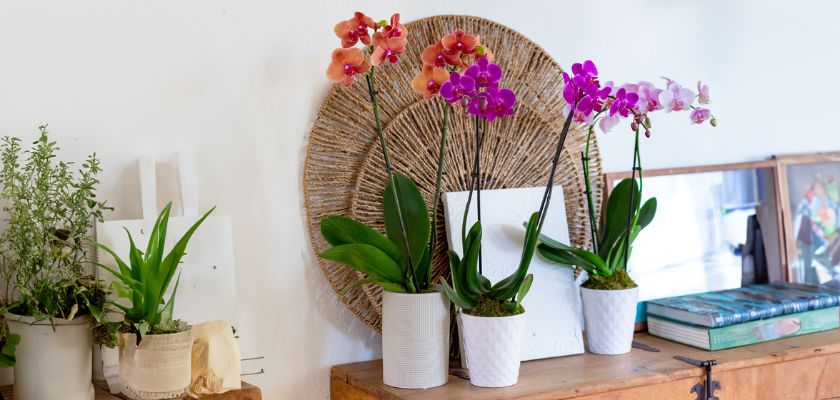
Orchids have quietly become one of the most gifted indoor plants in the world. They travel well, hold their display for weeks rather than days, and carry a formality that cut flower bouquets rarely match. In the Gulf, and in Dubai in particular, orchids have become the default premium plant gift for corporate openings, hotel guest rooms, and residential entertaining. For consumers approaching the category, the useful grounding is why orchids perform well in hot climates, which varieties actually suit indoor conditions, and how to evaluate a supplier.
Cut flower bouquets have a display window of roughly five to ten days depending on climate and handling. A flowering orchid plant in a pot typically holds its bloom for four to eight weeks, and the plant itself lives for years with basic care. For gifting contexts where the recipient opens the package after a delay, or for corporate settings where longevity matters more than visual drama, orchids are the more practical choice.
Consumer-facing orchid retail concentrates on a small number of varieties that tolerate indoor conditions:
Phalaenopsis accounts for the large majority of retail sales in most international markets because its light and humidity tolerance suits typical indoor conditions, including the climate-controlled environments common across the Gulf.
Dubai averages 30 to 45 degrees Celsius outdoors across much of the year, with indoor environments held in the low 20s by mechanical cooling. This combination is well suited to Phalaenopsis, which prefers stable indoor temperatures and does not tolerate sustained outdoor heat. The last-mile logistics challenge for orchid delivery in Dubai is the brief exposure during transit. An operator using conditioned vehicles during the summer months delivers plants in significantly better condition than one relying on open-bed transport.
A practical checklist helps separate a plant that will last months from one that fades within a fortnight:
Basic care instructions worth following after a plant arrives:
For a consumer choosing a supplier, the useful filters are similar to the cut flower market but with some category-specific differences. A specialist supplier that offers a curated orchid plants Dubai collection with a clear naming convention for varieties, transparent pricing on pot size and spike count, and care instructions included with the plant is more likely to deliver stock that has been acclimatised at retail rather than shipped directly from wholesale. Specialist suppliers in this category tend to hold stock longer at the correct conditions, which affects how long the plant blooms for the buyer.
Typical bloom duration is six to twelve weeks depending on variety, temperature, and handling before purchase. A plant purchased with mostly unopened buds will bloom longer than one with every flower already open.
Phalaenopsis, Dendrobium, and Cymbidium are generally non-toxic to cats and dogs, which is why orchids are commonly recommended for households with pets.
Every two to three years, or when the potting medium breaks down and stays consistently wet. Spring, after blooming, is the typical repotting window.
Phalaenopsis can survive in moderate indirect light but will rarely rebloom without exposure to several hours of bright indirect light per day. Supplemental grow lighting is an option for darker interiors.
Orchids reward consumers who approach the category as a long-term plant purchase rather than a short-term floral display. Choosing a variety suited to indoor conditions, buying from a supplier that has acclimatised the stock, and following basic care routines turns a gifted plant into something the recipient keeps for years rather than discards after a fortnight.