
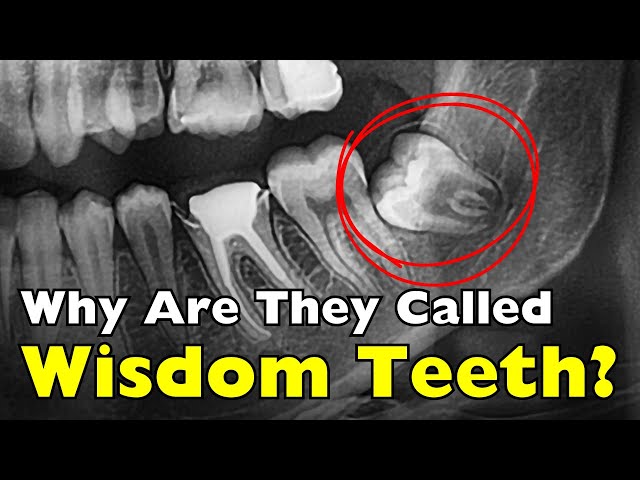
Why are they called wisdom teeth? It is one of the most searched dental questions online, and the answer goes back thousands of years.
Wisdom teeth, formally known as third molars, got their name not from intelligence but from the age at which they appear. They usually erupt between 17 and 25, a time historically linked to growing maturity.
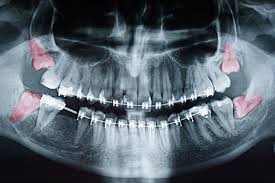
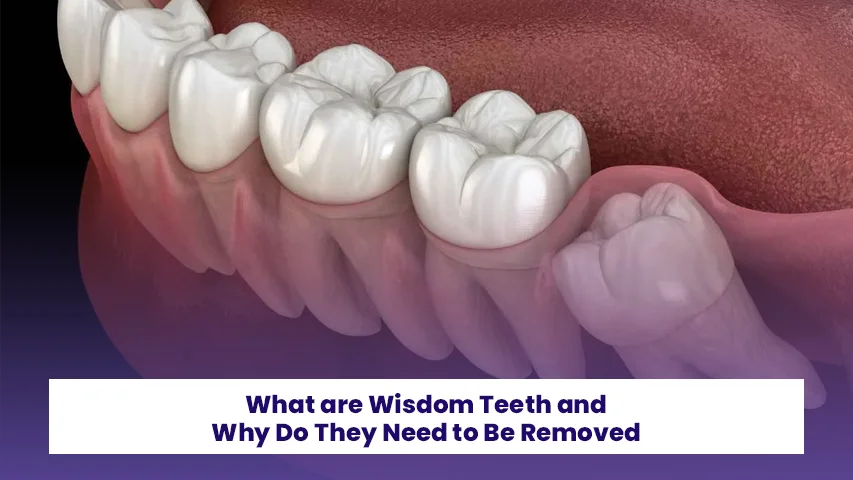
Wisdom teeth are the third and final set of molars in the human mouth.
They sit at the very back of both the upper and lower jaws. Most people develop four of them, one in each corner of the mouth.
Unlike other permanent teeth that arrive during childhood, wisdom teeth erupt much later in life. This delayed eruption is the key reason behind their famous name.
Wisdom teeth are called wisdom teeth because they appear during the so-called “age of wisdom.”
When these molars erupt, a person is typically between 17 and 25 years old. Historically, this age range was considered the beginning of adulthood and, by extension, the acquisition of wisdom and maturity.
The name has nothing to do with intelligence. A person with four perfectly erupted wisdom teeth is no smarter than someone without any.
The term “wisdom teeth” has very deep linguistic roots.
The ancient Greek physician Hippocrates referred to them as odóntes sophías, which directly translates to “teeth of wisdom.” This is one of the earliest documented uses of the concept.
The Latin equivalent is dens sapientiae, which also means “tooth of wisdom.” These Latin and Greek expressions were eventually adopted into Old English and evolved into the modern term we use today.
Aristotle also wrote about these teeth in his fourth-century BC work, History of Animals. He described them as “the last teeth to come in man,” noting they appear around age twenty in both sexes.
The term “wisdom teeth” as used in modern English is believed to have become widespread during the 19th century, though the concept existed in ancient times.
During the Industrial Revolution of the 1700s–1800s, processed foods became common. Molar impaction rates rose sharply, and wisdom teeth became a frequent topic in medicine and dentistry.
It was around this period that the modern dental profession inherited the ancient name and standardized it across English-speaking countries.
One of the most fascinating aspects of wisdom teeth is how many cultures independently developed similar name concepts.
| Language | Term | Translation |
|---|---|---|
| English | Wisdom teeth | Age of wisdom |
| French | Dents de sagesse | Teeth of wisdom |
| German | Weisheitszähne | Wisdom teeth |
| Spanish | Muelas del juicio | Molars of judgment |
| Latin | Dens sapientiae | Tooth of wisdom |
| Greek | Odóntes sophías | Teeth of wisdom |
The Spanish version, muelas del juicio (molars of judgment), is particularly interesting. It links the teeth not just to wisdom but to moral judgment and adult decision-making.
This cross-cultural consistency suggests that humans across very different societies all noticed the same pattern: these teeth arrive when life becomes more serious.
To fully understand why we have wisdom teeth at all, you need to look at prehistoric human biology.
Around 500 million years ago, early human ancestors ate a very rough diet. Raw meat, hard nuts, coarse seeds, and tough plant roots were staples.
This diet required powerful grinding capability. The third molars, positioned deep in the jaw, provided exactly that — extra surface area for grinding hard, fibrous food.
Early humans also had much wider jawbones than modern humans. There was enough room for all three sets of molars to erupt without crowding.
As humans developed cooking and food processing techniques, the need for extra grinding power gradually declined.
Softer food meant less mechanical stress on the jaw muscles. Over tens of thousands of years, the human jaw began to shrink in size.
The brain, however, was growing larger during the same period. Scientists theorize that as brain size increased, skull structure shifted, reducing the space available in the jaw.
The third molars never stopped growing to match. The result is the mismatch we deal with today: teeth that evolved for a larger jaw trying to fit into a much smaller one.
Wisdom teeth do not follow a single fixed schedule.
The tooth germs, or early tooth buds, form between ages 7 and 10. The teeth then develop slowly over years before finally breaking through the gums.
| Stage | Typical Age Range |
|---|---|
| Tooth germ formation | Ages 7–10 |
| Crown development | Ages 10–16 |
| Root development | Ages 16–25 |
| Full eruption (if it happens) | Ages 17–25 |
| Root completion | Around age 25 |
Some people see wisdom teeth as early as 15. Others do not feel them until their late 20s. A small percentage never develop them at all.
Scientists note that around age 25, the human brain also finishes its full development. This biological alignment between brain maturity and third molar completion is one reason the “wisdom” metaphor has felt so fitting for centuries.
About 35% of people are born without one or more wisdom teeth.
This is not a disorder or deficiency. It is considered an evolutionary trend. Researchers have linked the absence of wisdom teeth to mutations in genes PAX9 and MSX1.
Populations vary significantly in wisdom tooth prevalence:
| Population | Agenesis Rate (missing at least one) |
|---|---|
| Asian populations | 10%–41% |
| Singaporean Chinese | ~14% |
| Mexican populations | ~20% |
| Indigenous Mexican groups | Near 100% eruption |
| Tasmanian Aboriginals (historical) | Near 100% eruption |
African Americans also tend to have higher rates of erupted third molars compared to European Americans.
For most modern people, wisdom teeth cause problems rather than solve them.
Because the human jaw has shrunk over evolutionary time, there is often not enough room for the third molars to erupt in a healthy, functional position.
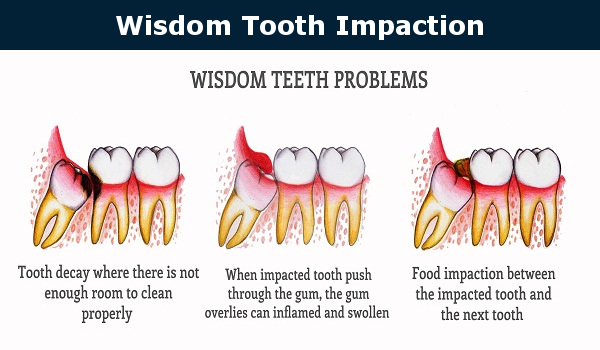
When they cannot erupt correctly, the following problems develop:
Impaction — The tooth gets stuck beneath the gum or jawbone, unable to fully emerge.
Crowding — The erupting molar pushes against neighboring teeth, shifting them out of alignment.
Infection (Pericoronitis) — A flap of gum tissue over a partially erupted tooth traps bacteria and food. This causes painful inflammation and infection.
Cyst Formation — In rare cases, the sac around the developing tooth fills with fluid. These cysts can expand and damage surrounding jawbone and nerves.
Decay — Because wisdom teeth sit so far back, they are difficult to brush and floss properly, making them prone to cavities.
Damage to Second Molars — A poorly angled wisdom tooth can press against the root of the adjacent second molar, causing decay or resorption.
Impaction is far more common than most people realize.
According to the American Association of Oral and Maxillofacial Surgeons, approximately 90% of people have at least one impacted wisdom tooth by age 25.
About 37% of individuals globally have at least one clinically impacted wisdom tooth. Research shows that roughly 85% of impacted wisdom teeth are positioned in one of these angulations: horizontal, vertical, or mesioangular.
Mesioangular impaction, where the tooth tilts toward the front of the mouth, accounts for approximately 44% of all impaction cases.
Wisdom tooth extraction is one of the most performed surgical procedures in the world.
In the United States alone, approximately 5 million Americans undergo the procedure every year. Internationally, around 10 million wisdom teeth are removed annually.
The procedure is most commonly performed between ages 17 and 25. By age 25, about 50% of privately insured young adults have had at least one wisdom tooth removed. By age 60, that figure rises to around 70%.
Americans spend an estimated $3 billion per year on wisdom tooth removal. Oral surgeons perform approximately 60% of all wisdom tooth extractions.
The average surgical time to remove all four wisdom teeth is 45 to 60 minutes once the patient is anesthetized.
If you check out dental implants in Chesapeake VA, they’ll also tell you that following the procedure, a brief recovery period of three to five days is typical for managing initial swelling and discomfort. Following clinical aftercare guidelines diligently during this time minimizes the risk of complications like dry sockets, allowing for a smooth and efficient return to routine activities.
Not necessarily. Modern dental guidelines have shifted toward a more individualized, evidence-based approach.
The current Cochrane review concluded that evidence does not justify routine removal of disease-free, asymptomatic impacted wisdom teeth.
Dentists now recommend removal when:
If wisdom teeth erupt straight, are fully accessible for cleaning, and do not crowd other teeth, many dentists recommend monitoring them rather than automatic extraction.
Some people keep their wisdom teeth for life without problems.
If your third molars erupted in a healthy position, are easy to clean, and are not causing crowding, they can be retained safely with regular dental monitoring.
Your dentist will typically check wisdom tooth development from around age 17 onward and use X-rays to assess positioning every few years.
Periodontal pocketing greater than 5mm is found in about 25% of patients with asymptomatic wisdom teeth, which is why even “quiet” wisdom teeth need watching.
Different cultures have historically interpreted the arrival of wisdom teeth in meaningful ways.
In traditional Chinese medicine, the eruption of wisdom teeth was seen as a critical life transition, marking the passage into full adult responsibility.
In various Native American traditions, wisdom teeth emerging was linked to personal and spiritual growth.
The consistency across ancient Greek, Roman, Chinese, and Indigenous American interpretations suggests that humans universally recognized this late eruption as a biological signal of growing up.
Some wisdom teeth facts that are rarely discussed:
Wisdom teeth contain stem cells that researchers have explored for potential use in treating other medical conditions.
The oldest documented case of an impacted wisdom tooth was found in a skeleton dating back to around 13,000 BC in what is now Western Europe.
Since the Industrial Revolution, wisdom teeth impaction rates have increased approximately tenfold, linked directly to the shift toward softer, processed foods.
Women tend to have their wisdom teeth erupt slightly earlier than men, typically between ages 17 and 20.
Rarely, a person can develop more than four wisdom teeth. These extras are called supernumerary teeth.
| Fact | Detail |
|---|---|
| Official name | Third molars |
| Typical eruption age | 17–25 years |
| Number in most people | 4 (one per quadrant) |
| People born without at least one | ~35% |
| Global impaction rate | ~37% |
| Annual US extractions | ~5 million patients |
| Annual global extractions | ~10 million teeth |
| Oldest documented impaction | ~13,000 BC |
| Cost per tooth (US average) | $300–$800 |
| Recovery time after removal | 3–7 days |
They are called wisdom teeth because they erupt between ages 17 and 25, a time historically associated with maturity and wisdom. The name comes from the Latin dens sapientiae and Greek odóntes sophías, both meaning “tooth of wisdom.”
No. There is no scientific link between wisdom teeth and intelligence. The name is based entirely on the age at which they appear, not any biological effect on the brain.
Wisdom teeth typically erupt between ages 17 and 25. Some people experience them as early as 15, while others may not until their late 20s.
Modern human jaws are smaller than those of our ancestors due to dietary and evolutionary changes, but our tooth count has remained the same. This mismatch means there is often not enough room for third molars to erupt properly.
No. Once wisdom teeth are removed, they do not grow back. In extremely rare cases, a person may have supernumerary (extra) wisdom teeth that had not yet formed at the time of surgery.
Yes. About 35% of people are born without one or more wisdom teeth. Researchers link this to genetic mutations in PAX9 and MSX1 genes, and it is considered an ongoing evolutionary trend.
An impacted wisdom tooth is one that cannot fully erupt because it is blocked by the jawbone, gum tissue, or adjacent teeth. It may grow at an angle, remain partially submerged, or stay completely buried under bone.
No. If wisdom teeth erupt straight, are fully erupted, and are cleanable, many dentists recommend monitoring rather than removal. Extraction is advised when pain, infection, crowding, or damage to nearby teeth occurs.
Recovery typically takes 3 to 7 days. Most patients manage discomfort with over-the-counter pain relievers, soft foods, and rest. Dry socket, which occurs in about 2 to 5% of cases, is the most common post-operative complication.
In French: dents de sagesse (teeth of wisdom). In German: Weisheitszähne (wisdom teeth). In Spanish: muelas del juicio (molars of judgment). In Latin: dens sapientiae (tooth of wisdom). In Greek: odóntes sophías (teeth of wisdom).
Why are they called wisdom teeth? The answer lies in history, language, and human biology.
These third molars earned their name because they arrive at a time of life — between 17 and 25 — that ancient civilizations across Greece, Rome, China, and the Americas all associated with growing maturity and judgment. The Latin dens sapientiae, the Greek odóntes sophías, and the modern English “wisdom teeth” all tell the same story: these are the teeth of adulthood.
Today, wisdom teeth are largely vestigial. Our smaller modern jaws often cannot accommodate them, and they frequently become impacted, infected, or crowded.
About 5 million Americans have them removed every year. Yet they remain a fascinating chapter in human evolutionary history — a dental echo of a time when our ancestors had wider jaws and rougher diets.
If you are wondering about your own wisdom teeth, the best step is a dental X-ray and a conversation with your dentist. Whether you keep them or have them removed, understanding where they come from — and why they have the name they do — makes the whole experience a little wiser.