
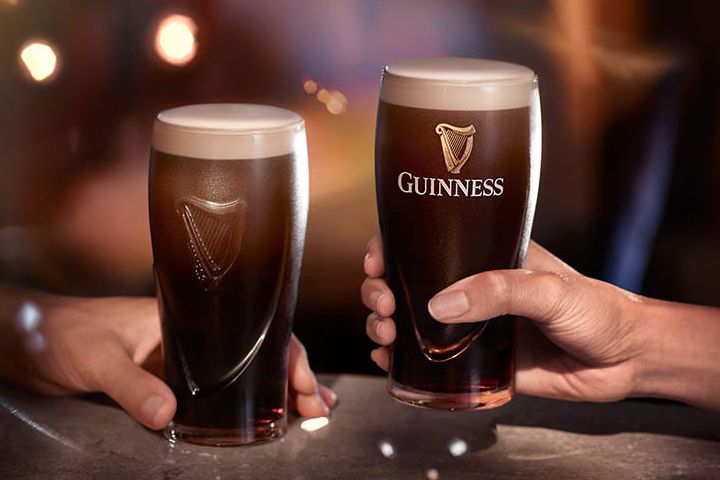
Guinness 0.0 calories is one of the most searched beer nutrition questions in 2026 — and the answer surprises almost everyone who asks it.
The “0.0” in the name refers to alcohol content, not calories. A standard 440ml can of Guinness 0.0 contains approximately 75 calories, a pint contains around 97 calories, and every 100ml delivers just 17 calories.
That is less than half the calorie count of regular Guinness Draught. Whether you are managing your weight, cutting back on alcohol, observing Dry January, or just curious about what is in your glass.
Guinness 0.0 is the official non-alcoholic version of the world-famous Irish dry stout brewed at St. James’s Gate Brewery in Dublin, Ireland.
The name Guinness 0.0 refers to the alcohol content — 0.0% ABV — not the calorie count. It was developed over four years by the Guinness brewing team and first launched in 2020 before being recalled for quality improvements.
It was successfully relaunched in 2021–2022 and has since become one of the best-selling non-alcoholic beers in the UK, Ireland, and the United States. It is brewed using the same water, malted barley, roasted barley, hops, and yeast as regular Guinness.
The dramatic calorie reduction in Guinness 0.0 compared to regular Guinness comes down to one ingredient: alcohol.
Alcohol contains 7 calories per gram — almost as calorie-dense as fat, which provides 9 calories per gram. Carbohydrates and protein each contain just 4 calories per gram by comparison.
In a standard pint of Guinness Draught at 4.2% ABV, the majority of calories come from the alcohol itself. When the cold filtration process removes the alcohol from Guinness 0.0, those 7-calories-per-gram units are eliminated entirely — cutting the calorie count by more than half.
A standard 440ml can of Guinness 0.0 contains approximately 75 calories.
This figure is calculated using the official nutritional value of 17 kcal per 100ml multiplied by the 4.4 serving units in a standard UK can. The figure is consistent across all official Guinness labelling and is widely confirmed by independent nutritional reviews.
This makes Guinness 0.0 one of the lowest-calorie dark beers available in 2026. For context, a regular 440ml can of Guinness Draught contains approximately 160 calories — more than double the Guinness 0.0 calorie count.
A full UK pint of Guinness 0.0 (568ml) contains approximately 97 calories.
This is based on the official 17 kcal per 100ml figure multiplied by the 5.68 units in a standard pint glass. Some sources cite between 90 and 100 calories depending on pour accuracy and serving temperature, but 97 kcal is the most consistent estimate using official label data.
Choosing Guinness 0.0 over a regular pint of Guinness Draught saves you approximately 113 calories per pint. Across a typical evening of three pints, that is a saving of around 339 calories — equivalent to skipping a medium bag of crisps.
The Guinness 0.0 calorie count varies depending on which format and serving size you are consuming. Here is the complete breakdown.
Guinness 0.0 Calories by Serving Size
| Serving Size | Volume | Calories (kcal) |
|---|---|---|
| Per 100ml | 100ml | 17 |
| Standard UK Can | 440ml | 75 |
| US Can | 355ml (14.9 fl oz) | ~60–75 |
| Standard UK Pint | 568ml | 97 |
| Half Pint | 284ml | ~48 |
| US Pint (draught) | 473ml | ~80 |
This is why so much confusion exists around Guinness 0.0 calories. Different sources quote different numbers because they are referring to different serving sizes — not different products. The per-100ml figure of 17 kcal is the official baseline for all calculations.
Understanding Guinness 0.0 calories fully means looking at the complete nutritional profile, not just the calorie number in isolation.
Here is the complete nutrition breakdown per 100ml as listed on official Guinness 0.0 product labelling.
Guinness 0.0 Nutritional Profile Per 100ml
| Nutrient | Per 100ml |
|---|---|
| Energy | 17 kcal / 72 kJ |
| Carbohydrates | 3.8g |
| of which Sugars | 0.7g |
| Protein | ~0.4g |
| Fat | 0g |
| Saturated Fat | 0g |
| Sodium | Trace |
| Alcohol (ABV) | 0.05% maximum |
Guinness 0.0 is fat-free and very low in sugar. The protein content is minimal but present due to the barley used in brewing. The sodium content is negligible, and there are no artificial sweeteners or preservatives on the label.
One of the most-asked questions alongside Guinness 0.0 calories is about carbohydrate content — particularly from people following keto, low-carb, or diabetic-friendly diets.
Guinness 0.0 contains 3.8g of carbohydrates per 100ml. That equals approximately 16.7g of carbs in a 440ml can and around 21.6g of carbs per full pint.
Interestingly, this is slightly more carbs than regular Guinness Draught, which contains 2.7g per 100ml. The extra carbs come from fructose and natural flavourings added during the dealcoholisation process to restore the mouthfeel and sweetness that alcohol provides in the original brew.
For people following a strict ketogenic diet, Guinness 0.0 is not a zero-carb option and needs to be factored carefully into daily macros.
At 16.7g of carbs per 440ml can, one serving could take up a substantial portion of a strict keto carbohydrate allowance of 20–25g per day. However, for people following a moderate low-carb diet with a 50–100g daily carb limit, one can is unlikely to cause problems.
If you are on keto, Guinness 0.0 is better than regular Guinness from a calorie standpoint but it is not a freely available option. Portion awareness is key.
Sugar content is a concern for many people researching Guinness 0.0 calories — particularly those managing blood sugar, following low-sugar diets, or tracking macro intake closely.
Guinness 0.0 contains just 0.7g of sugar per 100ml. That works out to approximately 3g of sugar in a standard 440ml can — an extremely low figure by any standard.
For comparison, a regular 330ml can of Coca-Cola contains around 35g of sugar. Even a glass of orange juice contains 20–25g. Guinness 0.0’s sugar content is negligible in comparison and poses no meaningful concern for most drinkers.
The most useful way to understand Guinness 0.0 calories is to compare them directly with regular Guinness Draught across every standard serving size.
Guinness 0.0 vs Regular Guinness Draught — Calorie Comparison
| Serving | Guinness 0.0 Calories | Regular Guinness Calories | Calories Saved |
|---|---|---|---|
| Per 100ml | 17 kcal | 35 kcal | 18 kcal |
| 440ml Can | 75 kcal | 160 kcal | 85 kcal |
| Half Pint (284ml) | ~48 kcal | ~99 kcal | ~51 kcal |
| Full Pint (568ml) | 97 kcal | 210 kcal | 113 kcal |
| 3 Pints (evening) | ~291 kcal | ~630 kcal | ~339 kcal |
The data is clear. Guinness 0.0 calories are consistently less than half the calories of regular Guinness Draught at every serving size. Over an evening, switching to Guinness 0.0 can represent a saving of over 300 calories — a meaningful difference for anyone tracking their intake.
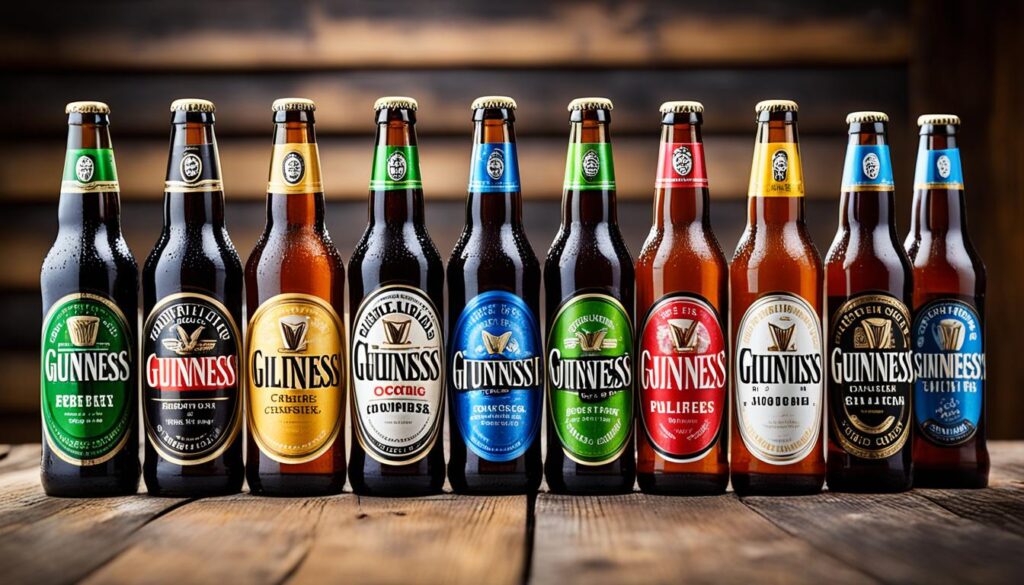
How does Guinness 0.0 compare to other popular non-alcoholic beers available in 2026?
Guinness 0.0 vs Other NA Beers — Calorie Comparison
| Beer | Calories per 100ml | Calories per Can (330–440ml) | ABV |
|---|---|---|---|
| Guinness 0.0 | 17 kcal | ~75 kcal (440ml) | 0.05% |
| Heineken 0.0 | 21 kcal | ~69 kcal (330ml) | 0.05% |
| Peroni Nastro 0.0% | 24 kcal | ~79 kcal (330ml) | 0.0% |
| Partake Brewing IPA | ~4.5 kcal | ~15 kcal (355ml) | 0.5% |
| Athletic Brewing Run Wild | 25 kcal | ~85 kcal (355ml) | 0.5% |
| Beck’s Blue | 14 kcal | ~46 kcal (330ml) | 0.05% |
| Lucky Saint | 53 kcal | ~175 kcal (330ml) | 0.5% |
Guinness 0.0 sits in a competitive middle ground. It is not the lowest-calorie NA beer on the market — Partake and Beck’s Blue are lower — but it delivers far superior taste, texture, and the iconic nitrogen pour experience that lighter NA beers simply cannot match.
Understanding the brewing process behind Guinness 0.0 helps explain both its calorie count and its remarkable similarity in taste to the original.
Guinness 0.0 is first brewed exactly like regular Guinness using the same barley, hops, yeast, and water at St. James’s Gate in Dublin. Once the fermentation is complete and regular Guinness has been produced, a cold filtration process is applied to remove the alcohol.
Cold filtration is chosen specifically because it protects the liquid from thermal stress that heat-based dealcoholisation methods would cause. Heat strips flavour as well as alcohol — cold filtration preserves the roasted barley character, coffee and chocolate notes, and the creamy body that define Guinness.
After filtration, small amounts of fructose and natural flavourings are added to restore the sweetness and mouthfeel that alcohol naturally provides. This is also why Guinness 0.0 contains slightly more carbs per 100ml than regular Guinness.
Yes, Guinness 0.0 is fully vegan. Guinness updated its brewing process in 2017 to remove isinglass (a fish-derived fining agent) from its filtration process, making all Guinness products including Guinness 0.0 vegan-friendly.
This was a significant change for the brand and opened Guinness up to a growing segment of plant-based consumers. Guinness 0.0 carries no animal-derived ingredients in its production.
Vegan drinkers can enjoy Guinness 0.0 without any concerns about animal-derived additives or processing agents.
No, Guinness 0.0 is not gluten-free. It is brewed using malted barley, which contains gluten. People with coeliac disease or serious gluten sensitivity should not consume Guinness 0.0.
For drinkers who are not coeliac but are simply watching their gluten intake for general wellness reasons, the gluten content of Guinness 0.0 is worth noting but may be tolerable in moderation.
People with medically diagnosed coeliac disease should seek out certified gluten-free non-alcoholic beer alternatives rather than relying on Guinness 0.0.
For people actively managing their weight, Guinness 0.0 calories offer a genuinely practical alternative to regular Guinness without requiring a complete shift away from the pub experience.
At 75 calories per can and 97 calories per pint, Guinness 0.0 fits comfortably within most daily calorie budgets. Replacing three regular pints of Guinness Draught with Guinness 0.0 over an evening saves approximately 339 calories — without sacrificing taste, social participation, or the ritual of enjoying a proper pint.
It is not a diet product and should not be treated as calorie-free. But as part of a balanced, calorie-aware lifestyle, Guinness 0.0 is one of the most sensible choices a beer drinker can make in 2026.
Athletes and fitness-focused consumers are among the fastest-growing segments of non-alcoholic beer drinkers in 2026, and Guinness 0.0 fits well into that lifestyle.
Regular alcohol impairs protein synthesis, disrupts sleep quality, raises cortisol levels, and slows post-training recovery. Guinness 0.0 removes every one of those drawbacks while preserving the social experience of sharing a pint after a training session, match, or race.
At under 100 calories per pint, Guinness 0.0 fits comfortably within post-training nutrition windows. It is not a recovery product in any clinical sense, but it is a far smarter choice than regular beer for people who care about physical performance and body composition.
The mindful drinking movement has grown substantially through the 2020s and shows no signs of slowing in 2026. More consumers are choosing to reduce or eliminate alcohol for reasons that extend beyond health — including mental clarity, fitness goals, improved sleep, and lifestyle balance.
Dry January, the growing sober-curious movement, and the broader cultural shift toward wellness-focused living have all contributed to the surge in searches for Guinness 0.0 calories and non-alcoholic beer nutrition facts.
Guinness 0.0 sits at the intersection of this trend perfectly. It allows people to participate fully in social occasions — the pub, a match day, a dinner — without consuming alcohol or significantly impacting their calorie intake.
Several widely repeated misconceptions about Guinness 0.0 calories circulate online and cause unnecessary confusion. Here are the most common ones corrected directly.
Misconception 1: Guinness 0.0 has zero calories. False. The “0.0” refers to alcohol content, not calorie content. A 440ml can contains approximately 75 calories.
Misconception 2: Guinness is a high-calorie beer. False. Regular Guinness Draught at 35 kcal per 100ml is actually lower in calories than most lagers, which typically contain 40–45 kcal per 100ml.
Misconception 3: Guinness 0.0 has fewer carbs than regular Guinness. False. Guinness 0.0 contains 3.8g of carbs per 100ml, slightly more than regular Guinness at 2.7g per 100ml. The extra carbs come from fructose added during dealcoholisation.
Misconception 4: Guinness 0.0 tastes completely different from regular Guinness. False. Independent taste tests consistently show that Guinness 0.0 replicates the original so closely that most casual drinkers cannot tell the difference when poured blind.
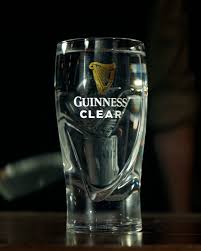
Guinness 0.0 delivers the full sensory experience of drinking a regular Guinness, from the iconic nitrogen pour to the creamy head and deep roasted flavour.
The nitrogen widget inside each can creates the same cascading surge and creamy white head that Guinness Draught is famous for. Poured into a glass, Guinness 0.0 is visually identical to the original — deep ruby-black with a thick beige head.
The flavour profile features roasted barley as the backbone, with coffee and chocolate notes, a hint of vanilla, and a smooth, mellow bitterness at the finish. Some tasters note slightly more fruit flavours in the 0.0 compared to the full-strength version, but the overall experience is remarkably close to the original.
Guinness 0.0 is now widely available across multiple retail and hospitality channels in the UK, Ireland, the United States, and other international markets.
In the UK and Ireland, it is stocked in most major supermarkets including Tesco, Sainsbury’s, Asda, Waitrose, and Marks and Spencer. It is also available in many independent off-licences and increasingly on draught at selected pubs.
In the United States, it can be found in large grocery chains, Total Wine, and specialist beer retailers. Four-packs of 14.9 fl oz (440ml) cans are the standard US format, typically priced between $7.99 and $9.99.
This is a sensitive area that requires careful and honest guidance. Guinness 0.0 contains a maximum of 0.05% ABV — the lowest level of alcohol detectable by standard laboratory equipment — which is comparable to the trace alcohol found in some fruit juices and fermented foods.
For all practical and legal purposes, Guinness 0.0 is classified as alcohol-free. However, the safest approach during pregnancy is always to consult your doctor or midwife before consuming any product that is not entirely and certifiably free of alcohol.
Individual medical advice should always take precedence over general product information when it comes to pregnancy and alcohol.
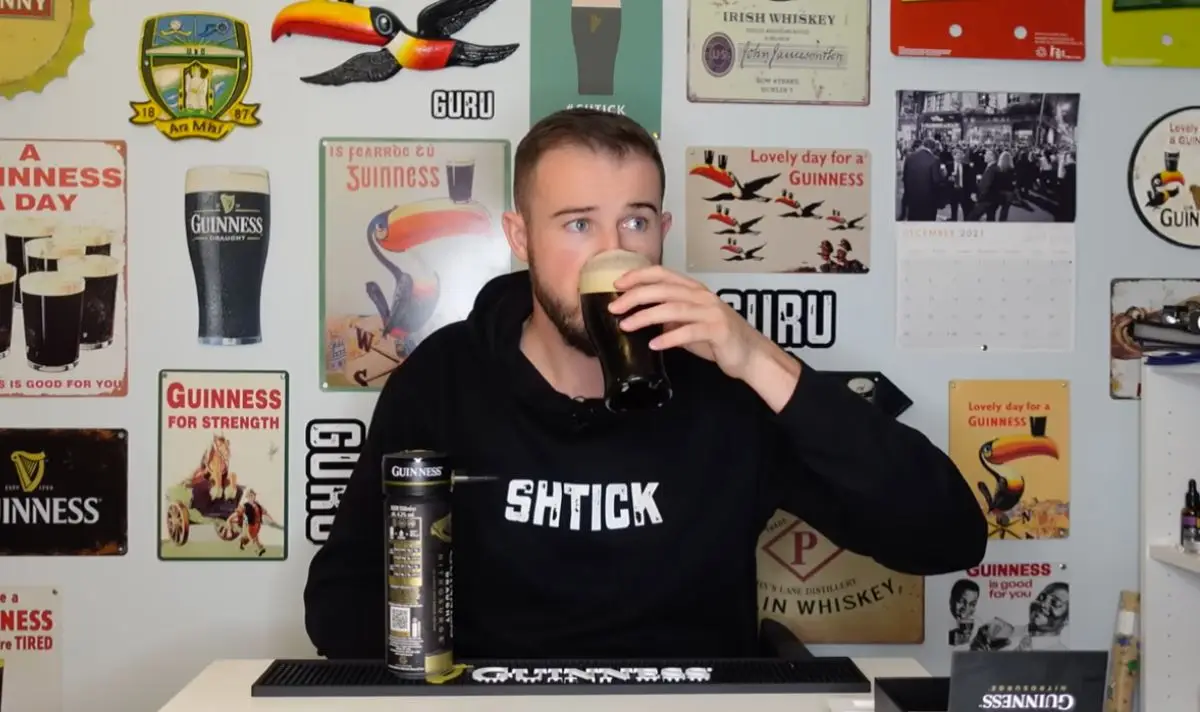
People in recovery from alcohol use disorders should make a careful individual decision about whether to consume any product associated with drinking, including non-alcoholic beers.
The very low ABV of 0.05% in Guinness 0.0 is unlikely to pose a chemical or physiological risk. However, the habitual, social, and psychological dimensions of drinking are deeply personal and vary between individuals.
Healthcare providers and support groups are best placed to advise on this topic. Guinness 0.0 should not be consumed as a workaround to sobriety goals without explicit personal consideration and professional input where appropriate.
Beyond the Guinness 0.0 calories story, there is a growing body of interest in the polyphenol content of non-alcoholic beer.
Regular Guinness contains polyphenols derived from barley (approximately 70%) and hops (approximately 30%). These compounds have been associated with antioxidant and anti-inflammatory properties in academic research.
Guinness 0.0 retains these polyphenols through the cold filtration process. While the health benefits should not be overstated — Guinness 0.0 is not a health drink — the presence of natural plant compounds from barley and hops is a meaningful part of the nutritional picture beyond just calories and macros.
A standard 440ml can of Guinness 0.0 contains approximately 75 calories, based on the official figure of 17 kcal per 100ml.
No. The “0.0” in the name refers to alcohol content, not calories. A pint of Guinness 0.0 contains around 97 calories.
A standard UK pint (568ml) of Guinness 0.0 contains approximately 97 calories — less than half the 210 calories in a regular pint of Guinness Draught.
Guinness 0.0 contains 3.8g of carbs per 100ml, equalling around 16.7g of carbs per 440ml can and approximately 21.6g of carbs per full pint.
Guinness 0.0 is not ideal for strict keto diets due to its 16.7g of carbs per can. For moderate low-carb diets with a higher daily carb limit, one can is unlikely to be problematic.
Yes, Guinness 0.0 is fully vegan. Guinness removed all animal-derived fining agents from its brewing process in 2017, making every Guinness product including the 0.0 suitable for vegans.
No. Guinness 0.0 is brewed using malted barley, which contains gluten. It is not suitable for people with coeliac disease or serious gluten sensitivity.
Regular Guinness Draught contains 35 kcal per 100ml and around 210 calories per pint. Guinness 0.0 contains 17 kcal per 100ml and around 97 calories per pint — saving approximately 113 calories per pint.
The official advice is to consult your doctor or midwife. Guinness 0.0 contains a maximum of 0.05% ABV, comparable to trace alcohol in some fruit juices, but individual medical guidance is always recommended during pregnancy.
Guinness 0.0 has slightly more carbs per 100ml (3.8g vs 2.7g) because fructose and natural flavourings are added after cold filtration to restore the mouthfeel and sweetness that alcohol naturally provides in regular Guinness.
Guinness 0.0 calories — 17 kcal per 100ml, 75 kcal per 440ml can, and 97 kcal per full pint — make it one of the most calorie-efficient dark beers available in 2026. It is fat-free, very low in sugar, fully vegan, and brewed using the same iconic process at St.
James’s Gate in Dublin as regular Guinness. While it is not zero-calorie, not gluten-free, and not ideal for strict keto, it delivers unmatched taste and the full Guinness experience at less than half the calories of the original.
For calorie-conscious drinkers who love Guinness, the 0.0 is quite simply the smartest swap available today.