
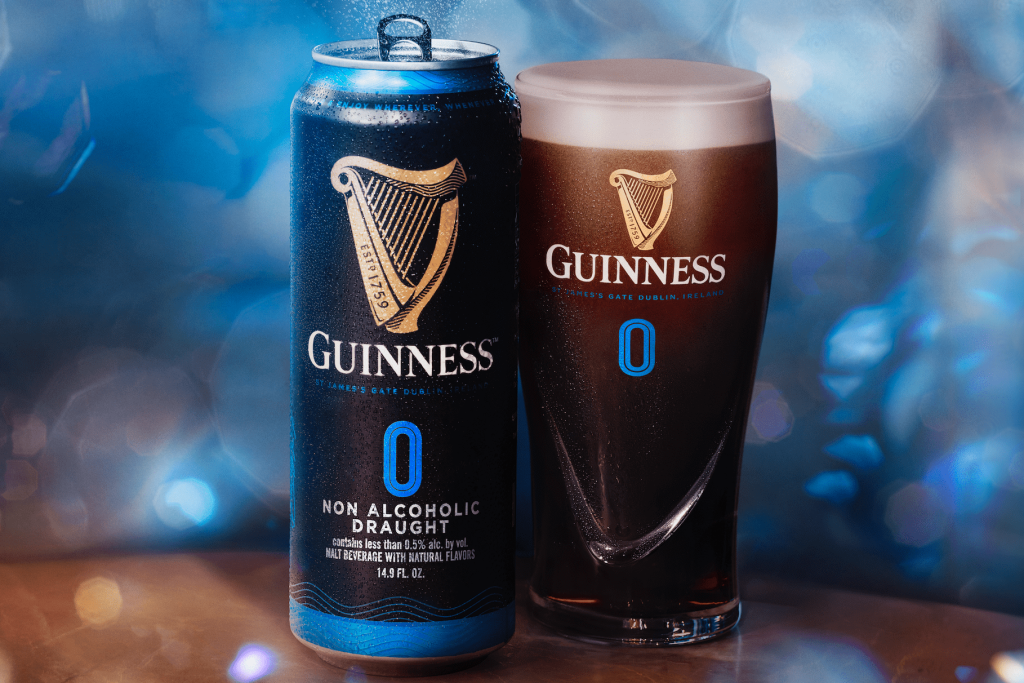
Guinness Zero calories is one of the most searched beer nutrition questions right now — and the answer surprises most people who try it for the first time. Guinness Zero is not a zero-calorie beer.
But it is dramatically lower in calories than regular Guinness Draught, and it has become one of the most talked-about non-alcoholic beers on the market.
Guinness Zero — also known as Guinness 0.0 or Guinness 0 — is the fully non-alcoholic version of the iconic Irish stout.
It contains no more than 0.05% ABV, which is the lowest level of alcohol detectable by standard laboratory equipment. For practical purposes, it is considered completely alcohol-free.
It is brewed in Dublin, Ireland at the same St. James’s Gate Brewery where regular Guinness has been produced since 1759. The same barley, hops, yeast, and water go in — only the alcohol comes out.
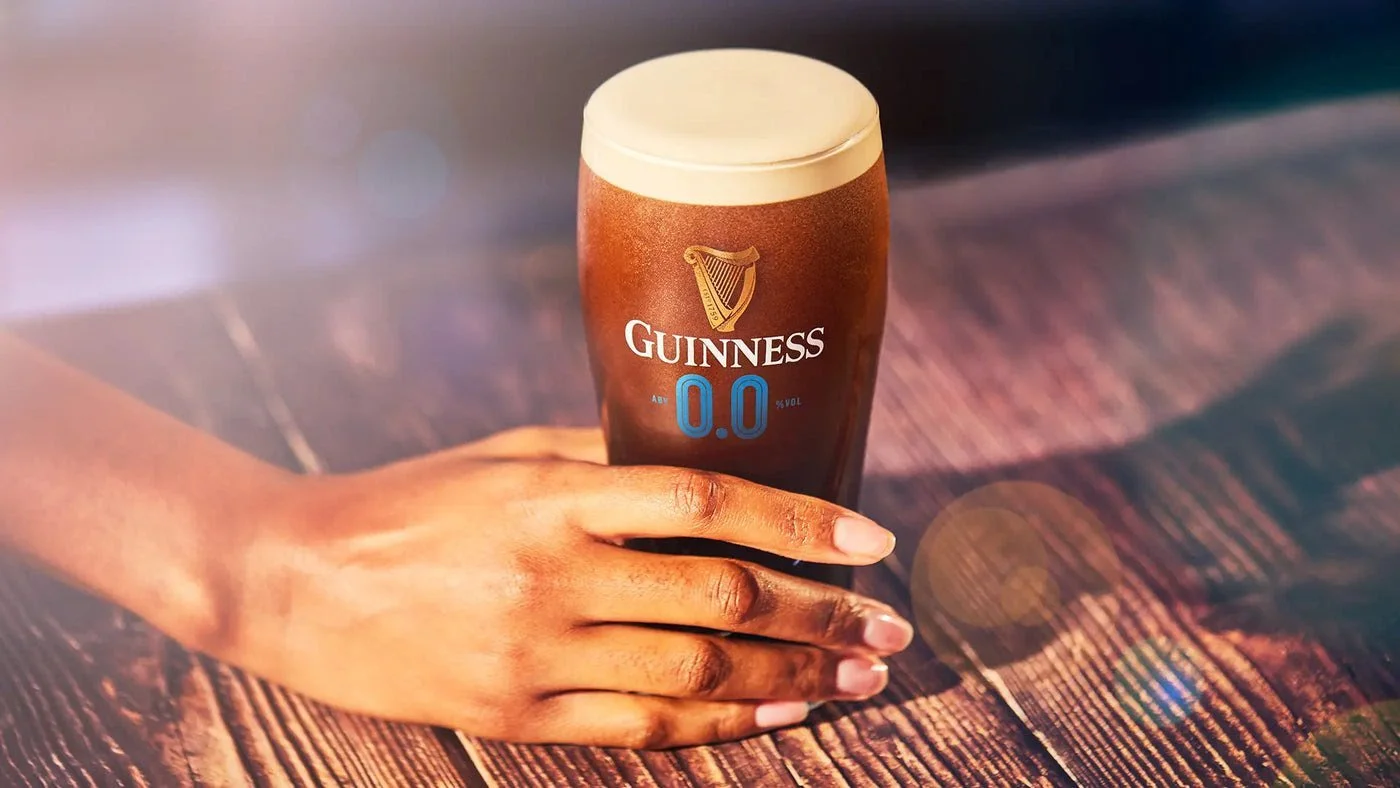
Let’s clear this up immediately because this is what most people come here to find.
Guinness Zero is NOT zero calories. The name refers to the zero alcohol content, not zero calories.
Here is the actual calorie count across different serving sizes:
| Serving Size | Calories in Guinness Zero | Calories in Regular Guinness |
|---|---|---|
| 100ml | 17 calories | 35 calories |
| 330ml (standard can) | ~56 calories | ~116 calories |
| 355ml (12 fl oz) | ~57–60 calories | ~125 calories |
| 440ml (UK pint can) | ~75 calories | ~155 calories |
| 500ml | ~85 calories | ~175 calories |
| 568ml (full pint) | ~97 calories | ~210 calories |
Guinness Zero has roughly half the calories of regular Guinness Draught at every serving size.
Here is the complete nutritional breakdown per 100ml of Guinness Zero:
| Nutrient | Guinness Zero (per 100ml) | Regular Guinness (per 100ml) |
|---|---|---|
| Calories | 17 kcal | 35 kcal |
| Carbohydrates | 3.8g | 2.7g |
| of which Sugars | 0.7g | 0.2g |
| Protein | 0.3–0.5g | 0.3–0.5g |
| Fat | 0g | 0g |
| Saturated Fat | 0g | 0g |
| Sodium | trace | trace |
| Alcohol | 0.0% ABV | 4.1–4.2% ABV |
The most important thing to notice here: Guinness Zero has more carbs per 100ml than regular Guinness, but far fewer calories. This is because alcohol itself is calorie-dense — removing the alcohol removes most of the calories even though a little extra sugar and carb content is added to improve the flavour balance.
This is a question that confuses a lot of people looking at the nutrition label.
When alcohol is removed from beer, it takes away a significant source of flavour, body, and mouthfeel. Brewers sometimes add small amounts of natural sugars — in Guinness Zero’s case, fructose — to compensate and preserve the taste profile.
Fructose is a natural sugar that adds a touch of sweetness and helps replicate the fuller body that alcohol provides. This is why the carb and sugar count per 100ml is slightly higher in Guinness Zero than in regular Guinness.
However, since alcohol contains 7 calories per gram, the calorie savings from removing the alcohol far outweigh the small increase in sugar calories. The end result is a much lower-calorie drink despite the higher carb count.
Understanding the production process helps explain why Guinness Zero tastes so similar to the original.
Guinness Zero starts life as a full-strength Guinness Draught. The beer is fully brewed at the same standard as the regular product — same ingredients, same process, same quality control.
Once brewing is complete, the alcohol is removed using a cold filtration method. This process carefully strips the alcohol while minimising the thermal stress on the liquid that can damage flavour compounds.
Cold filtration is considered one of the best dealcoholisation techniques available. It helps retain volatile aromatic compounds — the notes of roasted barley, coffee, and chocolate that make Guinness distinctive.
Multiple batches are blended during this process to achieve consistency. Natural flavourings and fructose are then added to restore some of the balance lost when alcohol is removed.
The nitrogen widget — the small plastic ball inside each can — is retained in Guinness Zero. This is what creates the famous surge-and-settle pour and the thick, creamy head that Guinness drinkers recognise instantly.
| Feature | Guinness Zero | Regular Guinness Draught |
|---|---|---|
| ABV | 0.0% (max 0.05%) | 4.1–4.2% |
| Calories (pint) | ~97 kcal | ~210 kcal |
| Carbs (per 100ml) | 3.8g | 2.7g |
| Sugar (per 100ml) | 0.7g | 0.2g |
| Fat | 0g | 0g |
| Protein | ~0.3–0.5g | ~0.3–0.5g |
| Nitrogen widget | Yes | Yes |
| Brewed in Dublin | Yes | Yes |
| Available on draught | Some pubs | Widely available |
| Price (4-pack US) | $7.99–$9.99 | ~$9–$12 |
The two products are remarkably similar in almost every way except alcohol content and calorie count.
This is one of the top questions people ask about Guinness Zero, and the answer is nuanced.
Guinness Zero is significantly lower in calories than its alcoholic counterpart. If you’re replacing regular Guinness with Guinness Zero, you’re saving roughly 100–115 calories per pint. Over time and multiple drinks, that is a meaningful reduction.
However, Guinness Zero is not a diet beer in the traditional sense. At 75–97 calories per full serving, it does contain calories that add up if consumed in large quantities.
For people watching calories, Guinness Zero is one of the better options in the non-alcoholic beer category. It is not as low as some ultra-light NA beers like Partake (around 15 calories per can), but it delivers far more flavour and a much more satisfying drinking experience.
If weight management is a priority, the key is moderation — Guinness Zero can absolutely fit into a calorie-conscious diet, but it should not be treated as a “free” drink simply because it says zero on the label.
How does Guinness Zero stack up against the rest of the NA beer market?
| Beer | Serving Size | Calories | Carbs |
|---|---|---|---|
| Guinness Zero | 440ml | ~75 kcal | ~17g |
| Heineken 0.0 | 330ml | ~69 kcal | ~16.5g |
| Athletic Brewing Run Wild | 355ml | ~65 kcal | ~16g |
| Partake Brewing Pale | 355ml | ~15 kcal | ~3.5g |
| Budweiser Zero | 355ml | ~50 kcal | ~12g |
| Brooklyn Special Effects | 355ml | ~90 kcal | ~22g |
| Big Drop Galactic | 330ml | ~48 kcal | ~10g |
| Clausthaler Original | 330ml | ~83 kcal | ~18g |
Guinness Zero sits in the middle of the NA beer calorie spectrum. It has more calories than the ultra-low options but fewer than many full-flavoured NA stouts and lagers.
What sets it apart is the combination of calorie count, flavour complexity, and the authentic nitrogen pour experience — a combination that no other NA beer in this list currently matches.
Low-carb and keto dieters have specific questions about Guinness Zero, and the answer requires some context.
Guinness Zero contains approximately 3.8g of carbs per 100ml. A standard 440ml can would contain around 16–17g of total carbs.
On a standard ketogenic diet, daily carb intake is typically limited to 20–50g. A single can of Guinness Zero would represent a significant portion of that limit — especially at the lower end of the spectrum.
For strict keto followers, Guinness Zero is not a great fit. The carb load is too high to consume regularly without impacting ketosis.
For low-carb dieters following a more moderate approach — such as those limiting to 100g of carbs daily — Guinness Zero can fit with proper portion awareness.
The bottom line: Guinness Zero is not keto-friendly in the traditional strict sense, but it is significantly lower in calories and carbs than the vast majority of regular beers.
Sugar content is a key concern for people managing blood sugar, diabetes, or insulin response.
Guinness Zero contains 0.7g of sugar per 100ml. In a full 440ml can, that equals approximately 3g of sugar total.
For context, a regular can of Coca-Cola contains around 35g of sugar. Even a glass of orange juice contains 20–25g. Guinness Zero’s sugar content is extremely low by any comparison.
The sugar present in Guinness Zero is primarily fructose — added during the dealcoholisation process to restore some of the sweetness and body lost when alcohol is removed.
People managing diabetes should still account for the total carbohydrate content rather than just the sugar figure, since all digestible carbs affect blood glucose.
Beyond the calorie and macro numbers, is there any nutritional upside to Guinness Zero?
Polyphenols are one of the more interesting components. Regular Guinness contains polyphenols from barley (approximately 70%) and hops (approximately 30%). These plant compounds have antioxidant properties and are associated with some cardiovascular benefits in moderate consumption studies.
Guinness Zero retains most of these polyphenols through the cold filtration process, since they are not removed along with the alcohol.
Iron content is another occasional talking point. Regular Guinness contains trace amounts of iron — roughly 4% of the recommended daily intake per 12oz serving. Guinness Zero retains a similar trace amount.
B vitamins from the barley are present in both versions in small amounts.
These nutritional benefits are modest and shouldn’t be used to justify overconsumption. But they do suggest that Guinness Zero isn’t nutritionally empty the way many carbonated drinks are.
One of the most searched related topics is whether Guinness Zero is safe during pregnancy.
Traditional Guinness was historically recommended to pregnant women in Ireland as a source of iron — a practice that was mainstream until the 1970s but has since been completely discredited by modern medicine.
Today, the NHS and most major health organisations worldwide recommend complete alcohol avoidance during pregnancy.
Guinness Zero contains at most 0.05% ABV — a level comparable to some fruit juices and fermented foods. Many healthcare professionals consider this level to be effectively zero in terms of risk.
However, the definitive guidance is to consult your doctor or midwife before consuming any product that contains any level of alcohol during pregnancy. This is a personal medical decision that should be made with qualified healthcare guidance, not based on product marketing.
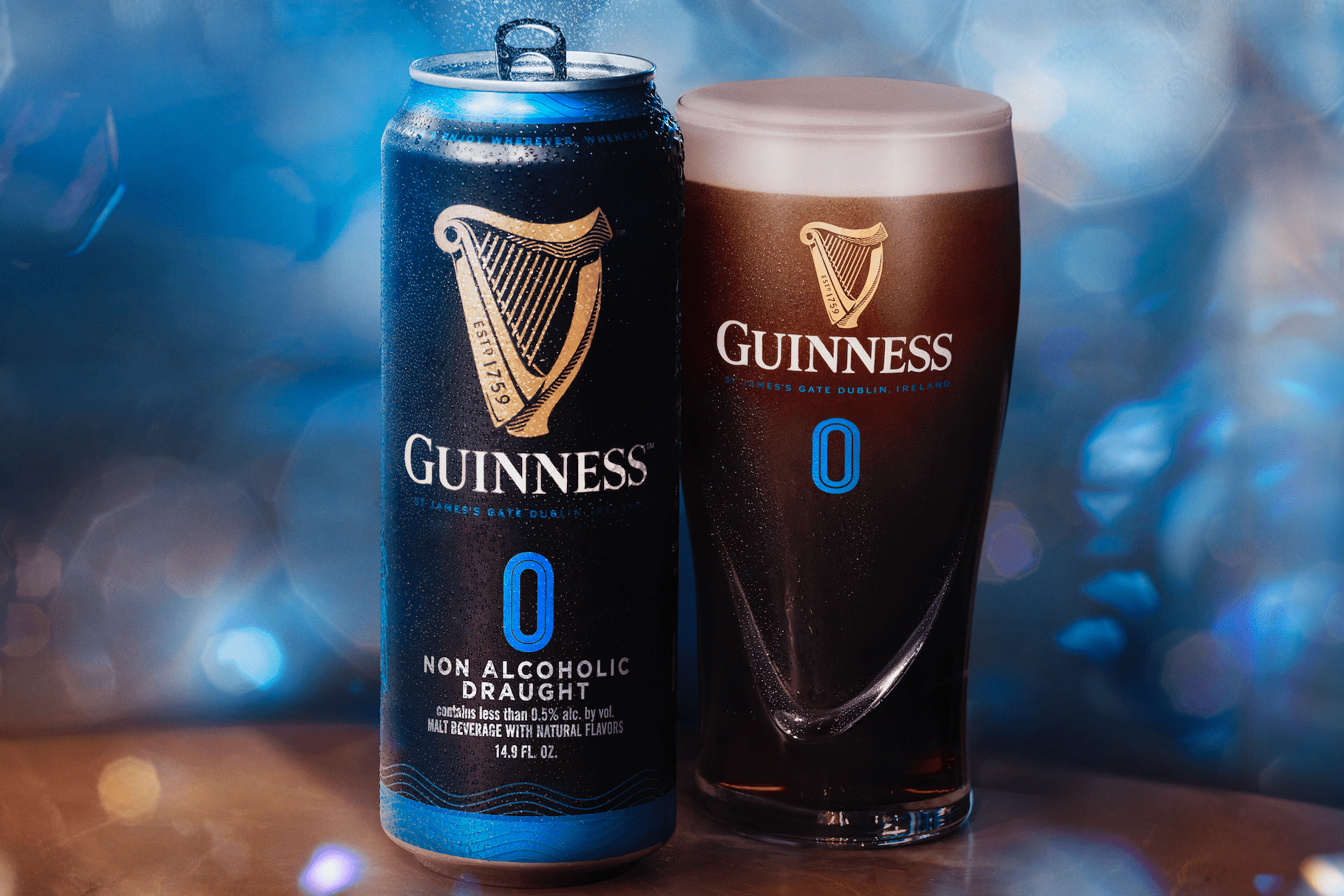
The rise of Guinness Zero tracks almost perfectly with the growth of the sober-curious movement.
More adults than ever are choosing to reduce or eliminate alcohol consumption without abandoning social drinking experiences. Guinness Zero is specifically designed for this market — offering the full sensory experience of a pint of Guinness without the alcohol.
The can includes the same nitrogen widget as regular Guinness. The pour delivers the same cascade and creamy head. The dark colour, the roasted aroma, and the smooth mouthfeel are all present.
For people doing Dry January, Sober October, or simply cutting back on alcohol for health reasons, Guinness Zero allows continued participation in pub culture, social occasions, and meal pairings without compromising the experience.
Taste is subjective, but the consensus from reviewers and consumers is remarkably consistent.
The flavour is very close to regular Guinness Draught. Roasted barley provides the dominant flavour backbone. There are secondary notes of coffee, dark chocolate, and a subtle malty sweetness.
The differences most noticeable in side-by-side comparisons are: a slightly thinner body than the full-strength version, fruit notes that are slightly more pronounced, and a touch more sweetness on the finish from the fructose addition.
Casual drinkers who aren’t conducting a formal comparison are unlikely to detect these differences. Dedicated Guinness enthusiasts may notice the subtle variations.
The nitrogen pour is identical — the famous surge-and-settle cascade and thick creamy head are perfectly replicated. This is one of the biggest achievements of Guinness Zero from a sensory perspective.
Here’s a practical look at what choosing Guinness Zero over regular Guinness means in real calorie terms:
| Frequency of Consumption | Calorie Saving per Session (~1 pint) | Annual Calorie Saving |
|---|---|---|
| Once a week | ~113 calories | ~5,876 calories/year |
| Twice a week | ~226 calories | ~11,752 calories/year |
| Three times a week | ~339 calories | ~17,628 calories/year |
| Daily (one pint) | ~113 calories | ~41,245 calories/year |
A saving of roughly 41,000 calories a year — if you were drinking a pint of Guinness every single day and switched entirely to Guinness Zero — is theoretically equivalent to over 11 pounds of body fat in pure energy terms. Real-world outcomes would vary based on individual metabolism and total diet, but the calorie difference is substantial and real.
One of the underappreciated aspects of Guinness Zero is how well it pairs with food.
The roasted malt character and creamy texture make it a natural companion for hearty dishes. Traditional Irish stew, beef and barley soup, and shepherd’s pie are classic pairings that work just as well with the non-alcoholic version.
The coffee and chocolate notes make Guinness Zero an excellent match for rich desserts. A Guinness Zero float with vanilla ice cream is a popular combination among NA beer enthusiasts.
Grilled meats — particularly beef and lamb — pair naturally with the roasted bitterness of the stout. Cheese boards featuring aged cheddar or blue cheese also complement the flavour profile well.
Guinness Zero appeals to a broader audience than most non-alcoholic beers.
It works well for people who enjoy regular Guinness but want to cut alcohol for health, fitness, or personal reasons. It’s suitable for designated drivers who want to fully participate in a social occasion at the pub.
People in recovery from alcohol use disorders should make an individual decision with support from healthcare providers — the very low ABV of 0.05% is unlikely to pose a chemical risk, but the habitual and social dimensions of drinking are deeply personal considerations.
Athletes and fitness-focused consumers who want a post-exercise social drink are drawn to the lower calorie count and zero-alcohol content.
Pregnant women and people on certain medications should consult their doctor — as with any beverage that contains even trace amounts of alcohol.
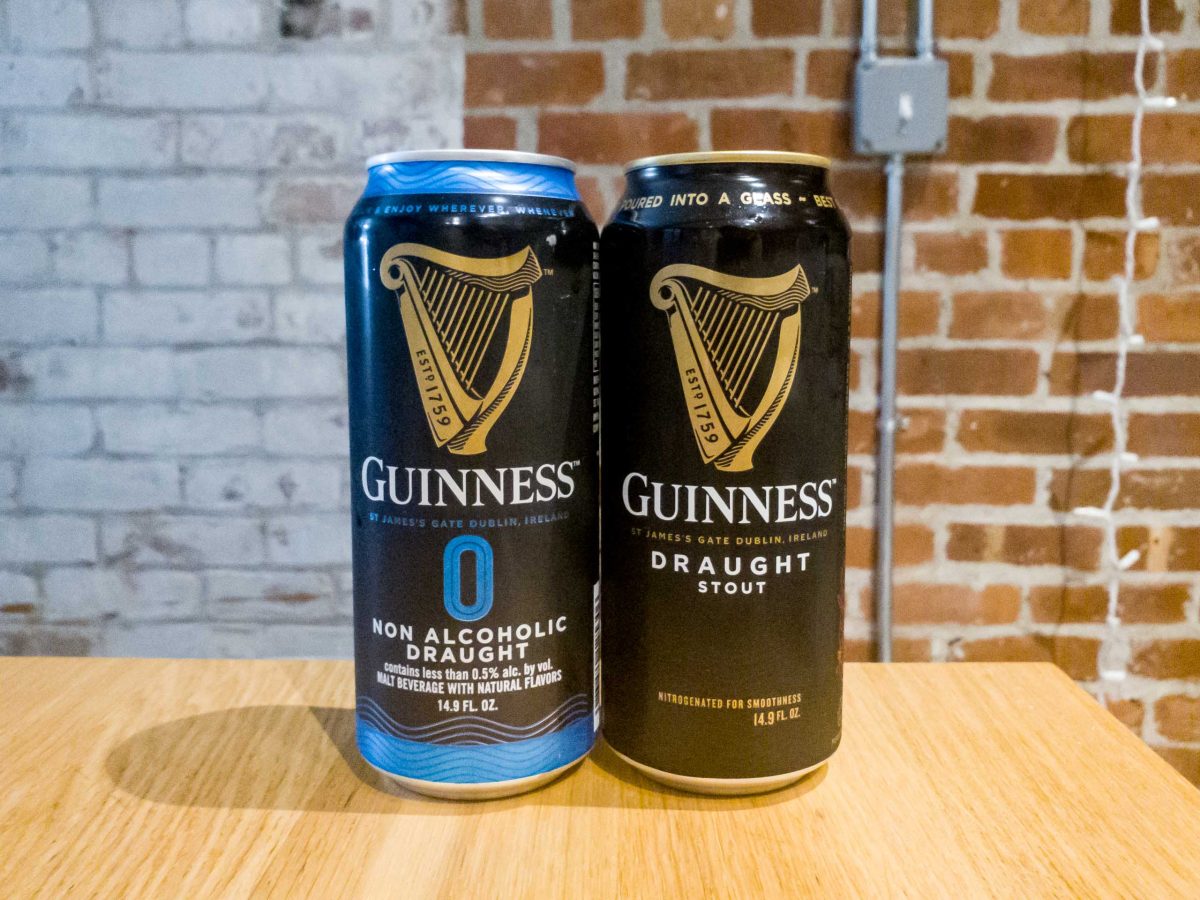
Availability has expanded significantly since the troubled 2020 launch and the successful 2022 relaunch.
In the United States, Guinness Zero is widely available at major supermarkets, Total Wine, BevMo, and online through Drizly and other delivery platforms. Four-packs of the 14.9oz cans typically retail between $7.99 and $9.99 depending on retailer and location.
In the UK and Ireland, it is available in most major supermarkets including Tesco, Sainsbury’s, Asda, and Marks & Spencer. Select pubs in Ireland also have draught Guinness Zero on tap using special single-can micro-draught systems.
In Canada and Australia, distribution has steadily expanded through major off-licence retailers and some grocery chains.
Availability continues to grow globally as demand for quality non-alcoholic options rises year over year.
No. Guinness Zero is not a zero-calorie beer — the “zero” refers to zero alcohol. It contains approximately 17 calories per 100ml, or around 57–75 calories per can depending on size.
A standard 440ml can of Guinness Zero contains approximately 75 calories. A 355ml (12 fl oz) can contains around 57–60 calories, and a 14.9 fl oz US can contains about 71 calories.
Guinness Zero contains approximately 3.8g of carbs per 100ml. A full 440ml can contains around 16–17g of total carbohydrates — slightly more than regular Guinness due to fructose added during the dealcoholisation process.
Not for strict keto diets. A single can of Guinness Zero contains 16–17g of carbs, which would represent a large portion of the strict keto daily carb limit of 20–50g. It can fit into moderate low-carb diets with careful tracking.
Guinness Zero has roughly half the calories of regular Guinness Draught. Regular Guinness contains about 35 calories per 100ml; Guinness Zero contains 17 calories per 100ml. Per pint, you save approximately 113 calories by choosing Guinness Zero.
Guinness Zero contains a maximum of 0.05% ABV — the lowest level detectable by standard equipment. For all practical purposes it is considered fully alcohol-free and is labelled as 0.0% ABV.
Guinness Zero can support a weight management goal when substituted for regular Guinness, saving roughly 100–115 calories per pint. However, it is not a zero-calorie product and should be consumed in moderation as part of a balanced diet.
You should consult your doctor or midwife before drinking Guinness Zero during pregnancy. While the alcohol content is at most 0.05% — comparable to some fruit juices — the safest approach is to seek personal medical guidance rather than relying on general product information.
Very closely, yes. The roasted barley, coffee, and chocolate notes are well preserved through cold filtration. Side-by-side, you may notice a slightly thinner body and touch more sweetness, but most casual drinkers cannot detect the difference.
Guinness Zero contains 0.7g of sugar per 100ml, primarily in the form of fructose. A full 440ml can contains approximately 3g of sugar — a very low amount compared to most soft drinks, juices, or flavoured beverages.
Guinness Zero calories are real — just not zero.
At approximately 17 calories per 100ml and 57–97 calories per typical serving, Guinness Zero delivers a genuinely low-calorie experience without sacrificing the flavour, texture, or ritual that makes Guinness one of the world’s most beloved beers.
It contains no fat, minimal protein, around 3g of sugar per can, and less than half the calories of regular Guinness Draught at any serving size.
Whether you’re cutting back on alcohol for health reasons, doing Dry January, managing your weight, or simply exploring the rapidly growing world of non-alcoholic craft beer, Guinness Zero stands out as one of the most satisfying options available in 2026.
It’s not zero calories, it’s not keto-friendly, and it’s not a meal replacement — but it is a genuinely impressive achievement in brewing that gives you most of the Guinness experience with a fraction of the calorie cost. That’s a trade-off most people will find well worth making.