

Will Aberdeen house prices recover is the question on every homeowner, buyer, and investor’s lips right now. After years of decline driven by the oil and gas downturn, rising mortgage costs, and economic uncertainty, Aberdeen’s property market is at a critical crossroads.
The city’s average house price sat at just £133,000 in December 2025 — well below the Scottish average of £191,000. Yet there are genuine signs of recovery emerging.
Transaction volumes are rising, the energy sector is diversifying, and rental demand remains strong, notes PMI Baltimore experts. This guide gives you the full picture backed by data, expert forecasts, and honest analysis.
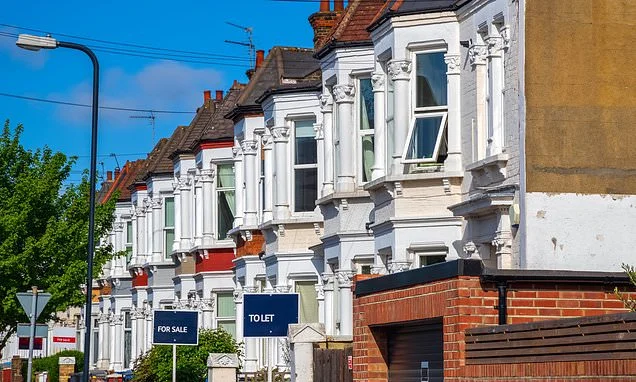
Will Aberdeen house prices recover depends heavily on understanding where the market stands right now. According to the UK House Price Index, the average price in Aberdeen fell 7.4% in the year to December 2025, dropping from £144,000 to £133,000.
That makes Aberdeen a significant outlier. Across Scotland, prices rose 4.9% over the same period. Across the UK, they rose to an average of £270,000. Aberdeen is moving in the opposite direction to almost every other major city.
The market has been falling for over a decade. At its 2014 peak, Aberdeen had some of the highest average house prices in Scotland. That peak was powered almost entirely by the North Sea oil boom.
To understand whether Aberdeen house prices will recover, you first need to understand why they fell so dramatically in the first place.
The Oil Price Crash of 2014–2016 is the single biggest factor. When Brent crude collapsed from over $100 per barrel to below $30, tens of thousands of jobs disappeared from the energy sector across Aberdeen and Aberdeenshire.
Around 18,000 jobs vanished from Aberdeen between 2010 and 2024 according to trade association Offshore Energies UK. That is a devastating loss for a city where the energy sector was the backbone of the entire local economy.
The knock-on effect on house prices was immediate. Property values dropped by around 30–37% from peak levels in some areas. Aberdeen is now one of only two UK cities with fewer jobs in 2023 than in 2010.
Understanding the full timeline helps answer whether a recovery is realistic.
| Year | Key Event | Impact on Prices |
|---|---|---|
| 2014 | Oil boom peak — Brent crude at $115/barrel | Highest prices in a decade |
| 2015–2016 | Oil price crash — Brent below $30 | Prices began sharp decline |
| 2017–2019 | Job losses continue, oversupply builds | Prices fell 15–20% |
| 2020–2021 | Covid-19 pandemic disrupts market | Transaction volumes collapse |
| 2022–2023 | UK mortgage rate rises, cost of living crisis | Further price softening |
| 2024 | Activity rises but prices still fall in Q4 | Mixed signals |
| Q2 2025 | Prices jump 3.8% in one quarter | First meaningful recovery signal |
| Dec 2025 | Average price £133,000, down 7.4% YoY | Fragile, uneven recovery |
The picture is uneven. Some areas and property types are recovering. Others are still falling.
The gap between Aberdeen and the rest of the country has rarely been wider.
| Area | Average House Price (Dec 2025) | Annual Change |
|---|---|---|
| Aberdeen City | £133,000 | -7.4% |
| Aberdeenshire | £202,000 | +0.3% |
| Scotland | £191,000 | +4.9% |
| United Kingdom | £270,000 | +2.3% |
Aberdeen City is now significantly cheaper than Aberdeenshire. That is an unusual reversal. Historically, Aberdeen City commanded a premium over surrounding rural areas.
This gap creates opportunity for buyers willing to invest long-term. But it also signals that city-specific problems — particularly the job market and oversupply of flats — are dragging prices down harder than the surrounding region.
Despite the gloomy headline figures, there are genuine green shoots worth taking seriously.
Transaction Volumes Are Rising Sales in 2024 exceeded 2023 in both number and value. According to the Aberdeen Solicitors’ Property Centre (ASPC), transactions increased by around 10% in Q3 2024 compared to Q2 2024, and by 20% compared to the same quarter in 2023.
Q2 2025 Brought a Strong Bounce Aberdeen’s housing market posted a 3.8% price jump in Q2 2025 — the most optimistic quarterly result since the pre-pandemic period according to ASPC and the University of Aberdeen Business School’s Centre for Real Estate Research.
Activity Increased Across All Property Types Semi-detached transactions rose 25.2% year-on-year. Detached dwellings were up 8%. Flat transactions grew 3.4%. Across all types, transactions were up 13% overall in Q2 2025.
Rental Yields Are Exceptionally Strong With average house prices so low and rental demand so high, Aberdeen currently offers some of the best rental yields in Scotland. Average private rents reached £860 per month in January 2026, up 2.5% annually.
A one-bedroom flat priced around £85,000 can rent for around £550–600 per month. That gives a gross yield of roughly 7.5–8% — nearly double the UK national average of around 4.75%.
Savills Forecasts 6% Five-Year Growth Savills Research forecasts cumulative house price growth of 6% for Aberdeen over the next five years. That is modest but positive. It reflects the expectation that the market will stabilise and gradually recover rather than bounce back sharply.
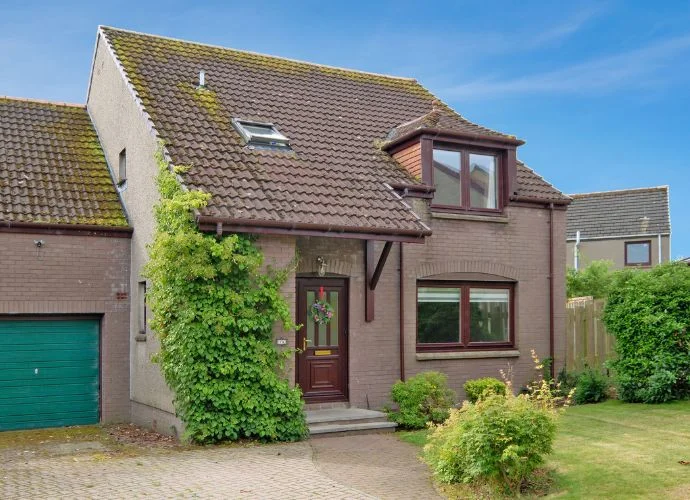
The same factors that caused the decline continue to cast a shadow over the recovery story.
Energy Sector Uncertainty Aberdeen’s economy remains heavily exposed to the energy sector. The shift away from North Sea oil and gas toward renewables is taking longer than hoped. Some major companies have scaled back or withdrawn investment entirely from the region.
According to Offshore Energies UK, without intervention the Aberdeen economy could lose the equivalent of 1,000 workers per month between now and 2030. That is a significant drag on housing demand.
Oversupply of Flats The Aberdeen flat market is facing serious oversupply. Data from ASPC shows consistently high numbers of flats available for sale, keeping prices depressed at the lower end of the market. The average price for a flat fell 8.7% in the year to December 2025.
For investors or sellers of Aberdeen flats, recovery is likely to take longer than for other property types.
New Build Viability Problems Savills data highlights a critical issue. In 2014, building a flat in Aberdeen cost around £59,700 and it sold for £154,000 — a healthy margin. By 2024, build costs had risen to £109,000 while the average flat price was just £122,000, leaving only £13,000 per unit for land, profit, and contributions.
This makes new development near-impossible without significant planning and financial reform.
First-Time Buyer Challenges The average first-time buyer price in Aberdeen fell to £113,000 in December 2025. While lower prices help entry, many young buyers still struggle with deposit requirements and mortgage affordability. Government schemes and falling mortgage rates will be essential to stimulating demand at the entry level.
The key question for Aberdeen’s housing market is whether the city can successfully diversify away from oil and gas. There are encouraging signs.
Renewable Energy Transition Aberdeen is positioning itself as a global hub for offshore wind and clean energy. The Peterhead Carbon Capture project in Aberdeenshire is a £2.2 billion investment that will capture up to 1.5 million tonnes of carbon annually. It is expected to support 980 years of employment during development and construction alone.
Aberdeen is also developing strengths in ClimateTech, AgriTech, and FinTech — sectors that could bring a new generation of well-paid professionals to the city.
Life Sciences and Technology Aberdeen is home to one of the largest concentrations of life scientists in the UK. The University of Aberdeen and Robert Gordon University both contribute significantly to the innovation ecosystem. These sectors tend to attract high-earning workers who drive property demand.
Major Housebuilder Re-entry Persimmon re-entered the Aberdeen residential market with plans for 1,000 new units. Cala and Barratt have also committed to developments. This renewed confidence from major housebuilders signals that the long-term fundamentals are turning positive.
Aberdeen Economy Expected to Grow 10% Over Next Decade Led by professional, scientific, tech, health, education, and information sectors, Aberdeen’s broader economy is projected to grow significantly. That growth trajectory, if realised, will create jobs, attract workers, and drive housing demand across the city.
Not all property types are recovering at the same pace. Understanding the breakdown helps buyers and investors make smarter decisions.
| Property Type | 12-Month Price Change (Dec 2025) | Outlook |
|---|---|---|
| Detached | -5.6% | Stabilising |
| Semi-Detached | Marginal positive | Recovering |
| Terraced | Mixed signals | Area dependent |
| Flats (Aberdeen City) | -8.7% | Still under pressure |
| Flats (Stonehaven) | Slight increase | Outperforming |
Detached and semi-detached homes are recovering faster. Flats in Aberdeen City are still under significant pressure due to oversupply. If you are buying to sell in the near term, family homes in good locations are the safer bet.
Not every postcode is the same. Some areas are already showing meaningful price improvement.
Westhill is one of the strongest performers, benefiting from its reputation as a family-friendly suburb with good schools and commuter links to Aberdeen city and the energy corridor.
Stonehaven has shown consistent resilience. It sits at the southern end of the Aberdeen commuter belt and attracts buyers who want coastal living with city access. Flat prices in Stonehaven have already edged upward against the city trend.
Inverurie and Ellon are also bucking the wider trend. Both offer strong community infrastructure, new housing stock, and transport connections that attract families relocating for work.
Fraserburgh and Banff have shown some of the strongest transactional improvements in Aberdeenshire, largely driven by relative affordability and fishing industry stability.
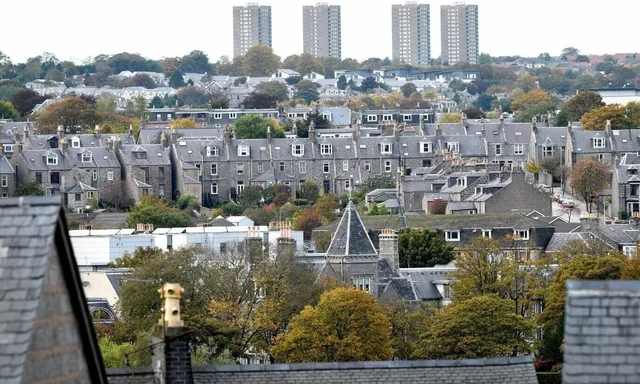
One of the strongest arguments for why Aberdeen house prices will eventually recover is the strength of the rental market.
Average rents in Aberdeen and Shire reached £860 per month in January 2026. That is a 2.5% annual increase and reflects consistent demand for rented accommodation in the city.
Flat rents rose by 3.4% over the year. One-bedroom rents grew by 3.0%. The rental market is significantly outperforming the sales market, which creates a self-reinforcing dynamic. Strong yields attract investors. Investor purchases reduce sales stock. Reduced sales stock eventually applies upward pressure on prices.
| Bedroom Type | Average Monthly Rent (Jan 2026, Aberdeen & Shire) |
|---|---|
| 1 Bedroom | ~£730 |
| 2 Bedrooms | ~£900 |
| 3 Bedrooms | ~£1,050 |
| 4+ Bedrooms | ~£1,250+ |
For landlords, Aberdeen is among the highest-yielding markets in Scotland right now. That represents a genuine opportunity even as the sales market remains uncertain.
Industry professionals are broadly cautious but moving toward optimism for 2025 and 2026.
Annie Littlejohn of Raeburn Christie Clark and Wallace forecast a 2–3% price increase during 2025 based on improving activity levels and transaction volumes.
Savills estimated a 5% increase for Scotland mainstream prices by the end of 2025, with Aberdeen expected to achieve around 1% growth due to ongoing stock availability. Their five-year forecast calls for cumulative growth of 6% for the Aberdeen region.
John MacRae, chairman of ASPC, described the Q2 2025 results as “encouraging” and said the market has been in “an improving state for around 2 years” despite short-term fluctuations.
The general consensus across Aberdeen property professionals is: the recovery is real, it is gradual, and it will not be a quick bounce back to 2014 levels. Those expecting a dramatic surge will be disappointed. Those investing patiently for the medium term are likely to see solid returns.
With prices at historically low levels relative to the rest of Scotland and the UK, Aberdeen represents an unusual buying opportunity for the right buyer.
First-time buyers can access properties at £113,000 on average — among the most affordable entry points in any Scottish city. With mortgage rates gradually declining and government incentives in place, the barriers to purchase are lower than they have been in years.
Investors are attracted by rental yields of 7–8% on entry-level properties — significantly above the UK average. With a long investment horizon, the combination of rental income and gradual capital appreciation creates a compelling case.
Owner-occupiers looking to upsize within Aberdeen can take advantage of compressed prices at the top of the market. Detached properties averaging £320,000 are still well below what comparable homes would cost in Edinburgh or Glasgow.
The risk remains the energy sector. If the oil and gas transition fails to materialise into real jobs and economic activity, Aberdeen’s housing market could remain suppressed for another decade.
Based on current data, expert opinions, and economic trends, here is a realistic forecast for Aberdeen house prices.
| Timeframe | Expected Direction | Estimated Change |
|---|---|---|
| 2026 (Short-Term) | Stabilisation with modest growth | 0% to +2% |
| 2027–2028 | Gradual recovery in family homes | +3% to +5% |
| 2029–2030 | Broader recovery if economy diversifies | +5% to +8% |
| 5-Year Total (Savills) | Positive trajectory overall | ~6% cumulative |
| Flat Market | Slower recovery due to oversupply | -2% to +1% |
These are moderate, data-informed projections — not guarantees. Aberdeen’s recovery depends heavily on external factors including UK mortgage rates, North Sea energy policy, and how quickly the renewables sector creates meaningful local employment.
A balanced view requires acknowledging the serious risks that remain on the table.
Continued Energy Sector Job Losses The pace of job losses in oil and gas has not yet been offset by gains in renewables. Until that balance shifts, housing demand in Aberdeen remains fragile.
Mortgage Rate Sensitivity Aberdeen buyers are disproportionately exposed to mortgage rate changes because of the high proportion of properties in the £100,000–£200,000 range. Even small rate increases hit affordability hard at these price points.
Flat Market Oversupply The sheer volume of flats on the Aberdeen market keeps downward pressure on that segment. A recovery in flats requires a combination of reduced listings, population growth, and stronger incomes — none of which are guaranteed near-term.
Demographic Challenges Aberdeen’s population is relatively static. Without net inward migration driven by jobs, the demand side of the equation cannot strengthen enough to drive sustained price growth.
Here is a practical summary of what the data means for different groups.
A full recovery is unlikely in 2026, but modest stabilisation of 0–2% growth is expected. The market is improving gradually, driven by rising transactions and economic diversification.
Aberdeen prices fell sharply after the 2014 oil price crash wiped out tens of thousands of local jobs. The city has never fully recovered, and ongoing energy sector uncertainty continues to suppress demand.
The provisional average house price in Aberdeen was £133,000 in December 2025 — down 7.4% from £144,000 a year earlier, according to ONS data.
For long-term buyers and investors, yes. Prices are near historic lows, rental yields are 7–8%, and gradual recovery is forecast. Short-term buyers should be cautious given ongoing price softness.
Westhill, Stonehaven, Inverurie, and Ellon are outperforming Aberdeen City. These areas have stronger employment bases, good schools, and commuter access driving sustained demand.
Aberdeen flat prices fell 8.7% in the year to December 2025. Oversupply is the primary cause. Recovery in this segment will take longer than for houses and depends on population growth and improved employment.
Aberdeen’s average of £133,000 is significantly below Scotland’s average of £191,000 and Aberdeenshire’s average of £202,000. The city is now one of the most affordable urban property markets in the country.
The energy sector is the single biggest driver of Aberdeen’s property market. Job growth in the sector increases demand and pushes prices up. Job losses do the opposite. The ongoing transition to renewables is a critical factor to watch.
Savills forecasts around 6% cumulative growth for Aberdeen over five years. They expect Scotland mainstream prices to grow 5% by end of 2025, with Aberdeen achieving more modest gains of around 1% per year in the near term.
Yes. Average yields of 7–8% on entry-level properties significantly exceed the UK average of around 4.75%, making Aberdeen one of the most attractive rental investment markets in Scotland right now.
Will Aberdeen house prices recover fully and quickly? Probably not. But will they recover? The evidence says yes — gradually, unevenly, and over a longer timeline than buyers and investors might hope.
Transaction volumes are rising, Q2 2025 delivered the strongest quarterly price growth in years, and the energy sector is diversifying in ways that could support sustained employment growth over the next decade.
For patient buyers, investors, and homeowners, Aberdeen represents a market with genuine long-term upside at prices that are historically low. The risks are real, the timeline is long, but the direction of travel is pointing upward.