
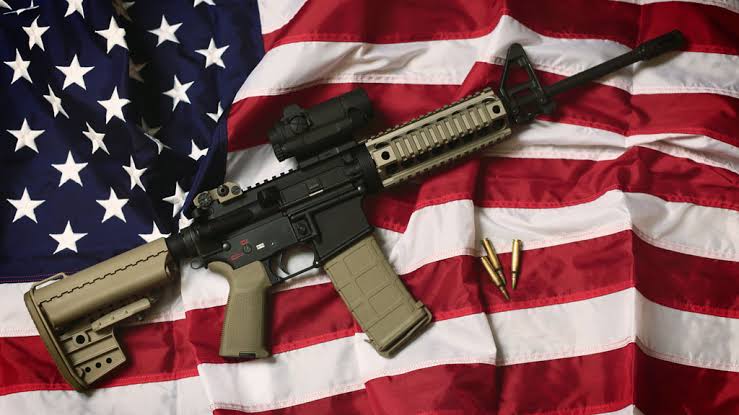
Why Was the Second Amendment Created? The Second Amendment was created to protect the right of ordinary citizens to keep and bear arms so that state militias could defend against foreign invasion, put down insurrection, and — most importantly to its framers — resist the possibility of a tyrannical federal government.
Ratified on December 15, 1791, as part of the Bill of Rights, it grew directly out of the Founders’ fear of standing armies, their recent experience fighting the British Crown, and a much older English legal tradition of armed self-defense.
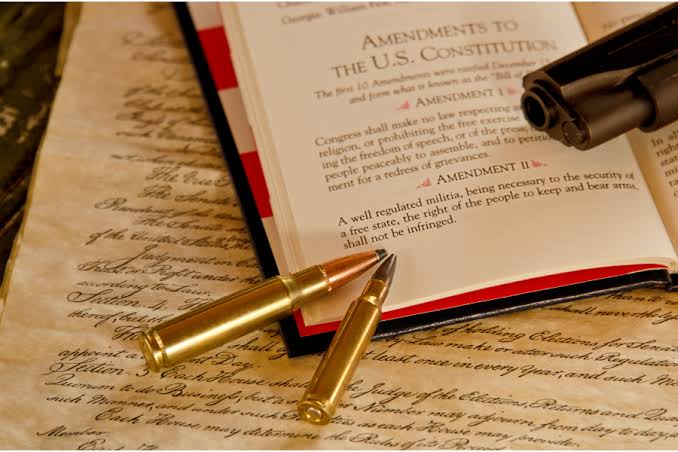
The Second Amendment was created for three interlocking reasons: to preserve state militias as a check on federal military power, to protect an inherited English right to possess arms for self-defense, and to prevent the new federal government from disarming citizens the way the British Crown had tried to do in Massachusetts. James Madison introduced the language in 1789, and it was ratified in 1791 as the second of the ten amendments in the Bill of Rights.
The amendment reads:
“A well regulated Militia, being necessary to the security of a free State, the right of the people to keep and bear Arms, shall not be infringed.”
These 27 words have generated more legal and political debate than almost any other sentence in American law, largely because the “militia” clause and the “right of the people” clause can be read in different ways.
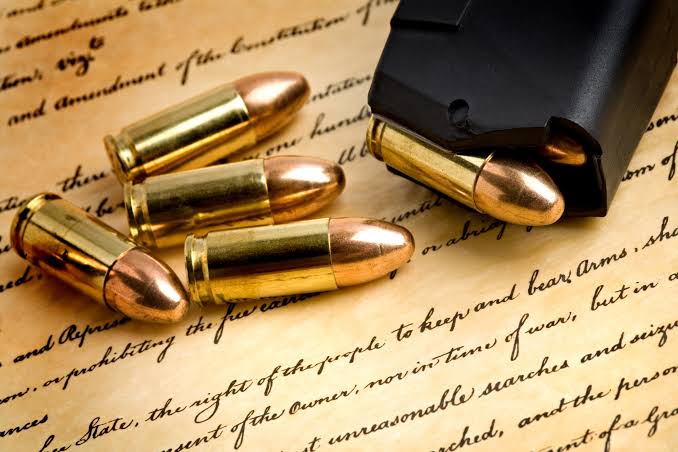
The Framers weren’t inventing a new idea out of thin air. Historians typically trace the amendment’s roots at least partly to the English Bill of Rights of 1689, which declared that Protestant subjects could have arms for their defense, suitable to their condition and as allowed by law. That English right had deeper origins still, going back to the late 16th century, when Queen Elizabeth I set up a national militia that required people of all classes to help defend the realm.
Legal scholars like William Blackstone described the English right to possess arms for self-defense as one of the core safeguards against violations of life, liberty, and property. American colonists, who thought of themselves as inheritors of English liberties, carried this idea across the Atlantic.
Colonial tensions with Britain escalated through the 1760s and 1770s. As frustration grew, the Crown’s response became more aggressive, and increasing numbers of royal troops were stationed in Boston not to defend colonists from outside threats but to enforce unpopular laws and intimidate the population.
The breaking point came when British General Thomas Gage sent troops to seize colonial stockpiles of arms and gunpowder in Lexington and Concord, Massachusetts — an act that triggered the opening battles of the Revolutionary War. For the Founding generation, this episode became a defining example of why an armed citizenry mattered: a government that can quietly disarm its people can also oppress them without resistance.
By the time the Constitution was drafted in 1787, a new fear had emerged — not of the British, but of the powerful new federal government being created. Anti-Federalists worried the Constitution gave Congress too much authority over the military and state militias.
Anti-Federalists argued that a centralized standing army, established under the new Constitution, gave the federal government too much power and too much potential for violent oppression. To calm those fears, James Madison — working from amendments proposed by state ratifying conventions — introduced what became the Second Amendment. Madison proposed the language specifically to allow the creation of civilian forces capable of counteracting a tyrannical federal government.
The amendment served a dual constitutional purpose. Beyond restraining federal power, it also gave state governments a safeguard that Anti-Federalist Luther Martin described as a final check enabling states to resist and oppose an overreaching general government. It also reflected an old Roman and Florentine constitutional ideal — the citizen-soldier — treating every citizen as a potential soldier and every soldier as a citizen.
One reason the amendment is debated today is that it links two ideas in a single sentence: a “well regulated Militia” and “the right of the people to keep and bear Arms.” In the Founding era, the government could rely on militias — ordinary civilians who supplied their own weapons and received limited, unpaid training — to respond to sudden emergencies, since raising and training a professional army takes time the country didn’t always have.
The debate over whether this protects a purely individual right or a right tied to militia service didn’t actually surface until long after the Bill of Rights was adopted — many of the Founders simply assumed governments could become prone to using soldiers against their own people, and an armed populace was insurance against that.
For most of American history, courts rarely addressed the amendment directly. That changed in 2008.
The Supreme Court held that the Second Amendment guarantees an individual right to keep and bear arms, entirely separate from serving in a militia, with self-defense as the right’s central component. The 5–4 decision, written by Justice Antonin Scalia, struck down a Washington, D.C. law that banned residents from keeping a functional handgun at home for self-defense. The Court also clarified that the militia clause explains why the amendment was included but doesn’t limit the right itself, and that people may keep arms for other lawful purposes such as hunting.
Two years later, the Court applied the same reasoning at the state level, striking down a similar handgun ban in Chicago by another 5–4 vote. This “incorporated” the Second Amendment against state and local governments, not just the federal government.
Some justices and scholars concluded the amendment protects only a right connected to maintaining a well-regulated state militia, and argued that even an individual self-defense right should allow governments to restrict handguns in high-crime areas. That disagreement — individual right versus collective militia right — remains the center of modern Second Amendment debate.
| Year | Event |
|---|---|
| 1689 | English Bill of Rights codifies the right of Protestant subjects to bear arms for defense |
| 1775 | British troops attempt to seize colonial arms at Lexington and Concord, sparking the Revolutionary War |
| 1787 | U.S. Constitution drafted; Anti-Federalists object to federal military power |
| 1789 | James Madison introduces the amendment in the First Congress |
| 1791 | Second Amendment ratified as part of the Bill of Rights |
| 1939 | United States v. Miller narrowly addresses militia-related firearm regulation |
| 2008 | District of Columbia v. Heller affirms an individual right to bear arms |
| 2010 | McDonald v. City of Chicago applies that right to state and local governments |
It was created to preserve state militias, protect an inherited English right to bear arms for self-defense, and guard against a tyrannical federal government or standing army.
James Madison drafted the language that became the Second Amendment, drawing on proposals from several state ratifying conventions.
December 15, 1791, as one of the ten amendments in the Bill of Rights.
In the Founding era, it referred to ordinary armed civilians organized for defense — not a professional standing army.
Since District of Columbia v. Heller (2008), the Supreme Court has held it protects an individual right to keep and bear arms, separate from militia service.
British attempts to seize colonial weapons and gunpowder stores at Lexington and Concord in 1775 are widely cited as a defining influence.
Yes — it draws on the 1689 English Bill of Rights and the writings of jurist William Blackstone on the right of self-preservation.
Heller established the individual right at the federal level (Washington, D.C.); McDonald extended that right to state and local governments two years later.
No, but the specific individual-vs-militia rights debate wasn’t seriously raised until long after the Bill of Rights was adopted.
Anti-Federalists explicitly saw an armed citizenry as a check against a potentially oppressive federal government, and Madison’s language was designed partly to address that fear.
The Second Amendment wasn’t written in a vacuum. It emerged from centuries of English legal tradition, the lived experience of colonists who watched British troops try to seize their weapons, and the Founders’ deep suspicion of concentrated federal military power.
Its modern legal meaning — an individual right to keep and bear arms, affirmed in Heller and McDonald — continues to shape one of the most actively debated areas of American constitutional law.